For Croatian pianist Diana Brekalo, Rebellious Women Composers is more than an album celebrating women in classical music. It is the result of years of research and performance, bringing together music by seven composers whose lives and artistic paths were shaped by the expectations of their time. Featuring works by Dora Pejačević, Fanny Mendelssohn, Clara Schumann, Mel Bonis, Anne de Belleville, Lili Boulanger, and Elisa Colognato, the recording pairs familiar names with lesser-known figures, including two composers whose works debut on the album.
Rebellious women composers
The title reflects what Brekalo sees as a common quality among these women. “They all have this in common: they have a strong mind and are determined about what they want to do, and they are rebelling against the conventions of their time,” she explains. For her, this idea is not limited to the nineteenth and early twentieth centuries. “I feel also even nowadays that the conventions are still not completely gone, that people have certain expectations of women and things like that.”

Diana Brekalo © diana-brekalo.com
Brekalo readily admits that she sees something of herself in the album’s title. Asked whether she considers herself a rebellious woman pianist, she answers, “I would say so.” Having built her career in different musical environments, she is particularly aware of the continuing imbalance in classical music programming. Although concerts devoted entirely to women composers are increasingly appearing, she feels their music is still not represented as regularly as it should be. Such programs are often associated with academic settings, while in mainstream concert life, a woman composer’s work may appear as just one piece in an otherwise traditional program. She also wonders whether some presenters remain hesitant to devote an entire concert to women composers.
For Brekalo, part of the problem is simply familiarity. When audiences and performers repeatedly encounter the same established repertoire, there is less opportunity to discover music outside it. She hopes recordings and performances can change this by giving listeners a chance to hear works they might not otherwise encounter.
The repertoire selection for Rebellious Women Composers reflects a mix of musical interests and personal connections. Brekalo wanted to include composers whose names would be familiar to audiences, such as Clara Schumann and Fanny Mendelssohn, whose musical achievements offer an interesting point of comparison with those of her brother, Felix Mendelssohn. At the same time, Brekalo was keen to include a Croatian composer. “I wanted to have a Croatian one, of course,” she says, referring to Dora Pejačević, whose music also gave the project a personal connection to her background.
Her research into the composers’ lives became an important part of preparing the program. Rather than approaching the repertoire only through the scores, Brekalo wanted to understand the circumstances in which the music was created. Some of the discoveries were particularly surprising. One example is Anne de Belleville, a successful contemporary of Clara Schumann, whose life and the story behind her Grand Fantasy were among Brekalo’s discoveries. Brekalo recalls learning that Anne had improvised the music for an audience before composing it. “She composed it basically after she improvised it to the audience,” she says.
The discovery made a strong impression on Brekalo, particularly because it reminded her of Mozart’s ability to conceive music mentally before writing it down. “As we musicians know, Mozart had his score finished in his brain and then wrote it down,” she observes. Finding a similar creative process in Anne de Belleville’s work gave Brekalo a deeper appreciation of the composer’s abilities, extending beyond her better-known reputation as a celebrated pianist. De Belleville was also an accomplished composer, with a career comparable to those of her male contemporaries. She and her husband both taught at the Royal Academy of Music in London and toured Europe together.
Brekalo’s research also led her to Elisa Colognato, a nineteenth-century Italian composer who taught piano in Buenos Aires, Argentina. The album includes world-premiere recordings of both composers’ works, bringing their music to a wider audience and making these performances particularly significant.
For Brekalo, presenting the stories behind the music is an important part of her performances. She often incorporates historical background and musical examples into her programs, finding that audiences respond particularly well to stories that remain relevant today. She is especially interested in how family expectations and education shape women’s opportunities, and believes daughters should receive encouragement from both parents to pursue their ambitions and follow their passion.
Researching the composers, however, was not always straightforward. Sometimes it took considerable time and even a little luck. Brekalo also spent time tracing their biographies and professional lives, occasionally relying on unexpected help. In one instance, her cousin helped her locate a source in an old local bookstore in Zagreb (Croatia).
The project continues beyond the album. Having performed the second program in her Rebellious Women Composers series, Brekalo is now preparing a third, with plans to include composers from countries such as Luxembourg and Norway. She also presents her research at conferences, sharing the music and stories with fellow musicians and educators.
For Brekalo, the album has personal and historical significance. Asked what it means to her, she emphasises that it is her mission and important to introduce this music to a wider audience. “For me personally, I am definitely convinced the world needs to hear it, and that’s why I will be keen to present it,” she says. Through the recording and her ongoing concert series, she hopes to encourage more pianists to explore this repertoire and give these composers a more regular place in concert life.
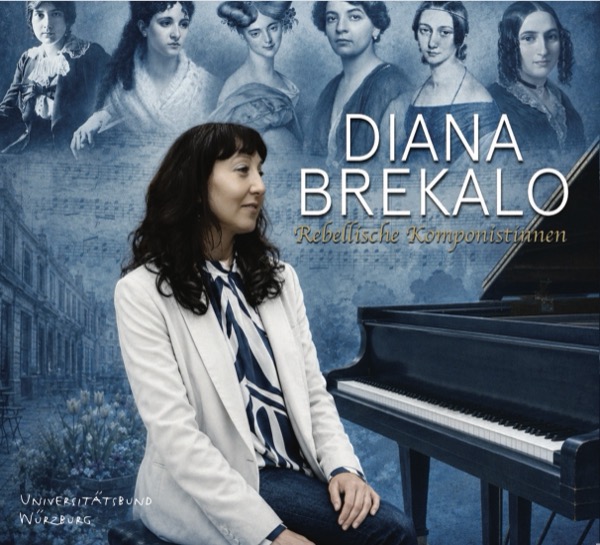
Piano works by Dora Pejačević, Fanny Mendelssohn, Clara Schumann, Mel Bonis, Anne de Belleville, Lili Boulanger, and Elisa Colognato
Performer: Diana Brekalo
Release Date: November 5, 2026
For more of the best in classical music, sign up for our E-Newsletter