
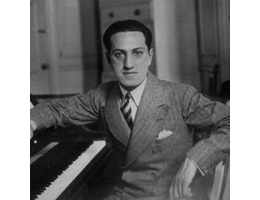
In 1937 George Gershwin was at the top of his game. His Rhapsody in Blue (1924), An American in Paris (1928) and his opera Porgy and Bess (1935) had established him as one of the most prolific and talented composers
In essence
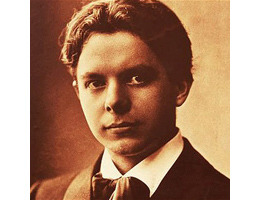
In all of classical music, there’s nothing quite as wonderful as a string quartet. Four voices but which produce a world of sound. In a letter to the composer C.F. Zelter in late 1829, Goethe described a string quartet as
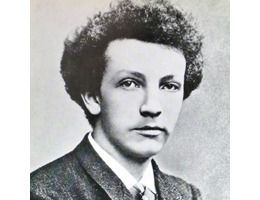
During the summer of 1883, the nineteen-year-old Richard Strauss (1864-1949) spent a short ten-day holiday at the little spa of Heilbrunn. Located between Bad Tölz and the Kochelsee in Bavaria, the natural thermal springs and forested rolling hills had long
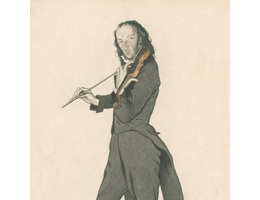
Performers with extraordinary talent were often accused of having made a pact with the devil to achieve their seemingly un-human abilities. We’ve already seen the temptation of Tartini. This accusation has been levelled against performers from violinist Nicolò Paganini in
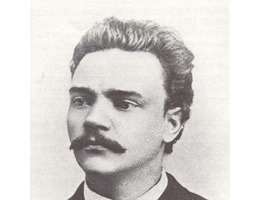
Like practically every composer working in the nineteenth century — regardless of their origin or nationality — Antonin Dvořák (1841-1904) was profoundly nationalist in many respects. In fact, he was expressively patriotic regarding Czech rights within the German dominated Habsburg
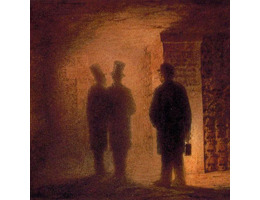
Modest Mussorgsky’s piano work Pictures at an Exhibition take us on a tour around an art gallery of the work of the Russian artist and architect Viktor Hartmann. The seemingly passive title might be clearer if we look at the
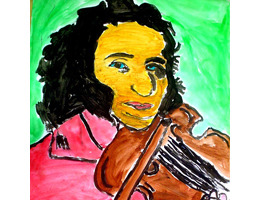
Rachmaninoff: Rhapsody on a Theme of Paganini Contemporary young composers of classical music are frequently taken to task for placing marketability and profit orientation above artistic integrity and compositional skill. In reality, however, placing the emphasis on the profitability of
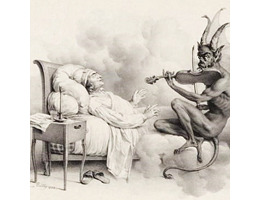
Giuseppe Tartini (1692–1770) took the already-lurid reputation of the violin and painted it with the colours of the dark side. Tartini was among the leading violinist/composers of his time and was based in Padua, Italy, where he founded an internationally