Inspirations Behind Christopher Berg’s Les Loisirs de la Poste
The French poet Stéphane Mallarmé (1842–1898) is best-known in the musical world for the poem L’après-midi d’un faune (1876), which was the inspirational basis for Debussy‘s prelude to the work: Prélude à l’après-midi d’un faune (1894). But, also among his works are 89 little quatrains, known as the ‘Récreations postales’, which are little 4-line occasional poems that celebrate his friends.
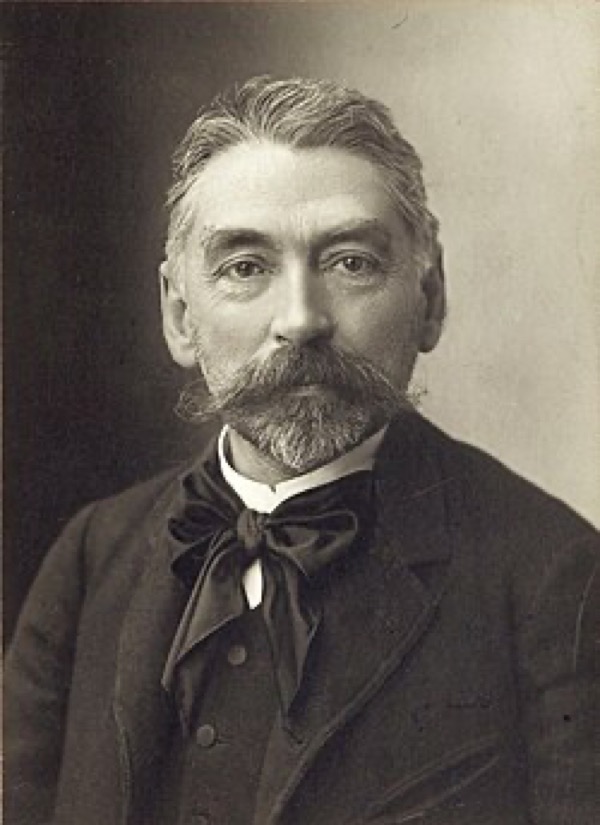
Nadar: Stéphane Mallarmé, 1890
The American composer Christopher Berg took up 6 of these in his 2001 song cycle Les Loisirs de la Poste where he collects the little quatrains of Mallarmé’s circle, including artists Whistler and Degas, composers Chausson and Hahn, and writers Huysmans and Verlaine. Mallarmé used these texts in various ways, sometimes as visiting cards and sometimes as little pieces to be written on paper fans.
James McNeill Whistler (1834–1903), living at 110 rue Antique du Bac in the 6th arrondissement, has his laughter compared to his wife’s.
| Whistler | |
| Leur rire avec la même gamme | Their identical laughter |
| Sonnera si tu te rendis | both ringing the same scale if you go |
| Chez Monsieur Whistler et Madame | to the home of Mr & Mrs Whistler |
| Rue Antique du Bac, cent dix. | Rue Antique du Bac, 110 |
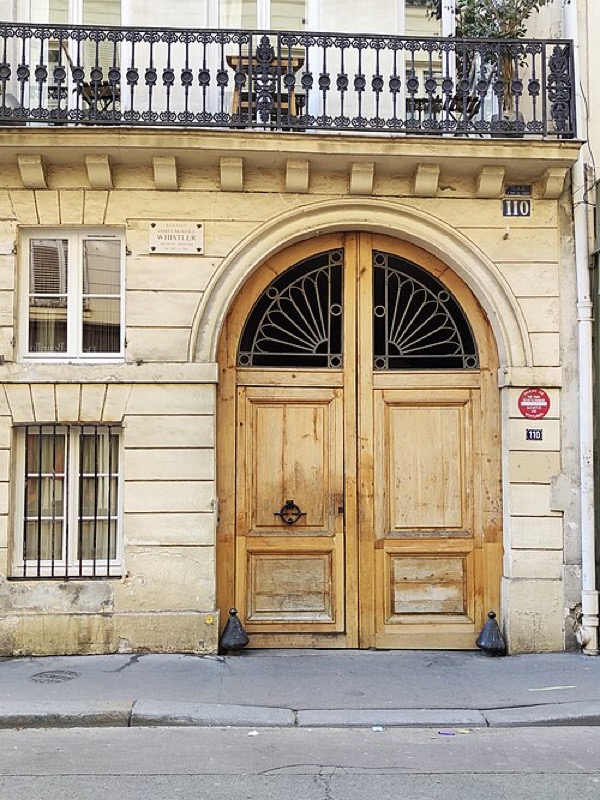
110 Rue du Bac, Paris
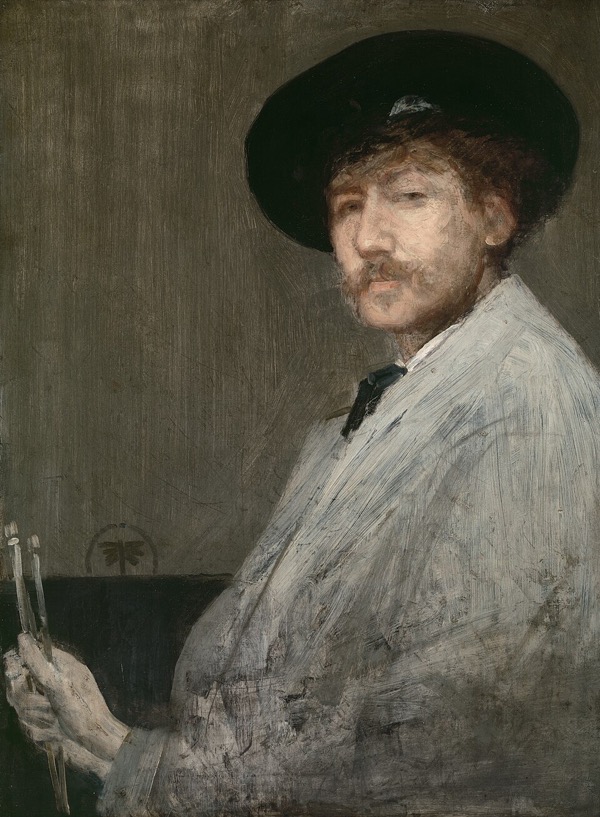
James McNeill Whistler: Arrangement in Gray: Portrait of the Painter, 1872 (Detroit Institute of Arts)
Christopher Berg: Les Loisirs de la Poste (Postal Pastimes): No. 1. Whistler (The Mirror Visions Ensemble; Christopher Berg, piano)
The composer Ernest Chausson is called out by Mallarmé for the sound of the ‘moaning cello’ at his house.
| Ernest Chausson | |
| Arrête-toi, porteur, au son | Stop porter, at the sound |
| gémi par les violoncelles, | moaned by the cellos, |
| C’est chez Monsieur Ernest Chausson, | That’s where M. Ernest Chausson lives, |
| Vingt-deux boulevard de Courcelles | 22, blvd. de Courcelles. |
You’ll hear a bit of Wagnerian drama in Berg’s setting, reflecting on Chausson’s position as a supporter of the German master.
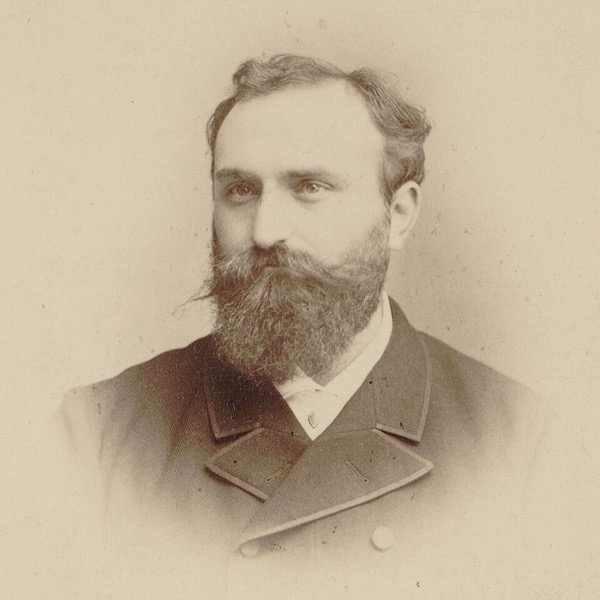
P. Frois: Ernest Chausson, ca 1885 (Gallica: btv1b8416393w)
Christopher Berg: Les Loisirs de la Poste (Postal Pastimes): No. 2. Ernest Chausson (The Mirror Visions Ensemble; Christopher Berg, piano)
J.K. Huysmans (1848–1907) was a novelist and art critic who was known for his works of deep pessimism, and Mallarmé picks up on his religious side, which was so important in his work The Oblate.
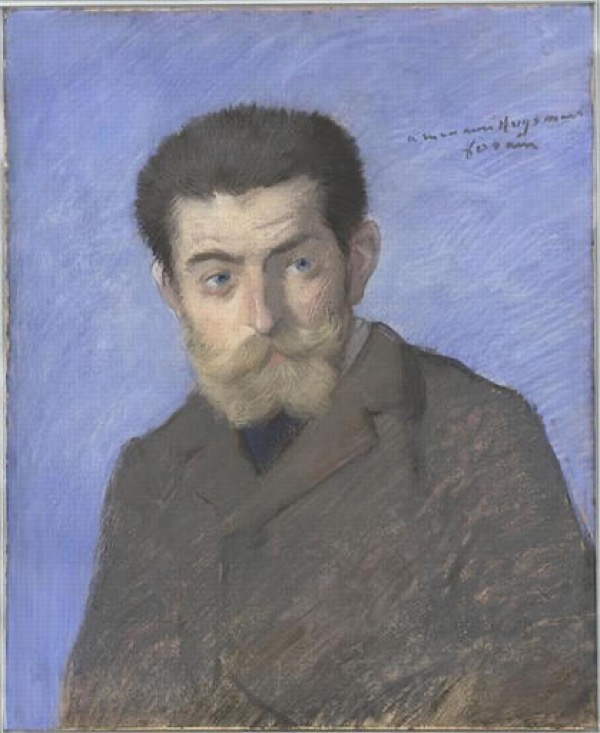
Jean-Louis Forain: J.K. Huysmans, ca 1878 (Musée d’Orsay)
| Huÿsmans | |
| Rue (as-tu peur?) de Sèvres onze | Rue de Sèvres 11 (are you afraid ?) |
| Subtil séjour où rapplique | a subtle dwelling where Satan returns, |
| Satan tout haut traité de gone | loudly called a jerk |
| Par Huÿsmans qui’il nomme J.K. | by Huÿsmans, whom he calls J.K. |
Berg starts his setting tentatively, as if picking up on the visitor’s fear of encountering the devil.
Christopher Berg: Les Loisirs de la Poste (Postal Pastimes): No. 3. Huysmans (The Mirror Visions Ensemble; Christopher Berg, piano)
| Verlaine | |
| Tapi sous ton chaud mac-ferlane | Lurking beneath your warm Macfarlane coat, |
| Ce billet, quand tu le reçois | When you receive this note |
| Lis-le haut; 6 cour Saint-François | read it aloud: 6 St Francis Court, |
| Rue, est-ce Moreau? Cher Verlaine | rue, is it Moreau? Dear Verlaine |
Mallarmé takes the postman’s caped coat as his point of reference, asking him to read Verlaine’s address aloud.
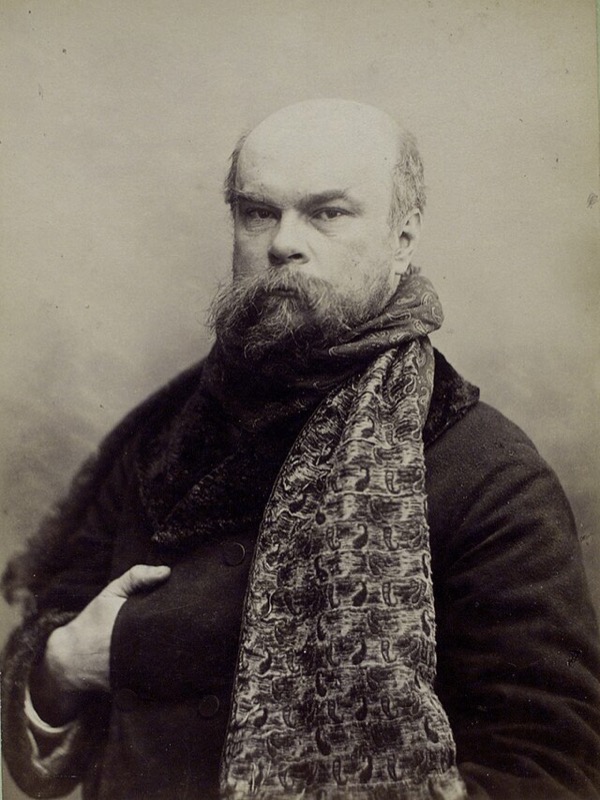
Paul Verlaine, 1893
Berg’s setting is almost loving in its setting – lightly describing the postman’s dress, how the address should be read, and its greeting to the poet.
Christopher Berg: Les Loisirs de la Poste (Postal Pastimes): No. 4. Verlaine (The Mirror Visions Ensemble; Christopher Berg, piano)
The song composer Reynaldo Hahn is noted for his weeping, sentimental songs, though not in a very complimentary light!
| Reynaldo Hahn | |
| Le pleur qui chante au langage | The tear sings the language |
| Du poëte, Reynaldo | of the poet, and Reynaldo |
| Hahn tendrement le dégage | Hahn releases it |
| Comme en l’allée un jet d’eau. | Like a jet of water in the alley. |
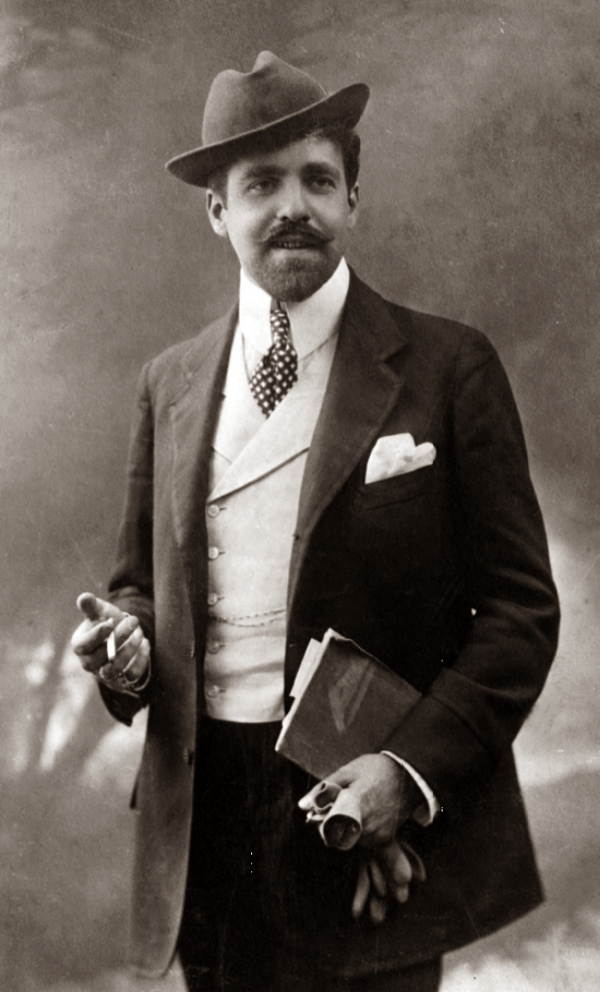
Manuel Cohen: Reynaldo Hahn, 1906
Berg sets the poems in a Hahn-esque manner.
Christopher Berg: Les Loisirs de la Poste (Postal Pastimes): No. 5. Reynaldo Hahn (The Mirror Visions Ensemble; Christopher Berg, piano)
The song collection closes with Degas, living at 23, rue Ballu. Mallarmé rhymes the painter’s name with that of the ‘syringa’, the lilac.
| Degas | |
| Rue, au vingt-trois, Ballu j’exprime | At 23 rue Ballu, I express |
| Sitôt juin à Monsieur Dega | As soon as June arrives, to M. Degas |
| La satisfaction qu’il rime | The satisfaction that it rhymes |
| Avec la fleur des syringas | with the syringa flower. |
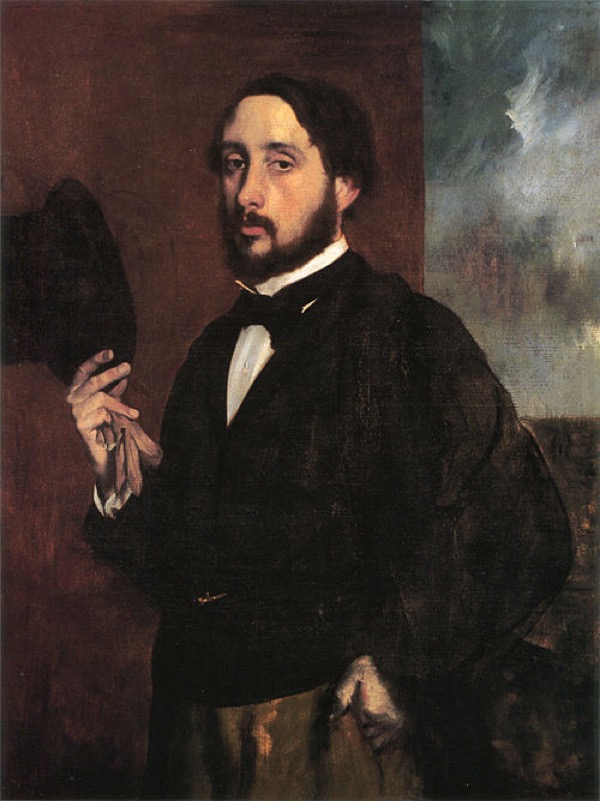
Edgar Degas: Self-portrait, ca 1863 (Calouste Gulbenkian Museum, Lisbon)
Berg’s setting is almost triumphant, celebrating with Mallarmé the coincidence of the arrival of spring and that Degas can be rhymed with syringa!
Christopher Berg: Les Loisirs de la Poste (Postal Pastimes): No. 6. Degas (The Mirror Visions Ensemble; Christopher Berg, piano)
The collection of Mallarmé’s quatrains was discovered by the artist James McNeill Whistler. While visiting the poet in February 1892, he found a notebook where Mallarmé had copied the little pieces. The poems were intended to be written on envelopes and actually mailed, and according to Mallarmé, all envelopes reached their intended recipients. In the 1920 edition of the poems, Mallarmé thanks the post office for its diligence.
As part of a large collection of occasional pieces, as Mallarmé called them, he wrote little pieces for all situations, and they appeared on fans, as dedications to books, sometimes accompanying sweets or New Year or Easter souvenirs, or celebrating anniversaries. They were initially collected by Mallarmé’s daughter and it was that collection that inspired Whistler to seek their publication.
Whistler loved the pieces and tried to get them into print. He first sent it to his own publisher, William Heinemann in London, but they were declined. He then sent it to another publisher who intended on creating a deluxe edition of the 89 quatrains, but that plan fell through as well. 27 of them were published in the American periodical The Chap-Book in December 1894. It was only after Mallarmé’s death that all the quatrains were published in a collection called Vers de circonstance (1920). The original collection of Mallarmé’s quatrains is now at Glasgow University Library, donated by Whistler’s sister-in-law, Rosalie Birne Philips.
In the 1920s collection (available on Gallica ark:/12148/bpt6k1065310s), the composer section includes Augusta Holmès, Chausson, M. Lamoureux, as well as a number of the courtesan Méry Laurent, and the vintner Willy Ponsot, giving us an interesting image of Mallarmé’s daily life.
For more of the best in classical music, sign up for our E-Newsletter