Over the centuries, many of history’s most important women composers were forced to publish under male pseudonyms.
Across the 18th, 19th, and early 20th centuries, dozens of women composers adopted masculine or gender-neutral identities so their work would be reviewed seriously or even allowed to be printed at all.
Some used their husbands’ names; others crafted entirely new male personas; many relied on initials to hide their gender.
From Maddalena Laura Lombardini Sirmen‘s quartets being published under the name of her husband, to Rebecca Clarke‘s Morpheus being attributed to “Anthony Trent”, these pseudonyms profoundly shaped the reception and legacy of their music.
This article explores ten women composers who used male pseudonyms: why they resorted to secrecy, how it influenced their careers, and when they finally reclaimed their own names.
Maddalena Laura Lombardini Sirmen (1745–1818)
Pseudonym: Ludovico Sirmen
Sirmen’s String Quartet No. 5
Maddalena Lombardini Sirmen was an Italian violinist, composer, and one of the most remarkable women musicians of the eighteenth century.
As a child, she trained at the renowned Ospedale della Pietà in Venice and became a star pupil of violin master Giuseppe Tartini.
In 1767, she married fellow violinist Ludovico Sirmen, and together they performed as a duo in various European capitals.
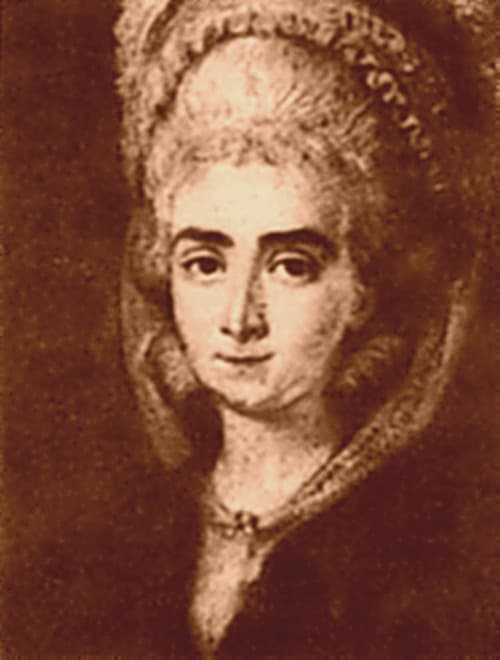
Maddalena Laura Sirmen © Wikipedia
She was among the first composers – male or female – to write string quartets, a then-emerging genre. But when her first set of six quartets appeared in 1769, they were published under Ludovico Sirmen’s name.
Historians aren’t certain why, but it’s possible it was because Ludovico was better known, or because a male name was considered more marketable.
Her case underscores how women’s most innovative works could sometimes only reach the public if masked by a male name.
Louise Farrenc (1804–1875)
Pseudonym: L. Farrenc
Farrenc’s Symphony No. 3
Jeanne-Louise Dumont Farrenc (1804–1875), known as Louise Farrenc, was a French composer, virtuoso pianist, and pedagogue of the Romantic era.
In 1842, she achieved a rare distinction for a woman of her time: she was appointed professor of piano at the Paris Conservatory. She was the only woman to secure a permanent professorship there in the 19th century.
Farrenc was highly respected as a performer and teacher, and she produced a substantial body of compositions, including piano music, chamber works, and three symphonies.
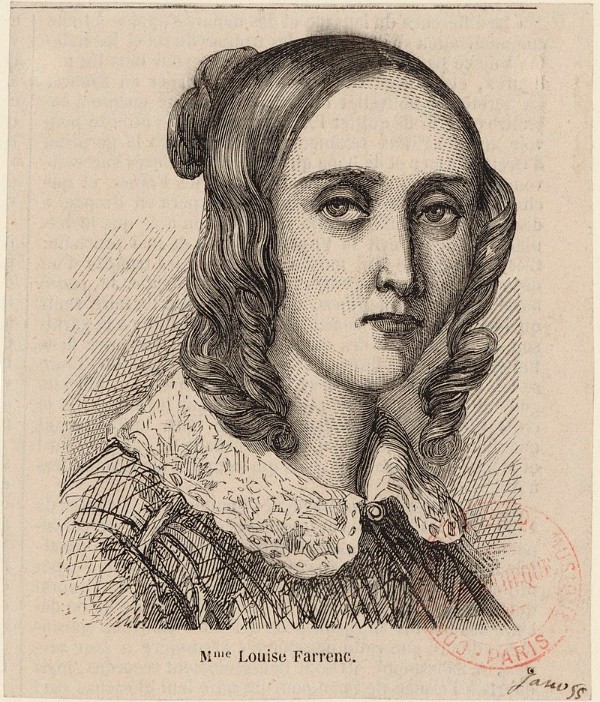
Louise Farrenc
She published under the name L. Farrenc. Throughout the late 1800s, piano students across Europe practised the 30 Études by this “L. Farrenc,” meaning that countless students studied the work of a woman composer without ever knowing it.
Fanny Mendelssohn Hensel (1805–1847)
Pseudonym: Felix Mendelssohn
Mendelssohn Hensel’s lied “Italien”
Fanny Mendelssohn Hensel was a German composer and pianist, as well as the elder sister of the famed composer Felix Mendelssohn.
Like her brother, she was a prodigious musician from a young age. At 13, she could play all 24 Preludes from Bach‘s Well-Tempered Clavier from memory, and she composed over 400 pieces over the course of her short lifetime.
However, Fanny’s creative ambitions clashed with the limitations presented by her social position. The Mendelssohn family was wealthy and respectable, and at that time, it was considered improper for a woman of her status to seek a public career in composition.
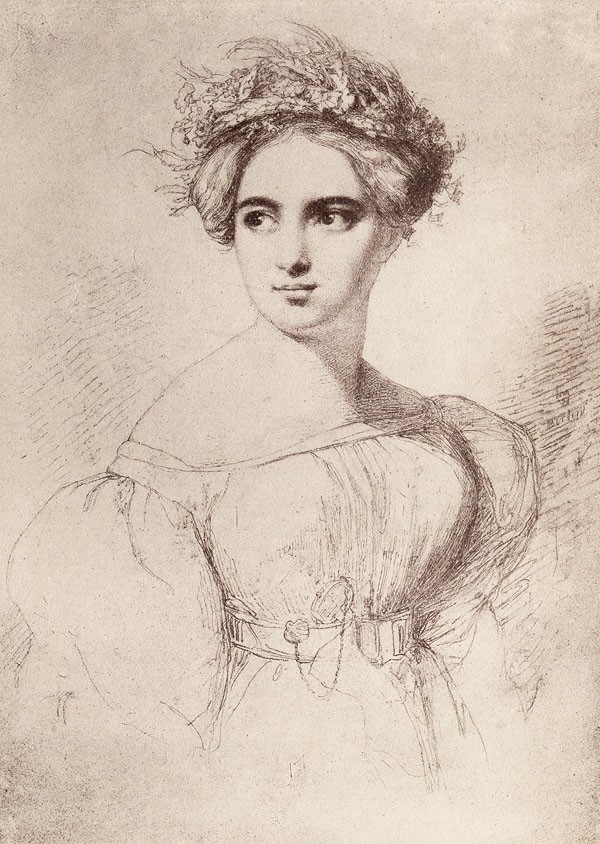
Fanny Mendelssohn-Hensel
Fanny married artist Wilhelm Hensel and remained an active musician in the private sphere, organising a renowned salon in Berlin where many of her works were performed.
Only late in her life, shortly before her untimely death in 1847, did she start publishing under her own name.
Because she faced so many headwinds in publishing, several of Fanny’s songs were initially published under Felix Mendelssohn’s name, albeit secretly. Both Felix’s opus 8 and opus 9 song collections (published in the 1820s) included a handful of songs composed by Fanny.
Laura Netzel (1839–1927)
Pseudonym: N. Lago
Netzel’s “Aubade” from Six Morceaux
Laura Netzel was a Finnish-born Swedish composer, pianist, conductor, and prominent musical philanthropist.
She grew up in a culturally rich environment in Stockholm and studied music (piano, voice, and composition) both privately and in Paris.
Laura Netzel began her composing career in the 1870s at a time when publishing music was considered an unusual – even unseemly – profession for a woman of her high social standing.
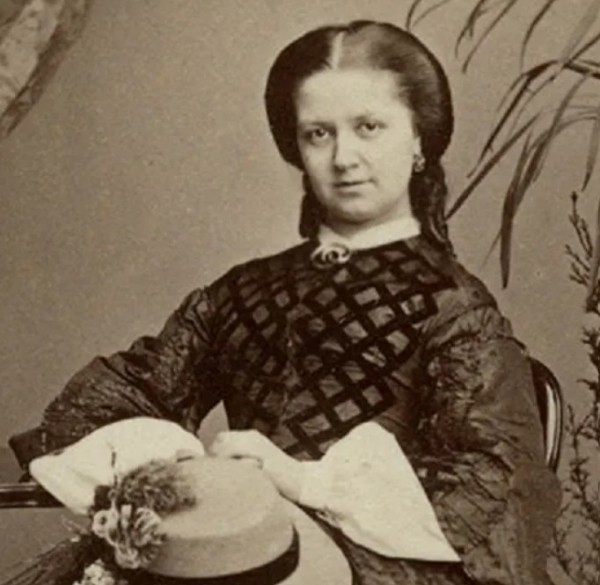
Laura Netzel
Presumably to navigate these social constraints, she adopted the gender-neutral pseudonym “N. Lago.” Netzel’s works were first performed and published under the N. Lago moniker in the 1870s.
Interestingly, one Swedish newspaper of the time noted that compositions by “N. Lago” displayed “masculine power in dedication and elaboration.”
Ten years later, around 1884, her fame and reputation had grown enough that she began publishing music under her own name.
Marie Damaschino (1844–1921)
Pseudonym: Mario Foscarino
Damaschino’s 3 Petites Pièces Faciles
We know relatively little about Marie Foscarina Damaschino (1844–1921). Her near-total invisibility in the historical record reflects how easily women’s musical voices were erased, especially when they felt compelled to write under alternate names.
Among the few things we know is that she was a Romantic-era composer of French and Greek heritage and the sister of a prominent doctor named François Damaschino.
While historians have yet to uncover statements from her explaining why she chose this name, her adoption of this pseudonym does fit the patterns of the era.
It is possible that she believed that adopting a male persona was the only way to have her work published by major houses and accepted by the musical public.
By taking an Italian-sounding name, she may also have been capitalising on the cachet that Italian music held in Romantic-era Europe.
Augusta Holmès (1847–1903)
Pseudonym: Hermann Zenta
Holmès’s La Nuit et l’Amour
Augusta Holmès (1847–1903) was a French composer of Irish descent who rose to prominence in the late 19th century.
She began her career in the 1860s, writing songs, which she published under the masculine, Wagnerian name Hermann Zenta.
She matured into a boldly ambitious musician known for composing on a grand scale, writing massive orchestral works, choral pieces, and operas.
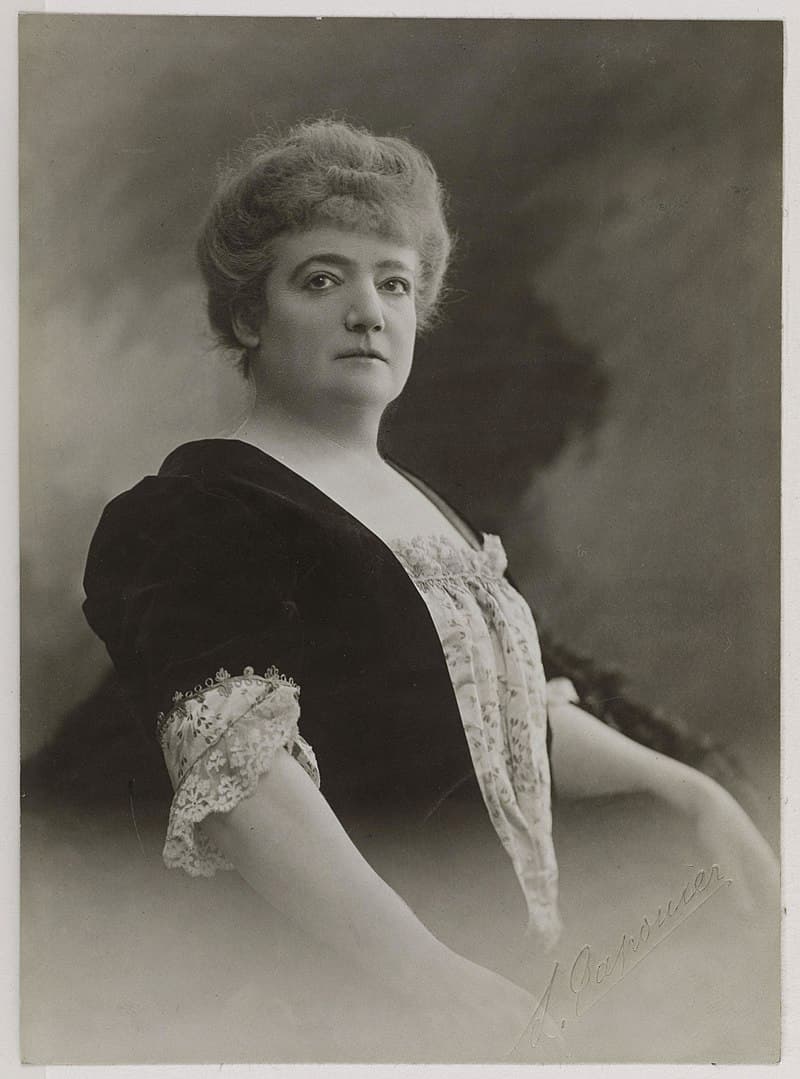
Augusta Holmès
This was an unusual path for a woman composer to take, given the lack of education, access, and institutional backing available to them at the time.
She was able to continue pursuing music seriously because the death of her father left her enough money to live on.
After she secured financial independence, she gave up the Hermann Zenta persona.
Emma Louise Ashford (1850–1930)
Pseudonym: E. L. Ashford
Emma Louise Ashford’s Siciliano & Barcarolle
Emma Louise Ashford (1850–1930) was an American organist, music editor, and an extraordinarily prolific composer of sacred and secular music.
Born Emma Hindle in Delaware, she married John Ashford and settled in Nashville, Tennessee. There she served as an organist and choir director for several churches and a Jewish temple.
Ashford composed over 600 pieces of music, including anthems, hymns, cantatas, organ voluntaries, piano pieces, and art songs.
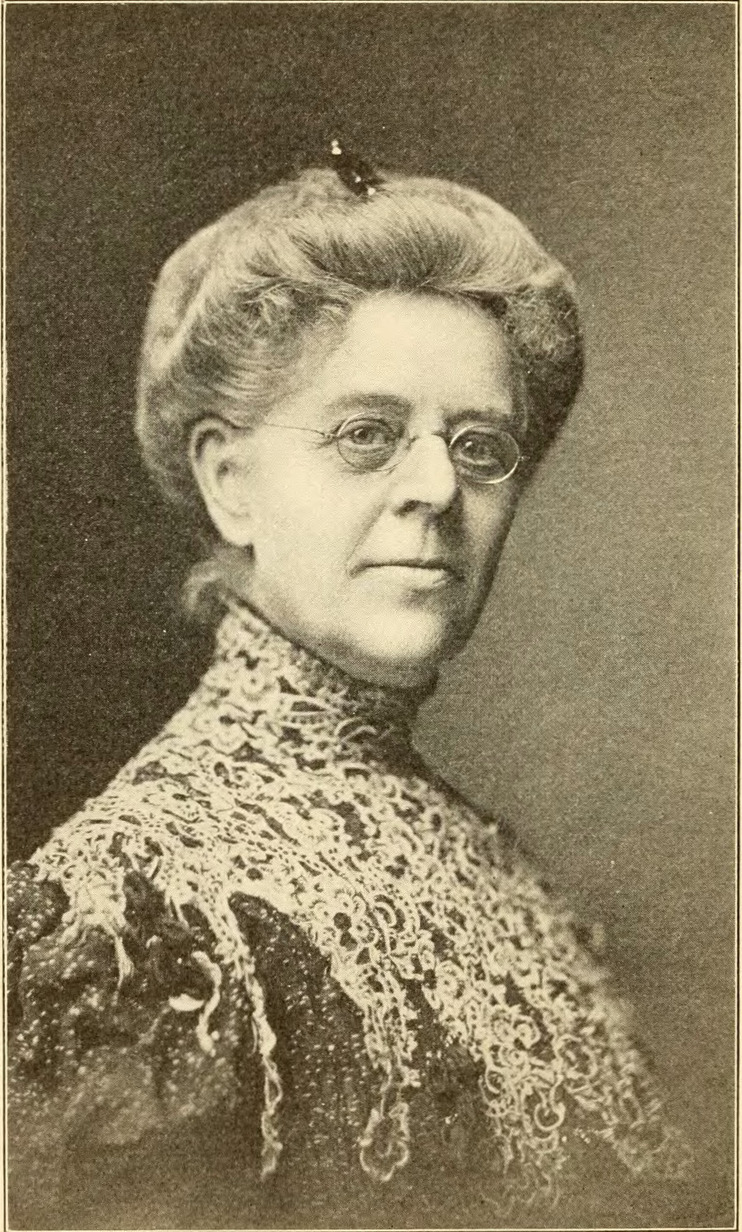
Emma Louise Ashford
For decades, she was an editor for the Lorenz Publishing Company’s music periodicals, which meant she shaped church music repertory across the United States.
Throughout her long career, Emma Louise Ashford almost never published under the name “Emma.” Instead, she chose to present herself as “E. L. Ashford.” This was not exactly a fictitious name – those are obviously her real initials – but it functioned as a gender-neutral byline.
One of her own music publishers, corresponding by mail, assumed that “E. L. Ashford” was a man and addressed letters to her as “My Dear Sir” for months – until eventually discovering that the prolific composer was in fact (in the words of one Ashford biographer) “a frail little woman of the most distinctly feminine type.”
Mélanie Bonis (1858–1937)
Pseudonym: Mel Bonis
Bonis’s Salomé from Trois Femmes De Legende
Mélanie Hélène Bonis (1858–1937) – known professionally as Mel Bonis – was a French composer whose music bridges the late Romantic and early Impressionist styles.
Bonis composed more than 300 works, including piano pieces, chamber music, organ music, songs, and choral motets.
Her music was published and received some acclaim in the early 1900s. When her Piano Quartet premiered in 1901, Camille Saint-Saëns reportedly exclaimed, “I never imagined a woman could write such music!”
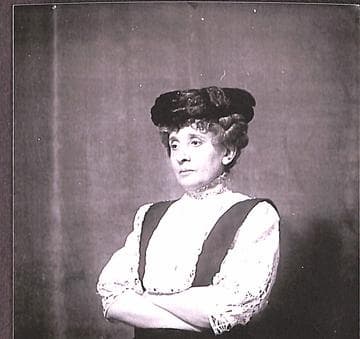
Mélanie Bonis, 1907
Despite periods of personal difficulty (an unhappy marriage forced her to take a hiatus from composing in the 1890s), Bonis returned to active composition in the 1900s and was an officer of the Société des Compositeurs.
Early in her career, Mélanie Bonis realised that in order to be taken seriously in the French music world, she needed to present herself on paper in a less conspicuously feminine way.
She therefore dropped the “-nie” from her first name and published as “Mel Bonis.”
In French, Mel is an uncommon name that does not immediately signal a gender. It can even be short for a masculine name (like a nickname for “Melchior” or “Melville”).
By shortening her name, Bonis crafted a professional identity that allowed critics to judge her music without dismissing her gender.
Rebecca Clarke (1886–1979)
Pseudonym: Anthony Trent
Clarke’s Morpheus
Rebecca Clarke (1886–1979) was a British violist and composer, regarded as one of the most important English female composers of the early 20th century.
Clarke was one of the first women to play in professional orchestras; she was hired by Sir Henry Wood in 1912 as one of the first female players in the Queen’s Hall Orchestra.
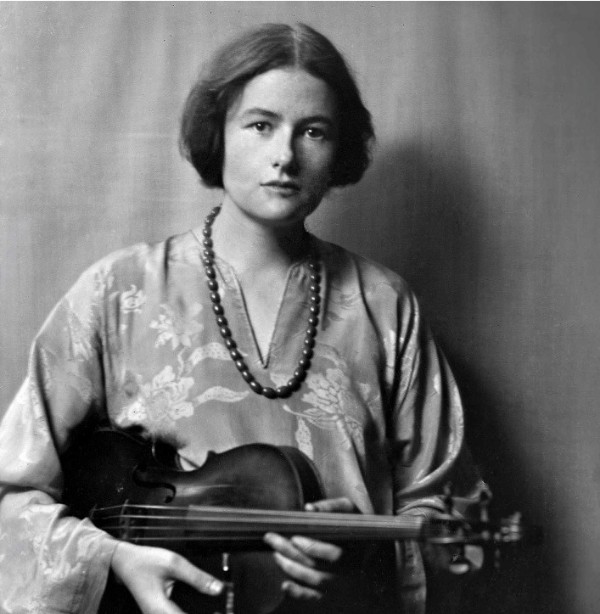
Rebecca Clarke
As a composer, she is best known for her chamber music, especially the 1919 Viola Sonata, which tied for first place in an international composition competition sponsored by arts patron Elizabeth Sprague Coolidge.
Rebecca Clarke used a male pseudonym only briefly and experimentally – and with a darkly funny result.
In 1918, Clarke gave a recital in New York in which she featured several of her own viola pieces. She felt self-conscious about appearing as the composer of too many works on the program. Her solution? For the piece Morpheus, she listed the composer as “Anthony Trent” in the program.
Although other works appeared on the program under the name Rebecca Clarke, considerable attention was paid to the mysterious newcomer Mr. Trent. Some expressed interest in this new composer, while largely overlooking Clarke’s contributions.
Realising that her ploy had perhaps worked a little too well, she decided to abandon it, and Anthony Trent was killed off for good.
Louise Marie Simon (1903–1990)
Pseudonym: Claude Arrieu
Arrieu’s Suite en Trio for Oboe, Clarinet, and Bassoon
Louise Marie Simon (1903–1990) was a French composer who spent her career using the professional name Claude Arrieu.
While attending the Paris Conservatory in the 1920s, she studied composition with notable teachers like Paul Dukas, winning a Premier Prix there in 1932.
She became a prolific composer, especially celebrated for her chamber music and film scores.
In addition to her composing work, she also worked as a producer for French radio, at one point working as an assistant head of sound effects at Radio France.
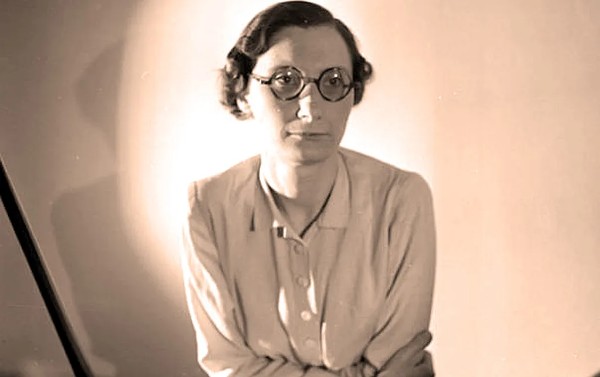
Louise Marie Simon
Louise Marie Simon assumed her gender-neutral pseudonym “Claude Arrieu” around 1927, when she was still in her mid-20s, and used it for the rest of her life.
As far as historians know, she never stated her exact reasoning for the name change, but evidence points to a desire to avoid the biases faced by female composers. It’s also possible that she was trying to distance herself from her family.
The name Claude can be a gender-neutral one in France. Of course, it also has a loaded connotation in the French classical music world, given the existence of Claude Debussy, whose legacy loomed especially large as Arrieu’s career was starting.
Conclusion
The practice of women adopting male pseudonyms in classical music arose from necessity and faded as opportunities opened up.
In earlier eras, most women with musical talent either remained in the private sphere or, if they ever ventured into print, did so anonymously or under a false name.
Fortunately, by the mid-20th century, changing attitudes and advocacy began to erode the stigma. Women gradually gained admission to conservatories; their names started appearing in publishers’ catalogues; and the artistic world slowly – albeit too slowly – grew more inclusive.
Women composers became more visible and normalised; the need for secrecy eventually diminished; and the era of women composers using male pseudonyms largely came to an end.
Modern musicologists continue to rediscover women’s work once attributed to men, ensuring that this music is finally heard under the names its composers should have been free to use all along.
For more of the best in classical music, sign up for our E-Newsletter