
“I am a beginner. I am always learning”Fou Ts’ong (from an interview with British journalist Jessica Duchen) Frédéric Chopin: Mazurka No. 13 in A Minor, Op. 17, No. 4 (Fou Ts’ong, piano) This wonderfully humble quote from Fou Ts’ong, the
Articles

Musicians and music lovers enjoy musical puns. Who doesn’t need a laugh these days? I thought why not expand on some of the puns colleagues have shared with me, of course omitting the ubiquitous viola jokes! (Special thanks to prolific
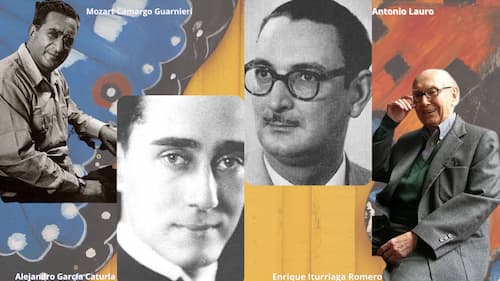
Latin American music is one of the exciting topics among musicians these days. However, a lot of Latin American composers remain undiscovered. We cannot truly explore such diverse styles of Latin American music without knowing more composers. This article discusses
Composers use a variety of means to create drama in music, from simple devices such as dynamics (level of sound) or tempo (speed) to repetitions, the use of rests and pauses, and changes of harmony or key (modulation). Mozart’s Fantasy

The following article is the first of a three-part series on impressionism around the world; in France, in Europe and in our Modern World. In these articles, I explore the genre of impressionism. Born in France, it is known to
When we think of those who work in classical music we tend only to think of the musicians – soloists, ensemble players, orchestral musicians and conductors. But there’s a whole “back office” and “supply chain”, if you will, of other
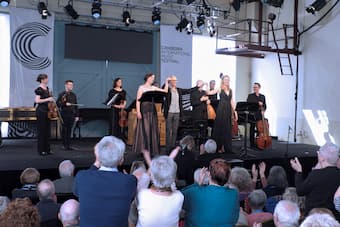
After attending live music festivals here in Australia recently, this has more than cemented my already long-held view that music is performance. Over the two large festivals where around 10,000 music lovers paid their money and turned up to hear
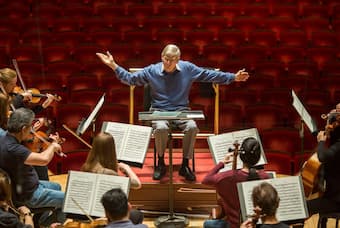
The rehearsal room of an orchestra is a strange place. We musicians take it for granted, but for people on the outside it can seem like the rehearsal is a mysterious place with its own customs, rituals and etiquette. Things