In the galaxy of classical music history, Handel was undoubtedly a master at manipulating public emotion. When mentioning his oratorios, most people immediately think of Messiah. Yet in the London of the 1740s, what truly filled Handel’s pockets and drove audiences into a frenzy was a series of victory oratorios filled with the smoke of war and patriotic passion. Among them, Joshua (HWV 64), composed in 1747, stands out as a commercial and artistic masterpiece that blends political gossip, religious fervour, battlefield drama, and wartime romance.
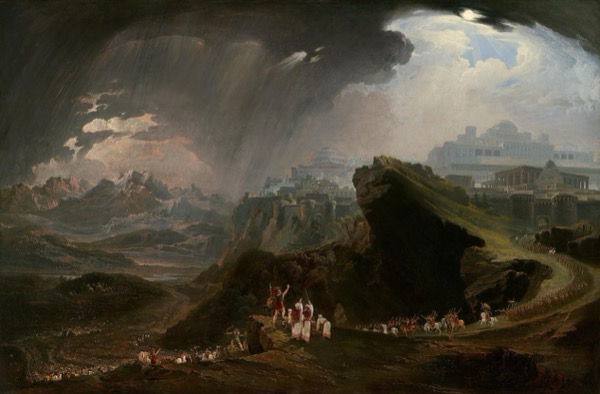
Joshua Commanding the Sun to Stand Still upon Gibeon – John Martin (1816)
Political Harvest Outside the Battlefield and Breakneck Speed
To understand the birth of Joshua, one must travel back to the turbulent British political scene of the 1740s. At the time, the Jacobites from Scotland, led by “Bonnie Prince Charlie,” launched a rebellion and marched south, throwing London’s financial markets into absolute panic. At the critical moment, the Duke of Cumberland, son of King George II, led the counteroffensive and decisively crushed the rebels.
As a shrewd musician and businessman, Handel swiftly captured the passionate patriotism of London citizens in the aftermath of their narrow escape. Working quickly with librettist Thomas Morell, he cleverly transformed the bloody biblical wars of Joshua, in which the Israelites conquered Canaan, into a political allegory celebrating the contemporary victory of the Hanoverian dynasty. This approach of “using the past to satirise the present” heavily stimulated the sense of identity among London’s Protestant audience.
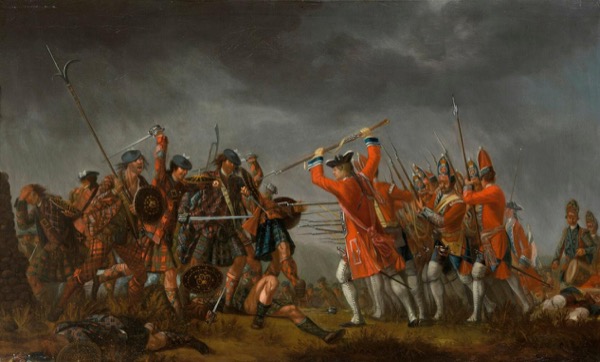
An Incident in the Rebellion of 1745, by David Morier (1746)
During this period, Handel demonstrated a jaw-dropping speed of composition. In the summer of 1747, he had just spent a month finishing Alexander Balus. After resting for a mere two weeks, he dove into the world of Joshua on July 19. He completed Act I in just 11 days, wrapped up Act II in another 8 days, and the entire grand wartime epic was fully composed in a single month. This relentless writing pace pushed librettist Morell’s text preparation to its absolute limits.
Ironclad Commander and Wartime Roses
To break the monotony of continuous warfare from start to finish, Joshua weaves a tender romantic subplot into its grand biblical epic narrative.
The characters in the play are vividly drawn: the protagonist, Joshua, is a pious yet occasionally delightfully conceited military leader; the old general, Caleb, is a patriarchal leader nearing retirement; while the narrative core of the romance focuses on Caleb’s daughter, Achsah, and the young warrior, Othniel. The two are deeply in love, but Othniel must strike a balance between playing the young warrior for his country and being a devoted lover. In the showdown, Caleb promises that whoever can conquer the stronghold of Debir can claim Achsah’s hand in marriage. Ultimately, love inspires Othniel to infinite bravery; he returns in triumph, wins his bride, and the story concludes beautifully amidst collective songs of thanksgiving and praise.
The Sun-Stopping High Note and Thunderous Choruses
The pastoral romance provides a beautiful contrast, notably in Act I with Achsah and Othniel’s scene. It features Othniel’s expressive accompanied recitative “In these blest scenes” and Achsah’s birdcall-filled, Arcadian imitation aria “Hark! ’tis the linnet and the thrush”, before the two unite in a lovely duet. Later, Achsah sings the wistful aria “Oh, who can tell” and the joyful, ever-popular “Oh had I Jubal’s lyre”.
However, the theatrical highlights are particularly celebrated. The first is the “collapse of the walls of Jericho” at the beginning of Act II, introduced by Joshua’s recitative. Handel fully mobilised the brass instruments and timpani, using a “Solemn March during the circumvection of the Ark of the Covenant” to frame a grand three-part choral tableau, culminating in the chorus “The nations tremble at the dreadful sound”. This creates a tug-of-war call-and-response between the soloist and the chorus, using bold, powerful strokes to shatter the solid city walls with sound literally.
George Frideric Handel: Joshua, HWV 64: Act II: Glory to God! – The nations tremble (Chorus, Joshua) (North German Radio Chorus; Göttingen Festival Orchestra; Laurence Cummings, cond.)
George Frideric Handel: Joshua, HWV 64: Act II: Chorus: Oh! Thou bright orb, great ruler of the day (Joshua, Chorus) (North German Radio Chorus; Göttingen Festival Orchestra; Laurence Cummings, cond.)
The other is the breathtaking moment at the end of Act II where Joshua commands the sun and moon to halt their advance in the chorus “Oh! Thou bright orb, great ruler of the day”. To depict the sun genuinely stopping in the sky, Handel plunges the entire orchestra into sudden deathly silence, leaving a single violin to hold a lonely, sustained high A for nine full bars! This avant-garde acoustic experiment caused a massive social stir at the time. While some conservative music critics (such as Charles Avison) sharply criticised Handel for “condescending to amuse the vulgar part of his audience”, the public bought into it in a frenzy.
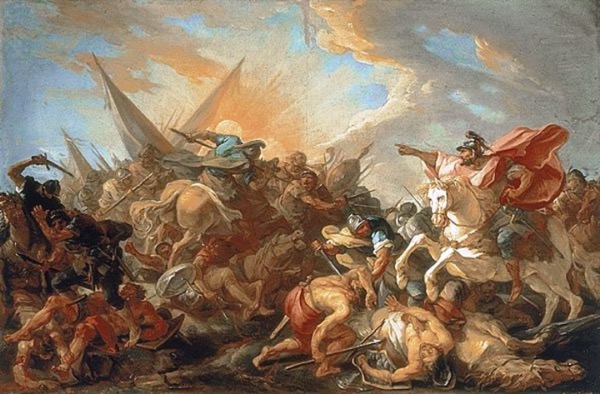
Joshuah Ordering the Sun to Stand Still, by Joseph-Marie Vien (1743)
The well-known essayist Eliza Haywood wrote excitedly in her diary after attending the premiere: “I was transported into the most divine Ecstasy… I closed my eyes, and imagined myself amidst the angelic Choir… I seemed to have nothing of this gross Earth about me, but was all Soul!—all Spirit!”
Box-Office Triumphs
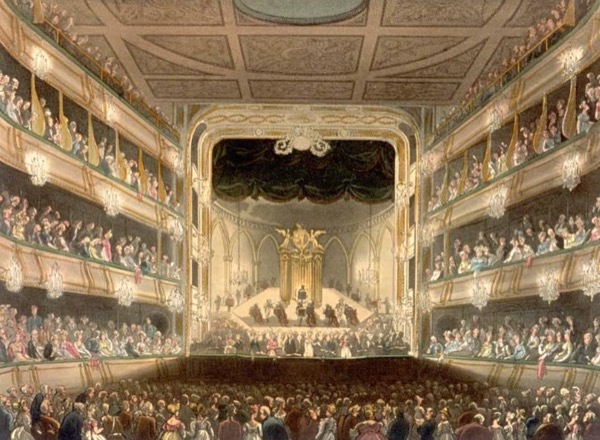
Joshua premiered at London’s Covent Garden Theatre on March 9, 1748, achieving historic success. By then, Handel had become highly financially savvy. According to records from Handel’s own bank statements, he deposited £300 after the first performance, £200 after the second, and another £100 after the third. By the beginning of May that year, Handel actually had enough spare cash to trade in annuity assets worth a staggering £4,500. This directly proves how brilliant Joshua’s box-office campaign was at the time.
However, Handel also employed many cost-cutting and almost comical operations during rehearsals. For instance, to save money, the number of boys singing the top line of his chorus was surprisingly small; he regularly required the star soloists to join in the tutti choruses when they didn’t have their own solo parts (which was absolute hard labour in those days). Furthermore, at three points in the score, Handel provided only brief rhythmic cues, leaving the rest entirely to the principal trumpeter’s live improvisation, adding thrilling unpredictability to the original performances.
A Twist of Fate: The Great Relocation of a Famous Song
The most profound impact of Joshua on posterity is undoubtedly the birth of that household choral song—“See the conqu’ring hero comes!”
Interestingly, this song, now universally recognised as the signature tune of the oratorio Judas Maccabaeus, was originally composed by Handel for Joshua. Following the premiere of Joshua, Handel quickly realised the massive, infectious commercial potential of this melody. He used his signature knack for commercial reuse, forcibly transplanting the song into subsequent revivals of Judas Maccabaeus. As a result, the tune spread like wildfire across Europe.
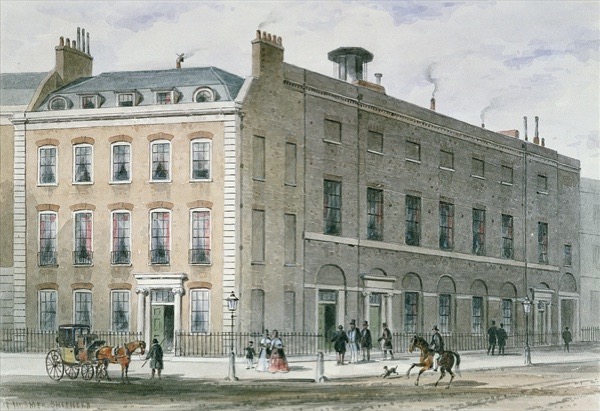
Hanover Square Rooms, principal venue of Haydn’s performances in London
In 1791, Franz Joseph Haydn was deeply shaken after hearing a large-scale performance of the piece at Westminster Abbey, praising it by saying: “Only one inspired Author ever did, or ever would pen so sublime a composition.” Even Beethoven was enchanted by it, composing a set of variations for cello and piano (WoO 45) based on this noble theme in 1796. In Germany, the tune was even adapted by a theologian into the Advent hymn “Tochter Zion, freue dich” (“Daughter of Zion, Rejoice”), which is still widely sung in Christian churches today.
George Frideric Handel: Joshua, HWV 64: Act III: See the conqu’ring hero comes (Chorus) (North German Radio Chorus; Göttingen Festival Orchestra; Laurence Cummings, cond.)
Ludwig van Beethoven: 12 Variations on “See the conqu’ring hero comes” from Handel’s Judas Maccabaeus in G Major, WoO 45: Thema: Allegretto (Gabriel Schwabe, cello; Nicholas Rimmer, piano)
Although the mainstream public somewhat neglected the complete oratorio of Joshua in the late twentieth century, it stands as a representative peak of Handel’s heroic style. Its musical language, crackling with dramatic sparks, still allows modern audiences to experience the same blood-pumping divine ecstasy that shook the London theatre over two centuries ago.
For more of the best in classical music, sign up for our E-Newsletter