Carl Maria von Weber, born around 18 November 1786 in Eutin, in the Bishopric of Lübeck, wanted to tell stories in his music that everyone could understand. Sublime greatness, he once suggested, was better left to Beethoven. Yet, he stunned the musical world in 1821 with the premiere performance of Der Freischütz.
With this opera, he created a work that fully embodied the energies of the youthful Romantic Movement. However, Weber was also a famous conductor and critic, and a virtuoso pianist known for his exciting improvisations.
Carl Maria von Weber left us four piano sonatas, all composed between 1812 and 1822, which are considered the pillars of his piano oeuvre. To celebrate his birthday, let’s explore his arguably most famous piece, the delightful Invitation to the Dance.
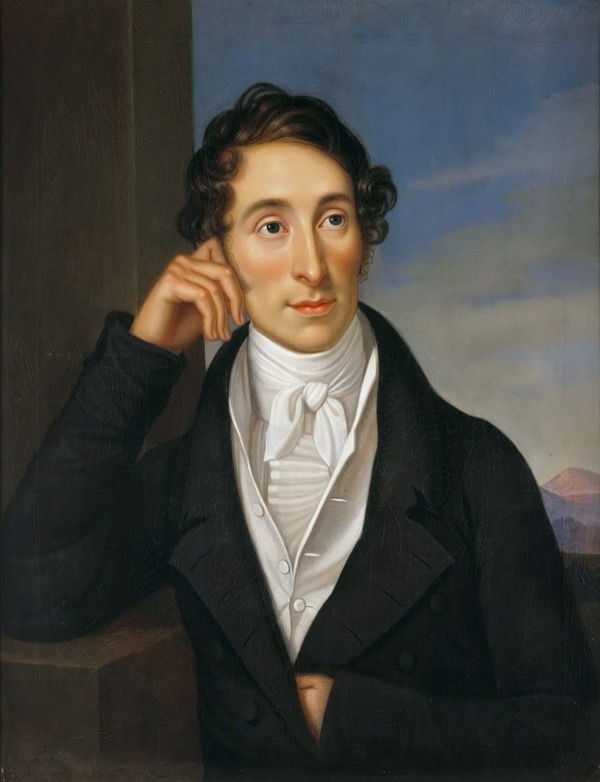
Carl Maria von Weber, portrait by Caroline Bardua
Carl Maria von Weber: Invitation to the Dance
A Waltz Made for Listening
The Invitation to the Dance may well be the first concert waltz ever written. This simply means that it is the first work in waltz form meant for listening rather than for dancing. John Warrack calls it “the first and still perhaps the most brilliant and poetic example of the Romantic concert waltz, creating within its little programmatic framework a tone poem.”
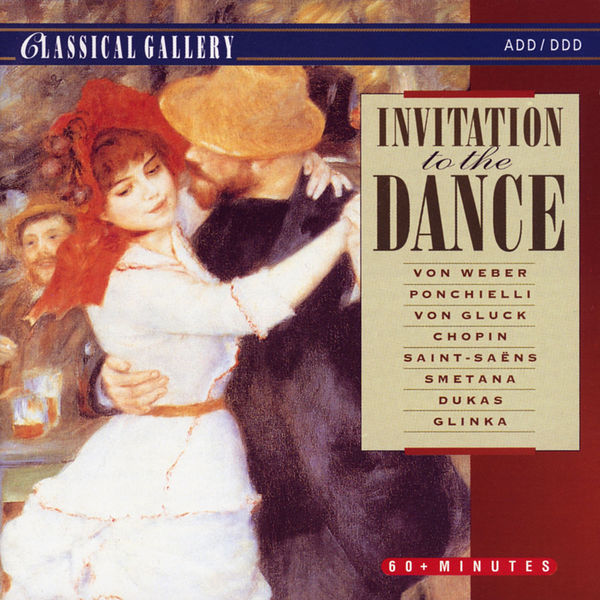
Invitation to the Dance
Weber composed the work in rondo form in 1819, and it tells the story of a couple at a ball. In fact, Weber himself gave his wife a rather detailed programme. The first couple of measures depict the young man’s first appearance and the lady’s evasive reply.
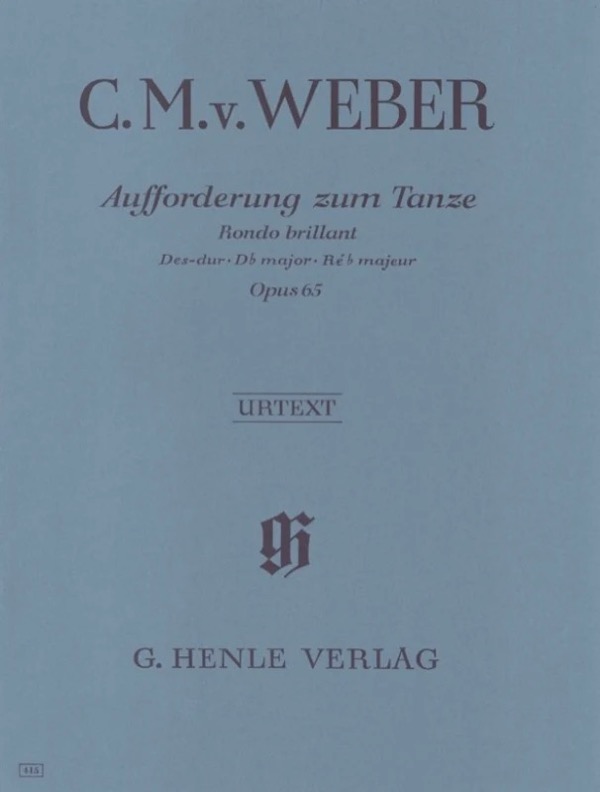
Weber: Invitation to the Dance
Between measures 9 and 21, the young man presses his invitation, and she consents, and then they begin a conversation and eventually speak with greater warmth and mutual sympathy. He then asks her to dance, and after her answer, they take their places and wait for the dance to commence. They whirl several times around the room, thank each other, and part politely.
Carl Maria von Weber: Invitation to the Dance (orch. Hector Berlioz)
Berlioz Adds His Magic
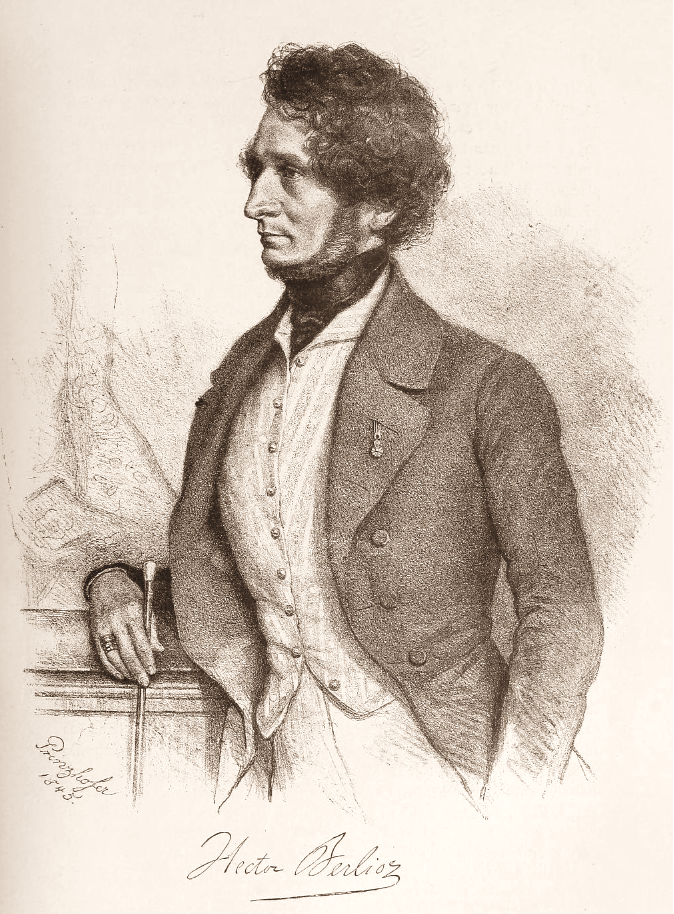
August Prinzhofer: Hector Berlioz, 1845
Hector Berlioz just loved the music of Carl Maria von Weber, and in his famous treatise on instrumentation, he suggested that Weber’s orchestration was not simply instrumental decoration, but a means of creating atmosphere and drama.
As luck would have it, Berlioz himself went on to provide the orchestration for Weber’s Invitation to the Dance. When Der Freischütz was given at the Opéra de Paris in 1841, and according to the conventions in France at the time, the opera required to include a ballet in Act II.
Berlioz agreed, and he transposed the piece from D flat to a more readily playable D major. With his orchestration, Berlioz brought Weber into his own sound world, and this version took on a life of its own. For a long time, it was much more popular than the piano original. However, Pyotr Ilyich Tchaikovsky described its use in the operas as “utterly incongruous, tasteless, and silly.”
Carl Maria von Weber: Invitation to the Dance (Le Spectre de la Rose)
A Rose and a Dream
It is surely no surprise that the Invitation to the Dance made it onto the ballet stage as well. In 1922, Michel Fokine used the Berlioz orchestration for a ballet for Serge Diaghilev’s Ballets Russes. The story is based on a verse by Théophile Gautier, and we find a young woman dressed in a white bonnet and ball gown.
She has just returned home after her first ball, and she holds a rose as a souvenir of the evening. As she falls asleep in a chair, the rose falls from her finger to the floor, and the spirit of the Rose is seen at the window.
He steps into the room and approaches the young woman. Still asleep, she rises and dances with him. He leads her back to the chair, kisses her, then leaps through the window and into the night. The young woman awakens and rises. She picks up the rose she dropped and kisses it.
Carl Maria von Weber: Aufforderung zum Tanze (Invitation to the Dance), Op. 65, J. 260 (arr. A. von Henselt for piano) (Sergio Gallo, piano)
Back at the Keyboard
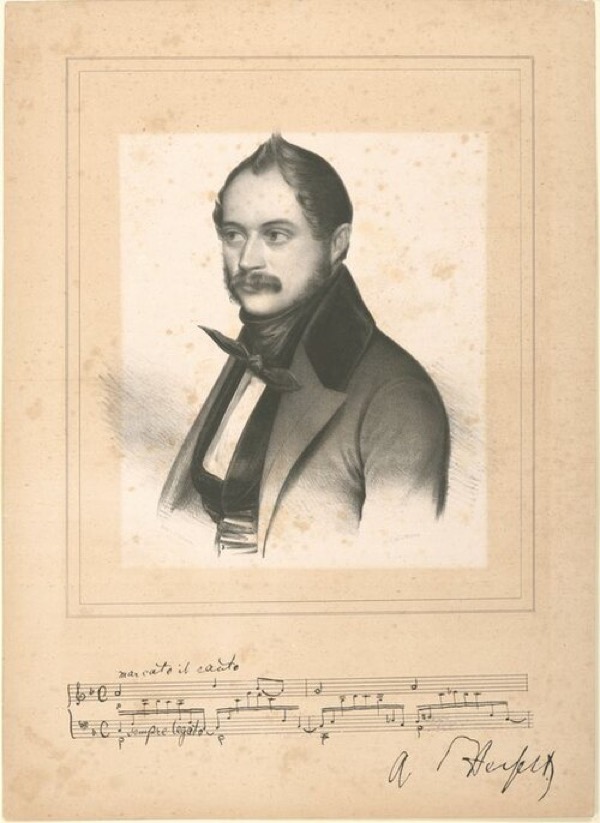
Adolf von Henselt
Additional orchestral arrangements of Weber’s Invitation to the Dance were fashioned by Joseph Lanner, Simon Paulli, and Felix Weingartner, but it’s not really surprising that this piece would fall back into the hands of the piano virtuosos.
Let’s take, for example, Adolf von Henselt (1814–1889). During his lifetime, Henselt was considered on a par with Mendelssohn, Chopin, Schumann, Liszt, and Thalberg. Henselt developed his own brand of keyboard technique, gradually stretching his hand so that he could easily reach the interval of a tenth.
That means he could play extended chords and impeccable cantabile without using the sustaining pedal. His great rivals on the concert stage, Franz Liszt and Sigismond Thalberg, could simply not believe their ears. And just listen to what he does with Weber’s Invitation.
Carl Maria von Weber: Aufforderung zum Tanze (Invitation to the Dance), Op. 65, J. 260 (arr. C. Tausig for piano) (Igor Kamenz, piano)
A Waltz with No Limits
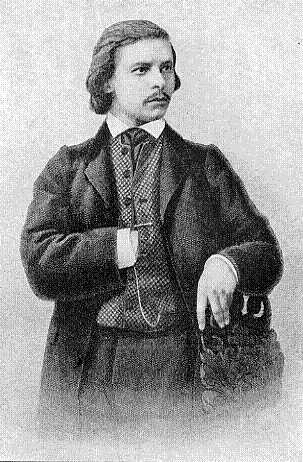
Carl Tausig
Another lion of the piano, Carl Tausig (1841–1871), was such a remarkable pianist that even Liszt was prompted to speak of his “hands of bronze and diamonds.” His students compared his playing to forked lightning, and it’s not surprising that he was drawn to Weber’s sparkling prototype of the Concert Waltz.
If Tausig’s elaboration is treacherously alive with double notes, octaves, and Lisztian bravura, Leopold Godowsky’s “contrapuntal arrangement is over the top. As Godowsky wrote, it “requires more a polyphonic brain, and fingers that work in cooperation with the brain. My piano music is like an orchestra; it requires tonal discrimination.”
Here we find an arrangement that owes a lot to Godowsky’s enthusiasm for counterpoint. He just couldn’t stand voids in the original score and filled them up by adding new parts to the music. This arrangement is a staggering feat of virtuosity that never fails to excite listeners. There is so much sonic richness in this score, you can literally hear it hundreds of times and still discover new connections.
From Carl Maria von Weber’s initial Concert Waltz to the dazzling transformations ranging from Berlioz to Godowsky, the Invitation to the Dance has developed a remarkable life of its own. Weber’s simple invitation has taken flight in the musical imagination.
For more of the best in classical music, sign up for our E-Newsletter
Leopold Godowsky: Weber – Aufforderung zum Tanze (Invitation to the Dance) (Carlo Grante, piano)