Johann Sebastian Bach is a favourite composer for many musicians; his intricate, intellectual works are the musical equivalent of Holy Scripture.
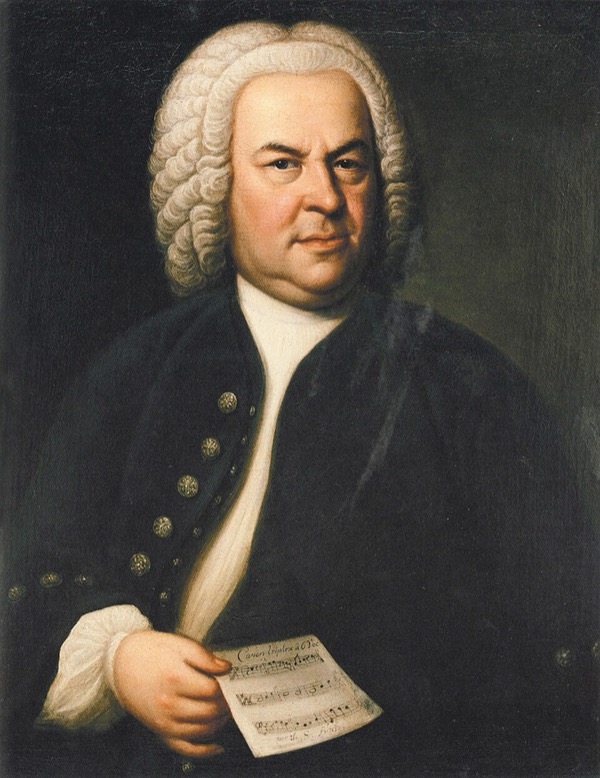
Johann Sebastian Bach
But the person behind the music was decidedly human. He was an orphan and a father of twenty – a hothead who had issues with authority that landed him in jail – an entertainer at a coffee-house – and a genius who died largely unpublished and half-forgotten.
Here are thirteen facts that reveal the man behind the masterpieces.
1. Bach and Handel were born a month apart in the spring of 1685 – but they never met.
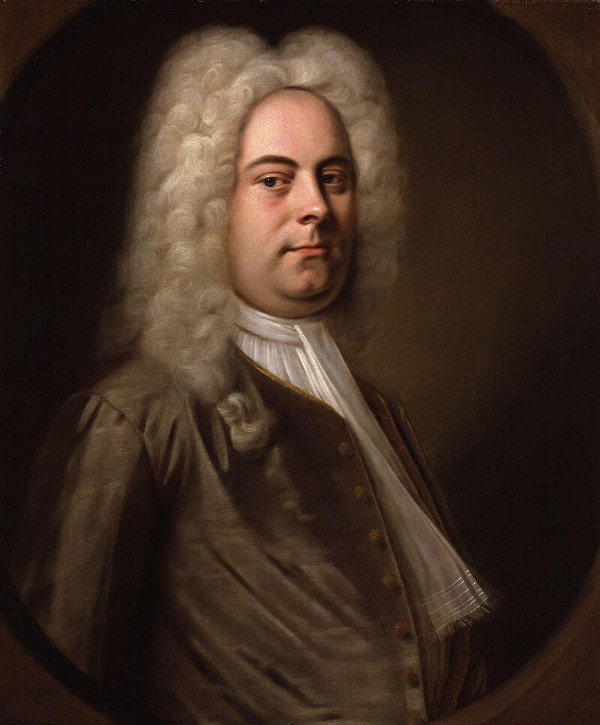
Balthasar Denner: George Frideric Handel, ca 1726–1728 (London: National Portrait Gallery)
George Frideric Handel was born in Halle on 23 February 1685, while Johann Sebastian Bach was born in Eisenach on 31 March 1685 – five weeks and a little over 100 miles apart.
Although both became giants of the Baroque era, their paths never crossed. Handel settled down in London, while Bach stayed put in Germany.
Bach wanted to meet Handel when the latter visited Halle, but the timing never worked out.
In another twist of fate, both composers were operated on by the same quack surgeon toward the end of their lives – more on that below.
2. Bach’s mother died in 1694, and his father died in 1695. Bach was nine years old.
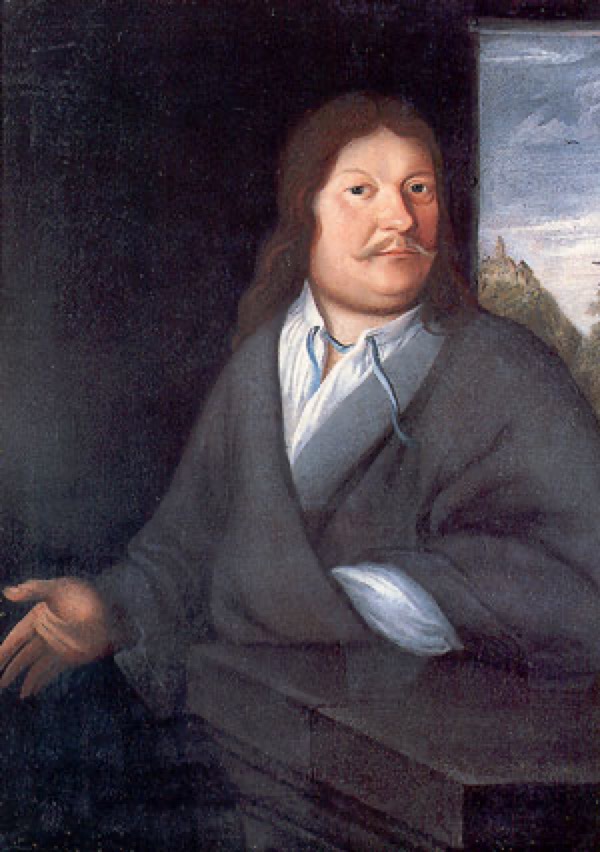
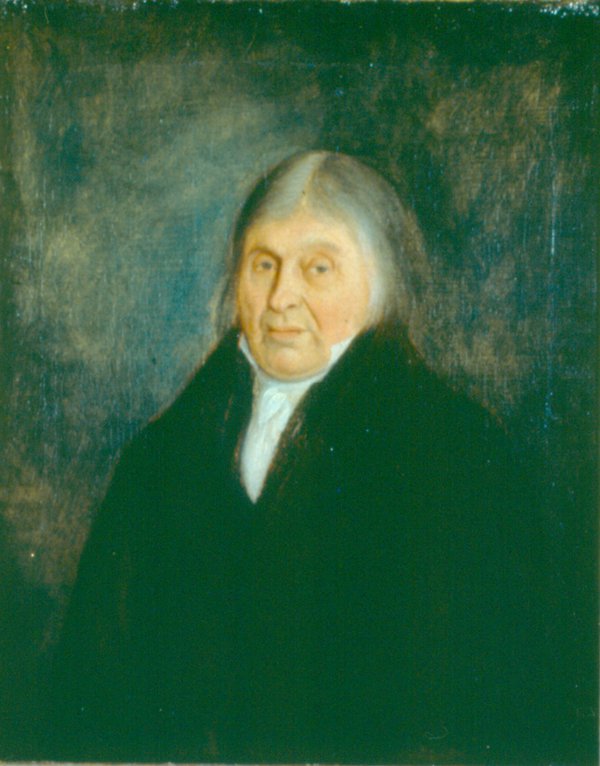
Johann Ambrosius Bach, J.S. Bach’s father
Bach’s childhood ended abruptly. His mother, Maria Elisabeth, died in the spring of 1694, and his father, Johann Ambrosius, a town musician, followed less than a year later, early in 1695.
Fortunately, the suddenly orphaned Bach – the baby of the family – was taken in by his eldest brother, Johann Christoph, an organist in Ohrdruf.
Johann Christoph oversaw Johann Sebastian’s upbringing and musical education.
3. As a boy, he copied out music secretly, because paper was expensive.
Money was tight in his brother’s household, and manuscript paper and printed scores were sought-after luxuries.
According to one early biographer, the young Bach longed to study a prized collection of keyboard pieces his brother kept locked away. Finally, he smuggled it out and copied it over six months’ worth of moonlit nights.
4. Bach walked 280 miles on foot to see composer and organist Dieterich Buxtehude perform – and stayed for four months, upsetting his employer.
Bach’s Passacaglia in C minor, BWV 582
In 1705, when he turned twenty, Bach worked as an organist in the town of Arnstadt. He set out on foot for Lübeck – a 280-mile journey! – to hear his renowned colleague Dieterich Buxtehude.
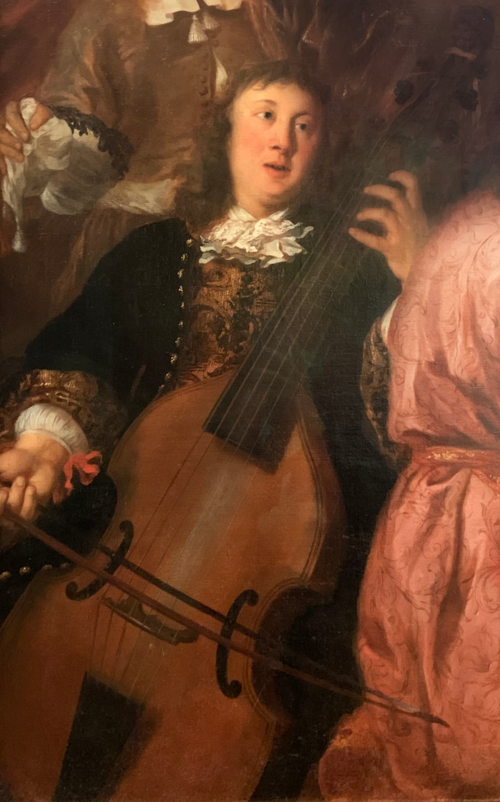
Depiction of the Danish baroque composer Dieterich Buxtehude in the painting “The Musical Party” 1674 by Johannes Voorhout
He’d been granted a four-week leave, but he stayed about four months. When he finally returned, his employers were understandably furious. It wouldn’t be the last time he’d experience friction with his employers.
5. Bach’s first wife died while he was on a business trip.
Bach’s Chaconne from the Partita No. 2 for Solo Violin
Bach came from a close-knit family of professional musicians, so it is perhaps unsurprising that he married his second cousin Maria Barbara in 1707. The couple had seven children together.
In the summer of 1720, he followed his employer Prince Leopold to the spa town of Carlsbad. He returned to horrific news: Maria Barbara had died during his absence, and they’d been unable to wait to bury her.
Bach came home to find his wife gone and his surviving children motherless – a devastation from which the household recovered only slowly.
6. Bach had a set of twins.

The Bach Family © Oxford Bach Soloists
Bach had twenty (!) biological children over his two marriages. Among them were twins.
Maria Barbara gave birth to them in February 1713. They were named Johann Christoph and Maria Sophia.
The infant mortality rate of the era was high, and that risk only climbed with twins. Johann Christoph died the day he was born, and Maria Sophia died weeks later – just a few days before her father’s 28th birthday.
7. When trying to leave his job in Weimar, Bach was jailed for a month “for too stubbornly forcing the issue of his dismissal.”
Bach’s Suite for Solo Cello No. 1
Bach was obstinate. In 1717, eager to leave the Weimar court for a better position in Cöthen, he pressed his request for release so insistently that the duke had him arrested.
He spent nearly a month in detention, from early November to early December. The court records noted that he was confined “for too stubbornly forcing the issue of his dismissal.”
8. He wrote a cantata about a caffeine-addicted woman, for performance in a local coffee house. It has become known as the Coffee Cantata.
Bach’s Coffee Cantata
Bach never wrote an opera (he specialised in sacred vocal music), but the closest he came was his so-called Coffee Cantata, likely written around 1735.
In it, a young woman named Lieschen is scolded by her father for her caffeine habit and cheerfully refuses to give it up.
The piece also has a fun extramusical dimension: it was written for performance at Zimmermann’s coffee house in Leipzig, where Bach conducted a musical ensemble.
9. After struggling with his eyesight in his mid-sixties, he consented to an operation with John Taylor, a quack surgeon. He never recovered.
Bach’s Art of Fugue
In his mid-sixties, Bach’s eyesight failed: a devastating development for a composer who relied on it to work and to support his younger wife and minor children.
In 1750, he agreed to be treated by John Taylor, a flamboyant travelling English oculist now widely regarded as a quack.
Taylor operated twice. The surgeries and recovery left Bach blind and sick. He died on 28 July 1750 at the age of 65.
Taylor would later operate on Handel – and fail to restore his eyesight, too.
10. Only about a dozen of Bach’s works were published during his lifetime.
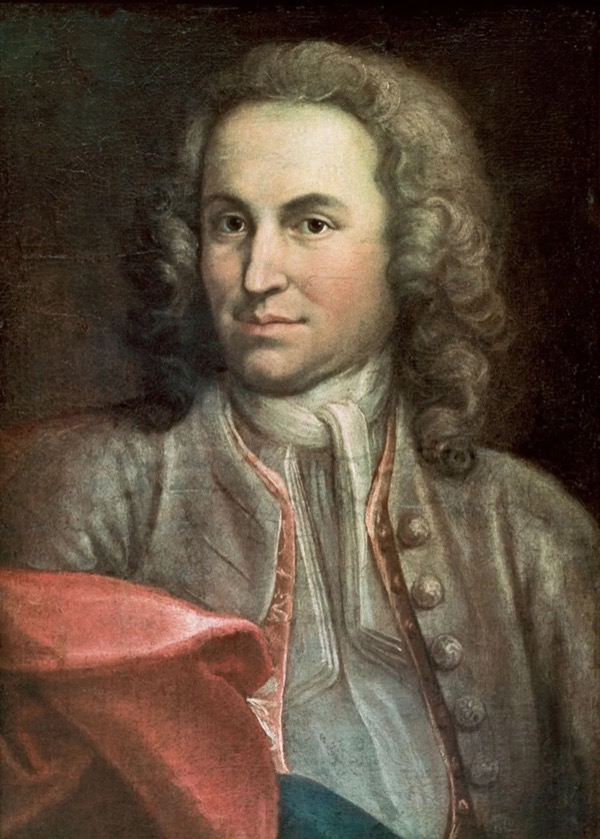
Johann Sebastian Bach
Given his later reputation as the ultimate titan of the Baroque era, Bach published surprisingly little during his lifetime.
Only about a dozen of his works appeared in print, mainly collections of keyboard and organ works.
The vast majority of his music, including the great Passions and hundreds of cantatas, circulated only in manuscripts.
11. Around half of Bach’s works have been lost.
Because so much of Bach’s music remained unpublished, much of his output was lost.
In fact, scholars estimate that roughly half of everything Bach wrote has vanished.
After his death, his manuscripts were divided among his sons and pupils. Many were sold off, scattered, or destroyed over the following decades.
It is mind-boggling to think that the works we have today represent only a fraction of what he actually wrote down.
12. Felix Mendelssohn developed a fascination with Bach as a teenager because his great-aunt had studied with one of Bach’s sons. He helped mount a Bach revival in the 1820s.
Bach’s St. Matthew Passion
Felix Mendelssohn’s great-aunt, an accomplished pianist named Sara Levy, had studied with Bach’s eldest son, Wilhelm Friedemann Bach.
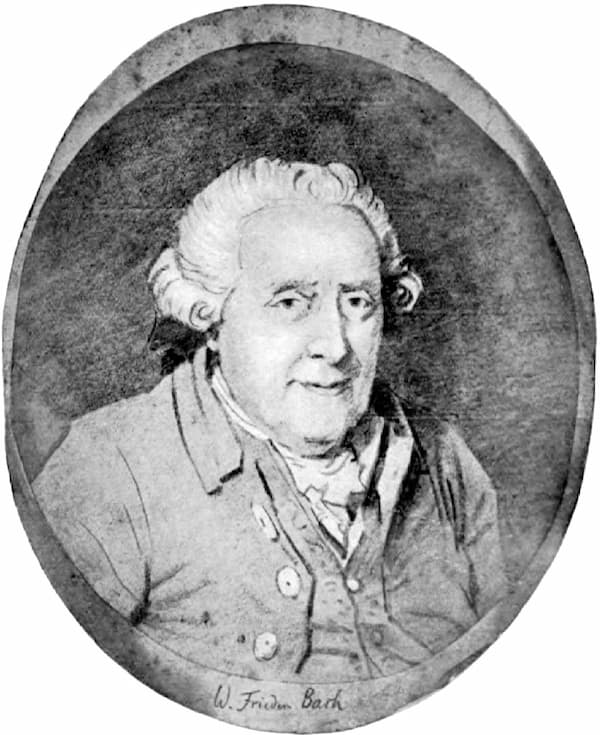
Wilhelm Friedemann Bach
In 1824, she gave her prodigy nephew (and his equally talented sister Fanny) a copy of the St. Matthew Passion.
Felix spent years studying it. In 1829, when he was just twenty, he conducted a revival of the St. Matthew Passion in Berlin – its first major performance in decades.
From this point on, Bach’s place in the repertoire was secure.
13. Bach’s Prelude and Fugue in C major from the Well-Tempered Clavier is on the Voyager space probe’s Golden Record – meaning that Bach might be among the first composers that extraterrestrial life will hear.
Bach’s Well-Tempered Clavier, Book 1
In 1977, NASA launched two Voyager probes, each carrying a gold-plated record of sounds from Earth, including recordings of human speech, nature sounds, and music.
Among the musical selections is the Prelude and Fugue in C major from Bach’s Well-Tempered Clavier.
He may well be among the very first composers any extraterrestrial listener ever hears. He’ll no doubt be popular on whatever planet his music lands on!
Conclusion
For someone who spent his entire life in Germany, Bach has covered an impressive distance since.
The stubborn organist who walked 280 miles to hear a concert is now regarded as the very bedrock of Western music.
And thanks to a golden record hurtling through interstellar space, he may yet become one of humanity’s first musical ambassadors to the aliens.
For more of the best in classical music, sign up for our E-Newsletter