Orchestras love to program Saint-Saëns’ Danse Macabre around Halloween. But you can celebrate the season all month with other dances of death—no candy corn required. From Berlioz’ hallucinatory Sabbath to Saint-Saëns’ skeletal waltz—by way of Liszt and Mussorgsky—here are four works that summon the spirits.
Looking at just the Romantic era, it all starts with Hector Berlioz’ 1830 Symphonie fantastique. Has there ever been a work of such startling originality? Berlioz’ program for the last movement states, “He sees himself at the Witches’ Sabbath, amidst a hideous throng of shades, sorcerers, and monsters of every kind, gathered for his funeral.” The idea of a witches’ sabbath—a nighttime gathering with Satan—dates from the Middle Ages.
Berlioz recasts his idée fixe—the recurring theme of the symphony—as a mocking dance tune for the clarinet. Bells announce the introduction of two other themes. In a blaze of imagination, he introduces the plainchant Dies Irae with its evocation of the Last Judgment: “Day of wrath—that day—shall dissolve the world into ash.” And a new, energetic melody piles a “witches’ round” on top of the madness.
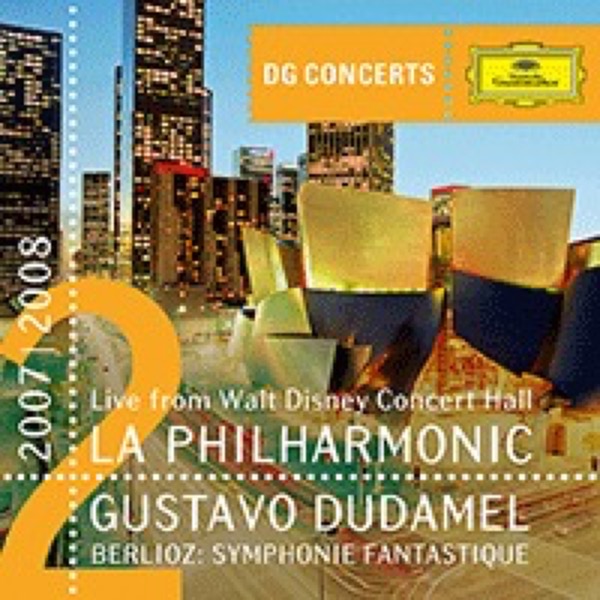
Hear the Witches’ Sabbath, the fifth movement of Berlioz’ Symphonie fantastique, played by the Los Angeles Philharmonic Orchestra, conducted by Gustavo Dudamel.
Hector Berlioz: Symphonie fantastique, Op. 14 – V. Songe d’une Nuit du Sabbat: Larghetto – Allegro (Los Angeles Philharmonic Orchestra; Gustavo Dudamel, cond.)
From the first performance, audiences responded with passion. Yet repeat performances didn’t materialise, and Berlioz remained poor. Franz Liszt, who was present at the premiere, transcribed the piece for piano solo and performed it frequently—a remarkable achievement for a 21-year-old.
A decade later, Liszt appropriated parts of Berlioz’ concept as he began composing his Totentanz (Dance of Death) for piano and orchestra; the first version was completed in 1849. Rather than the witches’ sabbath, Liszt drew on the tradition of the Dance of Death, particularly the woodcuts of Hans Holbein the Younger and the Triumph of Death fresco at Pisa’s Campo Santo. In Holbein’s woodcuts, the agent of death—a skeleton—drags people away from all walks of life, in all conditions, often while playing an instrument. In his single-movement showpiece, Liszt transforms the Dies Irae melody through a series of dazzling variations. Liszt has the strings play col legno—“with the wood,” using the back of the bow—to signify the bones of the skeleton.
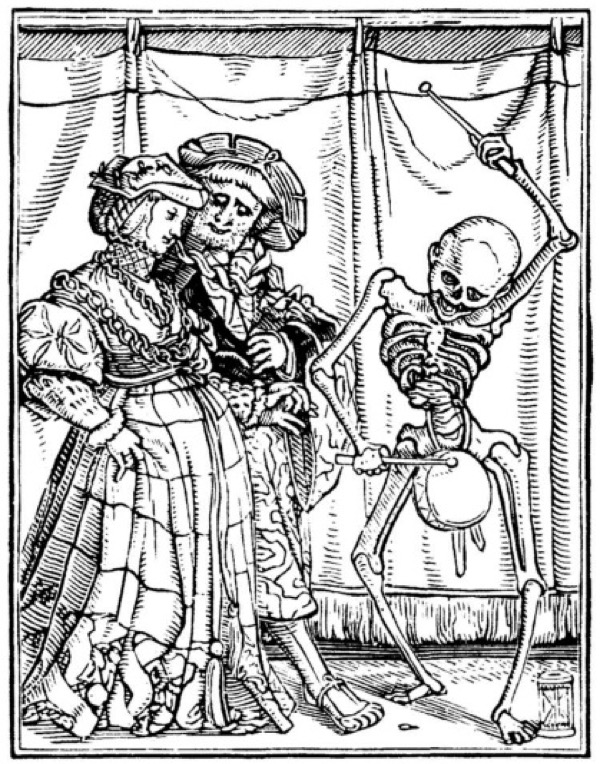
The Noblewoman, by Hans Holbein
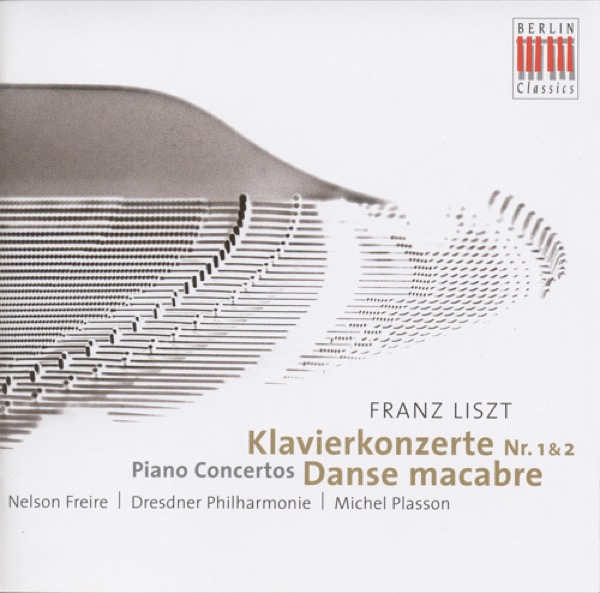
Hear pianist Nelson Freire with the Dresden Philharmonic Orchestra conducted by Michel Plasson.
Franz Liszt: Totentanz, S126/R457 (Nelson Freire, piano; Dresden Philharmonic Orchestra; Michel Plasson, cond.)
Liszt made three tours of Russia in the 1840s, including his last as a virtuoso. Partly because of the personal connections he made, Liszt exerted a profound influence on the direction of Russian music in the decades that followed. In 1867, Modest Mussorgsky knew of Liszt’s Totentanz as he wrote his tone poem, St. John’s Night on Bald Mountain. Mussorgsky wrote, “The form and character of my composition are Russian and original. Its tone is ardent and chaotic.” While Mussorgsky didn’t incorporate the Dies Irae in its original form, several of its themes echo the chant.
St. John’s Night refers to the Eve of St. John the Baptist’s birth, traditionally observed on June 23—six months before Christmas. Russian folk traditions include bonfires and other means of warding off evil spirits and witches. With this background, Nikolai Gogol wrote a short story, St. John’s Eve, about which Mussorgsky composed his music.
Bald Mountain was neither published nor performed during his lifetime. Mily Balakirev, who often imposed his views on his circle—Mussorgsky, César Cui, Alexander Borodin and Nikolai Rimsky-Korsakov—didn’t approve of the work. It fell to Nikolai Rimsky-Korsakov to tighten and redesign the piece into the version most often played now. You can read how Rimsky-Korsakov’s version differs from Mussorgsky’s in Maureen Buja’s Interlude story.
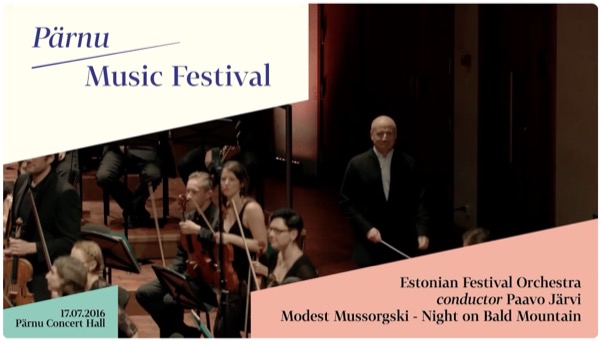
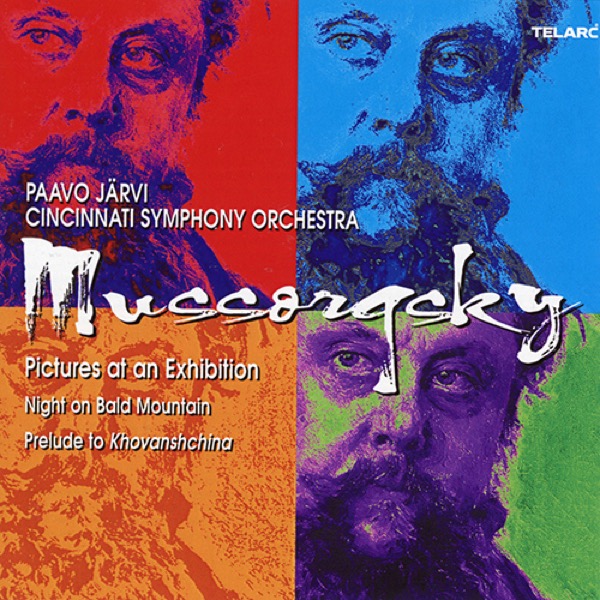
Hear Paavo Järvi conduct the Cincinnati Symphony Orchestra in Rimsky-Korsakov’s arrangement of Mussorgsky’s Night on Bald Mountain
Modest Mussorgsky: St. John’s Night on Bald Mountain, “A Night on the Bare Mountain” (arr. N. Rimsky-Korsakov for orchestra) (Cincinnati Symphony Orchestra; Paavo Järvi, cond.)
Saint-Saëns drew on yet another legend for his brief tone poem Danse Macabre: Death playing the violin at midnight on Halloween, with skeletons leaving their graves to dance. Incredibly, the piece began in 1872 as an art song to a delicious text by Henri Cazalis, who wrote under the pseudonym Jean Lahor. The song is rarely performed, perhaps because of the difficulty of the rapid-fire text. The violin plays open strings as if tuning—but the E string is tuned to E Flat in a technique called scordatura. The interval from A to E-flat is a tritone—the devil’s interval.
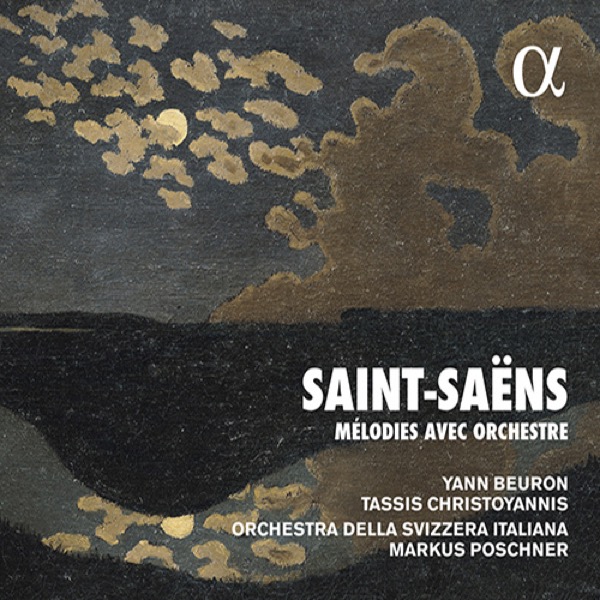
Hear Camille Saint-Saëns’ Danse Macabre for voice, Markus Poschner conducting the Orchestra della Svizzera Italiana with Tassis Christoyannis, baritone.
Camille Saint-Saëns: Danse macabre (version for voice and orchestra) (Tassis Christoyannis, baritone; Orchestra della Svizzera Italiana; Markus Poschner, cond.)
| Zig et zig et zig, la mort en cadence Frappant une tombe avec son talon, La mort à minuit joue un air de danse, Zig et zig et zag, sur son violon. Le vent d’hiver souffle, et la nuit est sombre, Des gémissements sortent des tilleuls; Les squelettes blancs vont à travers l’ombre Courant et sautant sous leurs grands linceuls. Zig et zig et zig, chacun se trémousse. On entend claquer les os des danseurs, Un couple lascif s’assoit sur la mousse Comme pour goûter d’anciennes douceurs. Zig et zig et zag, la mort continue De racler sans fin son aigre instrument. Un voile est tombé! La danseuse est nue! Son danseur la serre amoureusement. La dame est, dit-on, marquise ou baronne. Et le vert galant un pauvre charron— Horreur! Et voilà qu’elle s’abandonne Comme si le rustre était un baron. Zig et zig et zig, quelle sarabande! Quels cercles de morts se donnant la main! Zig et zig et zag, on voit dans la bande Le roi gambader auprès du vilain! | Zig and zig and zig, Death keeps the beat, Striking a tomb with a bony heel; At midnight, Death plays a dance-tune sweet— Zig and zig and zag—on the fiddle’s steel. The winter wind blows, and the night is deep; Moans rise up from the linden trees; White skeletons through the shadows sweep, Leaping and running in shrouds like these. Zig and zig and zig, how they sway and spin! One hears the clatter of dancing bones; A lustful pair sits where mosses begin, Savoring pleasures of old, in tones. Zig and zig and zag, Death plays on and on, Scraping the strings of that shrill instrument. The veil has fallen! The dancer is nude, Stripped bare! Her partner holds her, all intent. The lady, they say, is a marchioness— Her gallant, a lowly wheelwright—oh, dread! Yet she yields to his amorous, bold caress, As if the boor were a baron bred. Zig and zig and zag, what a wild saraband! What circles of dead, hand clasped in hand! Zig and zig and zag, in the throng we see The king capering near the peasant—glee! |
In 1874, Saint-Saëns reworked the song as a tone poem, giving the vocal part to the violin. A single harp note is struck twelve times, marking the twelve strokes of midnight, before the violin’s satanic dance begins. The xylophone depicts the dancing skeletons. Saint-Saëns inserts a fugato, then the woodwinds play the Dies Irae—but in a major key, so listen carefully! The madness fully blossoms into a brilliant showpiece before the oboe imitates a rooster at dawn.
Hear Camille Saint-Saëns’ Danse Macabre, Daniel Harding conducting the Bremen Deutsche Kammerphilharmonie with Renaud Capuçon, violin.
Camille Saint-Saëns: Danse macabre, Op. 40 (Renaud Capuçon, violin; Bremen Deutsche Kammerphilharmonie; Daniel Harding, cond.)
Almost a half-century after transcribing Berlioz’ Symphonie fantastique, Liszt transcribed Danse Macabre for piano. Today, Liszt’s transcription is most often heard in Vladimir Horowitz’s 1942 reworking.
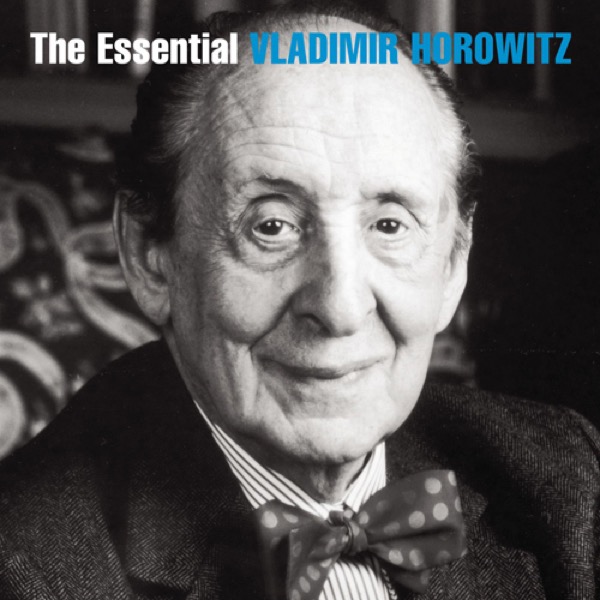
Hear Vladimir Horowitz, piano, play his version of Liszt’s transcription of Camille Saint-Saëns’ Danse Macabre.
Franz Liszt: Saint-Saëns – Danse macabre, S555/R240 (Vladimir Horowitz, piano)
Each of these four works offers a different answer to the same question: what does death sound like? The Dies Irae—that ancient warning of judgment—becomes, in their hands, a source of wonder. Death, for all its terror, can be made to dance.
For more of the best in classical music, sign up for our E-Newsletter