We spoke the other day with our favourite French cellist, Valérie Aimard, about her new recording, Cassadó / Casals. We’ve spoken with her before about her two encyclopedic recording projects, Cello Kids and Only Cello, and her last recording, her long-awaited Bach Cello Suites.
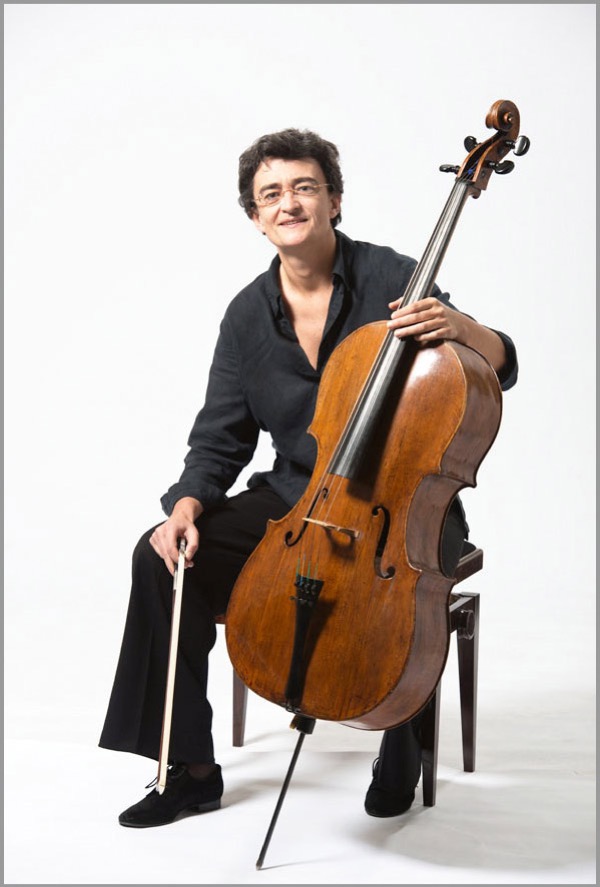
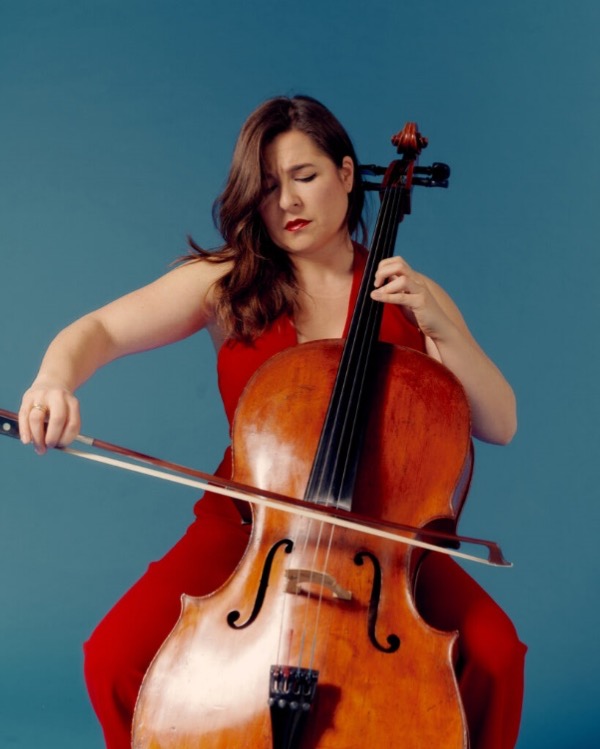
Valérie Aimard (photo by Steve Murez)
Aimard reflected on her own cello legacy and on mentor–student relationships. Aimard was a student of Bernard Greenhouse (1916–2011), who had been a student of Pablo Casals (1876–1973) just after WWII. Another great Catalan cellist, Gaspar Cassadó (1897–1966), also studied with Casals, who took him on as a student after hearing the 9-year-old play in a recital. The city of Barcelona gave Cassadó a scholarship that enabled him to study with Casals in Paris. He returned to Barcelona in 1914, when WWI broke out, ending his 6 years of study with Casals. When Aimard studied at the conservatoire in Lyon, her first teacher, Marc Latarjet, had been a student of Cassadó, thus giving her a double line to both cellists.
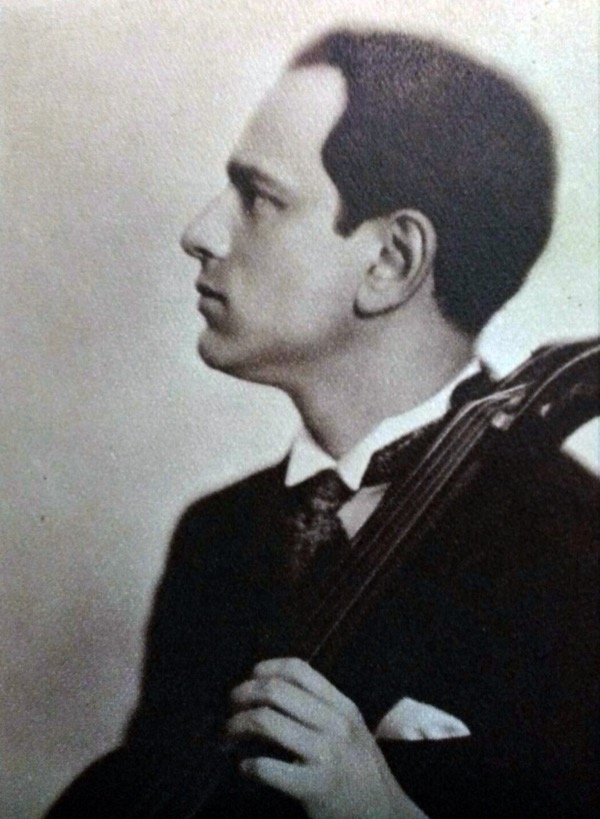
The young Gaspar Cassadó
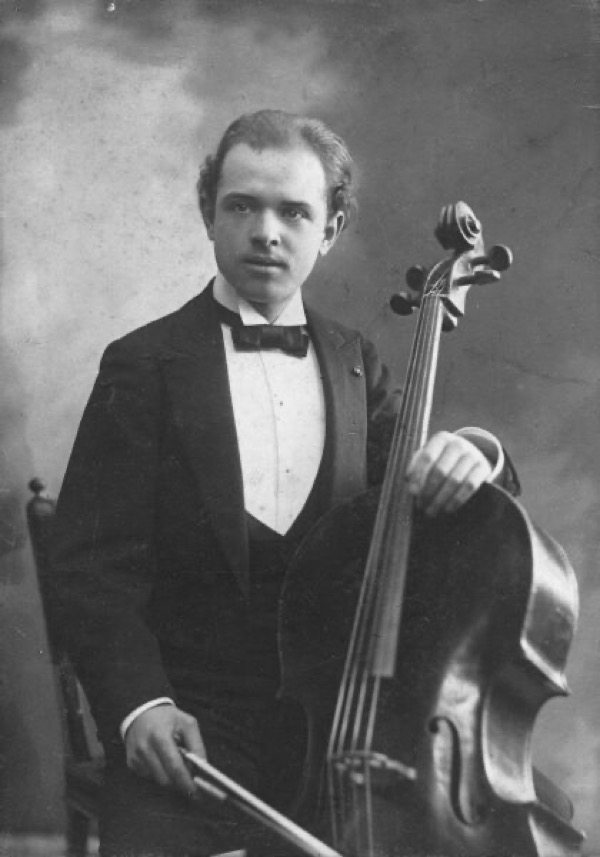
The young Pablo Casals
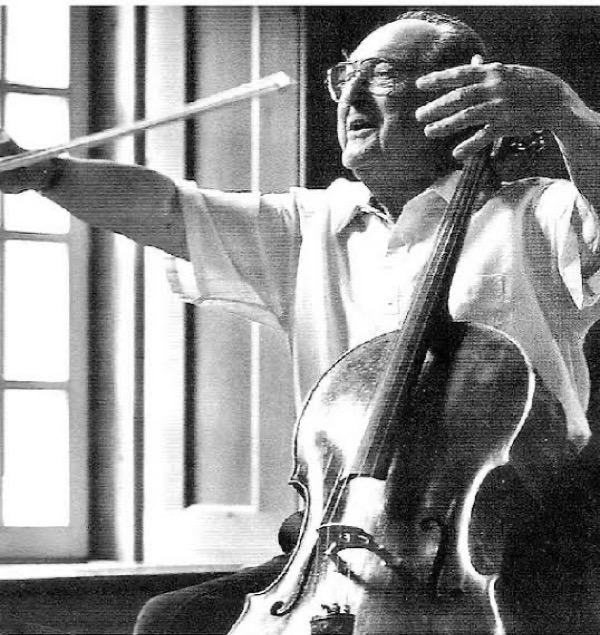
Bernard Greenhouse
Aimard was interested in seeing if Cassadó had other music for cello besides his well-known suite, which you will find on this recording along with some smaller numbers: the Requiebros (Compliments), which was dedicated ‘to my very dear master Pablo Casals’, and the Sérénade for cello and piano, ‘dedicated to Madame la Princesse Thurn und Taxis’, which is a favourite encore piece. After the Suite, which Aimard declares as having the whole of Spain resounding in it, follows a very special performance for the cello world.
Gaspar Cassadó: Suite for Solo Cello: III. Intermezzo e danza finale (Valérie Aimard, cello)
Cassadó’s Sonata for Cello and Piano in A minor was written in 1925 and was dedicated ‘À Donna Giulietta Gordigiani von Mendelssohn’, Cassadó’s long-time accompanist. The work has virtually vanished from the repertoire, Aimard thinks, because Cassadó died without heirs; his wife, the pianist Chieko Hara, donated their collective estate to Tamagawa University in Tokyo, and access to the papers has been difficult. With Aimard’s recording and the prospect of a new edition, the work is beginning to emerge from the shadows, and we look forward to this exhilarating work becoming better known.
We talked about how works fall out of the repertoire and get forgotten. Aimard said that, for some works, not every movement might be equally strong, or, as sometimes happens, the final movement might be too long. In Cassadó’s case, all four movements are interesting, and all carry through the ideas of Spanish dance.
The Sonata in A minor was not Cassadó’s only sonata – in 1925, he’d written a Sonata nello stile antico Spagnuolo that combines Baroque and Classical styles and forms. This Sonata in A minor, however, is more than a bow to the past as his first sonata had been.
Cassadó was interested in how the Spanish dance forms could become cello forms at the same time. After its first edition in 1925, the work vanished from the performing stages but now emerges to find a new audience.
Each movement is a different musical style based on a different dance-type. The opening movement is entitled Rapsodia and is given the stylistic designation of ‘misterioso’. It’s in classical sonata form and ends in a ‘breathtaking coda’.
The second movement, Aragonesa, is a dance form that serves as a scherzo. Its middle section, marked ‘libero come improvisando’, comes from the popular song form, the Copla. The third movement is a Saeta, which comes from the music for the Holy Week processions in Seville. As the Saeta disappears into the distance, flamenco music emerges from the background.
The final dance-form movement is a Paso doble, which starts as a simple dance but builds to the end.
Gaspar Cassadó: Cello Sonata: IV. Paso doble (Valérie Aimard, cello; Cédric Lorel, piano)
Another track contains music by neither Cassadó nor Casals, but it is Cassadó’s arrangement of the Intermezzo from the opera Goyescas by Enrique Granados. The score and the composer were both lost in 1916 when Granados’ ship was sunk off the coast of England during WWI.
Pablo Casals: Pastoral (Valérie Aimard, cello; Cédric Lorel, piano)
The music of Casals on the album includes his Pastoral (1893) and Rêverie (1896), his Romance, and a Feuillet d’album, all from 1897. These are all juvenilia of Casals and come from a 2010 edition of the music from his archives at the Casals Museum in El Vendrell. Casals declared, ‘I have always refused to let my works be published. I am categorical about this. After my death they will be found, and people will see whether they are worth anything’. By bringing these works written by Casals between the ages of 17 and 20, Aimard presents us with the Romantic Casals. When Casals composed these works, Brahms was still alive, and we hear not only his touch, but also those of Schumann, Mendelssohn, Liszt, and Wagner in them.
The last work on the album is a double statement by Casals: first, Aimard’s achingly slow performance of his famous El cant dels ocells (The Song of the Birds), followed by his own words, recorded during his 1971 UN speech.
Pablo Casals: El cant dels ocells (Song of the Birds) (version for cello and piano) (Valérie Aimard, cello; Cédric Lorel, piano)
Tracing the lines of mentor and student first from Casals to Cassadó and then from Casals to Greenhouse to Aimard shows us just how close the past can be to the present. Aimard’s first teacher, Marc Latarjet, had been a student of Cassadó’s in the 1960s, something she was unaware of when she was his student. While working on this recording, she asked Latarjet to speak of his teacher, and he said, ‘I’d be delighted to tell you about this great man, his simplicity, his very sensual musical instinct and refined Catalan culture’. In a world where so much seems to be disappearing around us, these secure lines of stylistic transmission are a true benefit to music.
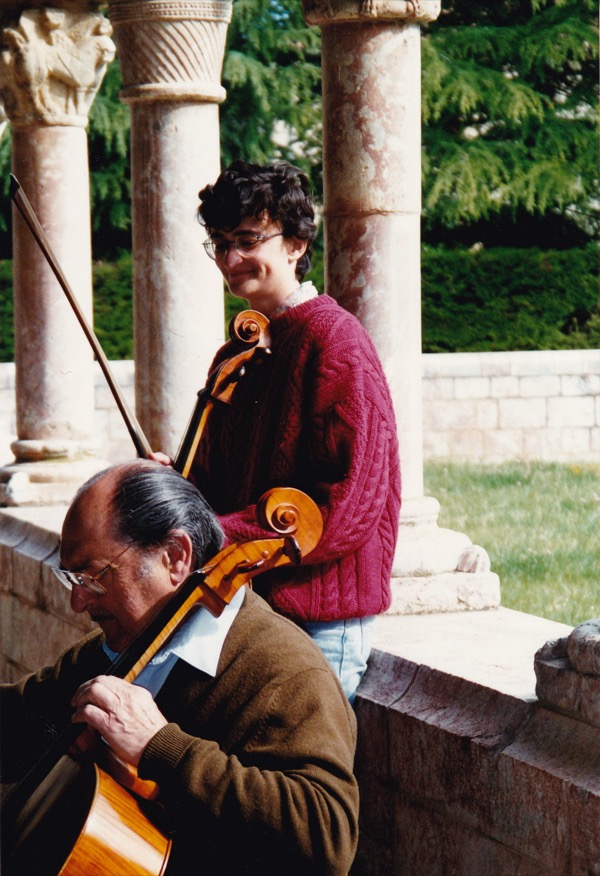
Valérie Aimard and Bernard Greenhouse
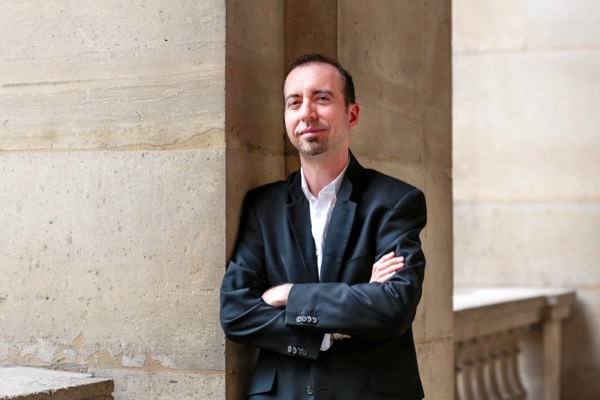
Cédric Lorel
Aimard records this album with her long-time collaborator Cédric Lorel on piano (you’ll also hear him as the pianist of Cello Kids). The keyboard parts for these works are, as Aimard said, ‘good and interesting’, yet beyond that, their musical partnership brings us chamber music with a balance in interpretation between the two instruments. Lorel provides the perfect backdrop and support for what could be a double problem of music by composers who were also cello virtuosos. There’s a freedom of performance and ease of interpretation that many should envy.
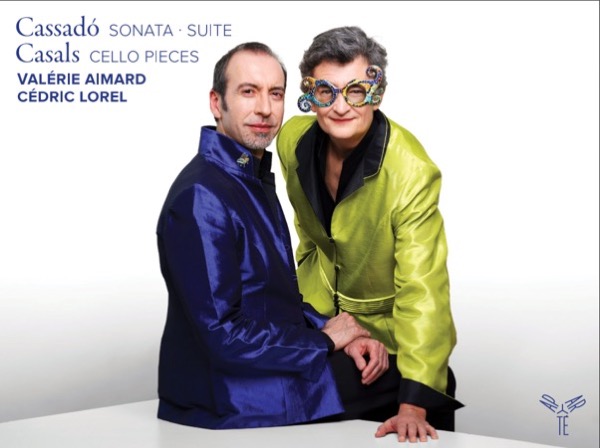
Valérie Aimard, cello; Cédric Lorel, piano
Aparté Music AP433
Release date: 18 September 2026
Release Concert: Monday, 12 October 2026 – 9:00 p.m., Studio Raspail, 216 Boulevard Raspail, Paris 75014
For more of the best in classical music, sign up for our E-Newsletter