Inteligencja, a loaded noble Polish title, seems to describe the pianist who defies definition. Well-versed in avant-garde literature, Japanese films, and Budapest’s best food market, Piotr Anderszewski lives and breathes Bach, Beethoven, and Brahms: “I do believe in a superior force of wisdom to which we sometimes have a little access. Mostly through music. But I could not name it.”
Like Glenn Gould once did, perhaps only Anderszewski can interview Anderszewski about Anderszewski. During his Asian tours in 2025 and 2026, I tried to piece together what the French philosopher Michel Foucault might call an archaeology of cultural connaissance—an effort nearly, but not entirely, in vain—as Anderszewski attests: “Everything influences the approach to music and the piano. It is all connected.”
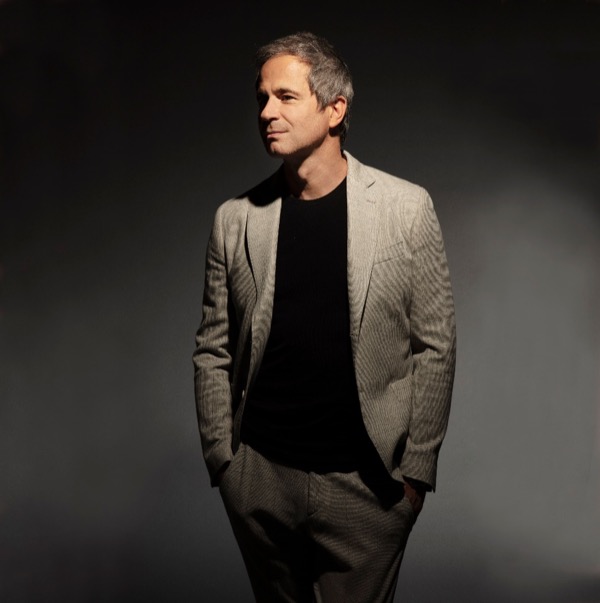
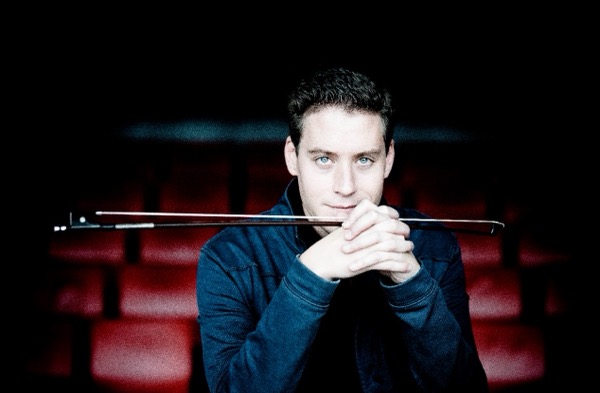
Piotr Anderszewski (Photo by Simon Fowler)
Perform the Form
In a 2018 Taiwanese interview, Anderszewski listed the novelist Witold Gombrowicz (1904–1969) as one of his favourites. “I have not read him for years now. The vitality, absurd humour, and sheer originality of his writing captivated me at the time,” Anderszewski recollected seven years later.
A Kafkaesque analyst, Gombrowicz impressed me with seminal work such as Ferdydurke (1937), in which a 30-year-old writer is forced to be reformed at school as a teenage boy again. Nietzsche or Beckett would see eye to eye with Gombrowicz, showing how we perform the presentable forms that society shapes us into.
Anderszewski, however, most emphatically doesn’t conform. He walked off the competition of his own will. He takes sabbaticals against the meritocratic tyranny that deforms many. Presumably, he is recently at the computer or the piano keyboard, either writing his book or playing a piece, wrestling with authenticity in performance that is so central to Gombrowicz’s characters.

Gombrowicz Festival Poster (https://festiwal.teatr.radom.pl/en/)
Lucid Visions
In his 2005 and 2024 albums, Anderszewski illuminated Karol Szymanowski’s piano music with discerning imagination. Besides Artur Rubinstein, the Polish composer also befriended the absurdly synesthetic painter, playwright, philosopher, and photographer Stanisław Ignacy Witkiewicz (1885–1939), whose “strangeness and lucidity” Anderszewski equally admired.
“He is a visionary,” Anderszewski once recommended the polymath’s novel Nienasycenie. Written in 1927, it fictionalised Poland in 2000 under the reign of Soviet, Mongolian, and Chinese collectivism. Well, what about our current dystopia of algorithms and consumerism? Maybe Witkiewicz’s Pure Form of art still has the potential to liberate the captive mind.
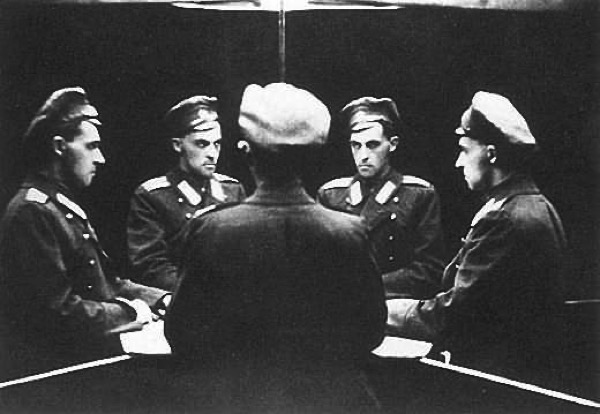
Witkiewicz’s self-portrait in mirrors (Wikipedia open source)
Like his artistic predecessors, Anderszewski is no stranger to integrating the visual, auditory, and intellectual. In Bruno Monsaingeon’s documentary Unquiet Traveller (2009), the pianist and his violinist sister performed in snowy Zakopane, where the mountain folk culture inspired both Witkiewicz and Szymanowski. When composing his own film Je m’appelle Varsovie (2017), Anderszewski chose as its soundtrack Chopin’s late mazurkas and the Polonaise in A-flat major, together with Szymanowski’s Masques Suite and Third Piano Sonata.
Karol Szymanowski’s La Berceuse d’Aitacho Enia in Unquiet Traveller
Ironic Games
When asked about his film preferences, Anderszewski says he is “more into Japanese cinema at the moment. Apart from the film Rejs by Marek Piwowski, which feels eternal to me.” Lesser-known abroad, the cult classic satirises the hypocrisy of rules and the communist period through a holiday cruise. Believe it or not, the Kinoteka Polish Film Festival in London once invited the audience—me included—to role-play it on a Thames cruise after showing the comedy. It was banal, hilarious, and surreal.
In a 2014 German interview, Anderszewski designated the piano as a “really large toy” and music as a “plaything” in self-deprecation. One hears plenty of playfulness in his Diabelli Variations, Bach’s dances, and Bartók’s Bagatelles. In a 2018 interview with Ben Finane, the pianist described his foray into new fields like “a child playing with his blocks and building a castle.” As one navigates a world where “there are so few things that make sense,” I recall Rejs‘s metaphor: we play by and against the rules to reveal the game.
Rejs (Film Trailer)
For Your Freedom and Ours
Do musicians today have the freedom to program what they play? “I can play what I want,” Anderszewski further probed into my assumption: “It depends on how you understand freedom.”
As a history student, I thought of the expensive freedom (Za wolność naszą i waszą) epitomised in the motto of too many Polish uprisings. It was a contemporaneous ideal of freedom (Freiheit über alles lieben), one that Beethoven weighed against the forms in compositions. What is political is personal—and artistically charged too.
Anderszewski relished the debates about Central Europe’s political freedom, vividly recalling how he used a pencil to cross out candidates’ names in Poland’s first free election on June 4, 1989—the very day that tragedy unfolded in Tiananmen Square. I can only presume how precious freedom must have been to his generation, as it is to ours.
Unquiet Traveller (Film Trailer)
What about Music?
Gombrowicz is likely to say that there’s no escape from labelling, and that the fabrication so far has presented Anderszewski as a rebel but missed the real musician. He is virtually on YouTube discussing where the downbeat of Bach’s Gavotte falls with the cellist Jean-Guihen Queyras! Apart from this 2021 clip, I caught a glimpse of that spirit: coming off the Shenzhen stage, the first thing Anderszewski did was genuinely marvel at the two subjects and three voices at the end of the Prelude and Fugue in G-sharp minor.
So, was the bizarre awakening in Witkiewicz relevant to a pianist’s sensitivity towards timing and timbre? Do I detect the kind of irony found in the film Rejs, when Anderszewski answered in all seriousness that, for those who have not yet visited Warsaw, they should go and see the dunes on the right bank of the Vistula River? He certainly wasn’t joking about Bosnyák tér as Budapest’s must-see market hall: “All dishes made with proper local ingredients and not spoilt by adding unnecessary flavourings.” This could be his standard for decent music too.
Piotr Anderszewski plays Bach WTC Book 2: Prelude No. 8
Misfired inquiries, missing evidence, and all the wordplay above merely wish to redeem my ignorance: “Why did Beethoven repeat a note twenty times in Op. 110? Do you want a string- or voice-like sound? Why did you choose Schubert’s D. 958? How to play Bartók without knowing the Hungarian language? When you ended on Brahms’s Intermezzo in E-flat minor, it was very depressing.”
“I’m not sure what instruments late Beethoven works are written for. They’re all vessels for sound. I only know why I like his Piano Concerto No.1. The sentimentalising of Schubert is irritating…I never played it. I thought it was time. Don’t reduce Bach and Chopin to period instruments. You can’t know everything. Yes, it’s very depressing. The Shanghai concert feels like another lifetime ago.” Thus spoke Anderszewski. The persona disappeared into the ether. The rest is noise. And silence.
Here’s Piotr Anderszewski’s calendar: https://anderszewski.net/schedule.php.
For more of the best in classical music, sign up for our E-Newsletter