Hungarian violinist Kristóf Baráti grew up in Venezuela before enrolling at the Liszt Academy of Music. He also trained under Eduard Wulfson, a student of Nathan Milstein and Yehudi Menuhin. Early on, Baráti won acclaim at major competitions, including the Queen Elisabeth Competition. In 2016, he made his Verbier Festival debut with Bach’s complete Sonatas and Partitas for solo violin, recorded live by Deutsche Grammophon.
In September 2026, Baráti brings two Bach recitals to China. Later in November, he will perform Bach’s Violin Concerto and Double Concerto, and conduct Brahms’ work. Ahead of his China tour, Baráti shared with us his evolving approach to Bach, his 1703 “Lady Harmsworth” Stradivarius, and his passion for flying.
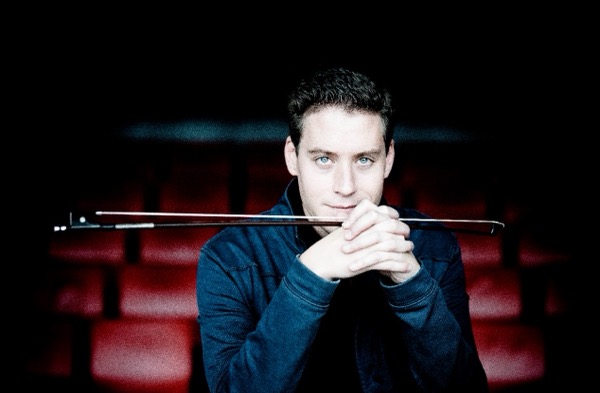
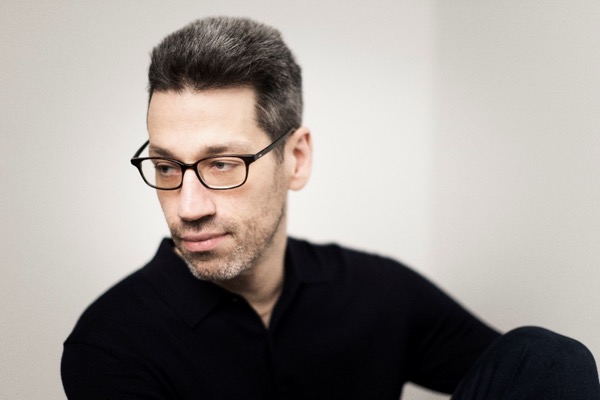
Kristóf Baráti (Photo by Marco Borggreve)
What do you remember about growing up in Venezuela?
Venezuela is a fantastic country, and I got so much from it as a child. I lived there for ten years and have many beautiful memories of the landscapes, the cities, and, of course, the people. They are incredibly talented, especially in music—many of my musician friends have gone on to join great orchestras or teach at leading universities. Most recently, I met Alexis Cárdenas and his wonderful band at the Auer Festival in Veszprém. One of my greatest musical dreams is to perform with the Venezuelan conductor Gustavo Dudamel.
What did you learn in Budapest and Paris?
I learned a great deal at the Liszt Ferenc Academy of Music. Its education is rooted in an incredible tradition, and of course, the environment and the great musicians around me were also deeply inspiring. I came to Eduard Wulfson when I already knew enough to understand what I needed to improve. We worked very thoroughly on technique over those eight to ten years, and in the process, my musical horizons grew wider and wider.
Could you introduce the violin you play?
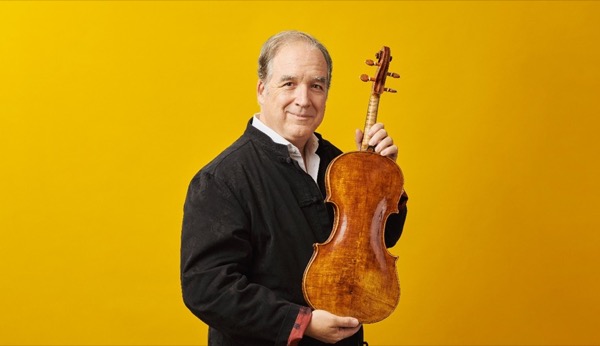
This violin, known as the “Lady Harmsworth,” was made in Cremona, Italy, in 1703, right at the height of Stradivari’s golden period. Apart from its previous owner, very little is known about its history. Before it came into my hands, it seems never to have been regularly played on stage by a professional violinist.
Having lived with it for more than twenty years, I recorded albums of Bach, Paganini, and Ysaÿe with it, and released a collection of encore pieces, The Soul of Lady Harmsworth. I regularly take it to my luthier, and fortunately, the violin is very healthy and in excellent condition. It’s not as temperamental as a “Lady” 🙂
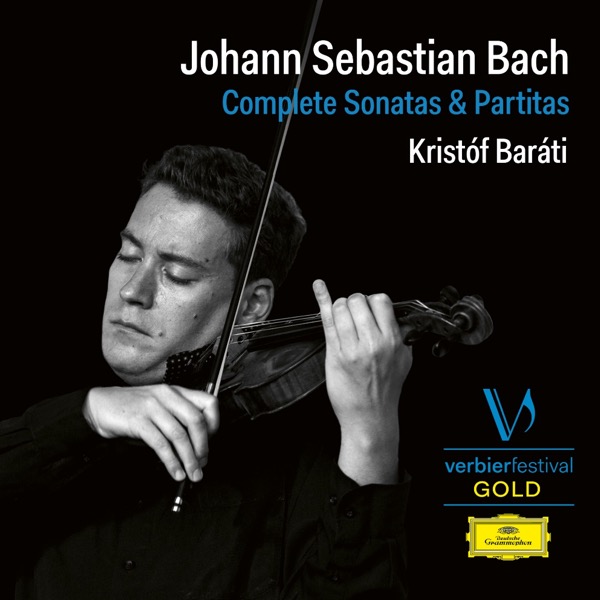
Kristóf Baráti
Your Bach album was recorded live at the 2016 Verbier Festival. What has changed in your approach to Bach?
My thinking has changed in many ways over the past ten years. Verbier is a fantastic place, and the festival’s importance and international standing are truly unique. It was obviously a major challenge to make my debut with one of the largest cycles, and performing six works in just a few hours was quite an undertaking. I think the friendship that has developed with the festival and with Martin Engstroem, the festival’s director, as well as the DG album, are good indications of the success of that debut.
Kristóf Baráti plays Bach’s Sonata for Solo Violin No. 1
How do you approach vibrato, ornaments, and polyphonic lines in Bach?
Every time I see a new nuance in the work. Over time, my approach has also changed more significantly. In the beginning, I treated Bach’s solo cycle in a more romantic, conservative way. Today, my approach is much freer and bolder, and I leave more room for spontaneity. My use of vibrato and ornamentation has developed in this spirit as well. I do not believe in playing without vibrato, because vibrato strongly influences and enriches the sound’s character and colour. Of course, finding the right balance is essential.
How do you bring the different dance movements to life?
Each movement’s dance character comes from its meter and pulsation; there are always heavier and lighter steps. Each dance’s pulsation must be clearly expressed through rhythm, tempo, and phrasing. I could demonstrate an example with my instrument…
There will be no encore after a recital of Bach, right?
Yes, I really don’t play an encore at the end of a Bach series. I feel that after the Chaconne—I always end Bach concerts with the Partita in D minor—there should be some time for self-reflection, rather than a moment for the performer to bask in the applause. Silence after the applause is certainly good for catharsis and a spiritual experience. In other concerts, I most like to play Bach pieces as encores. In my opinion, Bach’s music brings everything into harmony, making it a beautiful way to close any other repertoire.
Kristóf Baráti plays Bach Partita No. 2 in D minor: Chaconne.
Can you tell us more about the connection between Bach and Bartók?
Most great composers are somehow connected to Bach, and Bartók is no different. It is no exaggeration to say that his Solo Sonata is one of the greatest challenges for a violinist, both musically and technically. Bach’s influence is most clearly felt in the Tempo di Ciaccona movement, where the First Sonata in G minor and countless motifs from the Chaconne come together. The Fugue, of course, is also a tribute to Bach’s cycle. However, Bartók twists the musical material so brilliantly that, in the end, we always find ourselves in his unique musical universe.
Kristóf Baráti performs Bartók Violin Concerto No. 2
You have worked with the pianist Dénes Várjon. I love his smart and solid style.
Dénes Várjon and I have had the opportunity to work together countless times, primarily in chamber music. One of my favourite experiences was conducting Schumann’s Piano Concerto with his absolutely outstanding performance.
Besides being a soloist and conductor, how come are you also a pilot?
Yes, I have held a single-engine PPL since 2006. Flying is a great passion of mine; the freedom it gives me both inspires and relaxes me. In a past interview, I said flying is wonderful for a musician who probably always has some music spinning in his head; during your flight, you are definitely not thinking of any symphonies or violin concertos. Maybe one day I’ll manage to arrange things so that I can travel to my concerts in my own plane!
For more of the best in classical music, sign up for our E-Newsletter
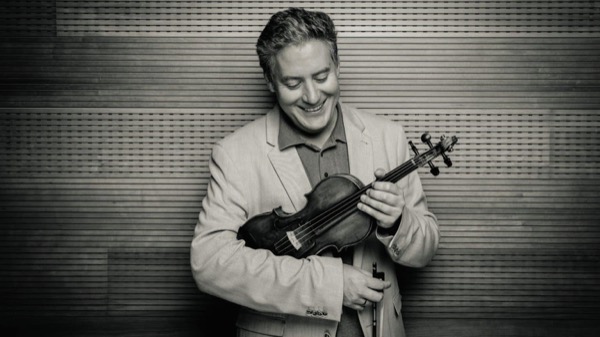
Kristóf Baráti (Photo by Csibi Szilvia)