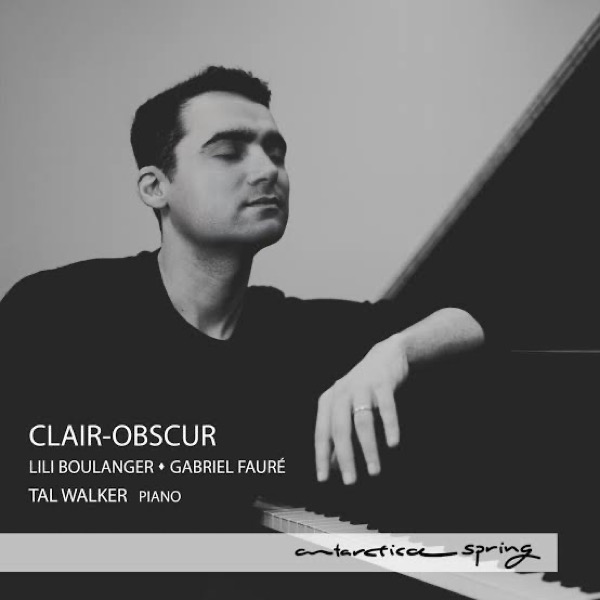
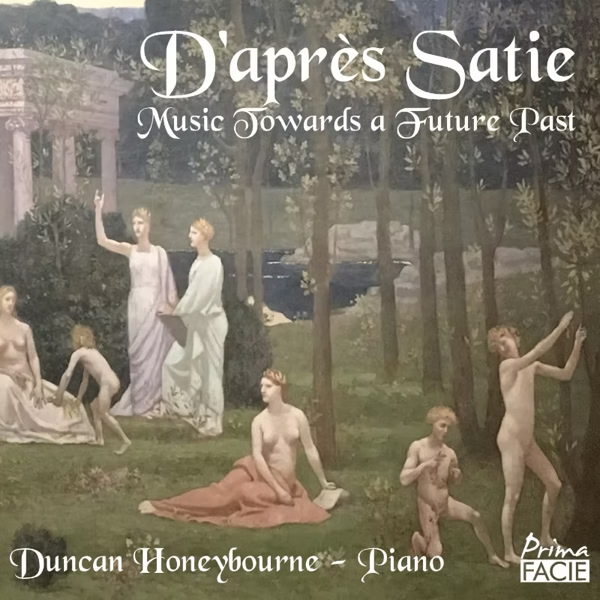
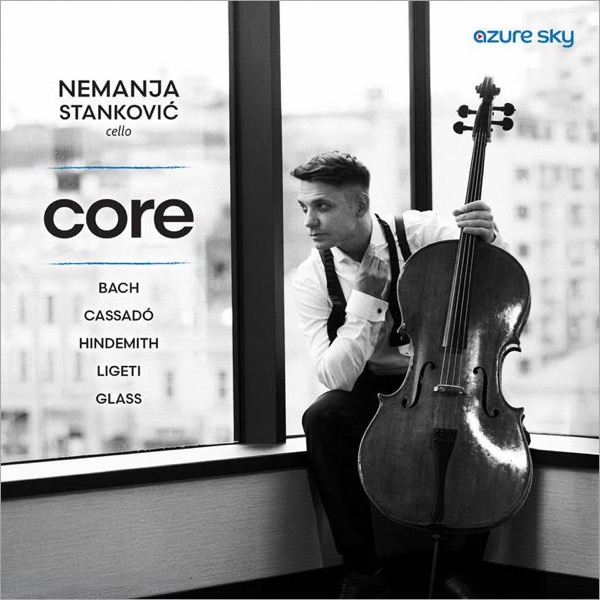
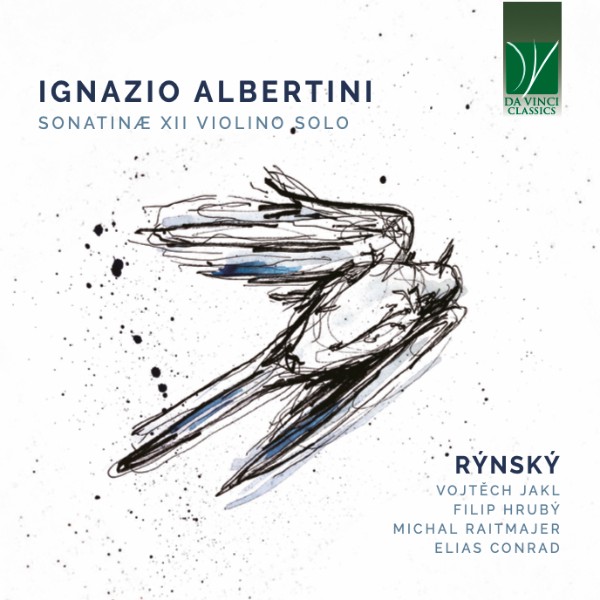
Hungarian pianist Mariann Marczi’s recent recording projects reveal an artist drawn to the many ways music can evoke ideas beyond sound itself. Across Enchanting Scents, Condensed Gestures, The Face of the North, and Miniature & Monument: Luminous Sonatas, Marczi explores fragrance and memory, concentrated musical gestures, Nordic landscapes, and the contrast between miniature and monumental forms. Though the concepts and repertoire differ, she sees a common thread: metaphor.
“What connects these recording projects is the shared power of the ‘metaphor’, whether it is an aroma, a physical gesture, a geographical landscape, or a structural contrast, to unlock deeper layers of musical meaning,” Marczi explains.
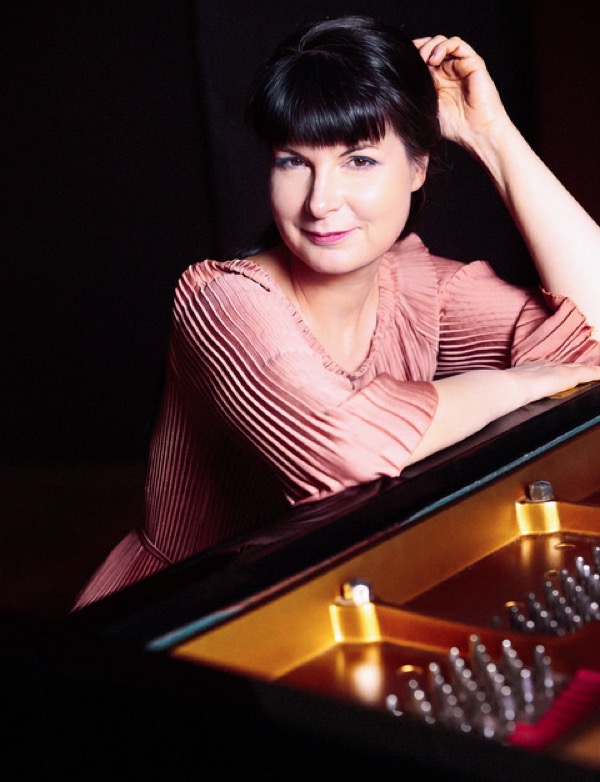
Mariann Marczi © Edina Pilcz
In Enchanting Scents, fragrance becomes a way to explore memory, emotion, and imagery through music inspired by trees, flowers, and gardens. Translating something as intangible as scent into sound required Marczi to look closely at the composers’ scores and their most subtle instructions. “The metaphor truly comes alive if the performer meticulously observes every subtle instruction left by the composer,” she says.
The project also pushed her piano technique to its limits, particularly in pianissimo and delicate touch. At times, Marczi felt that her fingers had to function “with the precision of a neurosurgeon” to reveal microscopic acoustic layers and recreate the ethereal atmosphere intended by the composers.
The idea of compression continues in Condensed Gestures, where Marczi returns to György Kurtág’s Splinters, Op. 6/d. She describes Kurtág’s music as one in which “immense emotional and structural tensions collapse into the spaces between the notes,” demanding complete concentration from the performer. Her connection to Kurtág’s music is also deeply personal: he was one of the important figures who shaped her own musical thinking during her postgraduate studies.
In The Face of the North, Marczi turns to Edvard Grieg’s Lyric Pieces, finding entire musical landscapes in their short forms. “An entire musical scene or landscape is compressed into just a few pages,” she says, describing the works as an intimate window into the life, soul and nature of the Nordic people. For Marczi, both Kurtág and Grieg demonstrate the rare ability to open vast perspectives through miniature forms, leaving an initial impulse for the listener’s own imagination.
The final project, Miniature & Monument: Luminous Sonatas, juxtaposes Haydn‘s Sonata in D major with Schubert‘s late Sonata in A major, D. 959. The pairing is connected by a historical thread that particularly interests Marczi: the Hungarian Esterházy family, whose patronage played an important role in the musical culture of their time. The album’s accompanying booklet explores these connections and the family’s relationships with composers including Haydn, Hofstätter, Werner, Schubert and Hummel.
For Marczi, these historical connections are not merely background information. They are part of the discovery that makes musical interpretation continually rewarding. That spirit of discovery has been central to her career, which spans repertoire from the early Baroque to contemporary music.
“I am deeply interested in all eras of music,” Marczi says. “For me, it is essential to understand and interpret the unique musical languages of different periods with genuine insight.”
Her commitment to contemporary music is particularly strong. Marczi observes that musicians in the time of Bach and Haydn primarily performed the music of their contemporaries, and she believes today’s musicians have a similar responsibility to maintain a living connection with the music of their own time. At the same time, she is naturally drawn to the Romantic and Post-Romantic repertoire. Her favourite composers, she says, are Schubert and Mozart. Her musical interests also extend beyond the piano: as a church musician, she spends considerable time engaging with early Baroque music on the organ.
Her broad repertoire reflects an equally diverse musical education. She began studying piano at four through the Kodály method, while her later teachers, many of whom had studied in Moscow, introduced her to the Russian-Soviet piano school. Her postgraduate mentors György Kurtág, Ferenc Rados and Zoltán Kocsis further shaped her understanding of harmonic structure, tonal proportions and inner balance, while Elisso Virsaladze and Márta Gulyás expanded her connection to the Georgian and Russian-Soviet traditions. She also studied with Lívia Rév, who combined the methods of Hungarian-American pedagogue Margit Varró with the principles of the French piano school. Drawing from these diverse influences, Marczi developed her own musical and pedagogical approach.
Her exposure to different schools is reflected in her teaching. While Hungarian musical heritage remains an important part of her identity, Marczi does not restrict her pedagogy to a single national tradition. Instead, she draws on what she has learned from her teachers and adapts it to each student.
“I never use a one-size-fits-all approach,” she says. “Every single student is unique, and I tailor my lessons completely to the individual needs, personality, and artistic voice of each student.”
For Marczi, musical tradition is therefore not something to be reproduced unchanged. It is something to be absorbed, questioned and transformed into an individual voice. Her own career reflects that process, bringing together Hungarian, Russian-Soviet, Georgian and French influences while moving freely across centuries of repertoire.
For Marczi, that spirit of discovery remains at the heart of performing. Even after years of teaching and performing, she says what continues to excite her is “uncovering these historical ties and bringing the timeless architecture and profound human emotion of these works to life.”
Whether exploring scent, landscape, gesture or the architecture of a sonata, Marczi approaches each project as an opportunity to discover new layers of meaning. Her piano becomes a meeting point for history, tradition, metaphor and imagination, with each work offering something new to uncover.
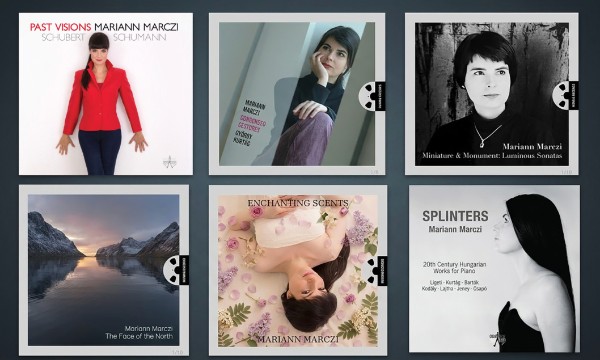
Mariann Marczi’s recording projects
To learn more about Mariann Marczi and her recording projects, visit https://www.mariannmarczi.hu.
For more of the best in classical music, sign up for our E-Newsletter