At the age of only 20, Henry Purcell composed a collection of ensemble pieces titled Fantazias. They represent, according to Mark Steinberg, the “final hurrah for consort music, ensembles no longer fashionable at the time of these works.”
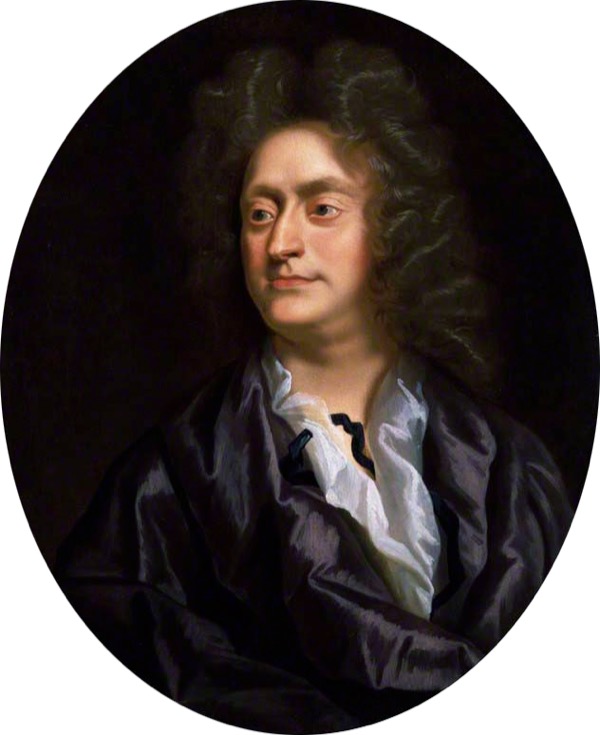
Henry Purcell by Closterman
Written during the summer of 1680, this collection brings two centuries of uninterrupted instrumental tradition in England to a crowning conclusion. Sometimes compared to Bach’s Art of Fugue, this collection of pieces in three to seven parts is currently being rediscovered in arrangements for string trios and string quartets.
To celebrate Purcell’s birthday, on or around 10 September, let’s take the opportunity to have a listen to music of supreme quality and inventiveness.
Henry Purcell: Fantasias à 4 (excerpts)
From Civil War to Royal Splendour
Henry Purcell was active during the Restoration, a period of political and religious upheaval following the English Civil War and the Puritan regime of the Commonwealth. The restoration of the monarchy under Charles II brought a renewed emphasis on ceremonial splendour, particularly in the Chapel Royal, where Purcell served as organist and composer.
The Chapel Royal, the monarch’s private religious establishment, was a hub for sacred music, and Purcell’s anthems, composed for both liturgical and state occasions, reflect the influence of earlier English composers and the polyphonic traditions he inherited.
Henry Purcell: Fantasia a 3 No. 2 in F Major, Z. 733 (arr. P. Warlock for string trio) (Sakuntala Trio)
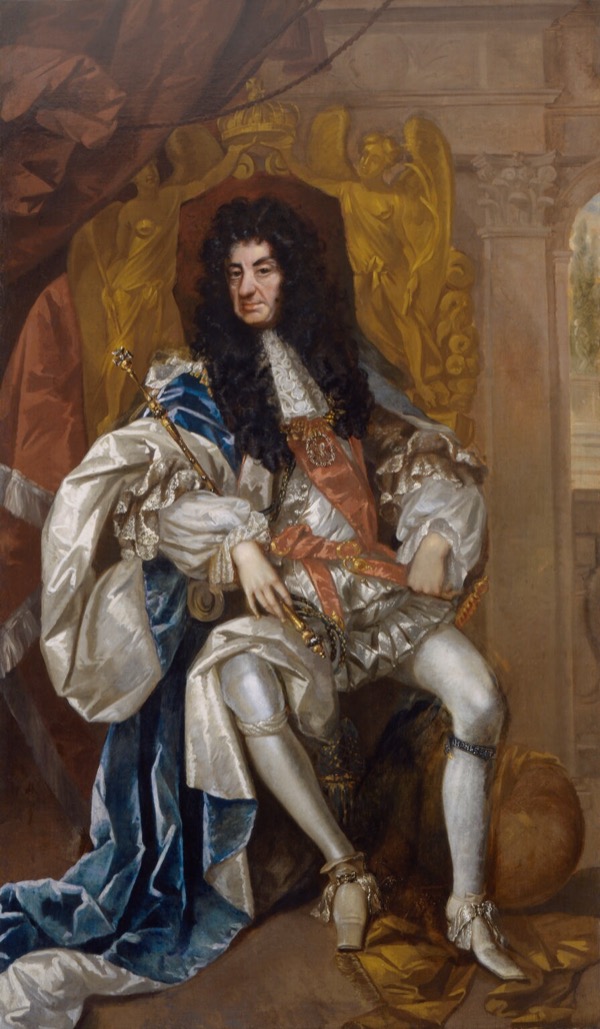
Charles II, 1680, by Thomas Hawker
The Sound of a Changing England
In terms of instrumental music, the situation is slightly more complicated. Although Charles II was a professed lover of music, he apparently detested anything he could not beat time to, such as “Fantasias.” And music from the decades surrounding the Civil War, from 1642 to 1651, was seen as old-fashioned, as public taste, led by what was fashionable at court, had transformed.
Groups of instruments in seventeenth-century England were collectively called consorts. These could be either a homogeneous blend of instruments, such as a set of viols or violins, or a mixed or broken ensemble made up of instruments from different families.
Henry Purcell: In nomine a 6 in G Minor, Z. 746 (London Baroque)
Tradition Reimagined
Purcell’s predecessors such as Orlando Gibbons, John Coprario, Thomas Lupo, John Jenkins and William Lawes contributed to this rich tapestry, which is largely made up of contrapuntal pieces called Fantasias and, to a lesser degree, dance music. We still have no convincing answer to the question as to why, in the summer of 1680, Purcell was suddenly compelled to write music in this outdated vein.
A rather sensible hypothesis suggests that for Purcell the Fantazias are little more than contrapuntal studies devised by the composer as intellectual exercises and as a means of honouring his forebears. To be sure, Purcell re-imagined the idiom in an impressively resourceful manner, both in its contrapuntal ingenuity and its rich harmonic language.
The collection contains three three-part Fantazias, nine four-part Fantazias with a fragmentary tenth, a Fantazia for five parts, and the “In Nomine,” settings for six and seven parts, respectively. All pieces are short, each consisting of two to five episodes with contrasting moods and tempos. The “In Nomine” settings are based on a cantus firmus in long notes. Both settings break down into sections featuring multiple themes embedded in a dense polyphonic fabric.
Henry Purcell: In nomine a 7 in G Minor, Z. 747, “Dorian” (London Baroque)
Uncharted Territory
The remaining thirteen pieces are anchored by the masterly four-part Fantasias, primarily built on two four-note motives each. Two or three themes are separated by homophonic episodes where, according to Harry Halbreich, “Purcell’s harmonic genius celebrates its greatest triumphs.”
The entire collection is bathed in deep melancholy, as only five pieces are set in major keys. Seemingly, Purcell’s favourite key appears to be G minor, as it is found in four Fantasias. But more impressive than this restrained choice of tonalities are constant modulations that, at times, feature four or five different tonalities within a single measure.
This leads the music into harmonic regions practically unknown in his day, and the systematic use of chromaticism expresses, again according to Halbreich, “Purcell’s feverish and tormented soul.” Above all, the contrapuntal ingenuity is astonishing, as we find music of “total freedom allied to total rigour, and the triumph of asymmetry, the leading feature of the Baroque spirit.”
Henry Purcell: Fantasia a 3 No. 1 in D Minor, Z. 732 (arr. P. Warlock for string trio) (Sakuntala Trio)
From Consort to String Quartet
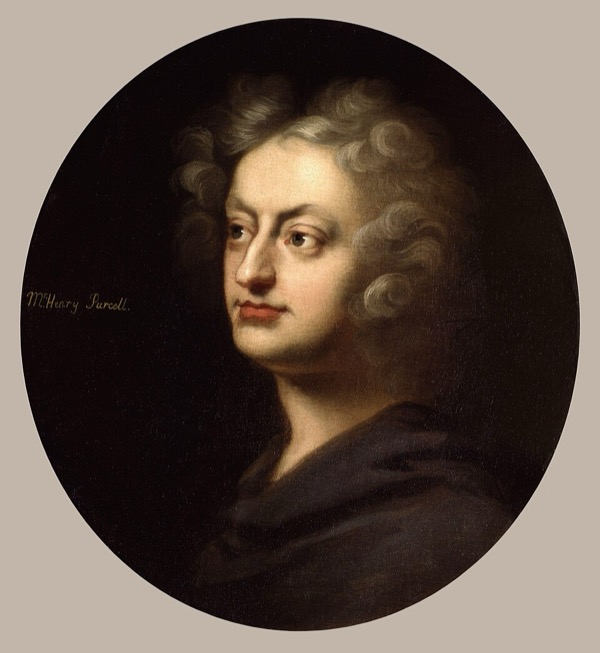
Henry Purcell by John Closterman
Only three years after Purcell had finished his fantasias, he left the past behind and published a set of Trio Sonatas heavily influenced by contemporaneous Italian instrumental music. However, these fantasias, exploring the boundary between private and public music, are being reimagined for contemporary string trios and quartets.
In a recent private performance by the Leonkoro Quartet at the Martinkirche in Basel, Switzerland, the pleading dissonances constantly slipped into more anguished forms of expression, communicating a sense of the physicality of the musical discourse. In spirit and timbre, the closest equivalent to the consort is probably the string quartet, and hearing Purcell in this medium certainly revealed the adaptability of this music.
For more of the best in classical music, sign up for our E-Newsletter