The virtuoso French cellist Gautier Capuçon, born on 3 September 1981 in Chambéry, France, has captivated audiences worldwide with his electrifying and engaging performances. A graduate of the Paris Conservatoire with first prizes in cello and chamber music, Capuçon has earned top prizes in international competitions.
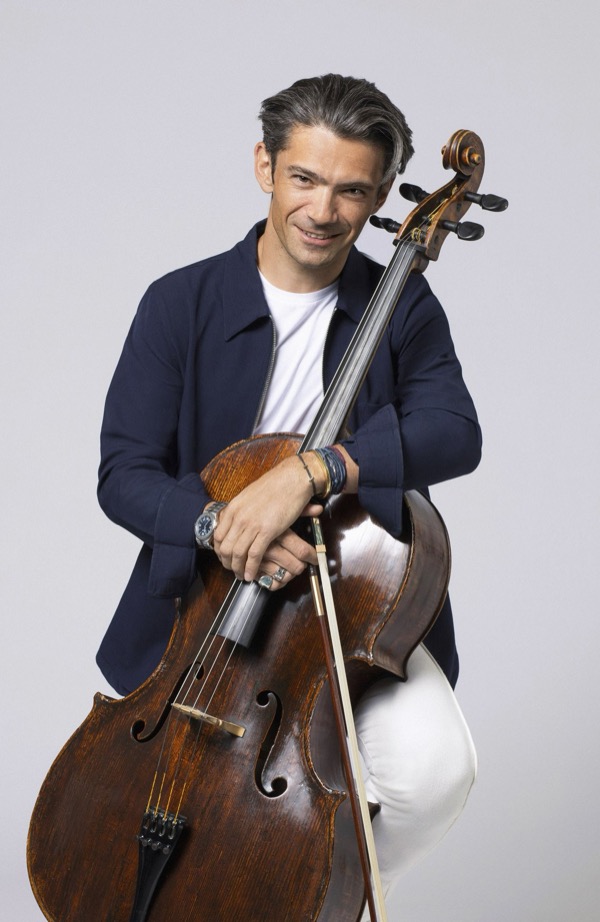
Gautier Capuçon (Laurent Rouvrais / Radio Classique)
Playing the cello, for Capuçon, is all about the physical sensation of playing, and the power of communicating a sense of personality and charisma to the audience. With his signature 1701 Matteo Goffriller cello, Capuçon has compiled a critically acclaimed discography for Erato and Warner Classics.
Music lovers tend to be familiar with his recordings of Dvořák, Elgar, Saint-Saëns, Shostakovich, and Tchaikovsky, yet a significant part of his career is devoted to the performance of contemporary music. Philippe Manoury, Karol Beffa, Michel Tabachnik, and Lera Auerbach have written dedicated works for Capuçon.
To celebrate his birthday on 3 September, let us take a closer look at two recent concertos composed by Danny Elfman and Thierry Escaich, and premiered by Gautier Capuçon.
Danny Elfman: Cello Concerto
From Hollywood to the Concert Hall
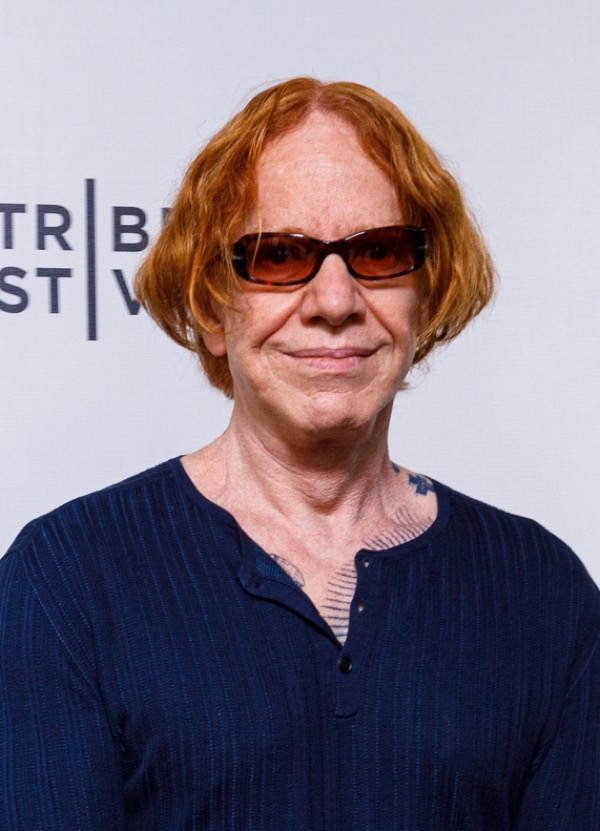
Danny Elfman (2022)
Modern audiences probably know Danny Elfman as the composer of award-winning film scores. I need only mention Batman, The Nightmare Before Christmas, Men in Black, and the Spider-Man series.
In all, Elfman has composed music for over 100 feature films, as well as compositions for television, stage productions, and the concert hall. Significantly, Elfman belongs to a generation of film composers who lack traditional university training.
Elfman was part of an experimental band in Southern California for 17 years before he was invited to write the score for his first feature film. He described the first time he heard his music played by a full orchestra as “one of the most thrilling experiences of his life.”
A Concerto Inspired by Gautier Capuçon
With regard to his cello concerto, Elfman explains, “I had long admired Gautier Capuçon, so when he approached me with the idea of a concerto for him I was more than thrilled. And to have a chance to work side by side with Michael Tilson Thomas was an extraordinary experience. Like with my violin concerto, I worked closely with Gautier to bring it to life.”
Jointly commissioned by the Wiener Konzerthaus, Wiener Symphoniker, Orchestre Philharmonique de Radio France, the San Francisco Symphony, and the Sofia Philharmonic, the inspiration, according to Elfman, came from Gautier himself.
“His amazing musicianship. I was excited to find a way to challenge him. I knew he liked melody, so I was always conscious of making sure I had those. Then I just began writing and discovering many different tangents as I went. It’s all about exploration. I really enjoyed the process of working with Gautier on the construction of the concerto.”
Between Hollywood and Shostakovich
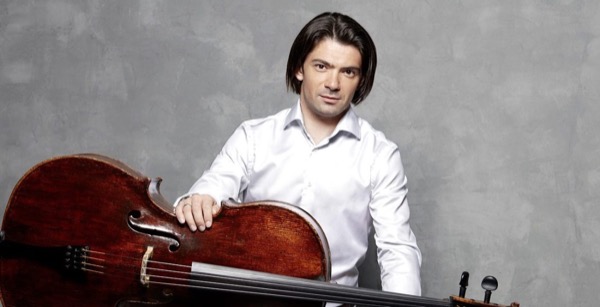
Gautier Capuçon
Elfman had completed his Violin Concerto “Eleven Eleven” in 2017, and together with the Cello Concerto, it represents his attempt to establish himself as a serious concert composer. In terms of musical character, the Cello Concerto for Capuçon presents a musical style that Elfman describes as a “no man’s land between neo-classical and modern.”
Elfman has great affection for Russian composers of the 20th century, in particular Dmitri Shostakovich, and his concerto borrows heavy brass sonorities, percussion, and metallic colours from the composer.
As such, it blends dark orchestral sonorities and a certain cinematic intensity with plenty of lyricism specifically written for Capuçon. The work premiered on 18 March 2022 at the Wiener Konzerthaus with the Wiener Symphoniker under David Robertson.
Reactions were decidedly mixed, and Capuçon suggests that Elfman had no need to disguise his identity as a film composer. The strongest qualities of the concerto are also its most characteristic Elfman qualities, and Capuçon was praised for his warm and intensely projected sound.
The Many Voices of Thierry Escaich
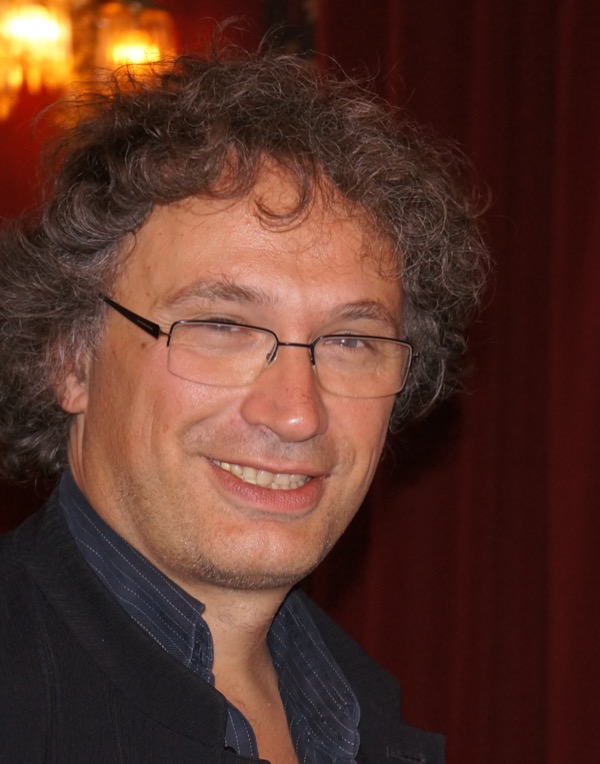
Thierry Escaich
Compared to Danny Elfman, the French organist, composer, and improviser Thierry Escaich is known only to a small segment of concert audiences. Yet he is a unique figure in contemporary music and one of the most important French composers of his generation.
First and foremost, Escaich is an organist who succeeded Maurice Duruflé as organist of Saint-Étienne-du-Mont in Paris. His compositions for the organ are performed around the world, and his first Organ Concerto was selected as a highlight by Gramophone.
Escaich’s career as a composer is closely linked to his career as an organist, and he is one of the ambassadors of the great French school of improvisation. For Gautier Capuçon, Escaich is simply an extremely gifted musician. “He plays both the organ and the piano and is an incredible improviser.”
“The way he improvises, the way he creates and composes music from his inspiration through the organ or the piano, it’s simply in his blood.” Capuçon and Escaich have collaborated for years, and in 2006 he composed “Miroir d’ombres,” a double concerto for violin and cello, for Gautier and Renaud Capuçon.
“Les Chants de l’aube” (Songs of the Dawn) is Escaich’s second cello concerto, composed specifically for Capuçon in 2023. The world premiere took place at the Gewandhaus in Leipzig on 16 March 2023 under the direction of Andris Nelsons.
Where Light Meets Shadow
The music is very different from the Elfman concerto, as Escaich is primarily interested in a constantly singing cello. Even if the musical material comes across as highly fragmented and rhythmically complex, the solo instrument is deeply invested in lyricism.
The work unfolds in three movements, linked by two substantial solo cadenzas. The opening “Des Rayons et des Ombres” takes its title from a Victor Hugo collection, and Escaich used the idea of light and darkness as a musical principle.
Escaich places a transparent sound in the higher register, contrasted with a much darker, more distorted reflection in the low winds. The orchestra and soloist continue to exchange phrases, with the cello gradually escaping from this dense environment toward a more lyrical climax.
From Improvisation to Dawn
“Le rivage des chants” opens in an almost mystical atmosphere but soon draws on a number of different musical sources. Invented Gregorian chants and imagined African traditional melodies combine in jazz-like rhythmic patterns, and their interaction sounds decidedly improvisational.
The two cadenzas transform the musical material and proceed directly into the next section, with the solo instrument becoming both the soloist and narrator. The concluding “Dawn Dance” is an extended and peaceful song, with the orchestra becoming ritualistic. This dance draws together material from the earlier movements and moves towards a luminous release.
The work was favourably received, and Gautier Capuçon was praised for effortlessly moving between enormous sonority and extreme delicacy. Escaich tailored the music to fit Capuçon’s strengths, as the cello tries to establish its voice in an ever-changing orchestral landscape.
A New Concerto on the Horizon
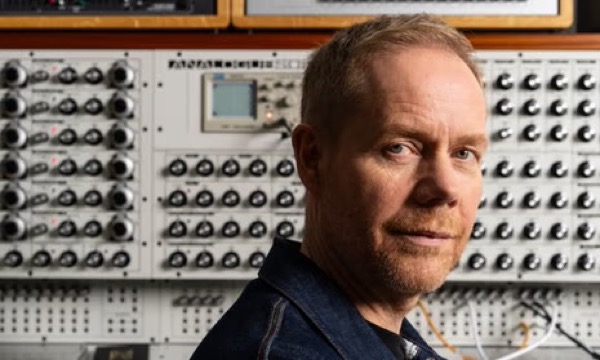
Max Richter
In 2023, Capuçon met with the award-winning composer and pianist Max Richter, known for his minimalist soundtracks for our fast-paced world. Richter is strongly influenced by the symphonic works of Gustav Mahler, and it was agreed that he would write a cello concerto for Capuçon. The world premiere is scheduled for 27 April 2027 at the Fondation Louis Vuitton in Paris, with Capuçon, the Orchestre de Paris, and Andrés Orozco-Estrada.
For more of the best in classical music, sign up for our E-Newsletter