French composer Édouard Lalo (1823–1892) began his studies at the Lille Conservatory before moving to Paris for private lessons in violin, conducting, and composition. Immediate success did not follow, but he earned a living as a violinist and teacher. His music did not find an audience. Unlike his contemporaries, he did not attend the Paris Conservatoire, which may have contributed to his difficulties. Without the network behind him, the critics simply did not take notice of his work.
In the 1850s, he joined the Armingaud Quartet and then formed his own quartet, which was important in bringing back to the public classical quartets by Haydn, Mozart, and Beethoven.
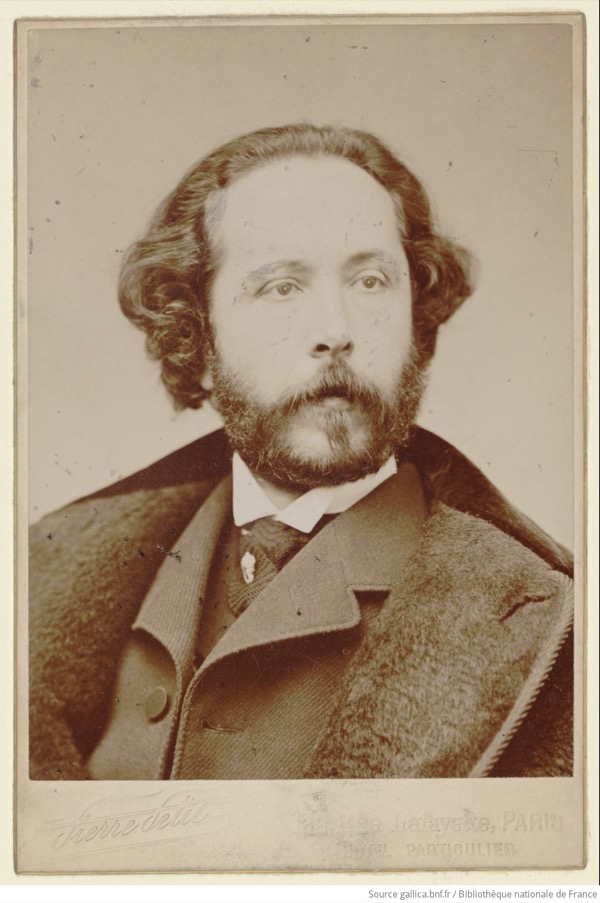
Pierre Petit: Édouard Lalo (Gallica: btv1b8421663h)
In 1874, Lalo wrote his Violin Concerto for the virtuoso Pablo Sarasate, and that captured his audience. Later that year, he wrote his Symphonie espagnole, also for Sarasate, which has become one of the most popular works in the violin repertoire.
Although titled a ‘Symphony’, it is truly a violin concerto, albeit without a cadenza. The opening movement establishes the distinctive rhythm of the work and the violinist’s role. The Spanish idea is settled immediately, and one of the work’s characteristics is its crisp and lively style. The rhythm of the work (threes alternating with twos) and the clipped ends of phrases contribute to its Spanish style. The second theme, in contrast, comes to life with both great melodic beauty and simplicity.
The work was dedicated to Sarasate, and after his premiere, many other virtuosos adopted it into their repertoire.
Édouard Lalo: Symphonie espagnole, Op. 21 – I. Allegro non troppo
This recording was made in 1959, with Walter Hendl leading the Chicago Symphony Orchestra and Henryk Szeryng as violin soloist.
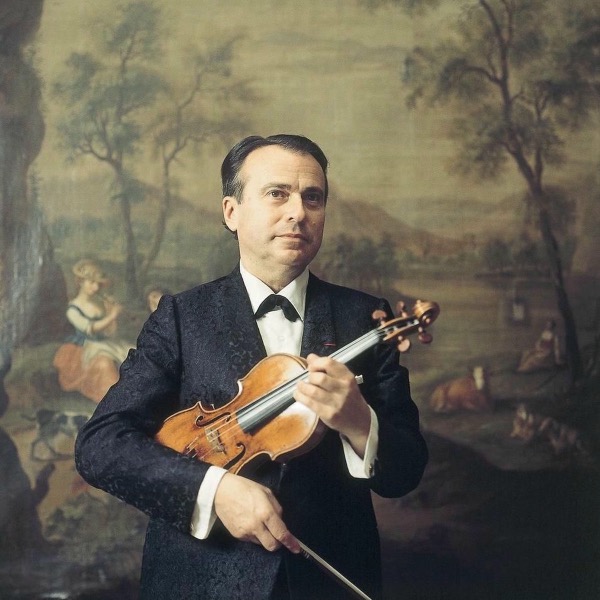
Henryk Szeryng
Polish-Mexican violinist Henryk Szeryng (1918–1988) was born in Poland and studied in Berlin and then at the Paris Conservatoire, taking the premier prix in 1937 in violin. He also studied composition with Nadia Boulanger from 1933 to 1939. During WWII, he served as liaison officer and interpreter to Władysław Sikorski, the premier of the Polish government in exile. His government work took precedence over his studies, but he was still able to give concerts, travelling to perform more than 300 concerts for Allied troops around the world. He was so gratified by his reception in Mexico for a concert for 4,000 Polish refugees in 1941 that he pursued Mexican citizenship after the war and was awarded it in 1946. He also became the head of the string department at the National University of Mexico. A chance meeting in 1954 with Arthur Rubinstein, who was also a Polish citizen, brought him back into the spotlight when Rubinstein encouraged him to resume his performing career. He played in duos with Rubinstein and added Pierre Fournier as cellist for trios; Szeryng and Rubinstein played together for the rest of their careers (Rubinstein died in 1982).
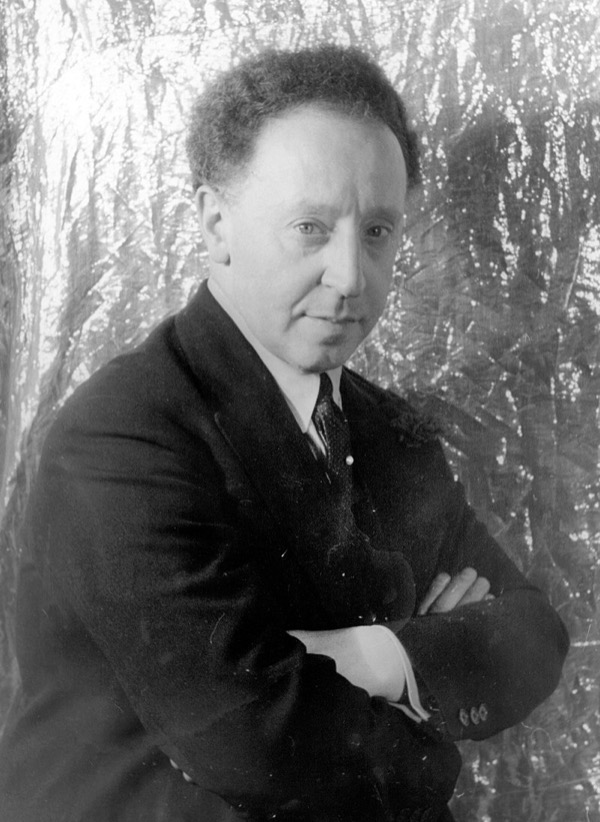
Carl Van Vechten: Arthur Rubinstein, 1937
In 1964, Szeryng partnered with pianist Charles Reiner, and together they made 35 recordings and performed in more than 900 concerts around the world.
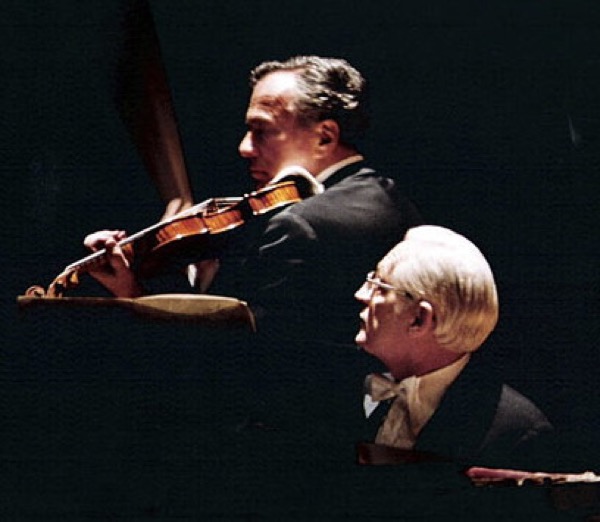
Henryk Szeryng and Charles Reiner
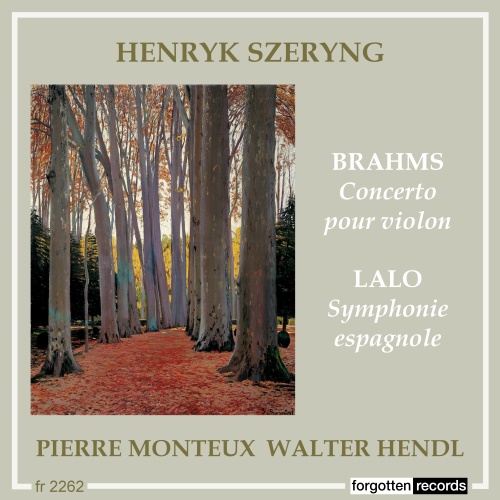
Performed by
Henryk Szeryng
Walter Hendl
Chicago Symphony Orchestra
Recorded in 1959
Official Website
For more of the best in classical music, sign up for our E-Newsletter