Brenden Gunnell finds a sense of belonging in England as he explores Midland composer Andrew Downes’s vocal music and prepares for the role of a lifetime, the ultimate ascent for a heldentenor
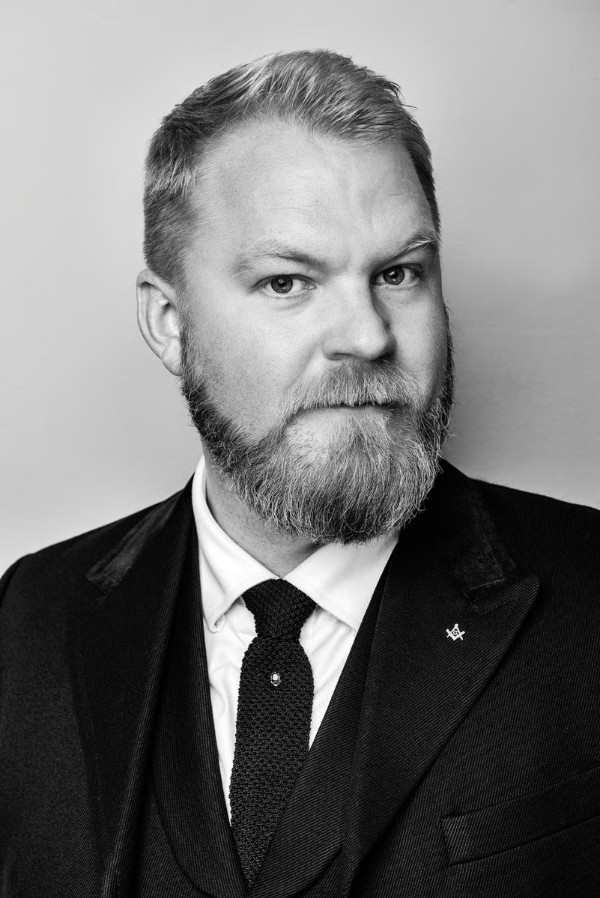
Brenden Gunnell © Kirsten Nijhof
By a circuitous route from the USA’s Midwest, I now find myself an Anglo-American with a chosen home in Sussex. Where does an opera singer belong? It is not such a preposterous question when the reality of a singer’s life is being on the road and stationed far from home for months at a time, or in my case, 5 years in Innsbruck, 2 years in Norway and another stint in Bavaria. Having relinquished my American citizenship, I have now embraced a wider European heritage (in spite of Brexit), discovering the almost forgotten vocal music of Midlands composer Andrew Downes (all be it with an American twist) and preparing for my personal Everest next year.
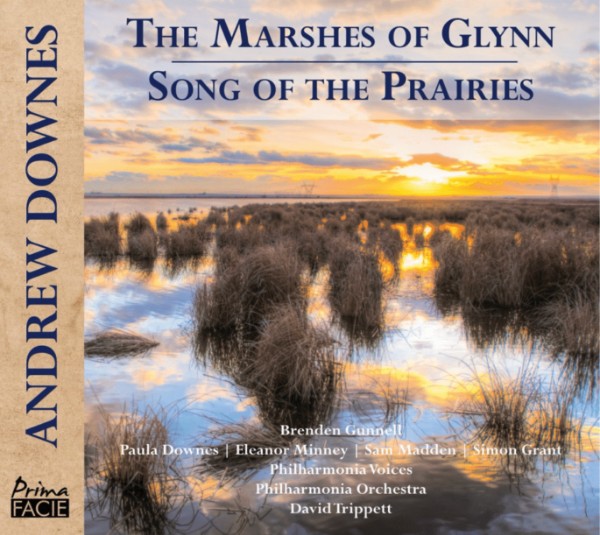
When conductor, academic David Trippett approached me last year for a recording of vocal music by Andrew Downes with the Philharmonia, I was curious to discover The Marshes of Glynn and Songs of the Prairies, which form the 2nd album in a series of 3 discs lovingly produced by Paula Downes in memory of her father. I was immediately drawn to the text that inspired the first – Sydney Lanier’s evocative The Marshes of Glynn. I wasn’t acquainted with Andrew Downes’ compositions, but Lanier’s poem reminded me of similar imagery and sentiments in the American romantic poet WC Bryant’s Thanatopsis [a famous meditation on death and the relationship between humanity and nature]. It’s one of my favourite works. Little did I know that Songs of the Prairies was based on another of Bryant’s poems.
Andrew Downes: The Marshes of Glynn & Song of the Prairies
Though I grew up in the USA’s Midwest, I haven’t yet visited the prairies, though I desperately want to see them and encounter a live Bison. There are so many aspects of the writing in Marshes that remind me of the green Appalachian valleys, close oak forests and windswept coastal dunes of my native Indiana and Michigan.
My own love of wide, open spaces initially tempted me to move to the Scottish Highlands. I have always sought out nature in my free time, whether wandering the alpine ridges and lakes, trekking in Norwegian forests, or fly fishing in the Scottish Highlands. I truly believe Downes stands out. Some of his harmonic language evokes musicians like Elgar, Debussy, Vaughan Williams, and his vocal writing is at times Wagnerian. Among composers today, you might draw comparisons with Nico Muhly. Yet there’s a level at which Downes uniquely holds his own. He was very taken by Native Americans’ respect for the environment and their sense of belonging to the land, not ownership of it. Songs of the Prairies is strongly influenced by a Native American perspective. You hear it particularly in his rhythmic writing, which invokes rain dances and the sweat lodge drumbeats of the Lakotas. In Marshes, there’s again a strong sense of Downes’ awe of nature. Especially in the first movement’s powerful evocation of the forest glen.
Andrew Downes
My decision to move to the UK was initially driven by an aesthetic sense of belonging in Europe. I maintain that I will always be a Hoosier [a citizen of the state of Indiana] at heart. But I feel more removed and foreign each time I return to the United States, simply by virtue of the time spent living so far away from it and building an entire life and career on this side of the pond.
I didn’t have a strong sense of permanence until I was granted Indefinite Leave to Remain, and eventually citizenship. Now I feel that I belong more, having established my basecamp in Sussex and purchased a home here. Though Scotland still calls to me. That was where I first felt the roots literally trying to grow out of my shoes, to keep me there.
After Brexit, for a considerable time, many opera houses and orchestras had a knee-jerk reaction against employing British artists in Europe. I had only recently been granted my visa, and was an established name in Europe already, so I had traction and a schedule full of contracts. Fast forward ten years to my citizenship, and most of the kinks in the visa approval process have been ironed out. Covid was taxing however, as I was in effect stateless when it came to government assistance. They were scary times indeed, but many German houses honoured partial contractual payouts, and in one or two cases, full compensation.
On the eve of the Ukraine War, I was in Moscow, where I was scheduled to perform at the Bolshoi in a new production of Lohengrin, co-produced with the Met. In the last weeks of rehearsal, political tensions between Russia and Ukraine escalated. Two days before opening night, I and my leading lady – a South African soprano – were informed we would not be singing at the premiere, for extremely flimsy artistic reasons, and in a clear breach of contract. The day of the premiere, the war broke out officially. It was clearly all premeditated. There was no way that the Russian cultural apparatus would have had an American and a South African headlining a new production at their flagship opera house at that time.
Russian airspace was closed, quite quickly, to British aircraft. But I managed to secure a ticket on the last plane back to Germany. This flight was delayed by eight hours while they waited for the arrival of the German women’s skiing team. By the time the plane landed in Germany, Russian airspace was closed to German aircraft as well. While attempting to leave Moscow, I was detained for an hour while a border/customs officer made a great show of investigating my American passport with its Russian work visa. The whole experience definitely changed my views on the intersection of artists and politics. It was harrowing to say the least.
I have now just recently returned from Leipzig, where I was singing in The Queen of Spades, and I’m now looking forward to a quiet six months in the South Downs, continuing my preparation for my first Tristan und Isolde, initially for Santiago (March) and then a revival in Belgium, Autumn of 2028.
It’s extremely surreal to have arrived at a point where the role of Tristan is no longer a hope, but several confirmed offers of gainful employment. When that first contract came through last February, I opened a very fine bottle of champagne at breakfast out of sheer elation and incredulity. Though I’m not sure that I feel a sense of arrival, so much as a sense of the next big leg of my journey, a real watershed moment.
In fact, I was recently asked – after a masterclass I gave for graduate students of the Jacobs School of Music at Indiana University – when I knew I had ‘made it’. My response was simply that I am still waiting for ‘that moment’ to come. I do truly hope that after my first successful third act of Tristan, I will finally be able to look in the mirror and quote Anthony Hopkins, saying, ‘We did ok, kid!’
I feel reverence and humility now that I’m approaching the part. It’s considered the Mount Everest of tenor roles. Someone recently sent me the statistic that more people have climbed Mount Everest unaided by oxygen tanks than have sung the role of Tristan since its world premiere.
That puts you in a very exclusive club from the beginning. You must have a sober self-awareness and a thorough assessment of the role’s demands (vocal and dramatic) before accepting it. There’s always the question ‘is this too soon’? Similar to climbing Everest, one doesn’t start with the main peak of the Himalayas. One must be an experienced climber and build up to it. As with other large undertakings like Lohengrin, the Kaiser in Die Frau ohne Schatten, or Hermann in Queen of Spades, I have made sure I have had two years of lead-in preparation time for this role, and have kept the calendar relatively free of other debuts, scheduling bottlenecks, or distractions. I have an amazing support team, including my indispensable voice teacher, Anthony Roden, but ultimately, no one can sherpa you up that last peak; no one can prepare you for singing this role. It will be me and my own mental chess.
I have tried not to bog myself down too much in comparing recordings, as every singer is so unique. I do, however, have a penchant for two mighty singers of yesteryear. Ludwig Suthaus’ recording with Wilhelm Furtwängler, and the great Jon Vickers, for his stage magic and handling of colours and dramatic moments. Suthaus has such a beauty of tone and expert delivery of the text, and we are similar in age as to when we both debuted the role. Vickers is not one to emulate vocally, per se, but a pinch of his dramatic madness is always quite enticing. In the end, somewhere between those influences, I’ll find my own way to the summit.
Grammy-nominated Heldentenor Brenden Gunnell is one of today’s most sought-after heroic tenors, renowned for his commanding stage presence and clarion diction. Equally at home in Wagnerian heroics, Strauss’s towering roles, as well as the international concert stage and recital, he captivates his audiences with a blend of powerhouse vocal technique, expressive subtlety, and insightful interpretation.
His upcoming role debuts include Tristan in Tristan und Isolde at the Teatro Municipal in Santiago, Chile (2027) and at La Monnaie, Brussels (2028), Florestan in Fidelio for Teatro Nacional de Sao Carlos Lissabon, as well as the Kaiser in a new production of Die Frau ohne Schatten at La Monnaie directed by Barrie Kosky (2027).
For more of the best in classical music, sign up for our E-Newsletter