Good ‘ol Bach – continuous beat, flowing tunes, and jazz?
Let’s look at his influence not on his contemporaries, not on his students, but on 20th-century composers.
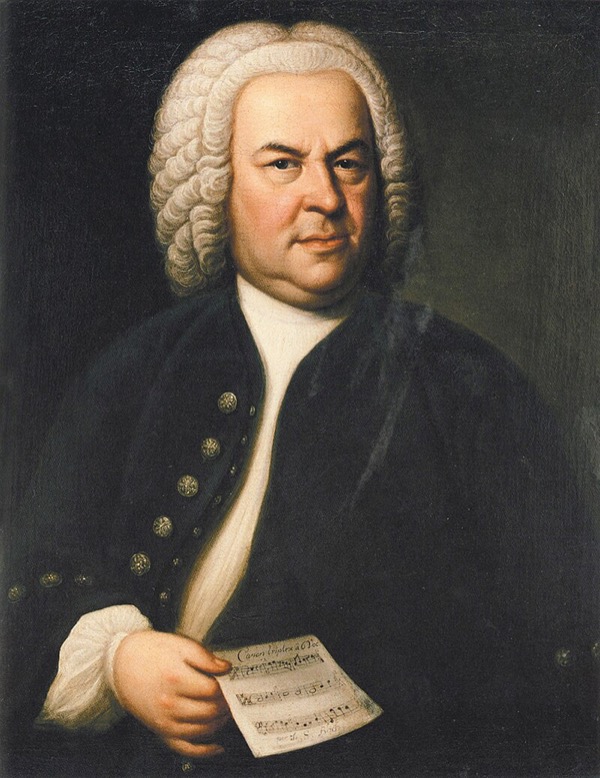
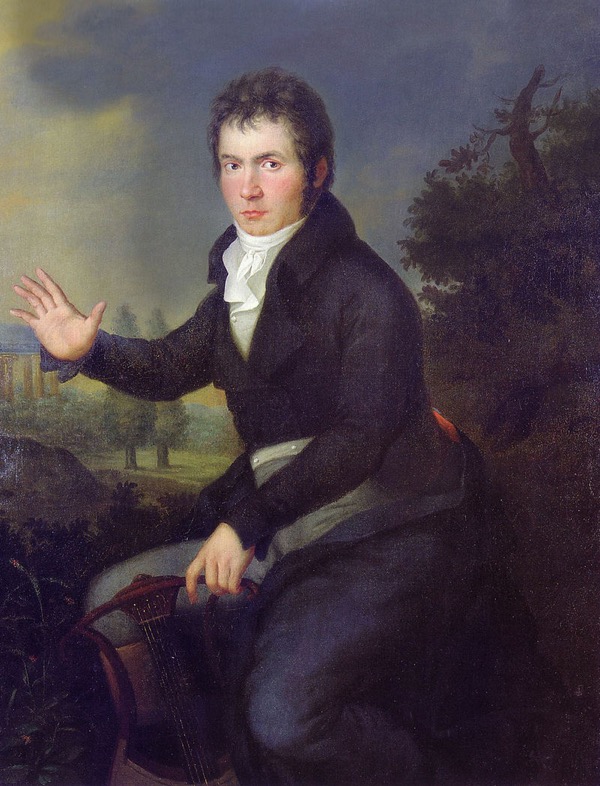
Elias Gottlob Haussmann: Johann Sebastian Bach, 1748 (Leipzig: Bach-Archiv)
Jazz gives us the opportunity to swing a solid beat. And that beat is what Baroque music is known for – what is sometimes called ‘sewing machine’ music – you start it and off it goes until it unwinds at the end. For jazz artists, Baroque music can be a springboard for improvisation (which was also important in Bach’s era, especially for organists) and for bending that rhythmic line.
Henry Brant took the idea of a Baroque toccata (a virtuoso work for keyboard or plucked string instrument) and swings it more than a little bit. One of the earliest of the Bach-meets-Jazz pieces, dating from the 1940s, the Jazz Toccata on a Bach Theme mixes a bit of Bach with a bit of Art Tatum piano style.
Henry Brant: Jazz Toccata on a Bach Theme (Henry Brant, piano; Gerrit Hommerson, piano)
On the classical side of things, French pianist and composer Jacques Loussier (1934–2019) fell in love with Bach as a child. Starting with the Notebook for Anna Magdalena at age 11, he used it as a place to add his ‘own notes, expanding the harmonies, and playing around with that music’. When he started his fusion of jazz and Bach at the Paris Conservatoire in the 1950s, it was unique for its time. According to the story, at a competition at the conservatory, Loussier played a prelude by Bach, and when his memory failed, he improvised. He later said that he only followed a tradition, because musicians of the 18th century—including Bach—were great improvisers. It probably didn’t hurt that he was earning money on the side playing jazz in Paris bars at the time. Loussier, along with string bass player Pierre Michelot (who had played with Django Reinhardt and the Quintette du Hot Club de France) and percussionist Christian Garros, formed the Jacques Loussier Trio and took Bach on the road, using his music as a basis for their jazz improvisations.
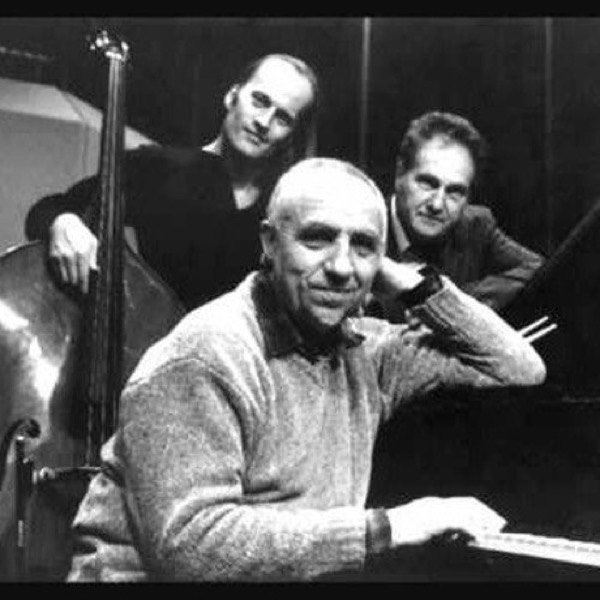
Jacques Loussier Trio
Johann Sebastian Bach: Herz und Mund und Tat und Leben, BWV 147: Chorale: Jesus bleibet meine Freude (arr. J. Loussier) (Jacques Loussier Trio, Ensemble)
Bach’s Trio Sonatas for Organ, BWV 525–530, are considered formidable organ works, written as training pieces for Bach’s oldest son, Wilhelm Friedemann. In the hands of the Trio Michael Spors, Bach’s Trio Sonata No. 2, BWV 526, is taken apart, put back together, improvised on, and generally changed while still being Bach.
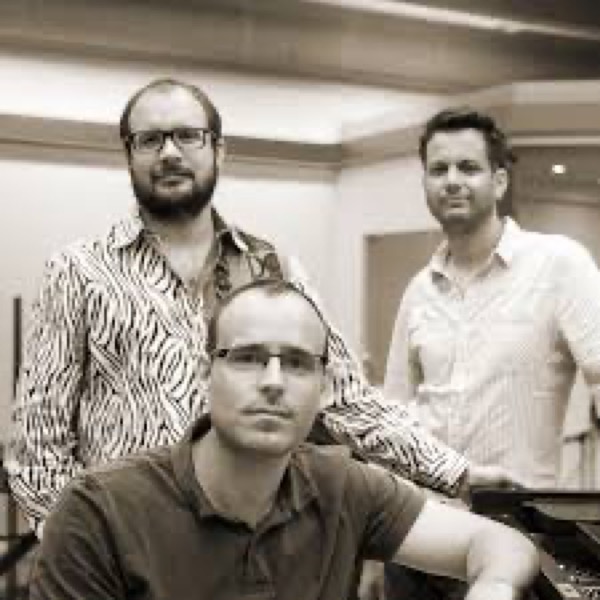
Trio Michael Spors
Michael Spors: Trio Sonata No. 2 in C Minor, BWV 526 (after Bach) – III. Allegro (im Rock) (Trio Michael Spors, Ensemble)
German keyboard player and composer David Timm (b. 1969) formed the JazzDuo Timm/Brockelt with saxophonist Reiko Brockelt in 1991. On their 2004 album Visions, they applied a number of different styles to Bach, including swing and samba adaptations to create a new jazz Bach world.
Their swing adaptation of the monumental Toccata and Fugue in D minor takes Bach to a loose and danceable 1940s feel. It’s an amazing amalgam of two distinct styles, emphasised by the different voices of the organ and saxophone.
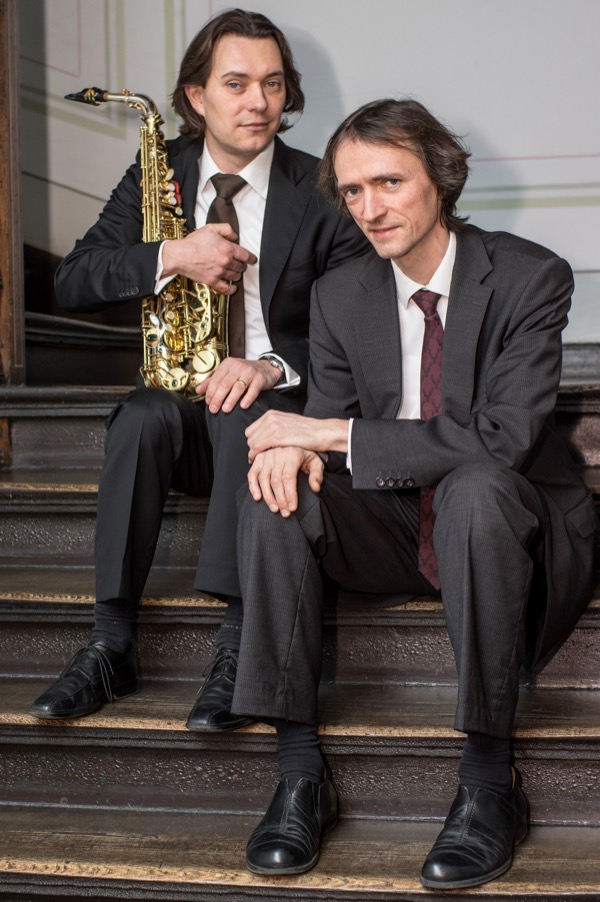
JazzDuo Timm/Brockelt
David Timm: d-m-Swing [Jazz adaptation of Toccata and Fugue in D Minor, BWV 565] (David Timm, organ; JazzDuo Timm-Brockelt, Ensemble; Reiko Brockelt, saxophone)
Dutch pianist and composer Lucie de Saint Vincent founded the Collectif Trytone to ‘break down the barriers between styles and traditions’. Their first album, Bach to Bach, was used by de Saint Vincent as a way of posing ‘questions about our humanity, the space between heaven and earth, and the relationship between our concrete existence and the realm of spirituality’. She draws on the idea of improvisation and how it contrasts with the modern idea of the set text. We can’t return to Bach’s sonic world, so why not bring him into ours?
The Collectif Trytone is directed by Lucie de Saint Vincent, with soprano Lucie Chartin, saxophonist Joao Driessen, bassist Mihail Ivanov, and Joan Terol Amigo on drums. Their musical synthesis brings together Baroque, Classical and jazz ideas.
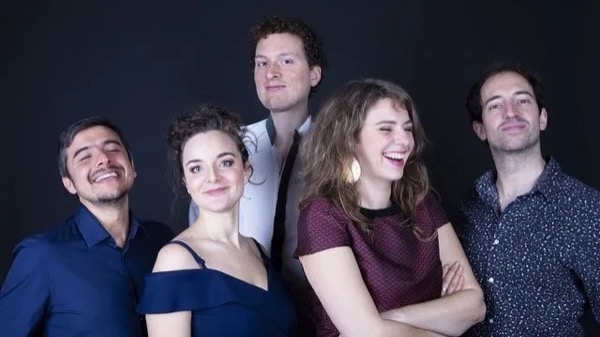
Collectif Trytone
Lucie De Saint Vincent: Prélude 999 (after J.S. Bach’s Prelude in C Minor, BWV 999) (Collectif Trytone, Ensemble)
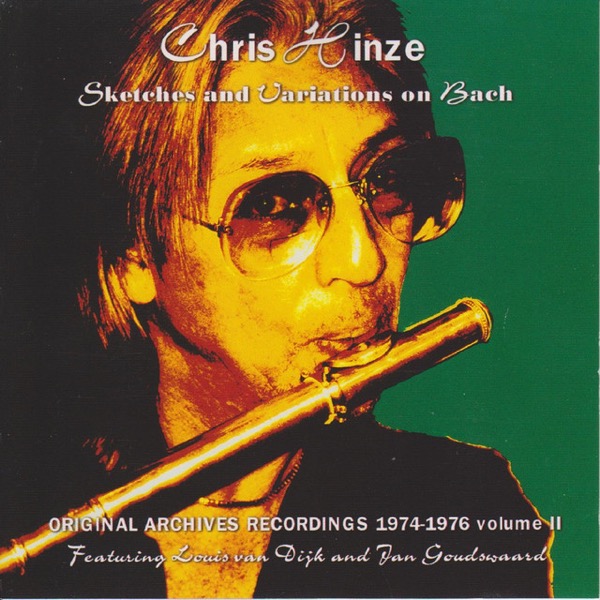
In their 2019 album Bach Today, flautist Stefan Keller and percussionist Beda Ehrensperger ‘play Bach and beyond’, as the cover says. The Bach of the title isn’t just J.S. Bach, but also his son C.P.E. Bach, and the two players create a new world of the ‘Baroque Classical’.
Beda Ehrensperger: Allemande (after J.S. Bach’s Flute Partita in A Minor, BWV 1013: I. Allemande) (Stefan Keller, flute; Stefan Keller, bass flute; Beda Ehrensperger, drums)
In 1959, a new wave of music came up from Brazil and changed jazz forever. This New Wave, or Bossa Nova sound, credited to Antônio Carlos Jobim (music) and Vinicius de Moraes (words), was based on samba, but without dance steps. It has syncopation but doesn’t swing like American jazz; it is most notable for each voice playing a different rhythm.
On his 1990 album WorldBeat Bach, clarinettist Richard Stoltzman took Bach and placed him in many different international musical styles, including samba, bossa nova, tango, West African, flamenco, calypso, bolero, and gospel. Although the melody is presented in a fairly straightforward manner, it’s always susceptible to that infectious beat below it.
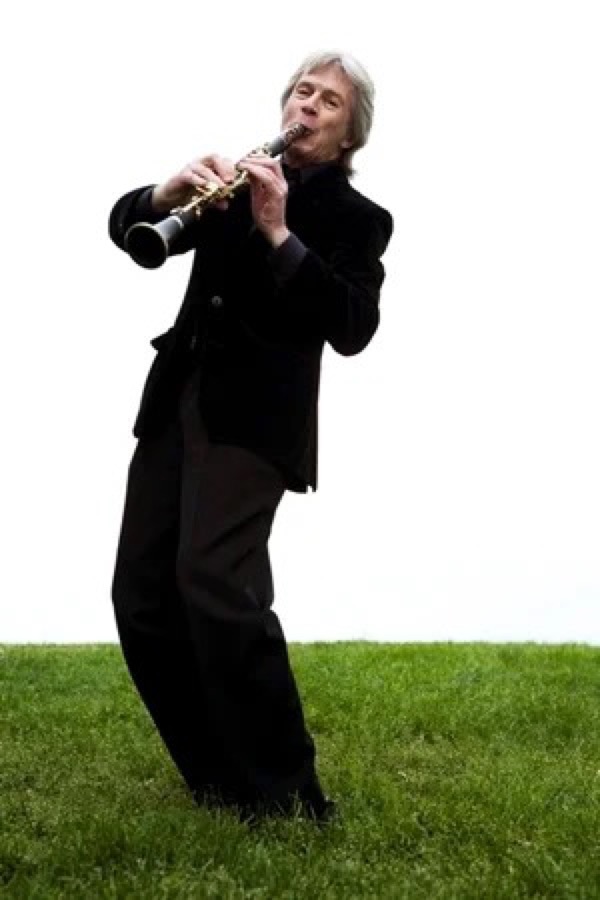
Richard Stoltzman (photo by Lisa Marie Mazzucco)
Johann Sebastian Bach: Clavierbüchlein for Anna Magdalena Bach, Book 2, BWV Anh. 113-132: Minuet in G Major, BWV Anh. 114 (arr. J. Wall) (Bossa Nova) (Richard Stoltzman, clarinet; Romero Lubambo, guitar; Eddie Gómez, bass guitar; Peter Stoltzman, piano; Jeremy Wall, keyboards; Gary Burton, vibraphone; Cyro Baptista, percussion)
Composer Jeremy Wall takes a familiar work by Bach, Jesu, meine Freude, and gives it a slow tango feel.
Jeremy Wall: Priceless Treasure (after J.S. Bach’s Jesu, meine Freude, BWV 227) (Tango) (Richard Stoltzman, clarinet; Romero Lubambo, guitar; Eddie Gómez, bass guitar; Peter Stoltzman, piano; Jeremy Wall, keyboards; Gary Burton, vibraphone; Cyro Baptista, percussion)
American vocalist and jazz man Ward Swingle created his vocal group the Swingle Singers in France in 1962, first as session singers backing pop stars such as Charles Aznavour and Edith Piaf, and then they discovered Bach. As a sight-reading exercise, they vocalised Bach’s Well-Tempered Clavier and discovered Bach’s swing possibilities. Their first album Jazz Sébastien Bach started as a private gift for friends and ended up being awarded the 1964 Grammy for Best Performance by a Chorus and Best New Artist. This was followed 5 years later by Jazz Sébastien Bach Vol. 2. This first group was disbanded when Swingle moved from France to England, and reformed again when Swingle moved to the US in 1984. The group is still active and, with its distinctive sound, has featured in many films and TV shows.
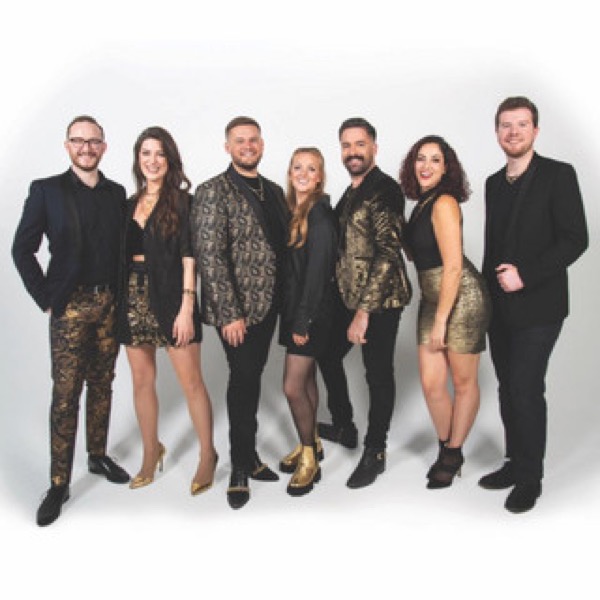
Swingle Singers
Johann Sebastian Bach: Brandenburg Concerto No. 3 in G Major, BWV 1048: I. Allegro (arr. J. Rathbone and B. Parry) (Swingle Singers, Ensemble)
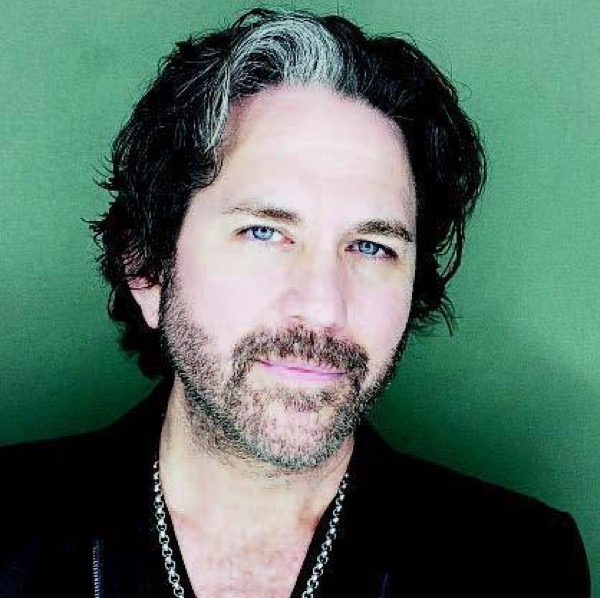
Jazz pianist and composer Brad Mehldau (b. 1970) studied jazz and contemporary music in New York at The New School and was a member of saxophonist Joshua Redman’s quartet in the mid-1990s. Following commissions to write music inspired by Bach, he started touring with these in 2015.
In his piece After Bach, Mehldau plays with Bach’s metre: 3/8 time is turned into the infinitely more complex 20/16, and other time signatures. Odd-metre Bach, playing with the established rondo form, and shifts of tonality take Bach firmly into the 21st century.
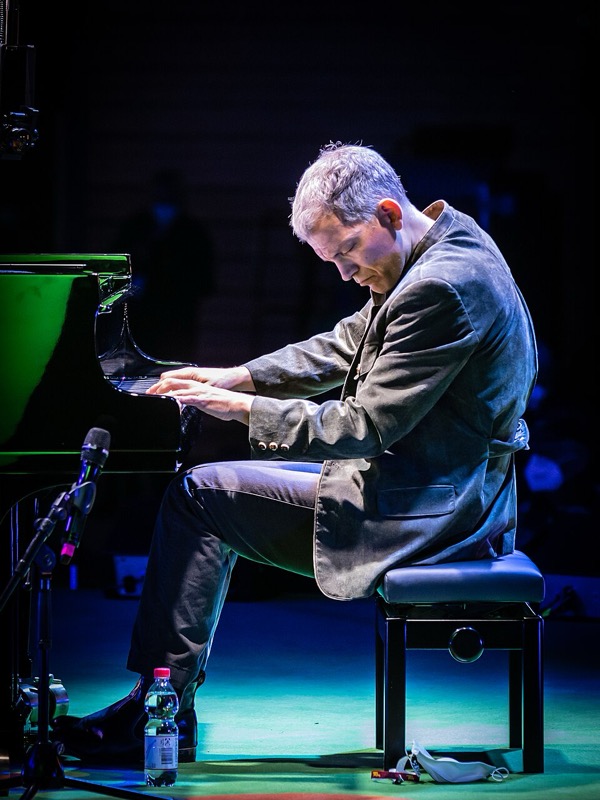
Brad Mehldau, 2021 (photo by Harald Krichel)
Brad Mehldau: After Bach: Rondo (Brad Mehldau, piano)
We’ll return to the Swingle Singers for our last bit of Bach. From their 2007 recording Beauty and the Beat Box, the Swingle Singers were joined by beatboxer Shlomo and the beatboxing choir, Vocal Orchestra. This truly takes Bach to the 21st century.
Shlomo: Bach Beat (arr. by W. Swingle for a cappella choir) (Vocal Orchestra; Swingle Singers)
Bach hides in many places and he’s not only confined to classical music. Jazz, pop, rock and every other genre can see a bit of Bach everywhere. Where’s your favourite Bach?
For more of the best in classical music, sign up for our E-Newsletter