Composer Ethel Smyth was the first woman to have an opera performed at the Metropolitan Opera. She befriended some of the most important composers and authors of the late nineteenth century, and once conducted her own suffragette anthem from a prison cell window using a toothbrush.
She was made a Dame of the British Empire. Pyotr Ilyich Tchaikovsky called her a composer worthy of serious consideration. She wrote chamber music, a choral symphony, operas, and more.
So why, for much of the twentieth century, did we forget about Ethel Smyth?
As with so many women in classical music history, the answer is complicated.
Ethel Smyth’s Difficult, Rebellious Childhood
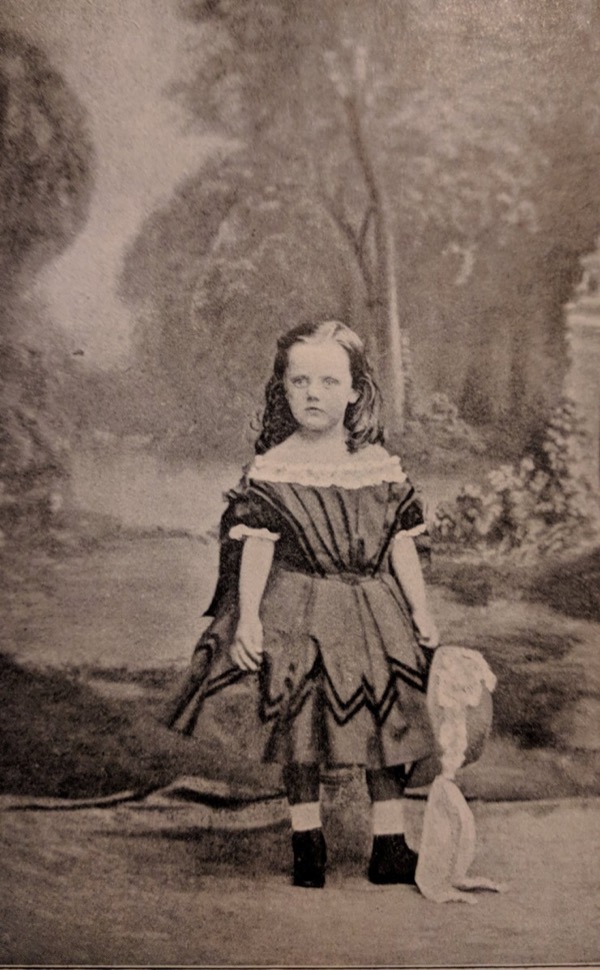
Ethel Smyth (her last name is pronounced with a long “i,” like “tithe”) was born on 22 April 1858 in London, the fourth of eight children.
Ethel Smyth
She showed musical promise early. But when she began to dream of becoming a professional musician, her father – a major general in the Royal Artillery – strongly opposed her ambitions. Rebelling against his pressure was the first of many battles she would have to fight simply to exist as a composer.
Ultimately, she prevailed through sheer persistence: she locked herself in her room and refused to come out until she was granted permission to study composition abroad.
Ethel Smyth: String Quartet in E Minor (Villiers Quartet)
After years of pressure at home, she left for Leipzig in 1877 – a major centre of nineteenth-century music – and enrolled in the conservatory.
Finding its instruction inadequate, she left to study privately with Heinrich von Herzogenberg.
This decision would shape her life. The Herzogenbergs hosted a vibrant Leipzig salon that attracted leading cultural figures, including Clara Schumann and Johannes Brahms.
After meeting her there, Pyotr Ilyich Tchaikovsky described Smyth as “one of the few women composers whom one can seriously consider to be achieving something valuable in the field of musical creation.”
Smyth’s Complicated Identity and Love Life
Leipzig opened doors professionally – and also personally.
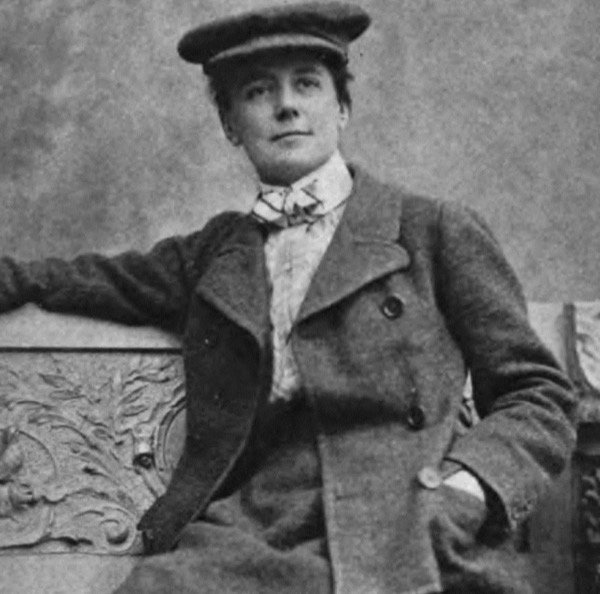
Smyth fell deeply in love with Elisabeth von Herzogenberg, her teacher’s wife, who was arguably just as musically gifted as he was. (She was not the first to fall for her: Johannes Brahms had romantic feelings for Elisabeth, too.)
Ethel Smyth
Smyth later recalled:
“In musical matters, Lisl and I saw absolutely eye to eye, and it was a strange, intoxicating thing to realise that in moments of musical ecstasy, the heart of the being on earth you loved best was so absolutely at one with yours that it might have been the same heart.”
The relationship did not last. In 1884, Smyth fell in love with writer Harry Brewster – her lover’s brother-in-law – causing a painful and ultimately irreparable rupture with Elisabeth.
Ethel Smyth’s Music
Between 1880 and 1930, Smyth produced an extraordinary body of work: lieder, two string quartets, six operas, a mass, a choral symphony, and more.
It would be a formidable output for any composer – but it was especially impressive for an unmarried woman supporting herself while navigating entrenched sexism.
In 1890, she made her orchestral debut with a Serenade in D at London’s Crystal Palace Concerts.
Three years later, her Mass in D brought her widespread recognition. It was a sweeping, ambitious work that established her as a composer unafraid of large-scale forms.
Smyth’s Mass in D
Her operas followed. Der Wald (1899–1901) became the first opera by a woman ever staged at New York’s Metropolitan Opera – a distinction that would stand for 113 years.
When it premiered in 1903, it was a commercial success. Although the New York Times dismissed it as an “inextricable slough of dreariness,” even the review conceded that the audience responded with a “ten or fifteen minute” standing ovation.
Her best-known work, The Wreckers (1906), is a harmonically and emotionally sophisticated drama of passion set in a Cornish fishing community – a striking precursor to Benjamin Britten‘s masterpiece Peter Grimes.
That it remained largely unperformed throughout the twentieth century says more about institutional bias than about the music itself.
On the Cliffs of Cornwall from Smyth’s The Wreckers
It is also worth noting that Harry Brewster wrote the libretto, permanently linking their personal and professional lives.
Throughout her career, criticism of Smyth’s work was filtered through her gender. Reviews repeatedly framed her music in terms no male composer had to contend with – a limiting lens that, in different forms, persists even today.
Her response was simple: she kept composing.
How Smyth Refused to Hide Her Queer Life
Smyth’s personal life was as unconventional as her career.
She was openly attracted to women, yet maintained a long-term, long-distance relationship with Brewster until his death in 1908.
She formed intense emotional connections with figures including Empress Eugénie of France and Emmeline Pankhurst, though the precise nature of some of these relationships remains debated.
Remarkably, Smyth documented her feelings with unusual candour. As early as 1892, she wrote to a male friend:
“It is so much easier for me, and I believe a great many English women, to love my own sex more passionately than yours.”
At a time when queer identities were rarely expressed openly, Smyth refused concealment.
The Friendship Between Ethel Smyth and Virginia Woolf
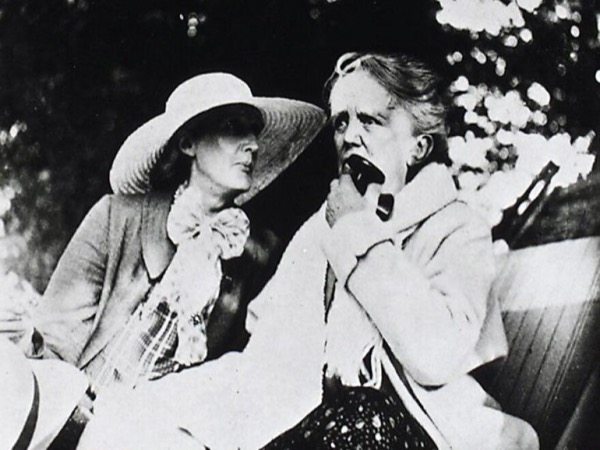
In her later years, Smyth formed a close – and on her side, deeply romantic – attachment to Virginia Woolf.
The two were strikingly different. Smyth, in her seventies, was forceful and extroverted; Woolf, in her forties, was fragile and introspective.
Smyth quickly became infatuated, declaring, “I don’t think I have ever cared for anyone more profoundly.”
Woolf, for her part, wrote in her diary, “An old woman has fallen in love with me. It’s like being caught by a giant crab.”
Despite this, the relationship was genuine and creatively productive. Woolf encouraged Smyth’s writing, while Smyth pushed Woolf toward a more direct articulation of the structural barriers facing women.
Whatever its precise nature, it remains one of the most compelling creative relationships of the early twentieth century.
Ethel Smyth and Virginia Woolf
Ethel Smyth’s Life as a Suffragette
By 1910, after decades of fighting for recognition in music, Smyth aligned herself with the broader struggle for women’s rights.
Inspired by Emmeline Pankhurst, she joined the Women’s Social and Political Union and temporarily stepped away from composition to become an activist.
Smyth’s The March of the Women
In 1911, she composed The March of the Women, which became the movement’s anthem.
Soon after, she was imprisoned for two months for throwing a stone through the window of politician Lewis Harcourt.
Asked why she chose his office, she replied:
“The window I selected belonged to the gentleman who said ‘I would not object to women having votes if they were all as intelligent as my wife.’ I think that the most impudent and fatuous thing I ever heard.”
While incarcerated at Holloway Prison, conductor Sir Thomas Beecham visited her – and found her leaning out of her cell window, conducting fellow prisoners singing The March of the Women below, using a toothbrush as a baton.
The Long Silence – and What Broke It
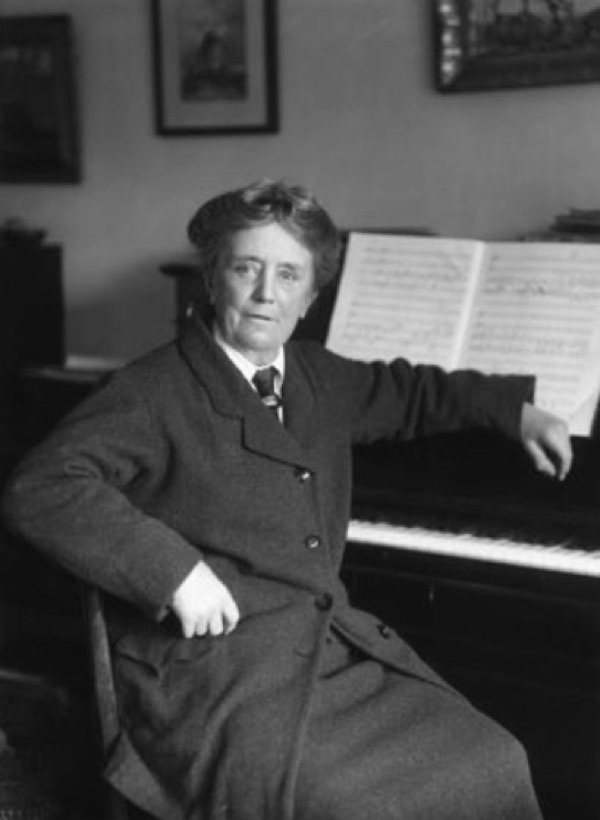
Smyth’s composing career was cut short in the 1920s by progressive hearing loss that eventually left her deaf.
Ethel Smyth
Characteristically, she adapted. Turning to literature, she published a series of autobiographical works between 1919 and 1940.
In 1922, she became the first female composer to be made a Dame of the British Empire.
She died in 1944 at the age of 86.
For decades afterwards, her music largely disappeared from the repertoire. Her operas went unstaged; her name faded from curricula; institutions failed to sustain her legacy.
That has begun to change.
The Wreckers received its first full North American staging at Bard College in 2015, followed by productions at Glyndebourne and Houston Grand Opera in 2022.
Her final major work, the choral symphony The Prison, was recorded for the first time in 2020 and won a Grammy Award in 2021 – marking the first Grammy awarded for a recording of music by a historically overlooked woman composer.
Ethel Smyth: The Prison (Sarah Brailey, soprano; Dashon Burton, bass-baritone; Experiential Chorus; Experiential Orchestra; James Blachly, cond.)
What Happened to Ethel Smyth?
The short answer is: what happened to many women composers. She was selectively praised, strategically dismissed, and eventually allowed to fade – not because her music lacked merit, but because the institutions that should have preserved it failed to do so.
The longer answer is more compelling.
Smyth built and sustained a major compositional career against extraordinary resistance. She wrote six operas, a mass, a choral symphony, ten volumes of memoirs, and countless letters. She went to prison for her beliefs. She conducted her own music from a cell window. She loved women openly in an era that punished such openness. And she articulated, with clarity and force, what it meant to make serious art in a world that preferred its women silent.
Ethel Smyth was not someone who could be quiet.
Fortunately, we are beginning to hear her again.
For more of the best in classical music, sign up for our E-Newsletter