
Composer Gustav Mahler is famous for his monumental symphonies that reshaped late-Romantic music.
Yet he wrote his final symphonies in the shadow of a devastating tragedy: the 1907 death of his daughter Maria Anna Mahler, nicknamed Putzi. The loss shattered the family and left a lasting imprint on his emotional world.
Today, we’re looking at the lives of Mahler’s eldest daughter – and how her and her sister’s births, childhoods, and Putzi’s heartbreaking loss shaped the final years of one of classical music’s most visionary composers.
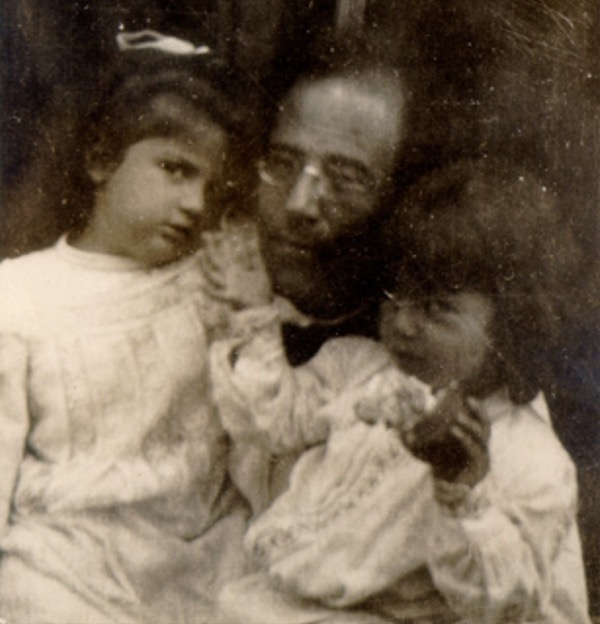
Mahler and his daughters
The Birth of Putzi Mahler
Maria Anna Mahler was born on 3 November 1902 in Vienna.
Her birth came eight months after her parents’ marriage, and a few days before the first anniversary of their first meeting. (Their courtship and engagement had been notably fast.)
Maria came to be known as “Putzi” (German for cute, sweet, or dainty, similar to the English term “darling”).
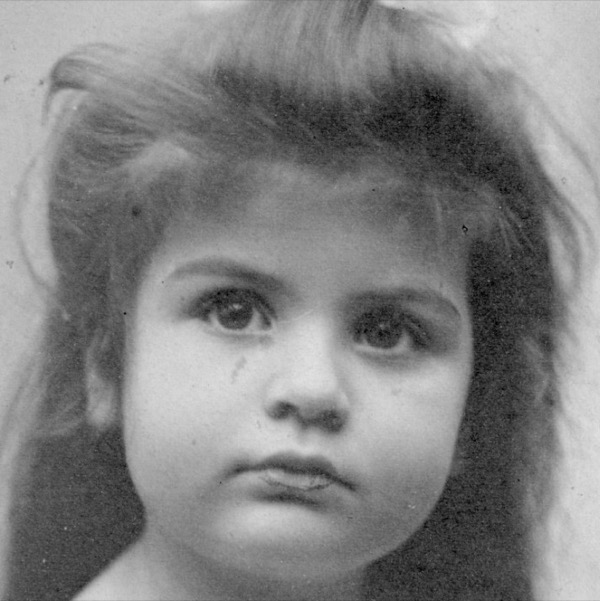
Maria Anna Mahler
The birth was difficult; she was born breech. Gustav was horrified by her birth, exclaiming, “How can men go on conceiving children knowing that they will cause such suffering?”
Alma wrote a diary during this time, and it’s our primary resource for understanding how both she and her husband reacted to parenthood. In it, she wrote:
“I don’t love her yet as much as I should. Everything in me belongs to Gustav.”
Five weeks later, Alma – herself an aspiring composer who had recently complied with her new husband’s demand that she stop composing – wrote about how she coped with the recovery by “weaving music” in her mind.
“My child doesn’t need me. In any case, I can’t keep myself solely busy with that… But my God, what has become of my goal, my magnificent goal!”
She also lamented:
“I feel as though my wings had been clipped.”
By contrast, Gustav seems to have been more involved with parenting than his taciturn personality might suggest. When she became ill, he would hold her and comfort her.
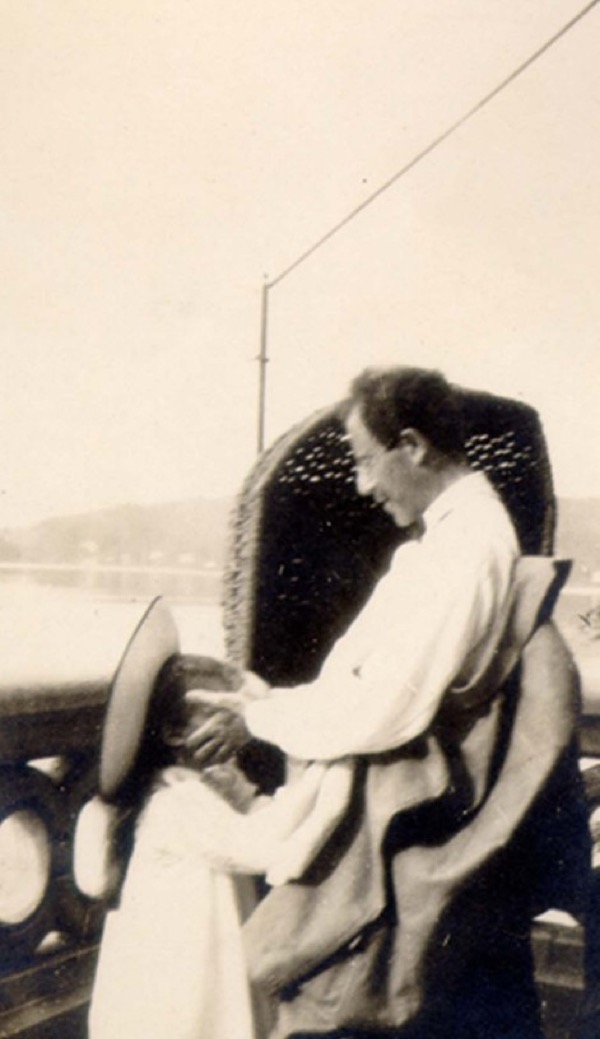
Mahler and Putzi
During the following summer, when the family was vacationing as he composed, he would sing and dance with Putzi, seeming like a child himself.
Gustav and Alma had a second daughter, Anna Justine, in the summer of 1904. She was nicknamed Gucki, a nickname referencing her bright blue eyes using gucken, the German verb for “to look.”
We’ve also told Gucki’s own remarkable story – including how she became a sculptor – here.
The Death and Illness of Putzi
Tragedy struck the family in the summer of 1907.
Earlier that summer, Gucki had come down with scarlet fever but fortunately recovered. Soon afterwards, the family travelled to Maiernigg for their annual holiday.
It was set to be an important creative summer for Mahler. After much conflict, he had tendered his resignation from his prestigious job at the Vienna Court Opera, and he hoped to spend the summer composing and gathering himself.
However, a sudden tragedy derailed Mahler’s plans. Just three days after their arrival, Putzi came down with both scarlet fever and diphtheria.
Alma wrote in her memoirs about this time:
“We passed a fortnight in an agony of dread; then there was a relapse and the danger of suffocation. It was a ghastly time, accompanied by thunderstorms and lurid skies. Mahler loved this child devotedly; he hid himself in his room every day, taking leave of her in his heart.”
In desperation, doctors attempted a tracheotomy operation in the home to save her life.
During the operation, doctors forbade the presence of either parent. Gustav stayed in his room, while Alma “ran along the shore of the lake,” crying.
Her memoir continued:
“She lay choking, with her large eyes wide open. Our agony dragged on one more whole day. Then the end came.”
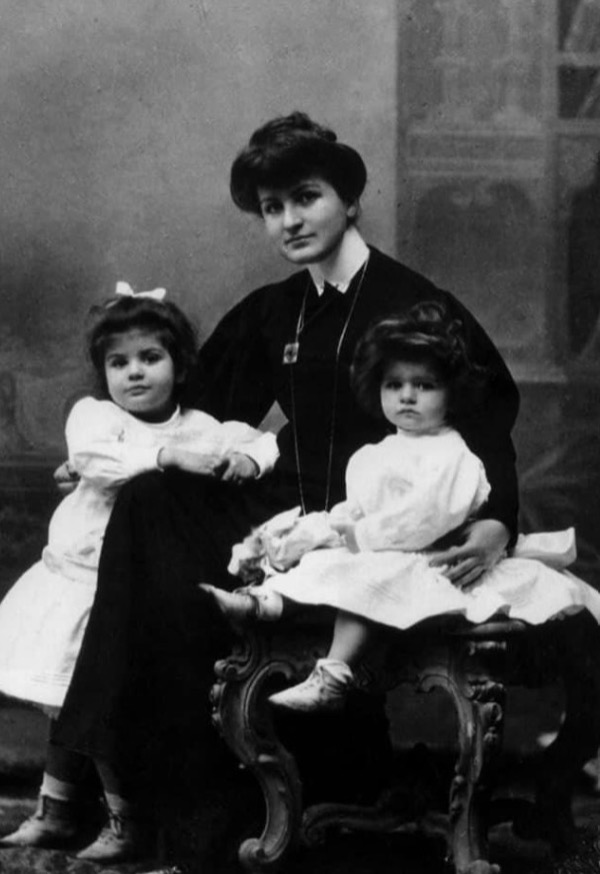
Alma Mahler and her daughters
More Tragedies Befall the Family
Two days later, Alma and her mother Anna, who had arrived to support her daughter in mourning, took a walk along the lake, at Gustav’s urging.
During the walk, Anna had a heart attack. Alma, panicked, resorted to placing a cold compress of lake water over her heart. (Thankfully, Anna survived.)
Mahler came down to see them, his face contorted, and Alma saw behind him the tiny coffin of her daughter being put into the hearse.
The shock of the tragedy affected the health of everyone in the family.
A doctor was called. He ordered a total bed rest for Alma. “He could not understand how I had kept going at all with my heart in that state,” she wrote in her memoirs.
As a “diversion”, Gustav asked the doctor to examine his heart. What the doctor heard alarmed him; he diagnosed Mahler with a heart defect and ordered him not to, in Alma’s words, “walk uphill, or bicycle, or swim.”
The heartbroken family had had enough. They left Maiernigg – Alma referred to their escape using the word “fled” – for another picturesque spot, Schluderbach.
How Putzi’s Death Changed Mahler’s Life and Work
Mahler’s Symphony No. 9
Maria’s death altered the trajectory of Mahler’s life in several ways.
First, of course, it turned Mahler’s mind to thoughts of loss, grief, and mortality. These themes are reflected in the works he wrote after 1907, such as Das Lied von der Erde and the ninth and tenth symphonies.
Second, it was the event that led to the diagnosis of heart trouble that would preoccupy him during the final years of his life.
And third, it impacted where Gustav would ultimately be buried. According to Alma, he wanted to be buried beside Putzi, which he ultimately was.
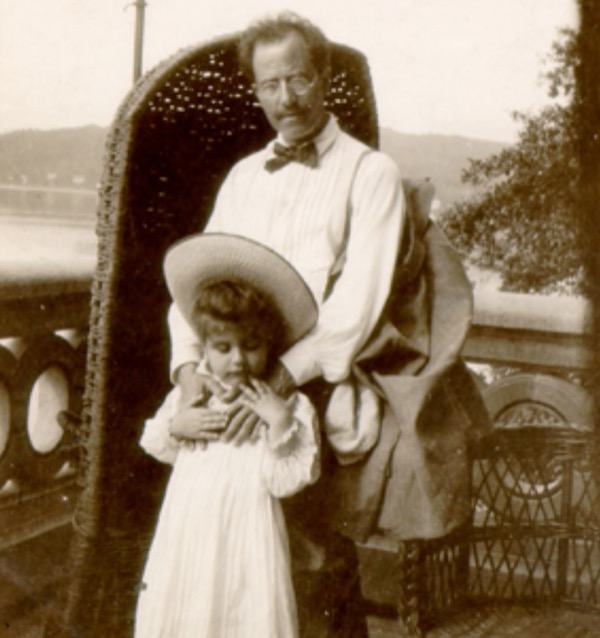
Mahler and Putzi
The death, combined with Gustav’s resignation from the Vienna Opera, also likely impacted the shape of their American sojourn.
In 1907, the Mahlers decided to leave for New York. Gustav and Alma departed in December, leaving the toddler Gucki with Alma’s mother Anna.
Mahler made his Metropolitan Opera debut in January 1908, conducting Wagner. This set a chain reaction in motion that led to Mahler being named conductor at both the Metropolitan Opera and the New York Philharmonic.
Gustav Mahler only outlived Putzi by a few years. He died in May 1911 from bacterial endocarditis, a type of infection that people with heart valve issues are especially prone to.
Alma spent the rest of her life championing her husband’s legacy.
As for Gucki, she would grow up to become a sculptor and would remain Gustav and Alma’s only surviving child.
Conclusion
The brief life of Maria Anna Mahler left a profound mark on her parents. Ironically, even though Alma had once feared she didn’t love Maria enough, she found her death emotionally shattering. The loneliness that followed was one reason why she sought solace with an affair partner, architect Walter Gropius, in 1910.
For Gustav, the loss of Putzi in 1907 coincided with a series of upheavals that changed the course of his life: the end of his tenure in Vienna, the diagnosis of a fatal heart condition, and the discovery of Alma’s affair.
In the handful of years he had left, Mahler composed some of his most haunting works, including Das Lied von der Erde and his final symphonies: music suffused with themes of farewell, fragility, and acceptance of mortality.
Putzi died at four years old, and her father followed her to the same grave less than four years later – but in between, he wrote some of the most searching music in the Western canon.
For more of the best in classical music, sign up for our E-Newsletter





You don’t mention Alma’s accusation that Mahler had anticipated Putzi’s death in his “Kindertotenlieder” (1904), surely not entirely irrelevant.