Azerbaijani composer Kara Karayev (also Gara Garayev) (1918–1982) began his musical education in his home city of Baku and, at age 20, was accepted into the Moscow Conservatory, where he studied composition. He returned to Baku after graduation and began what would be a long and illustrious career as a composer, pedagogue, and critic.
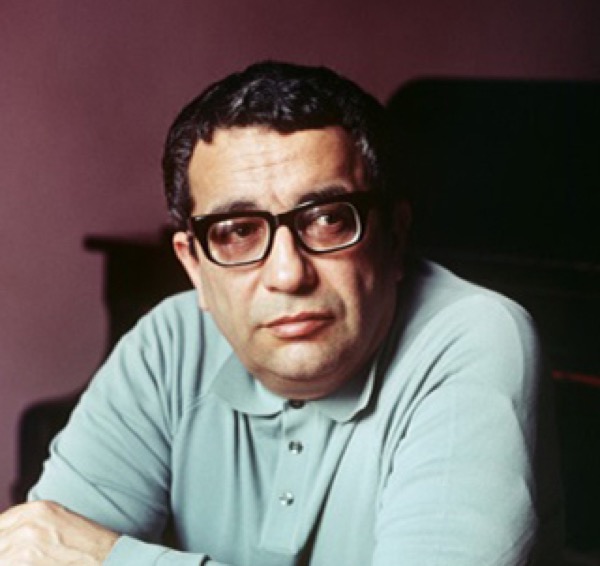
Kara Karayev (Gara Garayev)
At the Moscow Conservatory, he was the top student in the class studying with Dmitri Shostakovich, and much of Shostakovich’s influence is evident in Karayev’s musical style, particularly in instrumentation and harmonic language. He wrote across an enormous range of genres: music for plays and musicals, opera, ballet, symphonic and chamber works, romances, cantatas, children’s music, and film music. He saw himself as a native speaker of Azerbaijani music, and that music of both the east and the west came together in him.
In 1949, Karayev wrote the symphonic suite The Seven Beauties, based on the 12th-century poem by Nizami. In Nizami’s epic poem, completed in 1197, the young warrior Bahram Gur, destined to become ruler of the world, enters a mysterious, locked room to discover the portraits of seven beautiful princesses, each from a different land. When he wins a kingdom and achieves great wealth and power, he remembers the maidens and summons each of them, commissioning the architect Shideh to build seven domed structures – one for each bride. Seven brides and seven days of the week, and each beauty in a separate pavilion in a signature colour, to be visited on ‘her’ day of the week. Each beauty tells the king a story with a moral lesson. Starting the week in the White pavilion, he ends at the black pavilion. Nizami’s mystical poetry illustrates the supremacy of divine love over earthly pleasures.
The poetry of Nizami and the story of Bahram Gur have been illustrated for centuries, and below you will see selections from an early 16th-century manuscript from Herat, in present-day Afghanistan.
In 1953, Karayev converted his symphonic suite into a ballet, the first full-length Azerbaijani ballet, The Seven Beauties. The Seven Beauties Ballet Suite was created from the ballet.
Before any of the beauties are revealed, the ballet opens with a Waltz and Adagio, but not a waltz in the Viennese sense, since the use of percussion and the tonal modulations definitely takes us to the exotic east.
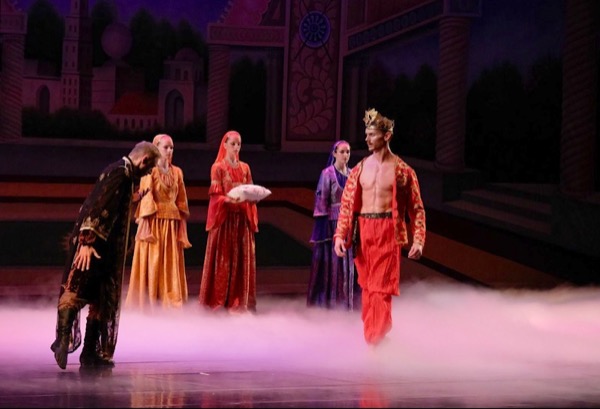
Bahram Gur, 2014 (San Diego Ballet)
Kara Karayev: 7 Beauties Ballet Suite: I. Waltz (Royal Philharmonic Orchestra; Dmitry Yablonsky, cond.)
The whirling Waltz is calmed in a moderate Adagio.
Kara Karayev: 7 Beauties Ballet Suite: II. Adagio (Royal Philharmonic Orchestra; Dmitry Yablonsky, cond.)
A comedic Dance of the Clowns follows, giving us the equivalent of a scherzo movement.
Kara Karayev: 7 Beauties Ballet Suite: III. The Dance of The Clowns (Royal Philharmonic Orchestra; Dmitry Yablonsky, cond.)
Now our hero, Bahram Gur, finds the ruined palace where the portraits of the 7 beauties adorn the walls, which forms an Introduction to the seven beauties.
Kara Karayev: 7 Beauties Ballet Suite: IV. The Seven Portraits: Introduction (Royal Philharmonic Orchestra; Dmitry Yablonsky, cond.)
Each princess is from a different region, starting with the beauty from India. The music is given to a solo flute, with a percussion accompaniment.
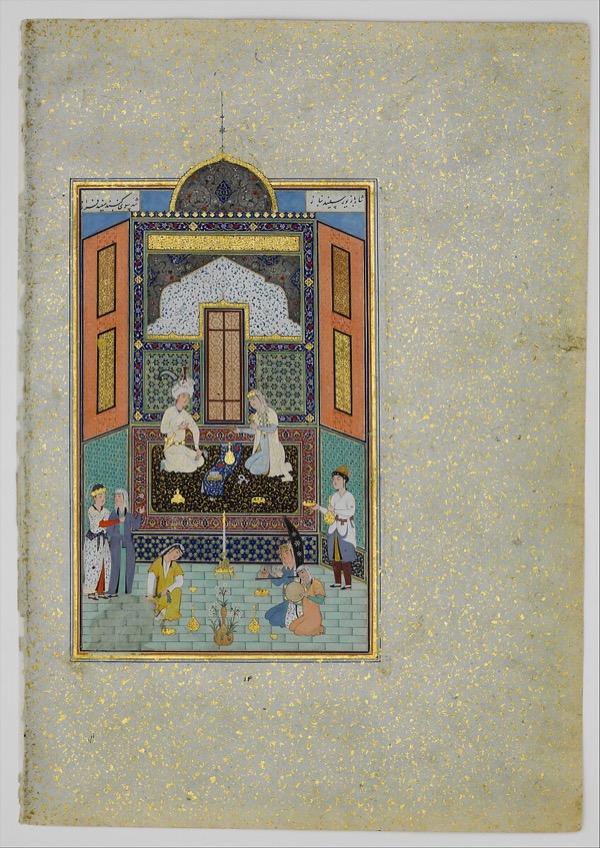
Bahram Gur in the White Palace on Friday, Folio 235 from a Khamsa (Quintet) of Nizami of Ganja, 1524–1525 (Metropolitan Museum, 13.228.7.14)
Kara Karayev: 7 Beauties Ballet Suite: IV. The Seven Portraits: The Indian Beauty (Royal Philharmonic Orchestra; Dmitry Yablonsky, cond.)
The Byzantine beauty is personified by a fast, fiery dance at her entrance and a more subdued exit.
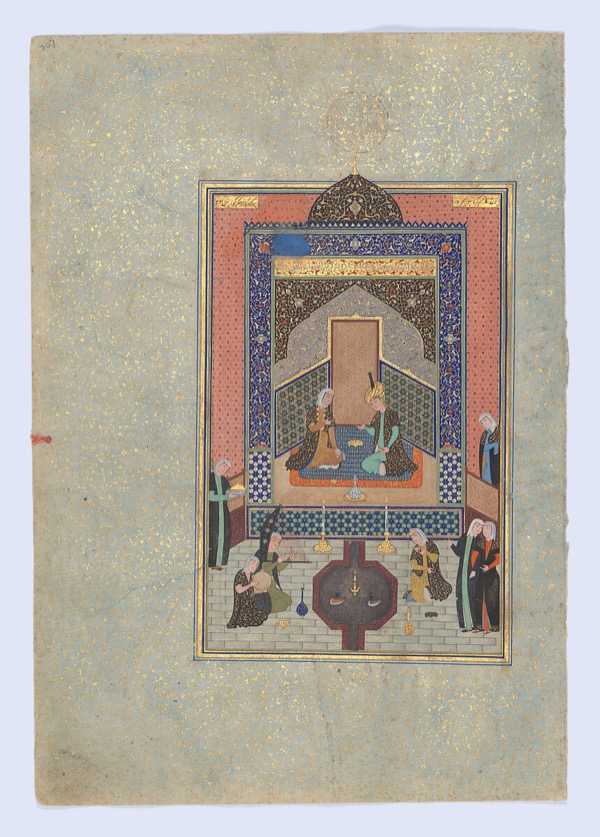
Bahram Gur in the Dark Palace on Saturday, Folio 207 from a Khamsa (Quintet) of Nizami of Ganja, 1524–1525 (Metropolitan Museum, 13.228.7.8)
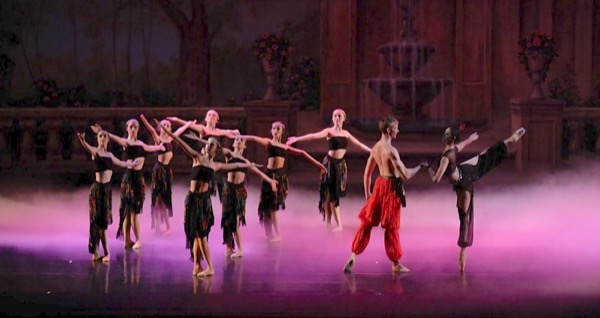
Bahram Gur and the Dark Princess, 2014 (San Diego Ballet)
Kara Karayev: 7 Beauties Ballet Suite: IV. The Seven Portraits: The Byzantine Beauty (Royal Philharmonic Orchestra; Dmitry Yablonsky, cond.)
The Khorezmian beauty from the Khwarazmian Empire, now part of present-day Central Asia, Afghanistan, and Iran, is also energetic.
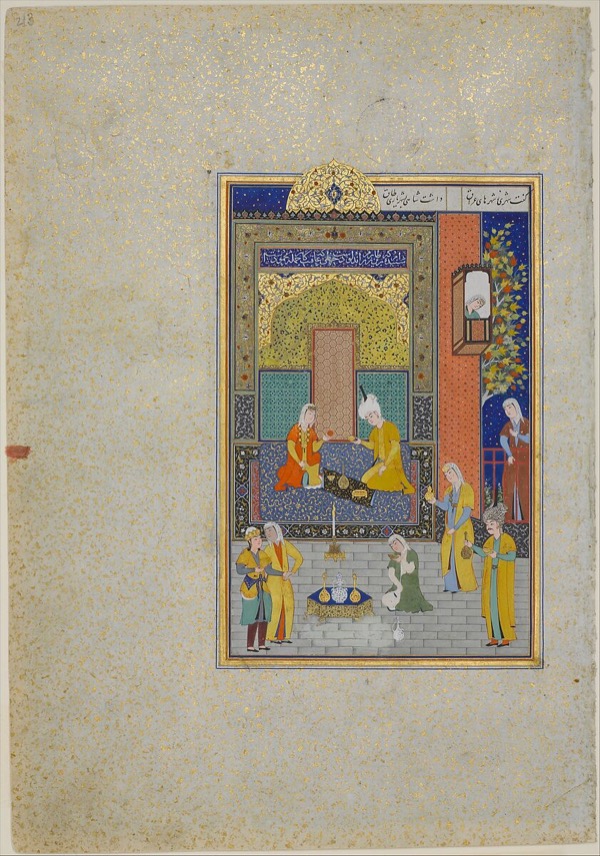
Bahram Gur in the Yellow Palace on Sunday, Folio 213 from a Khamsa (Quintet) of Nizami of Ganja, 1524–1525 (Metropolitan Museum, 13.228.7.9)
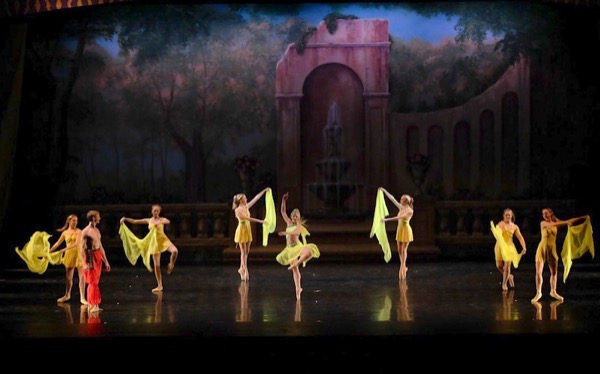
Bahram Gur and the Yellow Princess, 2014 (San Diego Ballet)
Kara Karayev: 7 Beauties Ballet Suite: IV. The Seven Portraits: The Khorezmian Beauty (Royal Philharmonic Orchestra; Dmitry Yablonsky, cond.)
The Slavonic beauty’s music invokes Russian folksong as its basis.
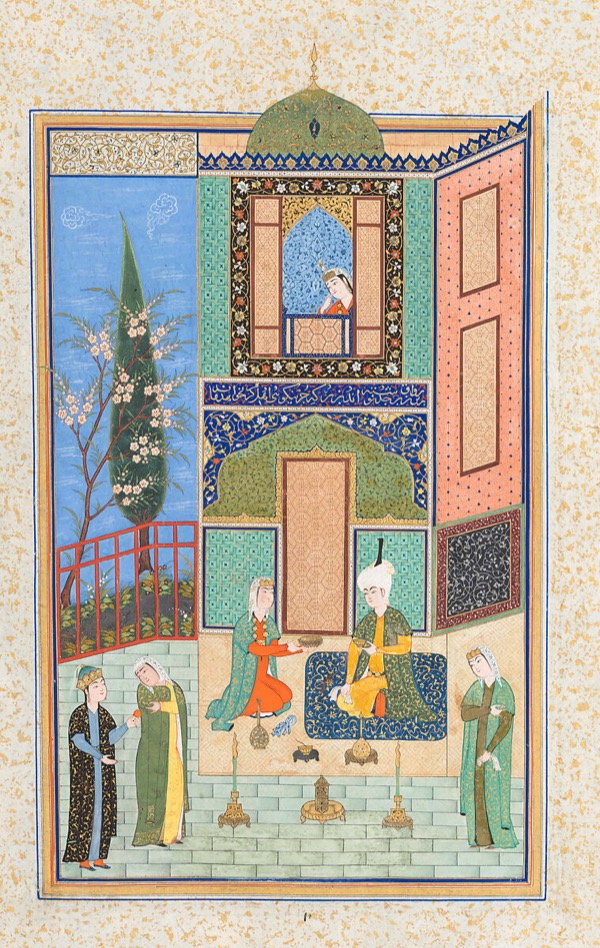
Bahram Gur in the Green Palace on Monday, Folio 224 from a Khamsa (Quintet) of Nizami of Ganja, 1524–1525 (Metropolitan Museum, 13.228.7.12)
Kara Karayev: 7 Beauties Ballet Suite: IV. The Seven Portraits: The Slavonic Beauty (Royal Philharmonic Orchestra; Dmitry Yablonsky, cond.)
The Maghrebian beauty brings us a bolero song style with castanets and Spanish harmonies.
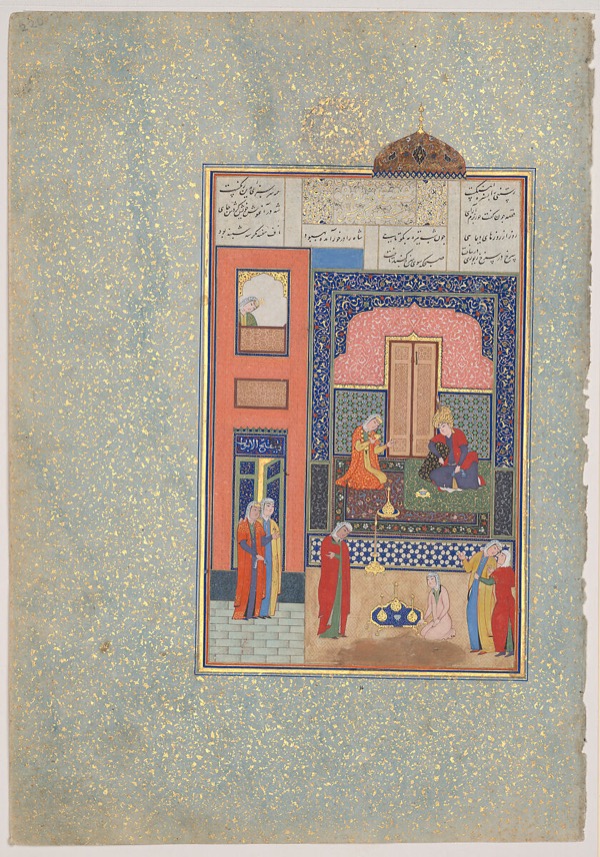
Bahram Gur in the Red Palace on Tuesday, Folio 220 from a Khamsa (Quintet) of Nizami of Ganja, 1524–1525 (Metropolitan Museum, 13.228.7.11)
Kara Karayev: 7 Beauties Ballet Suite: IV. The Seven Portraits: The Maghrebian Beauty (Royal Philharmonic Orchestra; Dmitry Yablonsky, cond.)
The Chinese beauty brings back the flutes, now in a lively dance.
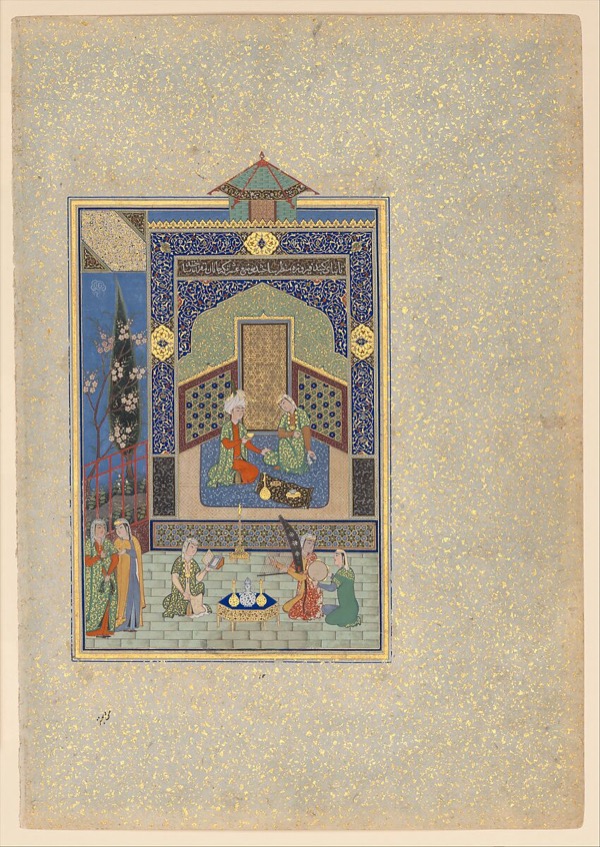
Bahram Gur in the Turquoise Palace on Wednesday, Folio 216 from a Khamsa (Quintet) of Nizami of Ganja, 1524–1525 (Metropolitan Museum, 13.228.7.10)
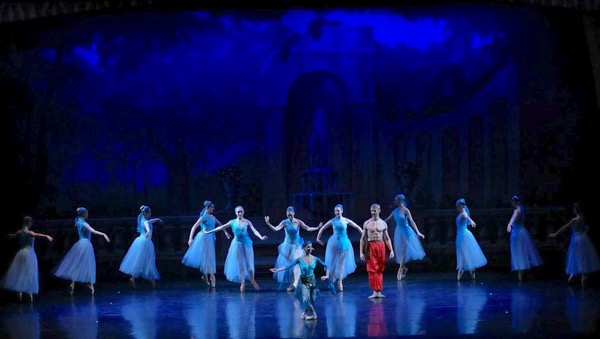
Bahram Gur and the Turquoise Princess, 2014 (San Diego Ballet)
Kara Karayev: 7 Beauties Ballet Suite: IV. The Seven Portraits: The Chinese Beauty (Royal Philharmonic Orchestra; Dmitry Yablonsky, cond.)
The final portrait, called by Karayev The Beauty of Beauties, uses harps and clarinets and places a unique melody in the oboe. The ostinato accompaniment gives the music an almost hypnotic feel. At the same time, there’s a triumphal feel, as though all the beauties in the world have come together as a brightly shining light.
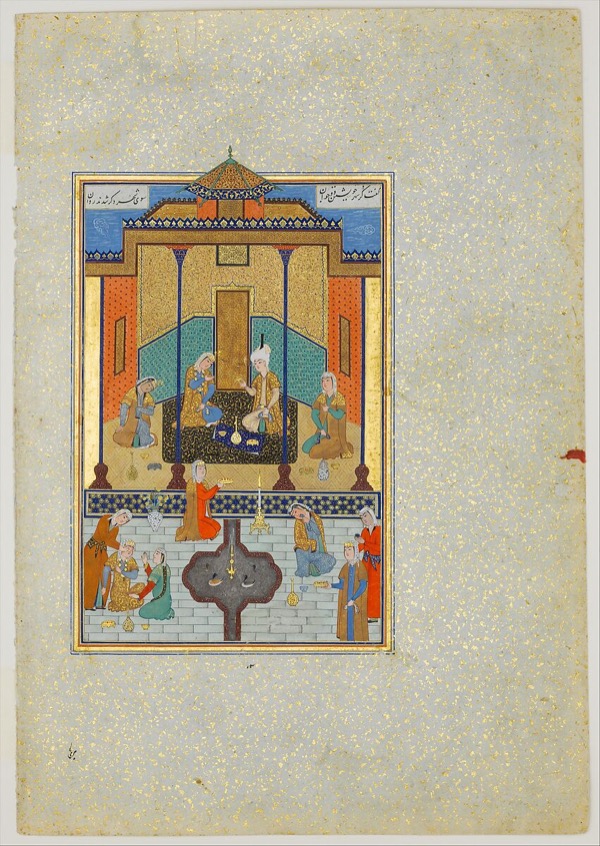
Bahram Gur in the Sandal Palace on Thursday, Folio 230 from a Khamsa (Quintet) of Nizami of Ganja, 1524–1525 (Metropolitan Museum, 13.228.7.13)
Kara Karayev: 7 Beauties Ballet Suite: IV. The Seven Portraits: The Most Beautiful of The Beauties (Royal Philharmonic Orchestra; Dmitry Yablonsky, cond.)
The ballet closes with The Procession, in a march that opens in the woodwinds and continues using harmonies and rhythms in the style of Prokofiev.
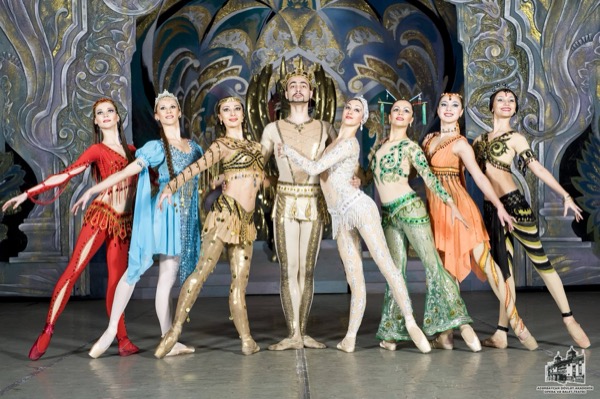
Bahram Gur and his 7 beauties, 2014 (San Diego Ballet)
Kara Karayev: 7 Beauties Ballet Suite: V. The Procession (Royal Philharmonic Orchestra; Dmitry Yablonsky, cond.)
Throughout the work, Karayev’s research into music of the Arab-influenced world and his ventures into Albanian, Vietnamese, Turkish, Bulgarian, and African musics all have a place to show in the international beauty brought together by Bahram Gur. As a ballet, it allows the choreographer to use musical styles from across the region for each princess, each reinforced by their individual colours.
For more of the best in classical music, sign up for our E-Newsletter