With his new album, Prokofiev: Miniatures, pianist Brian Woods shines a spotlight on Sergei Prokofiev‘s early piano works. Featuring Visions fugitives, Sarcasms, and Tales of an Old Grandmother, the recording grew out of an unexpected artistic journey. While preparing Prokofiev’s Piano Concerto No. 1 for his concerto debut with the North Carolina Symphony, Woods was captivated by the composer’s musical language, inspiring him to explore the expressive possibilities of Prokofiev’s miniature works.
“I always tell people that if there’s a composer you aren’t completely comfortable with, taking on one of their big pieces teaches you so much about how they write,” Woods says. “You often end up falling in love with their music because of taking on a big project.”

Brian Woods
That experience inspired Woods to look beyond Prokofiev’s large-scale works and toward the composer’s shorter piano pieces. “He accomplishes so much with so little,” Woods says of the composer. “Everything on the album ended up being under three minutes, so it became this really interesting exploration of both Prokofiev and what it means to build an album from miniature works.”
The repertoire came together naturally. Woods had known Sarcasms since his teenage years, while Visions fugitives had long fascinated him for its remarkable variety of character. Tales of an Old Grandmother, however, entered the project thanks to an unexpected recommendation from celebrated cellist Zlatomir Fung.
Tales of an Old Grandmother, Op. 31 No. 1 Moderato
“It’s always interesting when a non-pianist introduces you to piano music,” Woods says with a smile.
Recording thirty miniature works required a different mindset from capturing large-scale repertoire. Although each piece lasts only a few minutes, Woods found that their brevity demanded exceptional attention to detail.
“When you have music that’s built from only a handful of notes or a page of music, it’s immediately obvious if something isn’t quite right,” he explains. “The phrase has to unfold naturally, the sound has to be exactly what you want, and there’s nowhere to hide.”
Much of his preparation, therefore, focused not on technical mastery but on refinement. Rather than simply learning the notes, he spent weeks shaping the colour, balance, and pacing of each phrase until every piece conveyed its own distinct atmosphere.
The recording process itself reflected that philosophy. While shorter works allowed for multiple takes, Woods was careful not to over-edit the performances.
“These pieces are so carefully constructed that they can start to sound unnatural if they’re edited too much,” he says. “It was important to preserve the flow of each performance.”
As Woods delved deeper into Prokofiev’s world, he also became increasingly interested in the composer’s personality. Reading Prokofiev’s diaries confirmed what he had already sensed from the music: an artist of extraordinary confidence who rarely softened his artistic convictions.
“The music feels brutally honest,” Woods says. “If he’s angry, he’s angry. If he’s sarcastic, he’s sarcastic. There’s no apology.”
Visions fugitives, Op. 22: 7. Pittoresco
Yet Woods is equally drawn to the composer’s lyrical side. While Prokofiev is often associated with modernism, Woods hears a composer deeply rooted in the Romantic tradition.
“A lot of Visions fugitives possess tremendous warmth and lyricism,” he says. “He was always looking forward, but he never lost that expressive beauty.”
That combination of boldness and lyricism has also surprised audiences. Sharing excerpts from the album online, Woods noticed that listeners often gravitated toward the more provocative miniatures.
“I’ve been shocked by which pieces people respond to,” he laughs. “Sometimes the gentler pieces get less attention than the ones that are a little more abrasive. People are often more adventurous than we expect.”
Beyond the recording studio, Woods serves as music director of the concert series at the World Chess Hall of Fame in St. Louis, where he curates monthly chamber music performances featuring musicians from the city’s thriving artistic community. The position has become an important creative outlet, allowing him to design imaginative programs while introducing newcomers to classical music through informal pre-concert talks.
“I recommend that every musician have the opportunity to program concerts,” he says. “You stop thinking only about what you want to play and start thinking about what kind of experience you want your audience to have.”
Woods’ upcoming concert calendar reflects the breadth of his artistic interests. To mention a few, on August 20, he returns to the World Chess Hall of Fame in St. Louis for a chamber music program featuring Rachmaninoff’s Trio élégiaque No. 1 and Smetana’s Piano Trio in G minor, Op. 15. On October 24, he takes on one of the piano repertoire’s greatest challenges, performing Rachmaninoff’s Piano Concerto No. 3 with the Rochester Symphony. These performances continue a season that balances chamber music, concerto appearances, and imaginative programming.
As Prokofiev: Miniatures reaches listeners, Woods hopes it will be only the beginning of a longer relationship with the composer. “I’ve become much more comfortable with his musical language,” he says. “It’s becoming one of the core parts of my repertoire.”
Although the works on Prokofiev: Miniatures are brief, Woods sees them as remarkable examples of Prokofiev’s ability to communicate “so much with so little.” Through thirty concise musical portraits, the album reveals the composer’s wit, lyricism, and uncompromising honesty, inviting listeners to discover that some of his most compelling ideas unfold in just a few minutes.
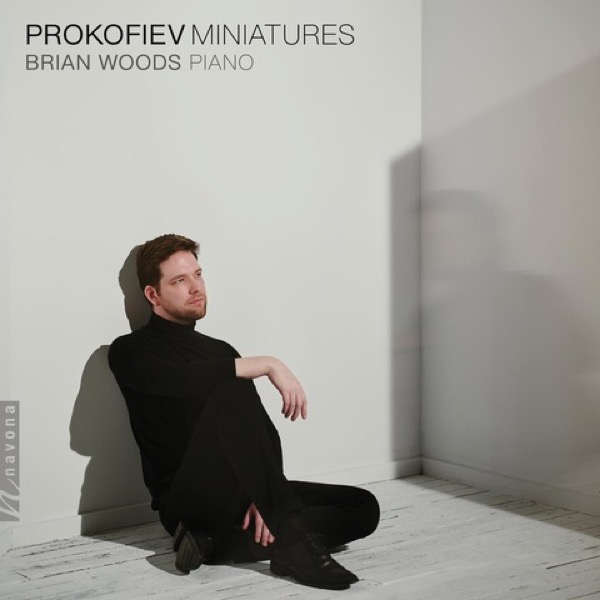
Prokofiev: Miniatures (Navona Records)
PROKOFIEV: MINIATURES
Brian Woods piano
Release Date: July 24, 2026
Catalog #: NV6870
For more of the best in classical music, sign up for our E-Newsletter