Vincenzo Bellini‘s final opera I Puritani is a daunting challenge, no matter which opera house attempts it. It is nearly impossible to assemble a cast of principals that is up to the task. The Royal Opera House, for the first time since the 1992 production with the unforgettable Edita Gruberova, took a valiant and largely successful shot with this new production by Richard Jones.
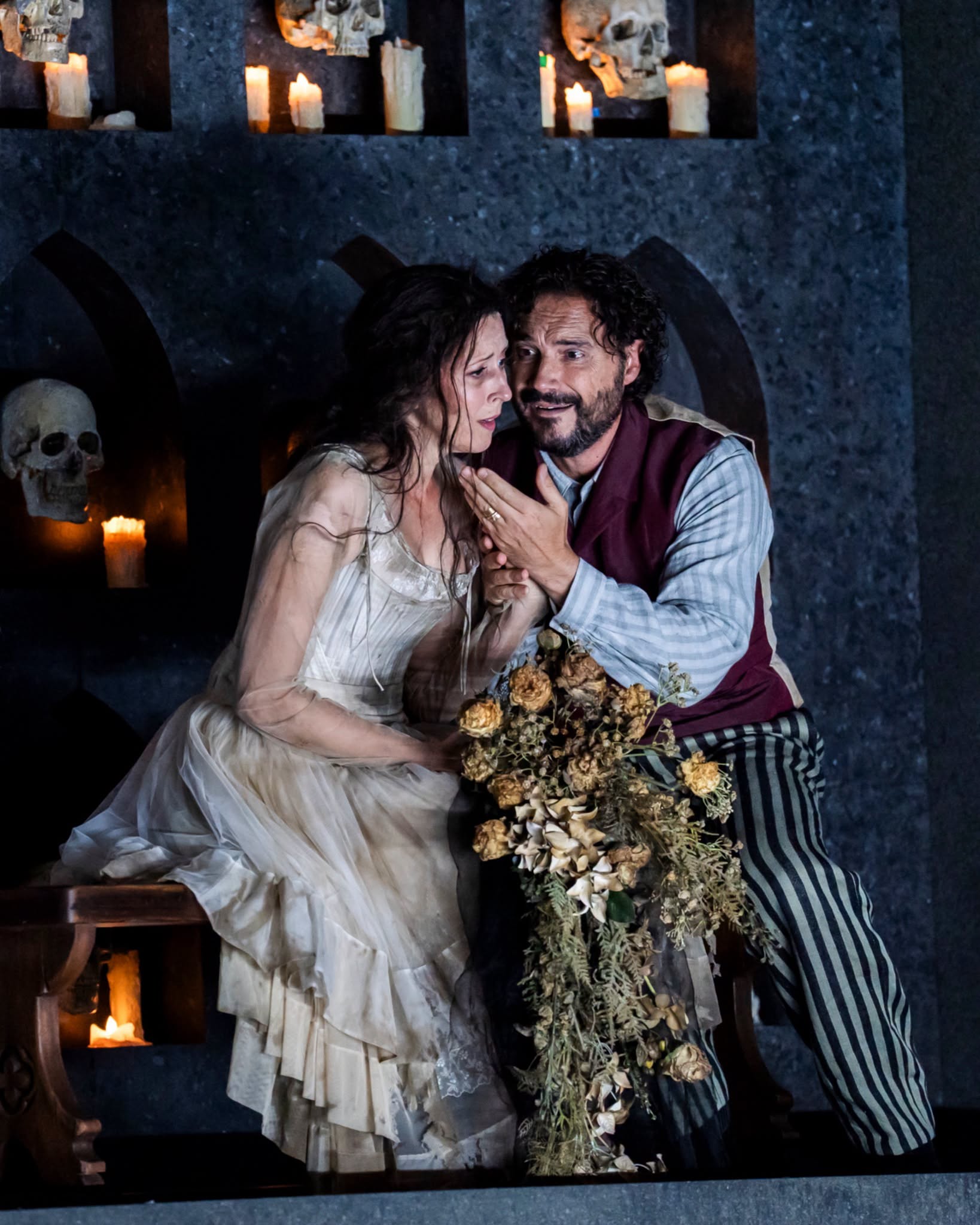
The program notes refer aptly to the work’s “gladiatorial vocal lines,” but Lisette Oropesa is singularly qualified to assume the role of Elvira, with its extraordinarily difficult vocal passages, trills, and top notes. The reigning lyric coloratura soprano du jour delivered not only vocally, but also dramatically, showing her impactful stage presence, her sensitive acting, and athletic physicality. She controls her voice with remarkable levity, never putting any pressure on her sumptuous organ, yet remains able to blade through the full chorus at will. Her soprano soars like a hovercraft through the famously challenging second act mad scene (Qui la voce sua soave/Vien, diletto, e in ciel la luna), her legato utterly exquisite. Occasional narrowness in the upper passages goes unnoticed, as she masterfully handles her formidable instrument.
© Tristram Kenton/Royal Ballet & Opera
Arturo Talbo, the love of her life, was portrayed by Francesco Demuro. While his voice was initially grainy, nearly bumpy, his vocal vehicle soon warmed up and ran reliably, delivering many moments of splendour. He effortlessly nailed the top notes of his entrance aria (A te, o cara). And he surprised with his much-anticipated third-act aria (Credeasi, misera), even attempting the harrowing high F.
The fact that he attacked this note, even if only shortly and not with much beauty, was a testament to the Sardinian tenor’s professionalism, as well as his fearless embrace of the treacheries of live opera – the very reason the art form can be so exciting.
Andrzej Filonczyk proved a robust Riccardo Forth, precise, physically engaging, and believable in a role that requires rapid changes of tone and mood. Ildebrando D’Arcangelo deployed his luscious and sonorous bass-baritone as Giorgio Valton to great effect. A delicious surprise was Marcela Rahal in the small but important role of Henriette, the widow of King Charles I. The Brazilian mezzo-soprano is a talent to watch.
Bellini: I Puritani, Royal Opera House
Riccardo Frizza, a bel canto specialist giving his house debut, ran through the score with graceful virtuosity and noticeable levity. While his pace was much appreciated, he didn’t explore nuances in the score, leading to occasional monotony, but always placed the voices at the centre of the performance.
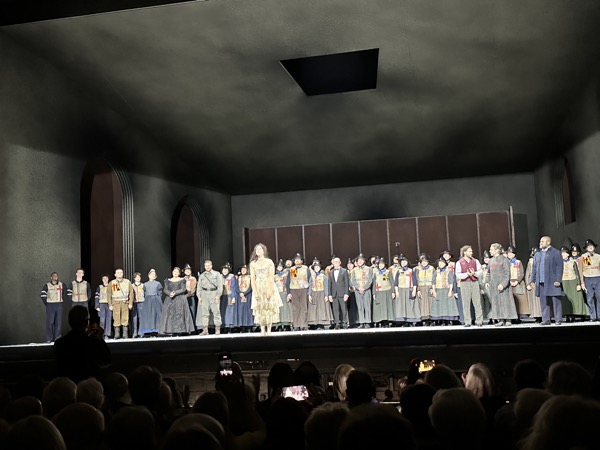
The direction was more problematic. There was a lot of aimless chasing around the stage, and the monochrome sets were unnecessarily lugubrious throughout. The ubiquitous martial themes were only contrasted with the more versatile moving rostrum, which provided much-needed intimacy.
© Tristram Kenton/Royal Ballet & Opera
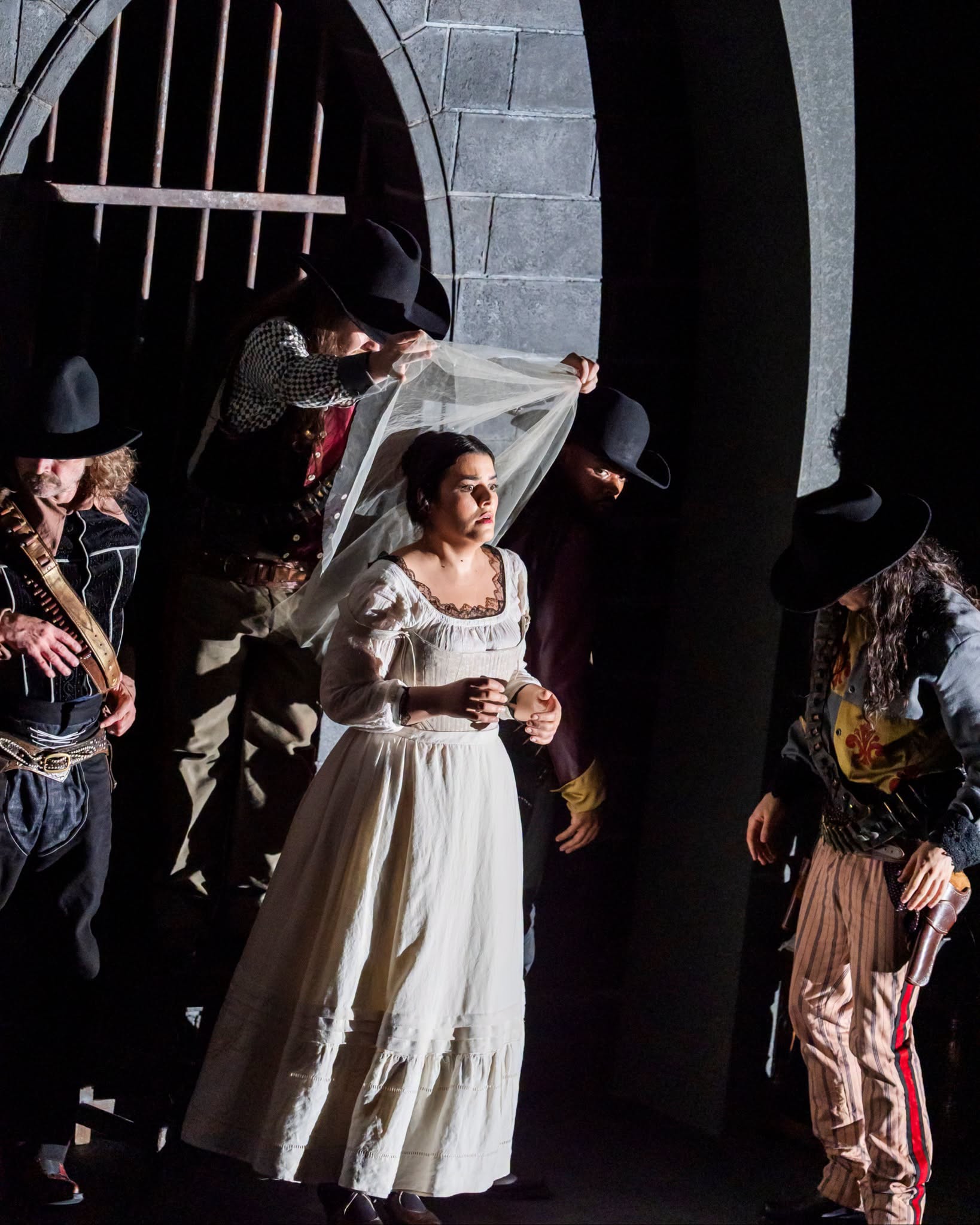
The costumes, however, were utterly confusing and ineffective. It looked like the designer could not decide whether she was dressing first world war medical nurses, Norman warriors or American cowboys (inexplicably!). In a complete aberration, she dressed Arturo in a garish outfit reminiscent of Wes Anderson’s Grand Budapest Hotel.
The videos by Sasha Balmazi-Owen, displaying letters between the protagonists, were playful yet hugely effective in immediately explaining much of the story’s background.
Opera always divides opinion, and many would not rate this as the best Puritani they have witnessed. But almost everyone would agree that the Royal Opera pulled off a respectable and thoroughly enjoyable performance of a very challenging opera.
Performance attended: June 30, 2026
For more of the best in classical music, sign up for our E-Newsletter