Wanda Aleksandra Landowska, born to Jewish parents in Warsaw on 5 July 1879, was the first person to record Bach‘s Goldberg Variations on the harpsichord in 1933. Her decision to revive harpsichord music was by no means uncontested.
To celebrate her birthday, let us highlight her struggle to restore the harpsichord to the concert stage and her passionate advocacy for Johann Sebastian Bach’s keyboard music. Fortunately, the posthumously published Landowska on Music (1964) is a treasure trove of Landowska’s own musical convictions; I will refer to and quote from it throughout.
Johann Sebastian Bach: Goldberg Variations, BWV 988 (Wanda Landowska, harpsichord)
From Museum to Concert Stage
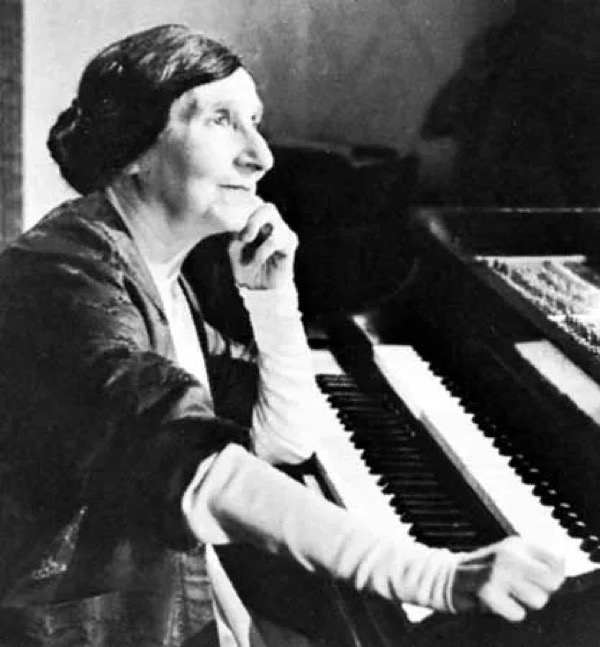
Wanda Landowska (1953)
Wanda Landowska gave her first public harpsichord recital in 1903 and subsequently undertook extensive concert tours in Europe. In parallel, Landowska was assiduously writing what she herself later called “belligerent articles to overcome the resistance widely shown towards the harpsichord, largely on account of the feeble tone of the available instruments.”
Engaging with historical performance practice before such a term existed, she had long realised that the piano was not the authentic instrument for playing Baroque music. She began to visit museums in Europe, and even took her chief engineer of Pleyel with her to take notes and measurements of instruments in Brussels, Leipzig, and England.
She published her book Musique ancienne in 1909, and three years later, at the Breslau Bach Festival, triumphantly introduced a large new two-manual harpsichord built to her own specification by Pleyel.
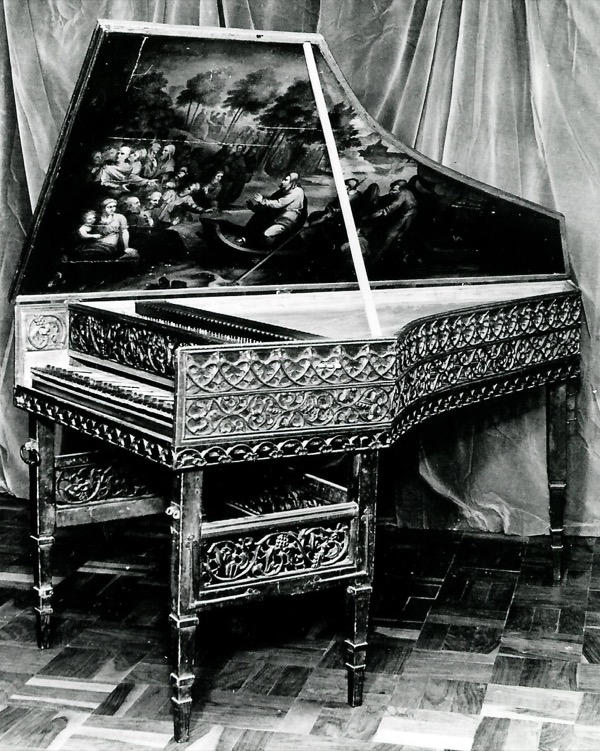
16th-century harpsichord, an early favourite of Wanda Landowska
Johann Sebastian Bach: Sonata No. 3 for Violin and Keyboard in E Major, BWV 1016 (Yehudi Menuhin, violin; Wanda Landowska, harpsichord)
A Universal Bach
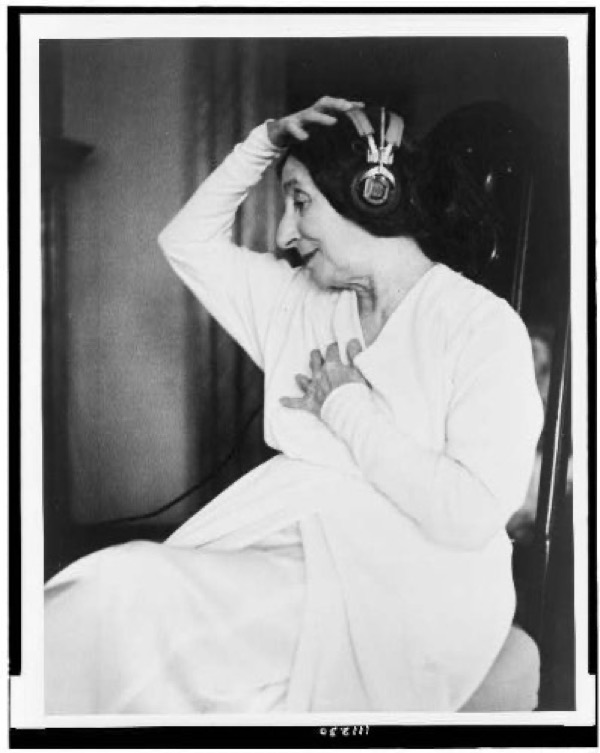
Wanda Landowska (1953)
Essentially, Landowska taught the 20th-century how to listen to Bach’s music in a completely new way. The 19th century had regarded Bach’s music “as if one were watching a funeral procession,” but Landowska believed it demanded a universal human approach.
As she writes, “Bach understands everything; he is sensitive to everything, the pastoral life as well as the atmosphere of village kermises, the mighty Gothic as well as the humility of the sinner kneeling to confess his faults.”
“Everything is close to Bach, and everything in Bach’s music is close to us, is part of our own life of misery, despair, or bliss. Bach never climbs on a pedestal to preach or to admonish.”
Johann Sebastian Bach: The Well-Tempered Clavier, Book 1, BWV 846-869 (Wanda Landowska, harpsichord)
A Glimpse of Modernity
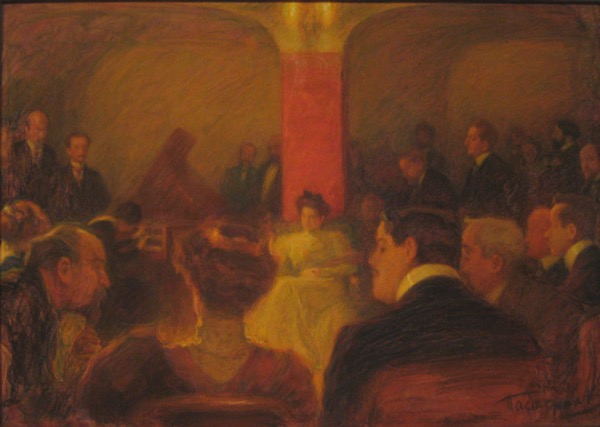
Wanda Landowska in concert
Landowska attributes an eternal universality to Bach’s music. She asks, “Why does a melodic line, as beautiful as it may be, even a melodic phrase of Chopin, for instance, become tiresome, while the melodic line of Bach can withstand more severe tests?”
“Because there is something eternal in Bach’s music, something that makes us wish to hear again what has just been played. This renewal gives us a glimpse of eternity.”
While her recording of the Goldberg Variations made her famous, at the centre of her study of the music of the past has been Bach’s Well-Tempered Clavier. Her chief aim in conducting extensive research was “to approximate as nearly as possible Bach’s intention.”
Johann Sebastian Bach: The Well-Tempered Clavier, Book 2, BWV 870-893 (Wanda Landowska, harpsichord)
Beyond Technique
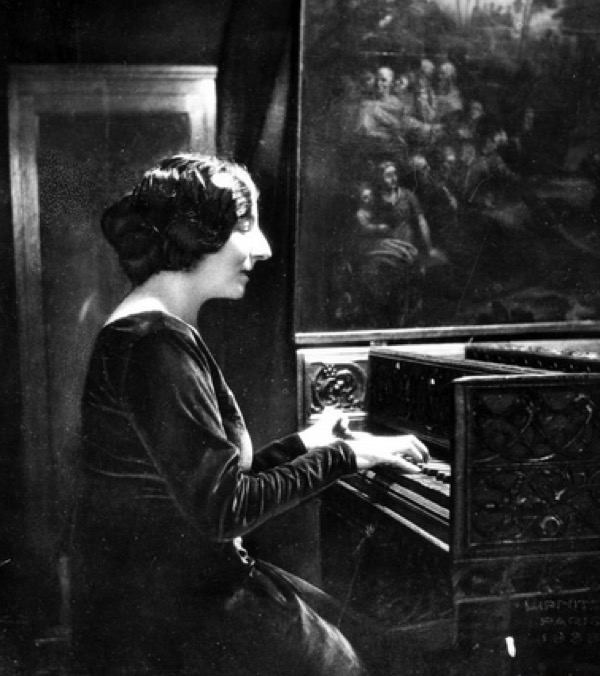
Wanda Landowska in Lwów
And that approximation starts with the observation that the WTC was not composed for the clavichord. Landowska rightly explains that the preludes and fugues are masterpieces of counterpoint, and that counterpoint is Bach’s natural language.
However, beyond such technical aspects, “the poetry, the atmosphere, the intensity of expression, the beauty of the preludes and fugues grip, overwhelm, and stimulate us.” The expressive richness of a Bach fugue lies in its unlimited variety.
“This variety stems from the harmonic shocks the subject undergoes every time it encounters the evolutions of the other parts.” A sudden or prepared modulation, the appearance of the fugue subject, or a chromatic motion can change the character and expression of the subject.
Johann Sebastian Bach: Partita No. 2 in C Minor, BWV 826 (Wanda Landowska, harpsichord)
Ancient Music Made Young
“A Bach theme is rich, and it lends itself to many different phrasings, by means of various breathings and accentuations. It is hard to believe that there are so many ways to treat a theme. Each version has its logic and its right expression.”
Landowska also addresses Bach’s intention of coupling preludes with fugues in the same tonality, although they might have been composed at different periods during his life. Landowska strongly believes that there is an undeniable relationship between each prelude and accompanying fugue. “Bach selected and coupled them because of a very subtle affinity, which might escape those who look only for literal resemblance.”
Revolutionary for her time, Landowska concludes that “ancient music is not ancient; it is young; it throbs with an exuberant and warm life which in turn gives us new life. It is thus that we must hear it. Listen to this ancient music, young and vibrant. Listen to it, and let yourself be carried away!”
For more of the best in classical music, sign up for our E-Newsletter