‘After a lot of careful training and restrictions .. That’s the point where you arrive at the point of freedom’
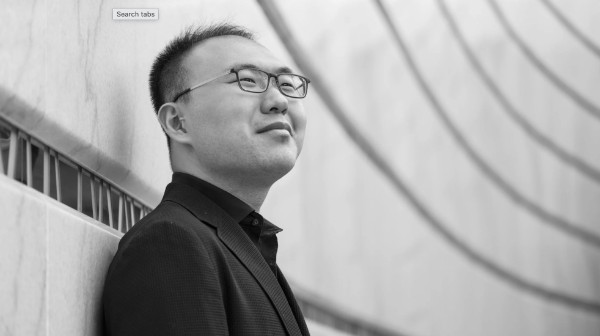
Tianxu An
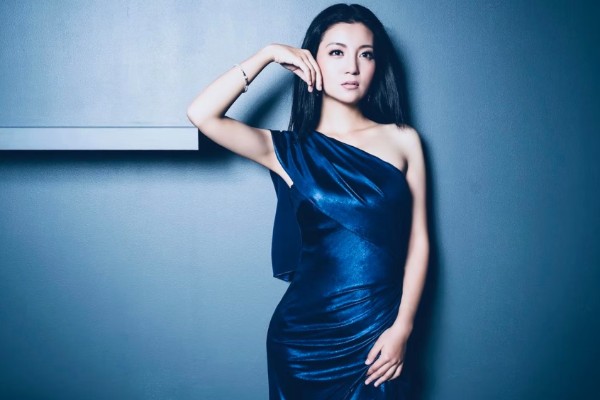
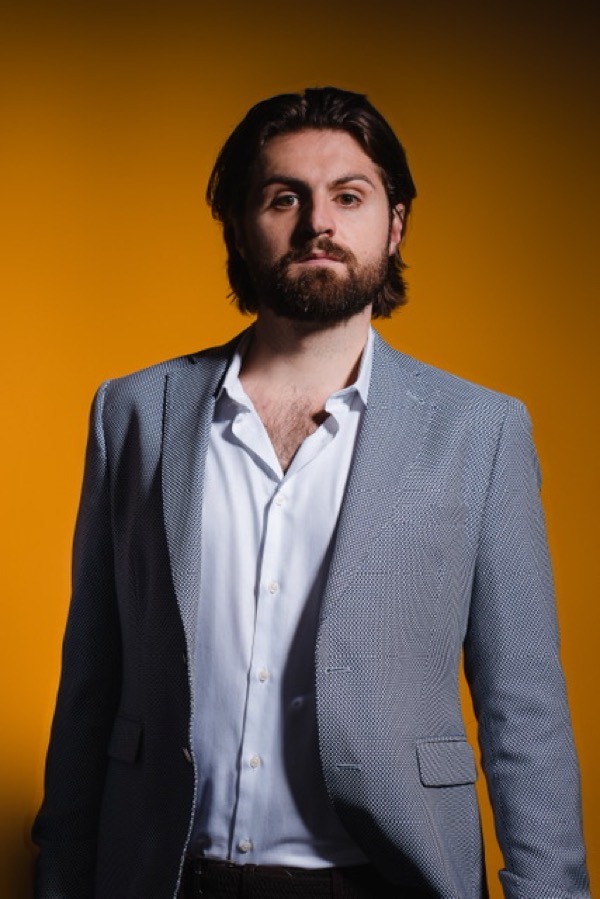
Chinese pianist Tianxu An has made a name for himself both in and outside of China, appearing with orchestras including the Mariinsky, Philadelphia and China Philharmonic Orchestras. Studying first in Beijing and then at Curtis and Juilliard, Tianxu is in demand as a recitalist across China and further afield, as well as being appointed a ‘Young Teacher’ at Beijing’s prestigious Central Conservatory of Music.
If Tianxu’s face is familiar to you, it may be because of a viral mishap at the 2019 Tchaikovsky Piano Competition in which the orchestra, owing to an administrative error, reversed the order of his two concerti in the final round, launching into Rachmaninoff’s Rhapsody on a Theme of Paganini rather than Tchaikovsky’s First as he was expecting. Nonetheless, Tianxu appeared as cool as a cucumber and carried on regardless, winning fourth prize overall, along with a special prize for ‘courage and restraint.’
#TCH16 – An Tianxu (Final Round)
Another work from Tianxu’s Tchaikovsky Competition repertoire that appeared in a slightly less dramatic round was the Rachmaninoff epic Variations on a Theme of Chopin, a piece that also featured on his debut album, released back in 2022. We talk about this recording and how his relationship to longer works changed with his move abroad.
#TCH16 – An Tianxu (2nd round)
How did you find your way to the piano?
None of my family members is a musician – I’m the only musician in my entire family. When I was young, around the early 2000s, parents of my generation in China really believed that playing the piano as a hobby could cultivate their children and develop more intelligence. They believed that the independence of the two hands could help to train the brain, to make their children smarter.
At the beginning of my piano studies, I already thought that I didn’t hate the instrument! Normally, kids really dislike all the practising, but I could already practice for around forty minutes without any pause.
My hometown is a small city – I say it’s small, but it still has ten million people – it’s called Bao Ding. It’s very close to Beijing; it’s about one hundred miles south of Beijing. We had some experts from the university faculty in Beijing come to our city to be on the jury of some children’s competition, and at that time, they mentioned that I had some kind of talent and that I could go to Beijing to study further.
That’s why, when I was nine years old, I was accepted by the elementary school attached to the Central Conservatory of Music in Beijing. It was a big change for me because I was one of the youngest kids in the class. I remember at that time that I thought that most of the other children in the class were much more experienced, and that they’d had better musical training than I. I thought that I really needed to make my best efforts to pursue further studies.
Your ‘further studies’ included moving to the USA to study with Meng-Chieh Liu at Curtis. How was it to make the move and study over there?
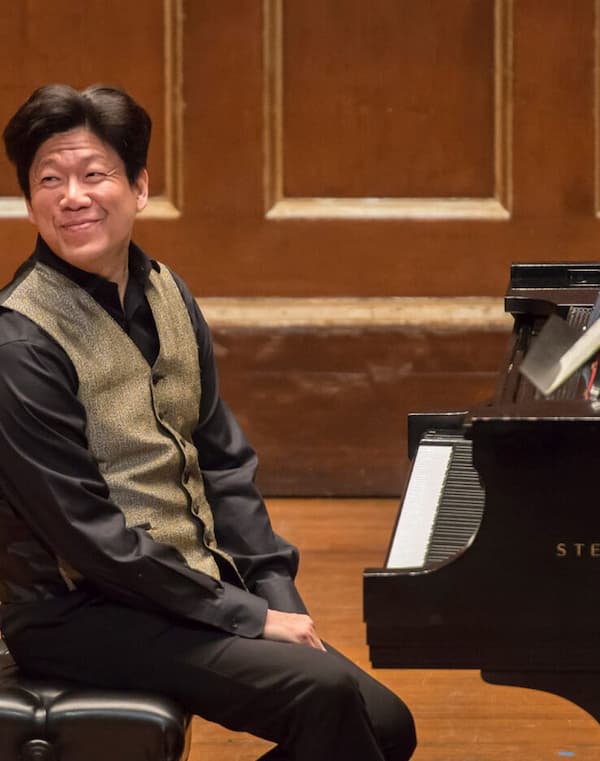
Meng-Chieh Liu © New England Conservatory
It was another big step for me – I was aware of a lot of great international pianists around me. Mr Liu was very intelligent, and I think his teaching ideology is mainly about how to use specific technical methods in order to achieve a certain kind of sound.
I’ve heard that in general there are two general methods used in piano education. One is just where the teacher gives some imagination and lets you find your own technique, but Mr Liu was not like that. He would try to tell us what kind of movement or which muscle we should use, and how to train our fingers in order to get a good sound.
I think that’s one of the major aspects he gave me, as an educator. In China, probably because I was young, we played a lot of short pieces, usually pieces under ten minutes. We didn’t get enough understanding to really get into the spirit or style of the composers.
Most of the works Mr Liu gave me when I was studying with him were over twenty minutes, things like Schumann‘s Carnaval and Beethoven‘s Eroica Variations, so he helped me a lot to broaden my view about the piano repertoire.
Watch An Tianxu plays Beethoven sonata “Appassionata” (2019).
Do you still hold onto that approach now in your own teaching?
Yes, it’s still an essential part of my playing. I’m currently a young faculty member at the Central Conservatory in Beijing, so I now understand that to give students specific concepts about technique is actually very effective.
After Curtis, when I studied with Robert McDonald at Juilliard, he also mentioned that his teachers just gave expressions and imagination. His generation really struggled with the ‘how’, so I think my teachers’ generation really tried to find exactly how to produce a good sound on the piano. I think it’s a very common thing nowadays, and I agree with it. It’s efficient and effective.
Later on, I had the learning experience of studying counterpoint or harmonies, and I began to know more about music’s structure, phrasing, and form, the logic of this language. I began to realise more and more why we call music a ‘language’.
Music has its grammar. It’s not only about sound or how you can play fast notes. You need to play all the things with a logic that others can understand. They are the things beyond, or besides, technique.
How did you come to choose the repertoire of your debut album, released in 2022?
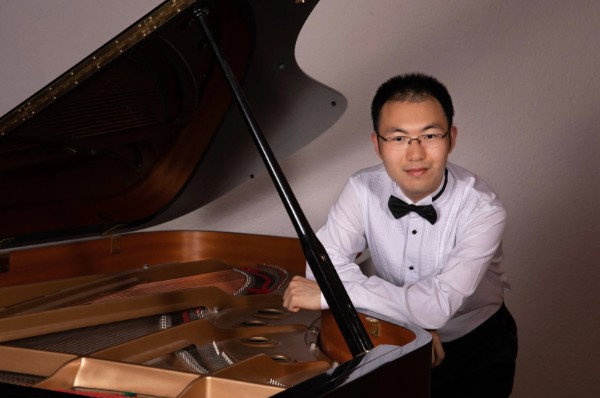
Tianxu An
At that time, it was just after the Tchaikovsky Competition in 2019. I already had some Russian works that I was practising really well and that I had in my repertoire, but I still needed to find some different layers in the Russian repertoire, so that’s why I chose Prokofiev, Rachmaninoff and Tchaikovsky.
I played the Rachmaninoff Chopin Variations in the Tchaikovsky Competition. I like this piece especially, because it’s a giant work, around thirty minutes long, but not frequently played. I personally think that it’s an underrated work, and I somehow find that piece to be a collection of human emotions under pressure, or under isolation.
We all know that Rachmaninoff had depression before writing the second piano concerto. His Chopin Variations are from the same period, so finally, after his depression, he gained some confidence and wrote a lot of good things.
In that work, there are a lot of fascinating dark moments, and I think those kinds of dark moments show a real psychological tragedy. It’s so sincere, it’s not showing off, it’s not too expressive. It’s really introverted, and I think somehow that I really engaged with those kinds of emotions.
The final set of variations develops into a triumph, so it’s a truly optimistic work. It’s not about showing off, but showing that we can find hope and light. I still find that I don’t play that work maturely enough, but I really think that I will play it more in the future!
Sergei Rachmaninoff: Variations on a Theme of Chopin, Op. 22 (Tianxu An, piano)
What other projects do you have in the pipeline?
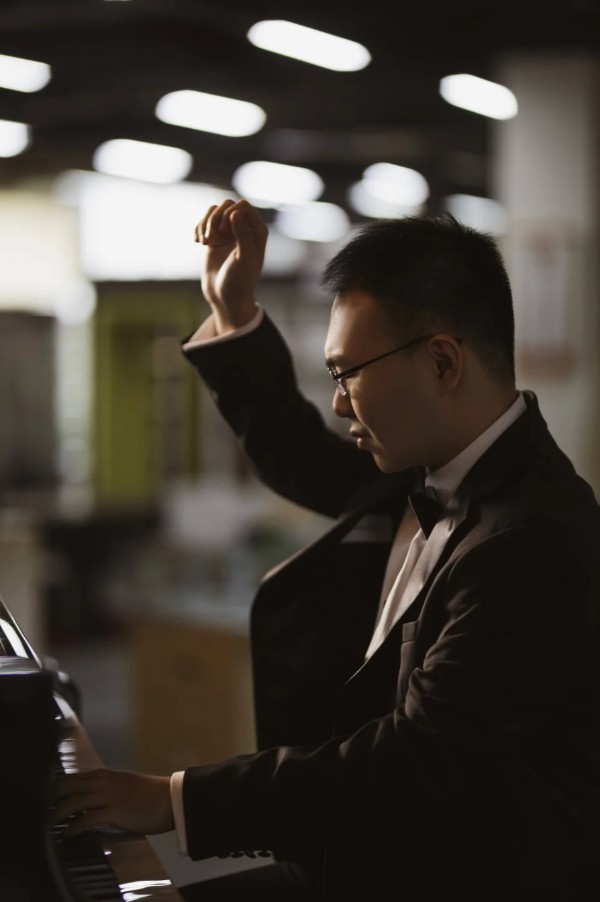
Tianxu An
I will have a new album released on Signum Records this August. It’s an album featuring three German sonatas: Mendelssohn‘s Sonata in E Major, Beethoven’s Sonata in F-sharp Major, and the first Schumann Sonata in F-sharp Minor.
This time, I want to show the more logical, ‘intellectual’ side of music. It’s a very enjoyable process to be able to play these big works with a clear structure and order. In general, I’m not a person who likes to freely express things – I don’t like the word ‘free’. I think that truly free things come after a lot of careful training and restrictions. That’s the point where you arrive at the point of freedom.
What do you do in your spare time?
A serious answer would be reading books, reading novels – I read classical novels like Dostoevsky, that kind of thing, or biographies of great people (not just of musicians!). I think that through their journeys as human beings, I can learn a lot. Sometimes you find that they truly suffered in life. You realise they tolerated huge suffering and still persisted in something, which is hugely admirable.
And your less serious answer?
I like watching comedy shows, especially stand-up. English humour is sometimes quite difficult for me to get, so I stick mainly to Chinese comedy – although I do like Mr Bean!
For more of the best in classical music, sign up for our E-Newsletter