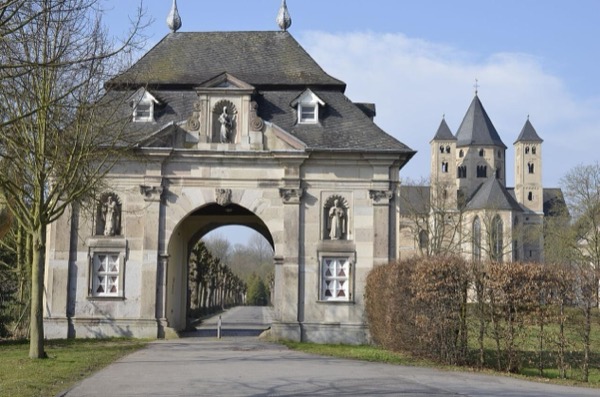
2026 marks the first summer edition of Music in the Burnhams, a festival taking place in and around the beautiful village of Burnham Thorpe, nestled up in North Norfolk, near the top of England’s east coast.
Despite this being the first summer festival in the region, Norfolk is no stranger to classical music; aside from the long-running Norfolk and Norwich Festival, Music in the Burnhams itself has been hosting fortnightly concerts for the past several years under the artistic direction of local resident Marian Abramovich.
For the first dedicated summer festival, spanning 19th-24th July, Marian is passing the mantle on to cellist Adrian Bradbury, whom I chat to as his inaugural season begins at the helm of Music in the Burnhams.
To kick things off this year, the festival is focusing on the life and work of Julius Benedict, a Romantic-era composer and pianist who came from Germany and eventually settled in England, where his frequent concert performances and commissions made him one of the busiest musicians of the day.
In collaboration with the Museum of Music History, the festival this year will present concerts alongside daily talks by New York-based Julius Benedict expert Philip Carli. The connection with Norfolk is felt especially strongly with Benedict, who revitalised the then-ailing Norfolk and Norwich festival back in the 1840s. His son is even buried in the nearby town of King’s Lynn, making the focus on Benedict for the first summer edition of Music in the Burnhams particularly fitting.
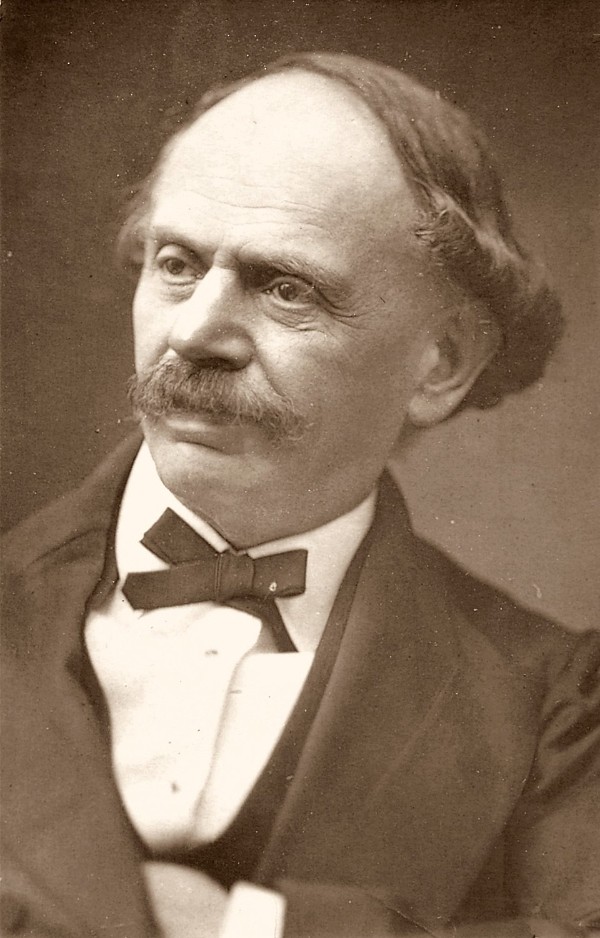
Julius Benedict
Back in his day, Benedict became known for his infamous ‘Monster Concerts’ which would stretch on for five or more hours, featuring cascades of arias, sonatas, recitations… anything and everything was welcome. On 22nd July, there will be a recreation of one of these Monster Concerts, which Adrian talks to me about, along with his desire to bring Benedict’s music back to the wider public consciousness.
Joan Sutherland – Benedict: The Gypsy and the Bird (Operatic Scenes 1963)
What can you tell us about Julius Benedict? How did this idea come about to celebrate him in this way?
It actually all started during the Covid lockdown. I got a call from Oliver Davies, a pianist who has sadly died now, who was founder of the Museum of Music History and who taught piano at the Royal College of Music. He said he’d just heard a broadcast on [the radio station] Classic FM where the then Prince [now King] Charles was being interviewed, and it turned out that Julius Benedict is one of his favourite composers.
Oliver had been collecting Benedict’s music for decades, and the Museum has one of the largest Benedict collections in the world. That put me onto Julius Benedict, and I always thought that was something we should celebrate.
Can you tell us more about the connection between Benedict and Norfolk?
We kept the Museum going after Oliver’s death, and it’s gone from strength to strength. This celebration of Benedict is a collaboration between the Museum and Music in the Burnhams. When I got the green light to do a summer festival, I thought that we should do it about Benedict – not just about his music, but about his life.
He was like a son to Weber, he was good friends with Mendelssohn, and he was the busiest musician in Victorian England. He was a great pianist and a great composer.
Benedict went to the Royal Liverpool Philharmonic and the first thing he did was add more desks of players to the string section. That, for me, is a proper conductor. He’s one of us musicians, and he’s really worth celebrating.

Adrian Bradbury (Marc Gascoigne Photography)
If someone hasn’t heard of Julius Benedict, what would you say to them about his music? What can we expect?
I would say listen to his teachers, Weber and Hummel, and you will hear the influences there. Listen to Mendelssohn as well, but then also listen to ‘Come Into the Garden, Maud’, listen to some Michael William Balfe, and put it all together. It’s not a mish-mash – it is very honest music, and it has its own integrity, but you can tell where the influences are coming from.
Sumi Jo : Julius Benedict – La Capinera
Why do you think he fell into obscurity?
He’s buried with William Wallace and Michael William Balfe, who were English Romantic opera composers. Their graves are in Kensal Green Cemetery, and poor Benedict’s grave is cracked. It’s barely tended for.
I think music goes out of fashion, and maybe that style of music went out of fashion, and then didn’t quite make the cut, except among some people.
Thomas Kelly, who is performing Benedict’s piano concerto on 24th July, sent us a couple of clips of his practice. There’s no need to apologise for this music – it’s very listenable, really attractive, very well-crafted, proper music. I suppose, just like some furniture, that his music fell out of fashion.
His style was all sorts. He learnt with Weber, he conducted in Naples, so you get Italian and German influences, and then the influence of the English ballad. I hope this festival will be part of a reawakening.
Do you have a concert that you’re particularly excited about?
The ‘Monster Concert’, on 22nd July, is one I’m particularly excited about. Well, ‘excited’ is one word for it!
One of Benedict’s things was these really long concerts in London’s St James’ Hall. He would invite artist after artist to come along. It’s difficult to know exactly what the programmes were, because they didn’t list them. The critics just said, ‘Another monster concert from Mr. Benedict’, so we’re not recreating a specific one.
We’re planning on a nice picnic in the middle of it; people shouldn’t sit for five hours! It’s going to be a little bit more informal. It’ll be candlelit. There’ll be lots of ballads and Beethoven. Benedict met Beethoven when he was 19. He was so proud of that, and so Beethoven will feature quite a lot in our Monster Concert.
When I was putting the festival together, I wanted to echo a Monster Concert. I initially wasn’t brave, and thought, ‘Maybe we should just do a mini Monster Concert’, but then I thought that if we did it, we would have to do it properly!
Dr Philip Carli is coming over from Eastman School of Music in New York. He is a real fan of Julius Benedict, and when I got in touch with him through Facebook, he basically fell off his chair. He couldn’t believe that someone was doing a festival about Julius Benedict, and that we wanted him to come over.
Every morning, he will give a talk, and he’s also performing in the Monster Concert. The Museum of Music History is giving him a visiting Fellowship, and then in a couple of years, there’ll be a book on Benedict, which there isn’t at the moment.
What is your hope for this focus on Benedict?
This is the inaugural festival, so I really hope that it gets good crowds, does its job, and gets people thinking about and enjoying the history. I’d love to collaborate with the Museum of Music History again.
I think people do love history. At the festival, they can learn about the background of the music through these talks, and the music is very palatable.
I hope that this series gives Music in the Burnhams the right kickoff, and that it can happen every year, hopefully with more collaborations with the Museum.
As far as Benedict is concerned, my hope is that he’s celebrated, that people do start talking about him. We can’t force revivals, but we can tickle them, just put them out there, and see if people run with it.
That’s what Benedict deserves: to be put out there and then just see if people are ready to come back to it. Whether that happens or not, people are still going to get lovely concerts, lots of lovely chamber music by Benedict and his circle.
More information about the festival can be found here.
For more of the best in classical music, sign up for our E-Newsletter