This article is a continuation of Episode 1 | The Venice of the North: A Republic’s Musical Startup and Episode 2 | The Business Animal of Opera House: Reinhard Keiser’s Baroque Empire.
In the early 1700s, if you were a young, ambitious musician in Central Europe with a disruptive idea for the stage, you didn’t head to the conservative courts of Dresden or Berlin. You headed to Hamburg. The Oper am Gänsemarkt was more than just a theatre; it was the Operatic Silicon Valley of the 18th century.
The Startup Capital of the North
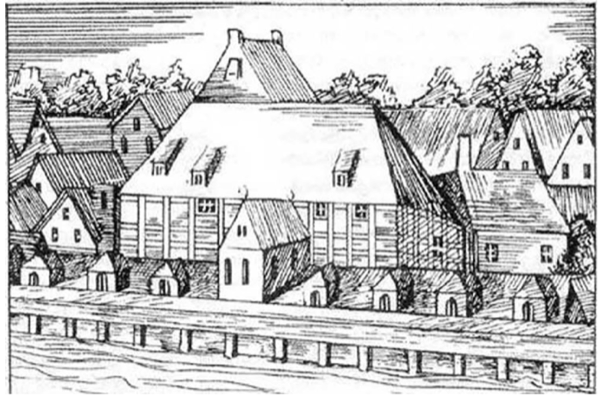
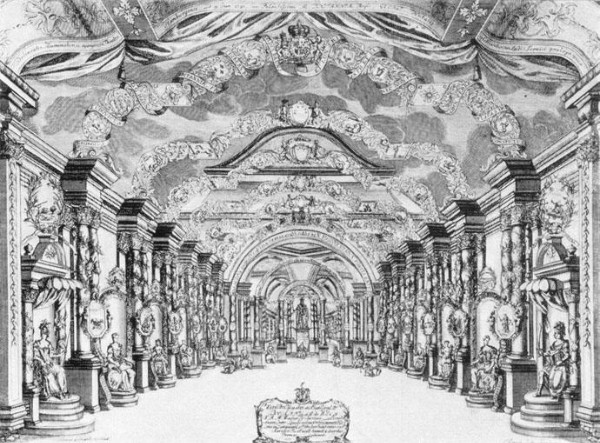
Early 18th-century engraving of the Hamburg Oper am Gänsemarkt
Why did every major disruptor of the era—George Frideric Handel, Johann Mattheson, Johann Christoph Graupner, and later Johann Adolph Hasse—all converge on this single stage? The answer lies in Hamburg’s unique status as a Free Imperial City. Unlike the courtly theatres where a prince’s whim dictated the repertoire, Hamburg was a merchant republic. The investors were the bankers and shipping magnates, and the users were the ticket-paying public.
This environment created a unique Incubator effect. Young musicians weren’t just employees; they were entrepreneurs of their own brands. They lived in a pressure cooker of social networking, late-night tavern debates, and fierce professional rivalry. Take, for example, the legendary duel between Handel and Mattheson in 1704. During a performance of Mattheson’s Cleopatra, a heated argument over who should lead from the harpsichord escalated into a literal sword fight in the middle of the Goose Market. A large metal button on Handel’s coat supposedly saved his life. Yet, they were back to being collaborators shortly after. This was the energy of the Gänsemarkt: a place where you fought for your seat at the harpsichord and composed your way to the top.
Christoph Graupner: The Intellectual Refugee
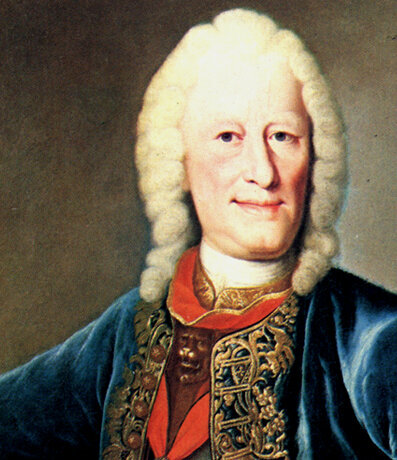
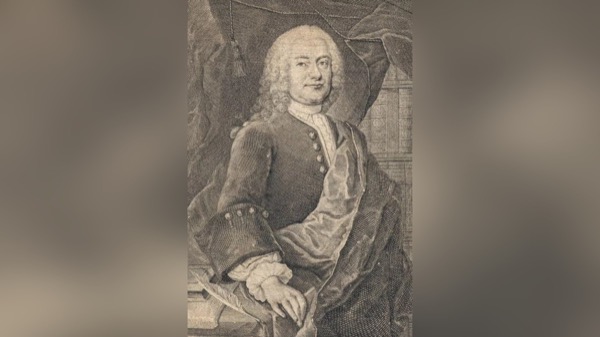
Christoph Graupner
Into this volatile mix stepped Johann Christoph Graupner (1683–1760). Like Handel and Telemann, Graupner was a product of the elite St. Thomas School in Leipzig, trained in the rigorous intellectual traditions of central Germany. He was a man of high academic pedigree who had even considered a career in law. However, when the Swedish invasion of 1706 brought war to Saxony’s doorstep, Graupner became a cultural refugee.
He arrived in Hamburg as a harpsichordist for the orchestra. From this seat at the keyboard, he watched the “Cavalier” Keiser manage the theatre’s complex finances and artistic output. Graupner was the quiet genius in the room, absorbing the theatre’s DNA. Within three years, he pivoted from performer to creator. His operatic debut, Dido, Queen of Carthage (1707), was his “Version 1.0,” and it revealed a composer who had successfully synthesised the raw energy of Hamburg with the intellectual depth of Leipzig.
The Tradition of Dido: Spectacle for the Masses
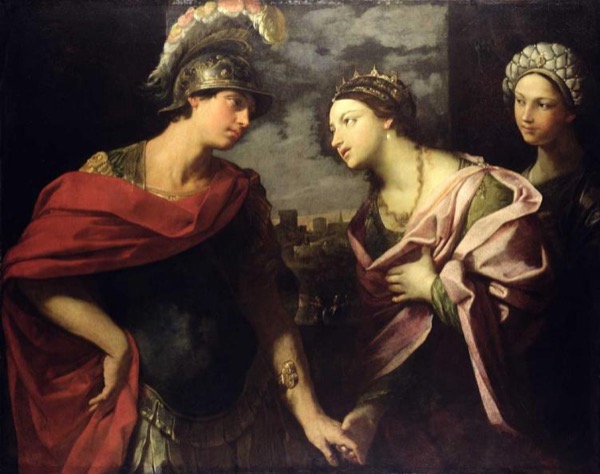
Dido and Aeneas, by Guido Reni (1630). Source: Gemäldegalerie Alte Meister (Old Masters Picture Gallery), Kassel
The story of Dido and Aeneas was the legacy code of the Baroque era. From Virgil’s Aeneid to the masterpieces of Cavalli and Purcell, the tale of the abandoned Carthaginian queen was a reliable dramatic framework. However, the Hamburg audience of 1707 didn’t want a minimalist tragedy. They demanded a full-stack experience: gods descending from the rafters, elaborate ballets, and complex subplots.
Working with librettist Heinrich Hinsch, Graupner delivered exactly what the market required. Hinsch expanded the intimate tragedy into a sprawling epic of Spectacle and Adventure. For the Gänsemarkt, the goal was to stimulate the senses; if three gods could appear instead of one, they did. Yet, Graupner used this sensory overload as a cover for a profound psychological investigation. In this version, Dido’s tragedy is rooted in a broken vow of widowhood—a betrayal of her own identity that triggers an internal collapse. Graupner turned the spectacle of divine intervention into a metaphor for Dido’s fracturing mind, proving that even a commercial blockbuster could possess a soul.
Christoph Graupner: Dido, Königin von Carthago (excerpts) (Anna Prohaska, soprano; Il Giardino Armonico, Ensemble; Giovanni Antonini, cond.)
A Bilingual Manifesto: The Polyglot Prototype
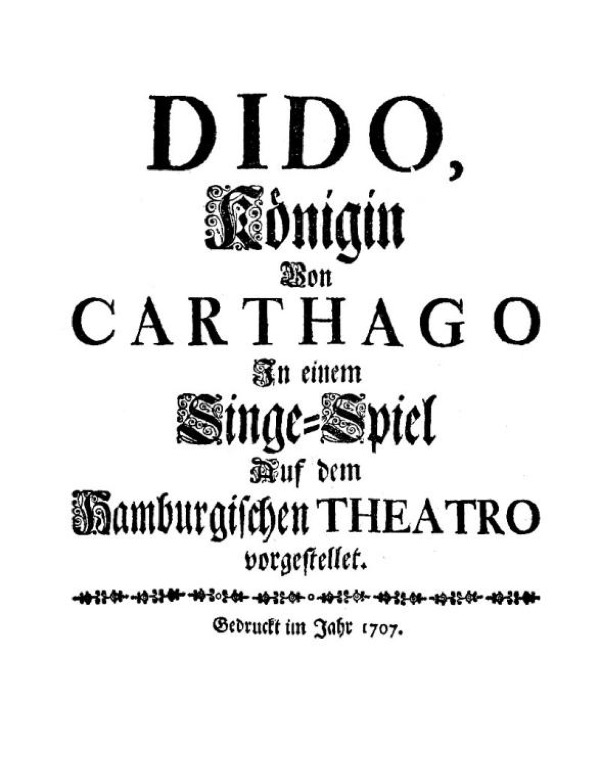
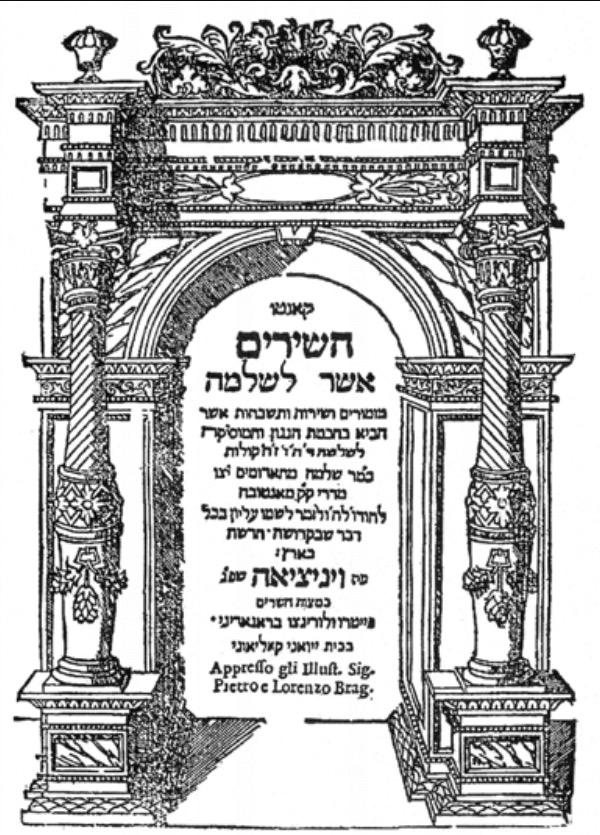
Title page of the original 1707 libretto for Graupner’s Dido
One of the most distinctive features of the Hamburg incubator was the bilingual opera. To a modern listener, the mixture of German dialogue and Italian arias in Dido seems like a bug, but it was a deliberate design choice. It was a compromise between the merchant’s desire for local narrative and the connoisseur’s love for the Italian global standard of vocalism.
Graupner’s Dido, however, contains a bold statement of linguistic faith. Most composers of the time reserved Italian for the prestige arias. Graupner did the opposite. The opera opens with the goddess Juno—a character of immense power—delivering a high-stakes, virtuosic rage aria. Surprisingly, Graupner sets this in German. It was an act of artistic nationalism, asserting that the mother tongue was fully capable of carrying the most complex Italianate coloratura.
The highlight of the score is the Act II Bilingual Chaconne. In this extraordinary four-part ensemble, Graupner layers German and Italian lyrics simultaneously over a repeating ground bass. The voices weave together in a dense polyphonic web, with the orchestra providing a jagged, leaping counterpoint. This isn’t just a song; it’s a sophisticated musical algorithm in which the rigid structure of the Chaconne represents the trap of Fate, while the shifting languages represent the lovers’ confused, overlapping emotions. In this moment, Graupner declared that the German school of counterpoint didn’t need to fear the Italian school of melody—they could be integrated into a single, powerful system.
Architect of the Soul: Psychological Analysis
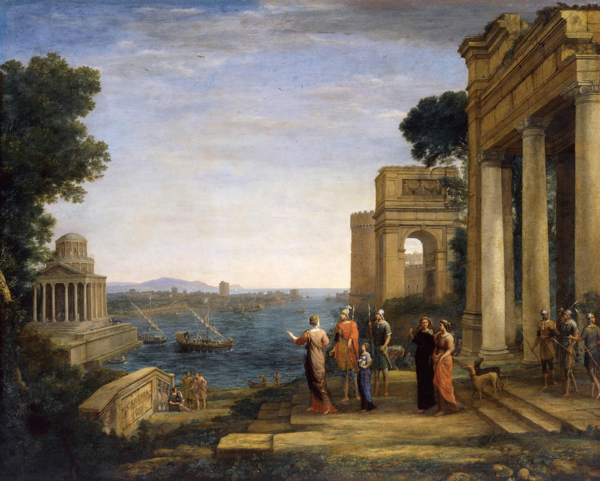
Dido and Aeneas, by Claude Lorrain (1675). Source: Hamburger Kunsthalle (Hamburg Art Museum), Germany
Graupner was a master of “User Experience” (UX) in music; he knew how to manipulate the listener’s psychological state. This is evident from the Overture. Most French-style overtures of the era began with a predictable, rhythmic strength. Graupner’s Dido begins with dreamlike chaos—a hazy, uncertain texture that mirrors the Queen’s subconscious before she is awakened by a terrifying prophecy.
The emotional peak of the work is the aria “Agitata da tempesta” (Stirred by the Storm). While the “ship in a storm” was a common Baroque trope, Graupner’s implementation is terrifyingly modern. He creates three distinct instrumental layers: the violas and basso continuo drive forward with frantic sixteenth notes, while the violins and oboes execute wide, descending leaps. Suspended above this instrumental hurricane is Dido’s vocal line—independent, jagged, and increasingly unhinged. Graupner successfully portrays a protagonist on the brink of a mental crash, a woman whose internal logic has been destroyed by the storm of her own making.
The Elbipolis Baroque Orchestra of Hamburg performing the historic 2010 concert version of Dido in Berlin.
The Legacy of Graupner
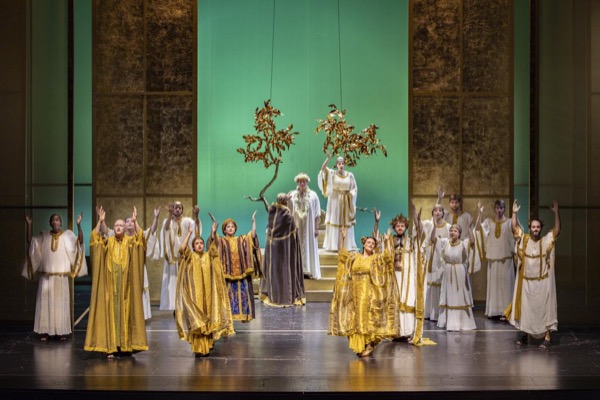
Production still from the 2024 full-stage revival of Dido at the Innsbruck Festival of Early Music, Austria.
Despite his brilliance, Graupner’s time in the Hamburg incubator was short. In 1709, he accepted an offer he couldn’t refuse from the Court of Darmstadt. He moved from the chaotic free market of the Gänsemarkt to the stable, if stifling, environment of courtly life. Graupner was tamed by the Duke’s relentless schedule; he spent the rest of his life churning out over 1,400 cantatas and 113 symphonies.
In 1740, when the great historian Johann Mattheson asked Graupner for his biography, the response was that of a man buried in his own to-do list. “I am so busy with official business,” Graupner wrote, “Sunday and holidays follow one after another… I almost have no time for anything else.” This relentless work ethic is the reason he ultimately withdrew his application for the Cantorship in Leipzig, famously allowing Johann Sebastian Bach to take the position. However, unlike Graupner—whose resignation was flatly rejected by his employer—his former colleague Georg Philipp Telemann also applied for this very same position. Ever the master negotiator, Telemann used the Leipzig offer as ultimate leverage, wisely persuading his Hamburg employers to considerably increase his salary to keep him in the Hanseatic Republic.
For more of the best in classical music, sign up for our E-Newsletter