This article is a continuation of Episode 1 | The Venice of the North: A Republic’s Musical Startup.
If Johann Georg Conradi laid the foundation for the Oper am Gänsemarkt, it was Reinhard Keiser (1674–1739) who turned it into a European legend. To a citizen of Hamburg in 1710, Keiser was the undisputed sun around which all other stars orbited. He was the “first man of the world” a title bestowed upon him by his colleague and critic Johann Mattheson, who famously wrote in Keiser’s 1740 obituary: “He was the greatest opera composer in the world” Under Keiser’s leadership, the Oper am Gänsemarkt became not just a local attraction, but a powerhouse on the continental map, rivaling the court theaters of Vienna and Paris.
The Business Animal: A Cavalier in the Marketplace
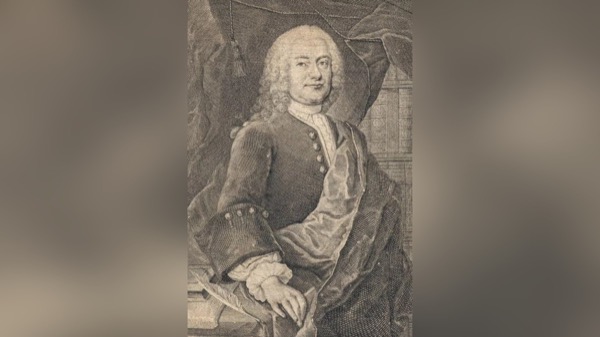
Portrait of Reinhard Keiser (artist and date unknown)
Reinhard Keiser was more than just a musician; he was the ultimate “business animal” of the 18th-century arts world. Arriving in Hamburg around 1697, he understood a fundamental truth about this Hanseatic city: in a merchant republic, art had to be both high-brow and high-yield. Mattheson once remarked that Keiser conducted himself in public more like a “Cavalier” than a mere musician—a man of style, charisma, and perhaps a touch of calculated excess.
While 19th-century biographers like Friedrich Chrysander often portrayed Keiser as a reckless spendthrift fleeing from debt to Weissenfels, modern research suggests these were largely questionable anecdotes. In reality, Keiser was a master of the commercial stage. For forty years, he navigated the treacherous waters of theatre management while serving as chief composer, producing approximately 60 full-length operas. This dual role as an artist-entrepreneur allowed him to bridge the gap between old courtly traditions and the new commercial reality of the public stage. He kept the city’s “cultural bank” solvent through sheer, inexhaustible creativity, proving that a merchant city could sustain a world-class artistic institution without a royal purse.
Drastic Realism and the Hamburg Style
Unlike the aristocratic, ceremonial performances seen in the courtly houses of France or Italy, the Hamburg Goose Market Opera practised a drastic realism that thrilled its diverse audience. Keiser and his librettists weren’t afraid to blend historical grandeur with local grit. A prime example was the 1701 production of Störtebecker und Jödge Michaels. This opera focused on a local folk hero—a pirate executed in Hamburg—rather than a remote Greek god.
The production was famous for its visceral effects. Legend has it that during the execution scene, real blood flowed across the stage. In reality, the performers playing the Vitalienbrüder (pirates) wore pig bladders filled with calf’s blood under their costumes, which were punctured at the climactic moment. This raw, theatrical energy was a far cry from the polished etiquette of Versailles. This realism ensured that Keiser’s works weren’t just musical events; they were spectacles that resonated with the merchant and the sailor alike.
Painting with Sound: Avant-Garde Instrumentation
Keiser’s most lasting legacy, however, was his revolutionary use of the orchestra. He turned the pit into a laboratory of innovative sound inventions. While Italian opera often relied on standardised accompaniments, Keiser was an orchestrator of refined, almost restless curiosity. In his successful works like Croesus, Die großmütige Tomyris, or Fredegunda, one can hardly find two consecutive musical numbers with the same instrumental lineup.
He was a pioneer of instrumental colour. In his opera Octavia, he famously accompanied an aria with a sombre choir of five bassoons, creating a dark, woody texture that was unheard of at the time. In Croesus, he utilised the chalumeau—a newly invented predecessor to the clarinet—combined with muted strings to evoke a delicate, pastoral atmosphere. His vocal writing ranged from refined street songs to virtuoso bravura arias with complex coloraturas that were almost too difficult for the era’s amateur singers. By blending Italian melodic fantasy with French choral and ballet scenes, Keiser created a polyglot musical language that was entirely his own.
Croesus and the Moral of the Merchant Class
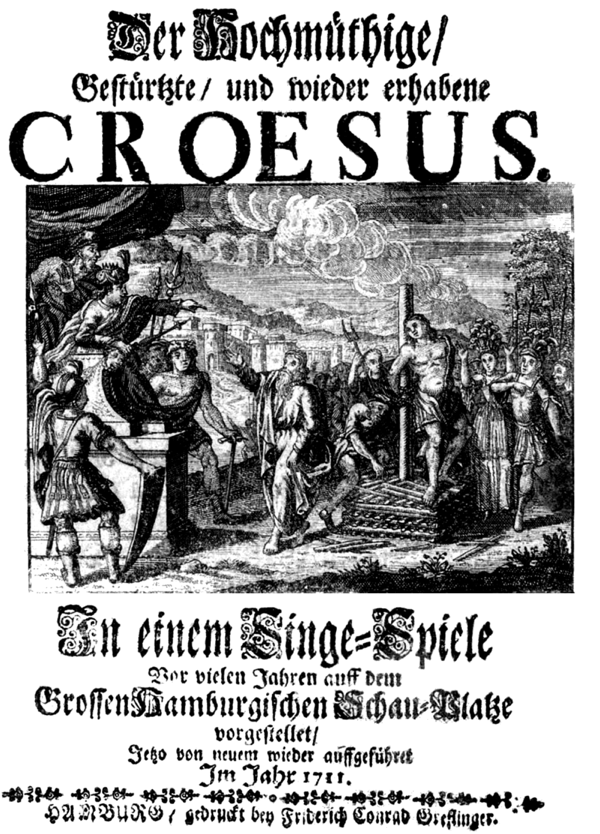
Title page of the original 1711 libretto for Keiser’s Croesus.
Keiser’s masterpiece, Croesus (1711), remains the perfect vessel for the “Mixed Taste” that defined Hamburg. The story, drawn from Book I of Herodotus’ Histories, follows the last King of Lydia, who believed his immense wealth made him the happiest man alive. When the philosopher Solon warns him that “no one is happy until they have died,” Croesus scoffs—only to find himself defeated by the Persian King Cyrus and sentenced to the pyre. In a city of bankers, this story of a fallen billionaire served as a powerful socio-economic manifesto on the impermanence of worldly glory.
Reinhard Keiser: Croesus — Act II Scene 8: Liebe, sag’, was fangst du an? (Akademie für Alte Musik Berlin; René Jacobs, cond.)
The libretto by Lucas von Bostel was a radical localisation of an Italian text by Niccolò Minato. He transformed the historical tragedy into an opera del perdono (opera of forgiveness), where Cyrus’s ultimate mercy toward Croesus serves as an Enlightenment symbol of the benevolent ruler. Furthermore, von Bostel infused the drama with drastic realism and local humour. As scholar Helmuth Christian Wolff noted, the scenes of street vendors crying their wares brought a Hanseatic flavour to the stage that was entirely absent in the courtly operas of Paris or Venice.
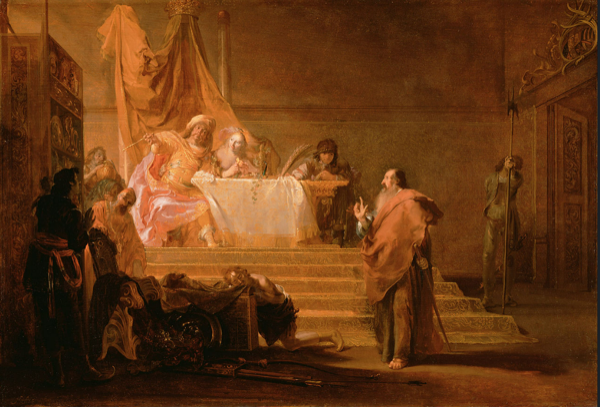
Solon before Croesus, by Nikolaus Knüpfer (c. 1650). Source: J. Paul Getty Museum, Los Angeles.
Keiser’s music captures this moral transience with stunning precision. The title character’s arias are remarkably brief—some under 32 bars—as if to mirror the fleeting nature of his power. In his first aria, Croesus asks, “Can I not enjoy the short time?” By the second, he is already in chains. In the third act, as he prays for mercy, Keiser utilises a haunting, chromatic descending bass line in a slow, solemn tempo to anchor the king’s profound misery.
Croesus, Act 1 Scene 1: Aria, “Prangt die allerschönste Blume”
This high tragedy is balanced by five subplots of love, where Keiser showcases his genius for musical rhetoric. The heroine Elmira provides the emotional core of the work, moving from the pastoral Siciliana rhythms of her great da capo arias to the pinnacle of passion in the key of A major—the traditional key of love. Her famous aria, “Love, tell me, what are you doing?” , captures a complex web of doubt and longing that influenced an entire generation of German composers. Meanwhile, the character Clerida represents the peak of decorative Rococo style; her music is filled with the delicate, pastel-like flourishes of the coming era. By mixing these noble sentiments with the simple, rhythmic songs of comic servants and nurses, Keiser ensured that the Croesus libretto lived up to its preface: it was a lesson in “avoiding vice and acknowledging the vanity of earthly riches,” delivered through the most magnificent entertainment of the age.
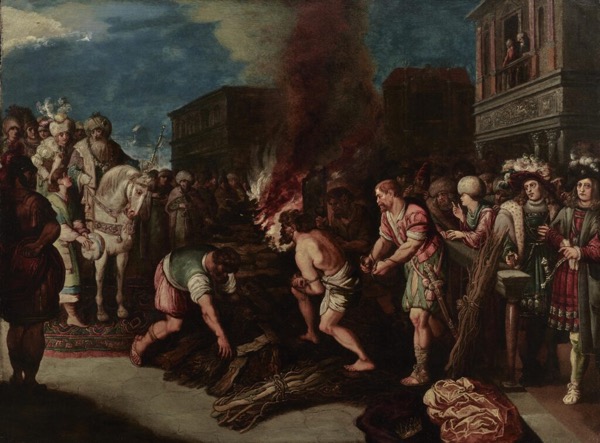
Croesus on the Pyre before Cyrus, by Gaspar van den Hoecke (c. 1610). Source: Private Collection.
The Rediscovery of a Lost Legacy
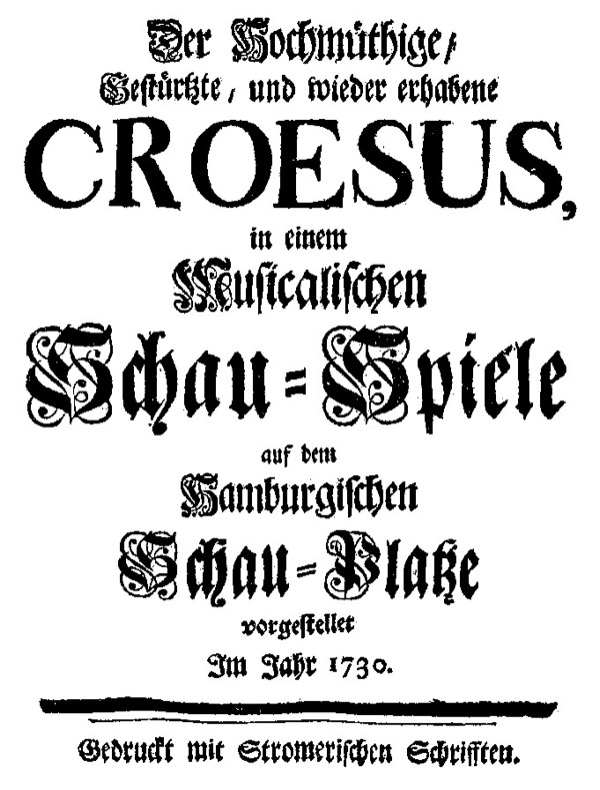
Title page of the lyrics from the 1730 revised edition of Keiser’s Croesus.
Like the character of Croesus, Keiser’s own worldly glory faded almost immediately after his death. Because he lived during a massive shift in musical taste toward the lighter Rococo style, and because 19th-century scholars wrongly viewed him as a mere stepping stone for the more famous Handel, two-thirds of his 60 operas were lost. Historians like Chrysander, unfortunately, allowed aesthetic prejudice to cloud their judgment, dismissing Keiser’s complex style as morally or musically “impure.”
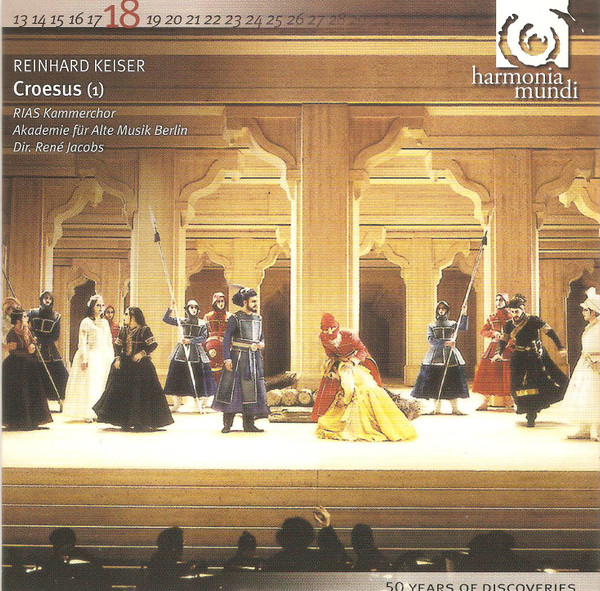
Cover of the 1999 recording of Croesus conducted by René Jacobs, featuring a production still from the Berlin State Opera
(Staatsoper Unter den Linden).
However, the modern era has seen a brilliant revival. Conductor René Jacobs’ landmark 1999 production in Berlin reminded the world that Keiser was the true mapmaker of the German Baroque. He proved that a public, commercial opera house could produce art that rivalled the Sun King’s Versailles. Keiser’s ability to fuse Italian vocalism, French rhythmic elegance, and a uniquely Hamburg-style realism created a cultural legacy that still echoes. As we close this chapter on Keiser’s reign, we see the foundation he left for the next generation. The “Business Animal” of Hamburg had successfully put the Goose Market on the map, leaving the stage ready for the young geniuses—Handel, Graupner, and Telemann—who were already sitting in his orchestra, ready to conquer the musical world.
For more of the best in classical music, sign up for our E-Newsletter