
Few composer biographies contain as much romanticised mythology as Frédéric Chopin.
Over time, selective anecdotes, early biographies, and nineteenth-century ideals of the “suffering artist” have hardened into familiar clichés: the frail invalid, the melancholic recluse, the salon dilettante undone by love.
These stories are certainly compelling – but they also blur historical reality and oversimplify a complex human life.
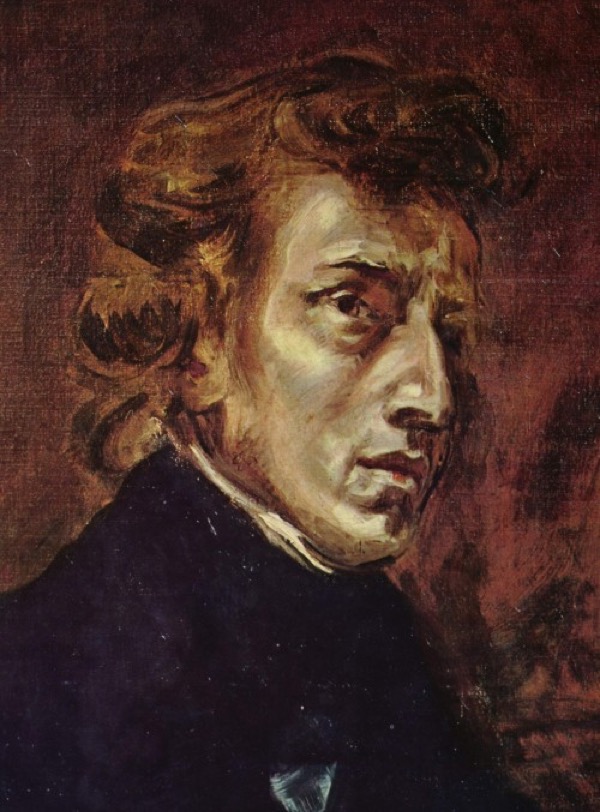
Frédéric Chopin
By looking at letters, contemporary accounts, and modern scholarship, we can separate the persistent music-history myths from what the historical record actually shows.
Myth 1: Chopin’s only health issue was tuberculosis.
Yunchan Lim plays Chopin’s Variations on “Là ci darem la mano,” Op. 2
Although most historians believe that Frédéric Chopin died of chronic tuberculosis, he also struggled with a number of other illnesses.
When he was a teenager, he suffered from an infection that left his lymph nodes swollen and nearly killed him.
His digestive system also rebelled against fatty foods, although he eventually discovered it could be soothed by honey and oat bran.
In 1835, while living in Paris, he had both laryngitis and bronchitis. Rumours even began spreading in Poland that he’d died.
Other scholars and medical experts have suggested alternative suggestions to a tuberculosis diagnosis, suggesting the possibility of cystic fibrosis or valvular heart disease.
In fact, it’s theoretically possible that he didn’t even have tuberculosis at all and suffered from some other lung issue instead.
Myth 2: Chopin never performed publicly.
Eric Lu plays Chopin’s Mazurka in A minor
This myth likely arose because Chopin preferred intimate salon settings over the concert hall. However, he did perform in public on multiple occasions.
As a child prodigy in Warsaw, he played charity concerts, and after settling in Paris, he gave a handful of public recitals.
In fact, over his entire career, Chopin gave roughly thirty public or semi-public concerts. These included his successful Paris debut in 1832 and a final concert tour of England and Scotland in 1848.
This may have been modest by the standards of touring virtuosi like Liszt, but his public performances were far from nonexistent.
That said, contemporaries certainly noted how much more frequently Chopin appeared in salon settings.
But the claim “he never performed publicly” is false. His reputation as a performer was just shaped far more by his salon appearances than by his public concerts.
Myth 3: Chopin’s only moods were melancholic and depressed.
Kate Liu plays Chopin’s Andante Spianato and Grande Polonaise Brillante in E flat major, Op. 22
Chopin’s music and letters reveal a far more complex personality than the mopey, mournful poet of the piano that is often portrayed in pop culture.
Yes, it’s true that he was prone to bouts of depression, especially during illness or when anguished by news from his occupied Polish homeland. But that wasn’t his only mood.
As a child and teenager, Chopin was remembered as witty, playful, and even mischievous.
One early biographer, Frederick Niecks, noted in his book Frederick Chopin, as a Man and Musician, that Chopin’s behaviour in childhood was marked by “sprightliness, a sparkling effervescence that manifested itself by all sorts of fun and mischief. He was never weary of playing pranks.”
He delighted friends with his jokes and impersonations, and his letters often demonstrated his dry sense of humour.
For example, a teenage Chopin created a spoof newspaper called the “Szafarnia Courier” to amuse his family, and later he wryly described inept doctors “sniffing” and “tapping” at him while trying to diagnose him in Majorca.
In short, over the course of his life, Chopin felt the full range of human emotions. Yes, he was soulful and brooding at times, but he could also be tender, sarcastic, and light-hearted.
The cliché of Chopin as perpetually depressed ignores the lively, personable side he often showed to friends, as well as the vivacity evident in many of his compositions.
Myth 4: Chopin’s relationship with George Sand ruined him.
Seong-Jin Cho plays Chopin’s Twenty-Four Preludes
Chopin’s nine-year relationship with the novelist George Sand has been both romanticised and maligned. But far from “ruining” him, Sand in many ways provided stability and care that sustained Chopin through difficult years.
They became lovers in 1838, and soon Sand took on a nurturing, almost protective role. She called the ailing composer her “third child,” managed his domestic life, and oversaw his medical care.
At Sand’s country estate in Nohant, Chopin enjoyed some of his most productive summers, composing numerous masterpieces in the tranquil environment she created for him.
Rather than draining his creativity, their union coincided with the writing of many Polonaises, Mazurkas, Ballades, and the Twenty-Four Preludes.
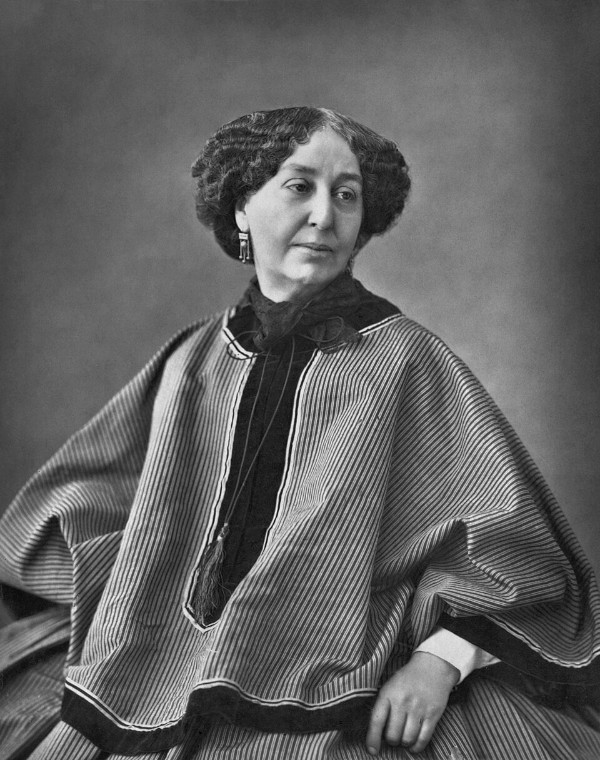
George Sand – Portrait by Nadar (1864)
It is true that the relationship ended painfully. In 1847, Sand broke with Chopin amid family tensions – namely, a feud involving her daughter, Solange. After Chopin stood up for Solange, Sand felt badly betrayed. This breakup devastated Chopin emotionally, and his health, which was already deteriorating, got worse.
Some of Chopin’s friends bitterly blamed Sand for Chopin’s worsening illness. Modern scholarship, however, views this as an exaggeration; he likely would have gotten sicker regardless of what happened in his love life.
In short, George Sand did not ruin Chopin. On the contrary, she cared for him and inspired him during their years together. Yes, their relationship ultimately soured, but attributing Chopin’s tragic end solely to Sand unfairly oversimplifies the complex personal and medical realities. It was a coincidence, not causation.
Myth 5: Chopin only wrote “salon music.”
Vladimir Horowitz plays Chopin’s “Heroic” Polonaise in A flat, Op. 53
This myth stems from the fact that Chopin composed almost exclusively for solo piano and often in forms suitable for salons (waltzes, mazurkas, nocturnes, and the like).
During the 19th century, some critics dismissed these elegant miniatures as lightweight salon music.
But equating Chopin’s output with trivial parlour fare is a major mischaracterisation.
His contemporaries knew that beneath the graceful surfaces of these pieces lay profound artistry and innovation.
Robert Schumann, for one, famously remarked that “the works of Chopin are cannons concealed amongst flowers” – meaning that even in his delicate mazurkas and waltzes, Chopin smuggled in bold, explosive emotion and subversive expressions of patriotism.
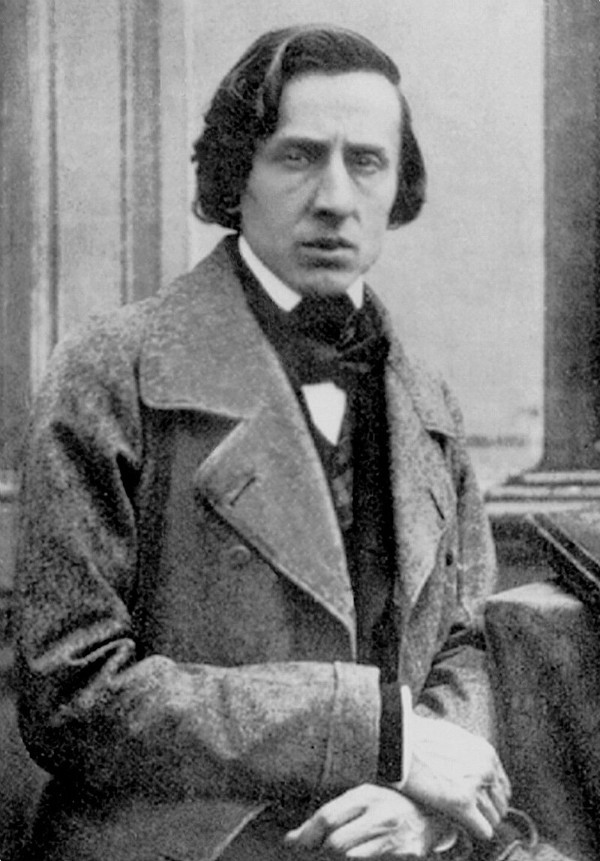
Frédéric Chopin
Meanwhile, his four Ballades are structurally daring, thematically unified tone poems for piano; his Polonaises (like the “Heroic” Polonaise in A flat, Op. 53) thunder with nationalistic fervour; and his Piano Sonata No. 2 in B flat minor (which includes the famous Funeral March) shows he could handle large-scale forms when he chose.
Even his briefest preludes – slender little wisps of things, lasting only a minute or two – are imbued with sophisticated harmonies, novel textures, and deep feeling.
In short, Chopin should be celebrated as a composer of intimate but profound music rather than dismissed as a writer of lightweight salon pieces.
Conclusion
Taken together, these myths reveal less about Chopin himself than about the stories later generations wanted to tell about him.
Yes, he was physically fragile, but not perpetually incapacitated. Yes, he favoured salons, but he did perform publicly. Yes, he experienced deep melancholy – but he also demonstrated humour, warmth, and playfulness. His relationship with George Sand was complicated, not sheerly destructive, and his piano works, however intimate their scale, are anything but trivial.
Stripped of exaggeration and stereotype, Chopin is revealed to be the sophisticated artist he actually was. Understanding the truth behind these myths allows us to hear his music with fresh ears and a clear mind.
For more of the best in classical music, sign up for our E-Newsletter






Thank you so very much, Emily, for posting this honest and very interesting essay.