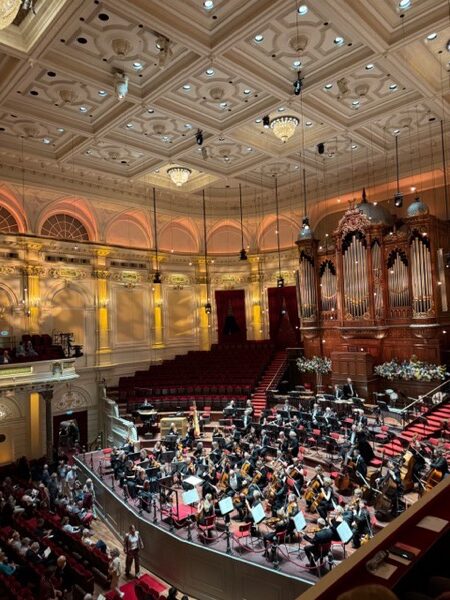
The highly anticipated finals of the Queen Elisabeth Competition for cello took place Monday, May 25, through Saturday, May 30, at the Salle Henry Le Boeuf (Centre for Fine Arts) in Brussels. Each evening, two finalists played the compulsory piece and a concerto of their choice with the Belgian National Orchestra, Antony Hermus conducting.
This is a milestone year for the competition of celebrating significant anniversaries— the 150th of the birth of cellist Pau (Pablo) Casals and also Queen Elisabeth, as well as the 75th anniversary of the Queen Elisabeth competition itself. The royal family was in attendance throughout.
By now, the competition procedures are decisively in place, and I feel the events have been beautifully organised. The finalists are emerging from a week in isolation. Some of them have indicated how novel and enjoyable it was to be without their phones and internet. They shared meals prepared for them at the Queen Elisabeth Music Chapel, played ping pong, consulted each other, and practised, of course! If you’d like to catch up, you can listen to the semi-finals here:
https://queenelisabethcompetition.be/en/watch-listen-detail/doc/72785/
Not only did they have to learn and study the very challenging piece written and commissioned for these finals— Four Odes to the Tidings of Flowers by Fang Man, a 4-movement work—the orchestra and conductor also had to learn it too, rehearse with each candidate, and rehearse the concerti. Have a look at these segments of the cello part. Complex is an understatement!
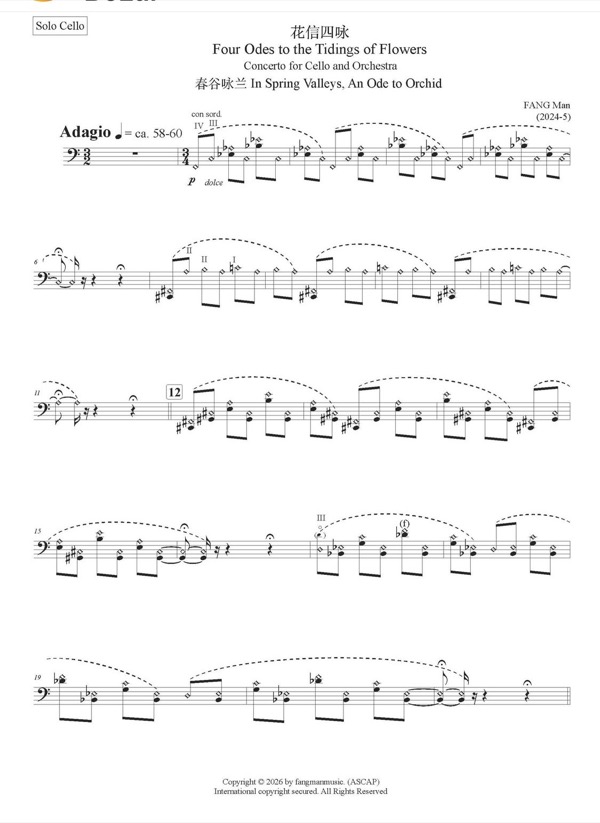
A segment of the cello part from Fang Man’s Four Odes to the Tidings of Flowers
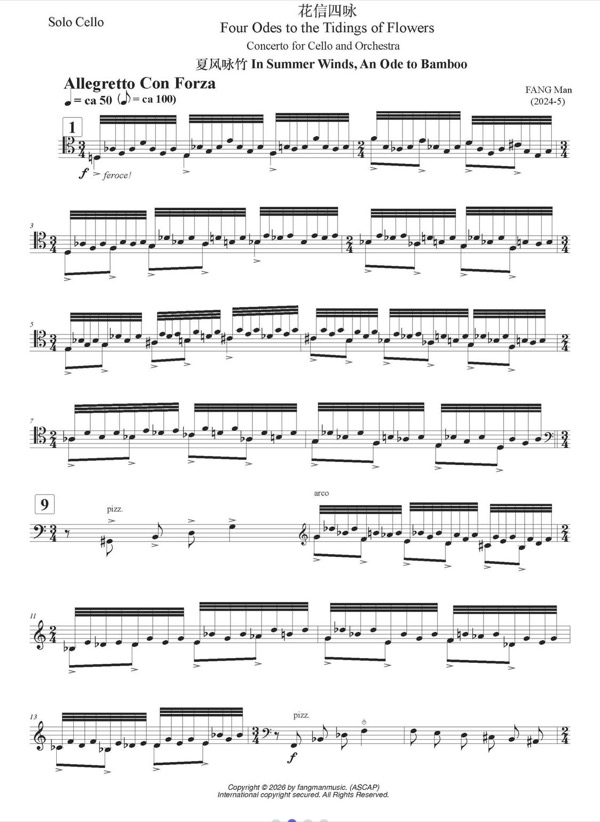
A segment of the cello part from Fang Man’s Four Odes to the Tidings of Flowers
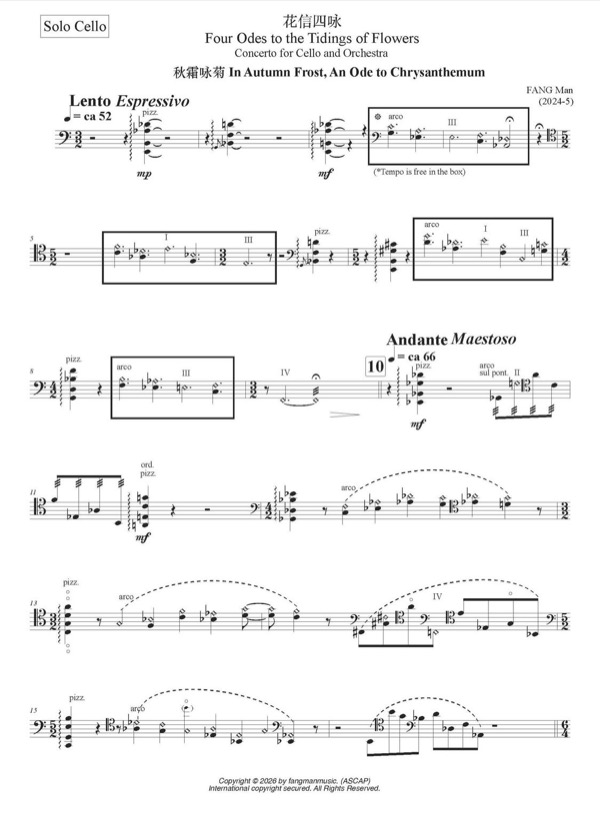
A segment of the cello part from Fang Man’s Four Odes to the Tidings of Flowers
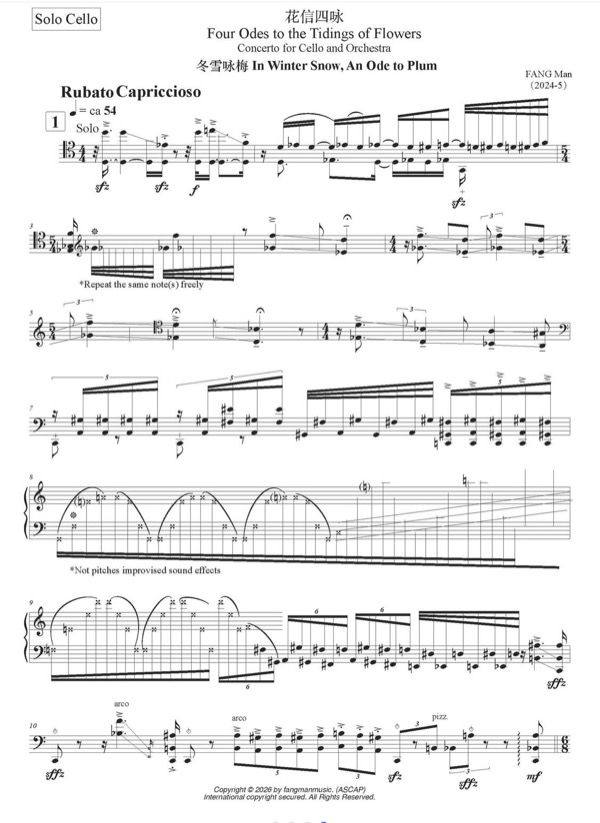
A segment of the cello part from Fang Man’s Four Odes to the Tidings of Flowers
The 12 cellists are to be celebrated. The finals are the culmination of weeks, months, and years of work, and the last time to prove themselves during the competition. There’s a lot at stake. The prizes are exceedingly generous, with six awards, and unusually enough, the non-laureates receive a generous stipend too. Concerts have been set up for all the finalists. In addition, this year, the winning laureate will have the privilege of playing the Casals Gofriller cello from 1733 for four years.
It was wonderful that Belgian broadcasters RTBF and VRT arranged for watching online live, and audiences were once again able to vote for their favourite candidates. The winners of the audience prizes receive an additional award.
The distinguished international panel of jurists had their work cut out for them!
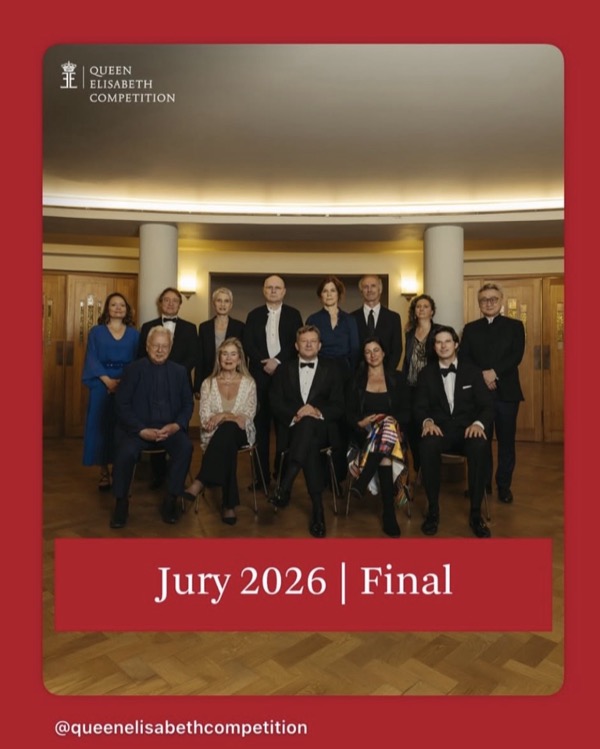
The jury of the 2026 Queen Elisabeth Cello Competition © Alexandre de Terwangne – Thomas Léonard / Queen Elisabeth Competition
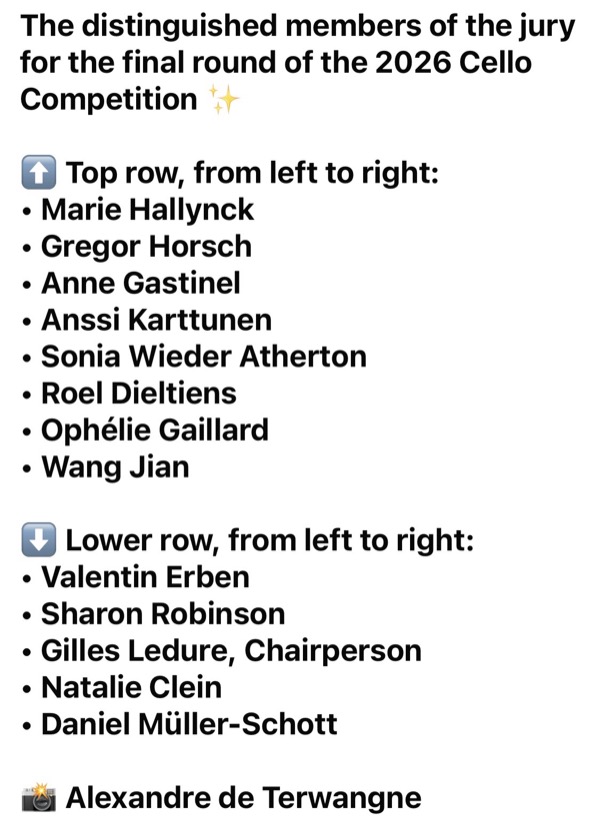
The jury of the 2026 Queen Elisabeth Cello Competition
Each finalist began with the Man work. The four movements are entitled: In Spring Valleys, An Ode to Orchid; In Summer Winds, An Ode to Bamboo; In Autumn Frost; An Ode to Chrysanthemums; In Winter Snow, An Ode to Plum. This is what the composer says about the piece:
“This work draws its title from the traditional Chinese concept of huā xin the “tidings” carried by flowers as they mark the unfolding of the seasons. In Chinese aesthetics, flowers are not merely botanical presences but spiritual emblems. …The concerto traces a journey through Spring, Summer, Autumn and Winter, illuminating the inner landscapes these seasons awaken. Yet this journey is not bound to a fixed chronology. Just as memory and emotion do not unfold in linear time, the four movements may be performed in an order chosen by the solo cellist. …the soloist becomes both interpreter and storyteller…”
While the contestants were sequestered, they had a chance to work with the composer, and they also consulted one another whenever a thorny passage might have stumped them.
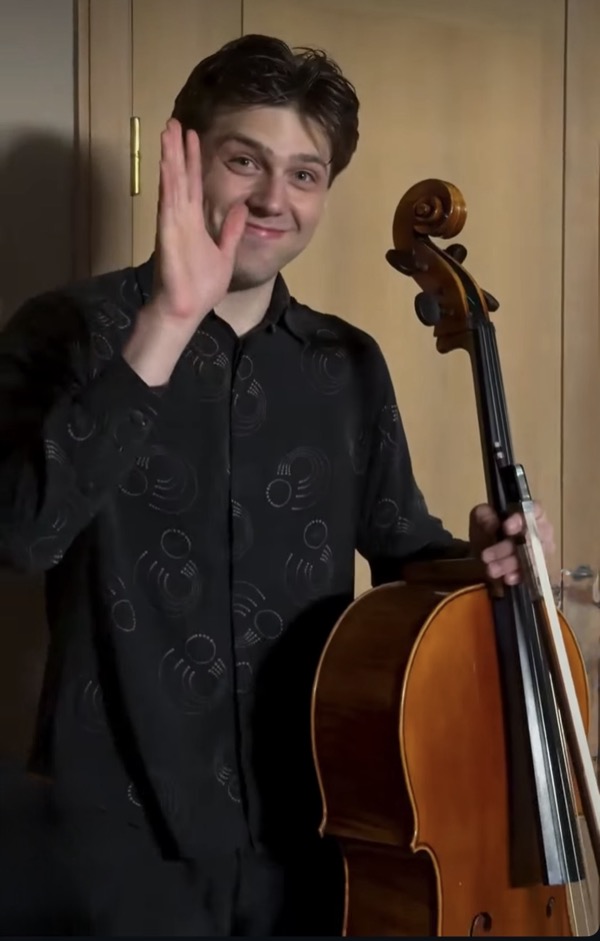
A finalist performing at the 2026 Queen Elisabeth Cello Competition © Alexandre de Terwangne – Thomas Léonard / Queen Elisabeth Competition
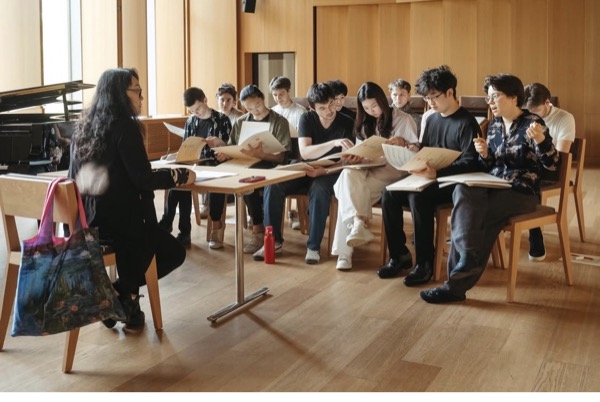
The finalists with composer Fang Man © Alexandre de Terwangne – Thomas Léonard / Queen Elisabeth Competition
I didn’t envy the first candidate, Maria Zaitseva, of the Russian Federation, who had to set the tone. It’s difficult to be the first during an audition as well as a competition, but she had to illuminate the piece in this truly world premiere performance and set the standard. Zaitseva began with Spring, the movement that begins with muted harmonics –a very tricky start if your bow is in the least unsteady—the mute making the response even trickier. There are numerous challenging double stops and string crossings. The candidates who followed could choose a different order of the movements. As we listened to each candidate playing the piece, I must say that more familiarity brought more understanding of the piece. I’m sure that was true for the jury, for the conductor, and the orchestra who played this rhythmically complex work with more deliberation and confidence as the competition progressed.
Zaitseva followed with Henri Dutilleux Tout un monde lointain (a whole distant world), another atmospheric piece in five movements performed without pause, which was written for Mstislav Rostropovich between 1967 and 1970. The poetic references of French poet Charles Baudelaire deepen the enigmatic moods of the music. The opening was lovely. She effortlessly portrayed the mood of the opening movement entitled enigma—very free and flexible. She played with assurance, and I was impressed with her concept throughout.
The second player, Lionel Martin from Germany, performed the Man and the Dvořák Cello Concerto. One must be courageous to play a work with so much history and an established interpretation. It was accomplished playing, but I felt he frequently pushed the tempo, and he played almost exclusively near the bridge, so his sound rarely became tender or varied much in colour.
On Day II, the performers Yo Kitamura, of Japan and Ivan Sendetsky, of the Russian Federation, played Prokofiev Symphony-Concerto op. 125 and Shostakovich Concerto No. 1, respectively. Kitamura played quite skillfully, but he also played mostly on the bridge and for my taste, there were a bit too many non-vibrato passages and little humour that is characteristic of Prokofiev.
I enjoyed Sendetsky’s Shostakovich interpretation. He captured the aggressive mood of the piece without sacrificing clarity. The cadenza was impressive, as was the building of tension to the last movement.
Day III, we heard two renditions of the Prokofiev, first by Ettore Pagano, of Italy, then Clara Dietlin, of France. Pagano played with a gorgeous, clear sound, with lovely contrasts of tenderness and wit, with ease and control, and what a magnificent cadenza. Technically masterful, he took us to another world when he performed—a fantastic and moving interpretation of the Prokofiev. After performing, Pagano giddily said, “Now I can sleep!”
Clara Dietlin seemed nervous, and she didn’t appear to settle, although she has a lovely sound, and I enjoyed her playing very much in earlier rounds.
Day IV, there were two Shostakovich Concerto No. 1 performances. Dilshod Narzillaev, of Uzbekistan, made sense of the Man piece. His Spring movement was more Bach-like, and the moto perpetuo movement had lots of personality. The Autumn movement also felt as if he was pointing out the similarities to the Bach Sarabande from the Suite No 5. His Shostakovich seemed a bit light. It appeared to me that he was being careful, which can happen in a competition, and for me, he didn’t convey the driving intensity of the piece.
One of the two youngest at this competition, Álvaro Lozano Cames of Spain, also made a mark on the Man piece, especially in the cadenza. His Shostakovich successfully conveyed the spirit and intensity of the piece. The slow movement was more romantic than some players play it, but he was convincing with this interpretation. The last movement, which he took at an extremely fast tempo, is challenging for stamina after the lengthy and difficult third movement cadenza. Like Rostropovich famously did, Cames gripped the bow like a club, the last several bars for the FFF repeated downbow strokes at the end of the piece. An impressive performance.
Day V, Leland Ko, of the United States and Canada played the Samuel Barber Concerto, a piece dedicated to and commissioned for Raya Garbusova by Serge Koussevitsky and the Boston Symphony and premiered in Boston in 1946, Ko’s hometown. It too has large-scale technical demands. His cadenza was excellent, and in the third movement, he played with amazing accuracy, especially in the passages of consecutive thirds. He sits very erect, and one can see every nuance in his face. I would have liked more sostenuto playing, but it was a striking performance, and he received a very warm ovation from both the audience and the orchestra members.
Krzysztof Michalski, of Poland, played the Shostakovich as well, with wonderful facility and amazing spiccato passages. He played with expressivity, but for me, not enough pathos, not quite capturing the despair of the slow movement. His cadenza was freer rhythmically, and the frequent pauses I felt interrupted the building of intensity in the last movement.
Day VI, Andrew Ilhoon Byun, of Canada, played the Henri Dutilleux Tout un monde lointain with great confidence and ease. His was a lovely espressivo sound both in the upper and lower registers during the lyrical segments of the piece, and this was accomplished through playing.
Tae-Yeon Kim, from Korea, at only 20 years old, played with astonishing, gripping animation. The opening cadenza was riveting right from the start. Composed in 1970 and written for Mstislav Rostropovich, the Witold Lutoslawski Cello Concerto is in one continuous movement. There is a notational pattern that gives some freedom to the soloist to improvise. Returning several times to the repeated open Ds demonstrating restrained inner resolve, Kim played the defiant and beleaguered solo cello, amidst the aggressive and often jarring orchestral interruptions, with virtuosity and panache. Ending alone with several fortissimo high As the soloist triumphs, and this was a spectacular performance.
You can relive the finals, or any of the rounds here:
https://queenelisabethcompetition.be/en/watch-listen/
And so, the competition concludes after weeks. We waited impatiently for the jury’s decision.
It is important to note what competitions can do for award-winners and what they cannot. The preparation at this level, the depth of immersion in the works, and the polish over months can raise the player’s standard of playing immensely. Unlike other competitions, this one focuses on camaraderie, and I believe the contestants benefited greatly from the shared experience.
There are many opinions about the value of competitions, most recently from our esteemed colleague Steven Isserlis, who said,
“Wow – the standard of performance has been amazingly high! And some really strong musical personalities there – cellists of whom we shall hear more in the near future.
But still – it IS a competition, and therefore, I cannot resist a bit of a rant. To begin with, everyone knows that musical competitions are basically ridiculous. Music is not a competitive sport! As Bartok so memorably put it: ‘Competitions are for horses, not artists’. It’s so true – after a certain level, it becomes really impossible to judge between players, any more than it would be possible to judge between priests interpreting the word of God! It is purely a matter of personal preference, and for those preferences to hold sway over people’s careers is – well, risky.”
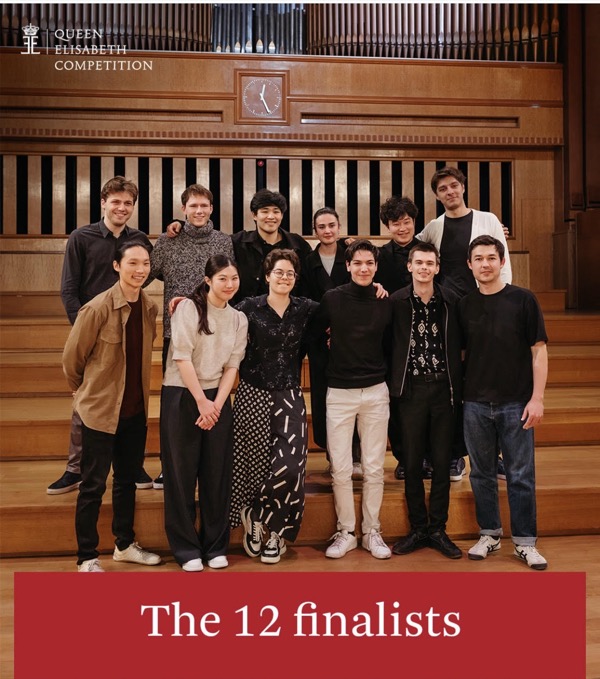
I would argue that this competition, which nurtures the candidates, is an exception. One only needs to look at this photo to see how cellists from all over the world bonded during these weeks.
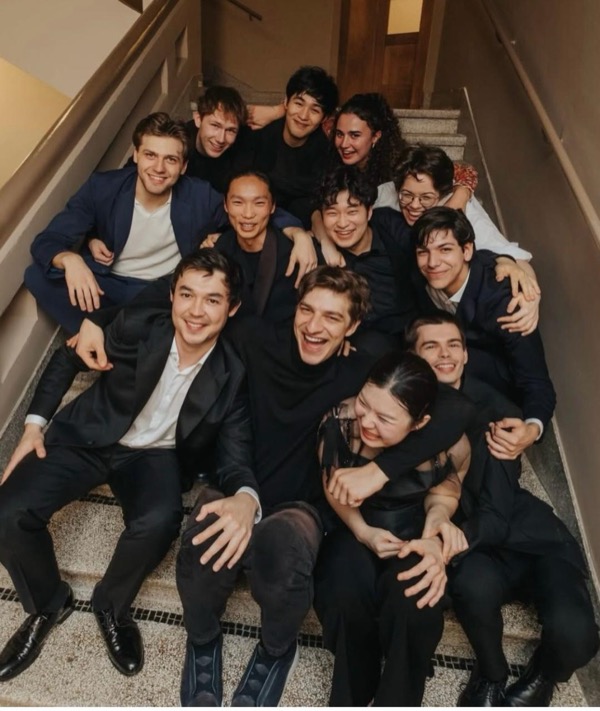
The twelve finalists of the 2026 Queen Elisabeth Cello Competition © Alexandre de Terwangne – Thomas Léonard / Queen Elisabeth Competition
One must mention the excellent conductor Antony Hermus, who was not only encouraging to each contestant but also led these complex scores brilliantly. The Belgian National Orchestra, especially the woodwinds, the principal horn, and the percussion, had a workout, and they were excellent.
The winners were announced on Saturday, May 30, around midnight Brussels time. The Queen Mathilde Prize of €25,000 was awarded to Ettore Pagano. He was my first choice too, as I thought he was extraordinary and inspired.
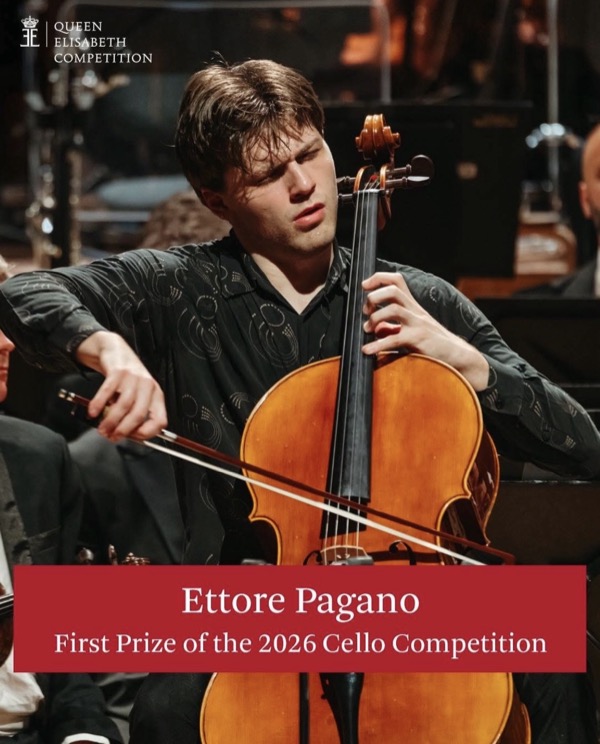
First Prize laureate Ettore Pagano © Alexandre de Terwangne – Thomas Léonard / Queen Elisabeth Competition
Tae-Yeon Kim won Second Prize, awarded by the Belgian Science Policy (Belspo), of €20,000, my choice as well. She also won the Klara Prize, based on a vote by listeners of Klara and VRT Max, an additional €2,500.
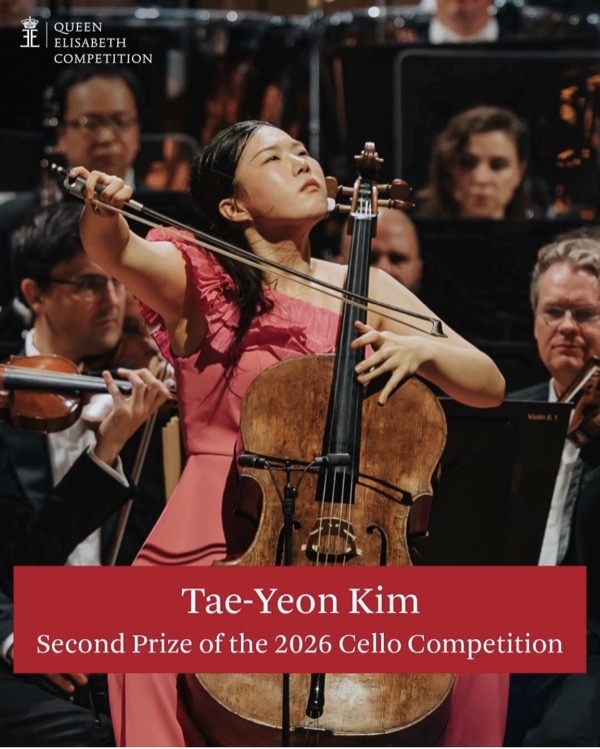
Second Prize laureate Tae-Yeon Kim © Alexandre de Terwangne – Thomas Léonard / Queen Elisabeth Competition
The Count de Launoit Third Prize of €17,000 was awarded to Leland Ko.
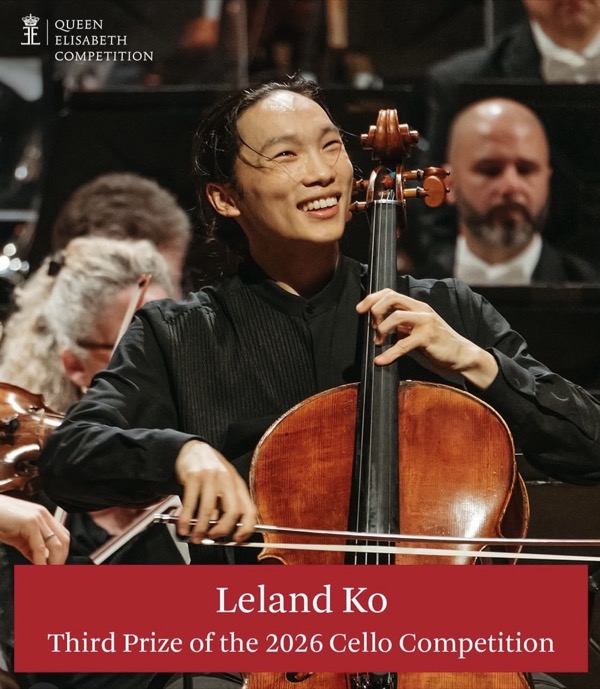
Third Prize laureate Leland Ko © Alexandre de Terwangne – Thomas Léonard / Queen Elisabeth Competition
The Fourth Prize recipient, this year awarded by the Government of the French Community, was Álvaro Lozano Cames a prize of €12,500. He also won the RTBF Musiq3 Prize, based on a vote by listeners of RTBF Musiq3, La Trois and Auvio, another award of €2,500.
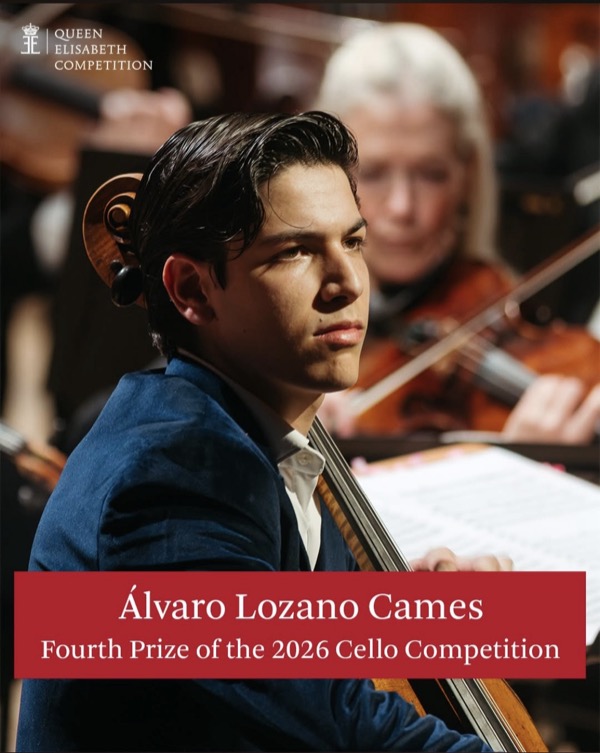
Fourth Prize laureate Álvaro Lozano Cames © Alexandre de Terwangne – Thomas Léonard / Queen Elisabeth Competition
Yo Kitamura won Fifth Prize, the Brussels-Capital Region Prize of €10,000, and Maria Zaitseva was awarded the Sixth Prize, the City of Brussels Prize, of €8,000.
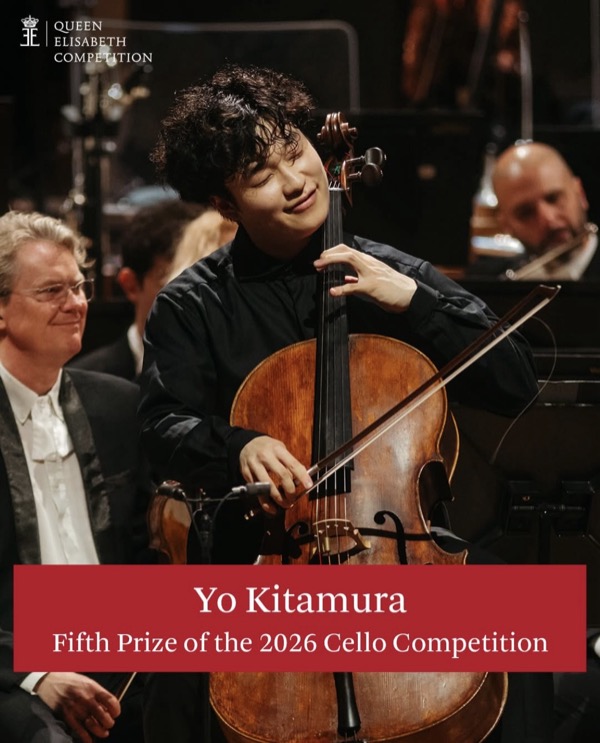
Fifth Prize laureate Yo Kitamura © Alexandre de Terwangne – Thomas Léonard / Queen Elisabeth Competition
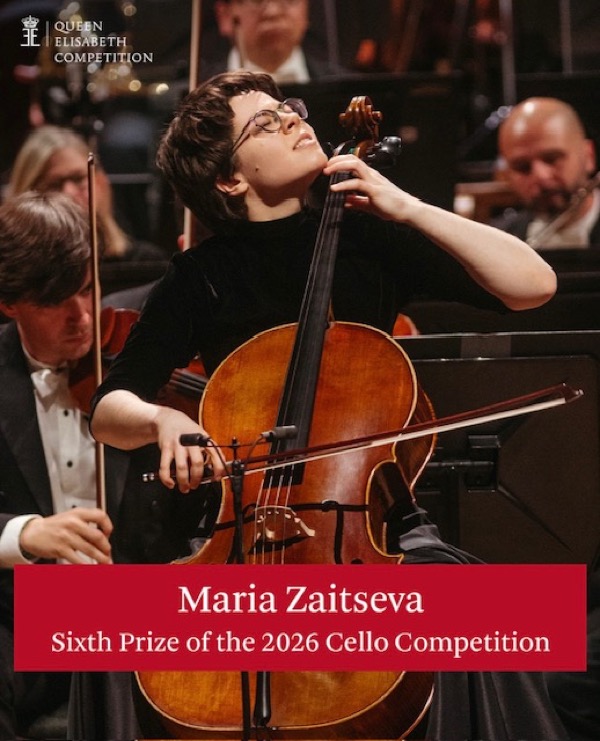
Sixth Prize laureate Maria Zaitseva © Alexandre de Terwangne – Thomas Léonard / Queen Elisabeth Competition
€4,000 will be received by each of the six unranked finalists.
We listeners online and in the audience in Brussels enjoyed the performances immensely. We were exposed to new works as well as older pieces that were new to us. It was a gruelling month for the contestants, and they were truly exhausted after performing the lengthy Man work and a concerto on one program, but the playing was exceptional and at a standard that I have not heard before.
For more of the best in classical music, sign up for our E-Newsletter
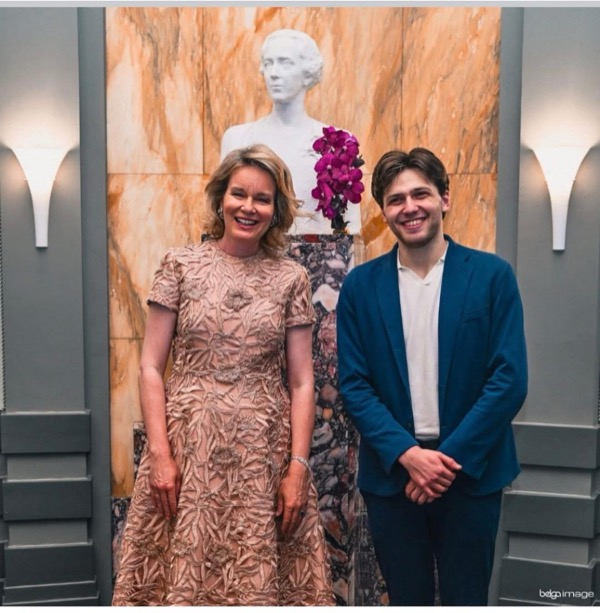
First Prize laureate Ettore Pagano with Queen Mathilde of Belgium © Alexandre de Terwangne – Thomas Léonard / Queen Elisabeth Competition
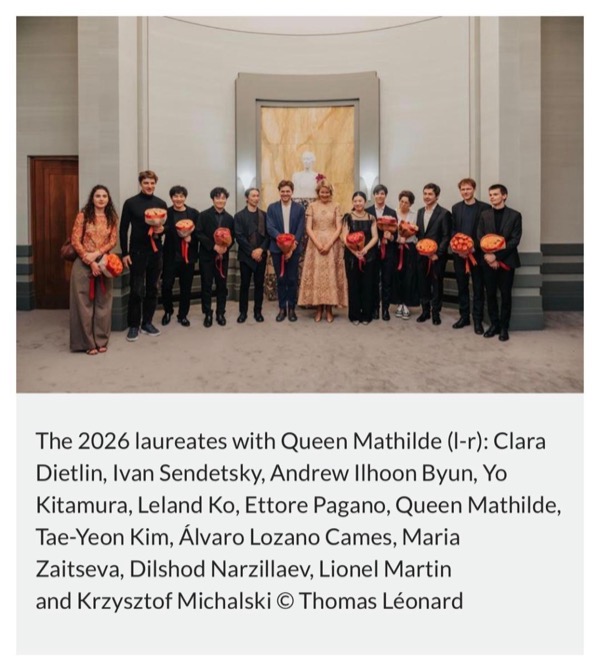
The twelve finalists with Queen Mathilde of Belgium