Felix Mendelssohn is often credited as the man who popularised Johann Sebastian Bach.
Although he mounted important performances of Bach’s St. Matthew Passion, leading to a Bach revival, Felix was not the only member of his family who made this vital rediscovery possible.
To get a fuller story, you have to look at the biography of his maternal grandmother, Bella and her sisters, Fanny, Cäcilie, and Sara.
These four musical sisters were the daughters of Daniel and Mariane Itzig. The Itzigs were bankers who lived in a Berlin palace and did lucrative business with Frederick II of Prussia.
All of the Itzig children were well-educated and encouraged to pursue their passion for music.
Today we’re looking at how four of the Itzig sisters promoted Bach…as well as Mozart, Beethoven, Mendelssohn, and other giants of the classical music world.
Fanny Itzig von Arnstein
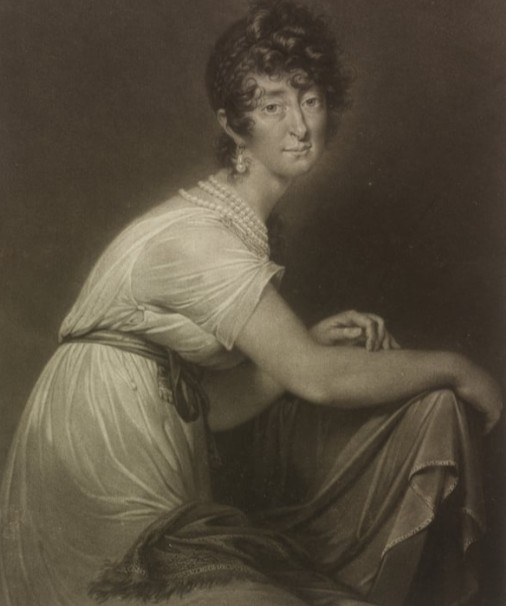
Fanny Itzig von Arnstein
Fanny Itzig, the eighth Itzig child, was born in September 1758.
Like all of her siblings, she was well-educated and played piano from an early age.
In 1776, when she was eighteen, she married Vienna-based banker Nathan Adam von Arnstein, ten years her senior. She had her only child, Judith, later known as Henriette, in 1780.
The von Arnsteins’ salon became one of the most important in Vienna. Their home was open daily from noon until midnight (or even later!), and served as a place for influential figures in the arts, politics, and philosophy to meet, mingle, and exchange ideas.
She was very interested in using her wealth and social position to promote the arts.
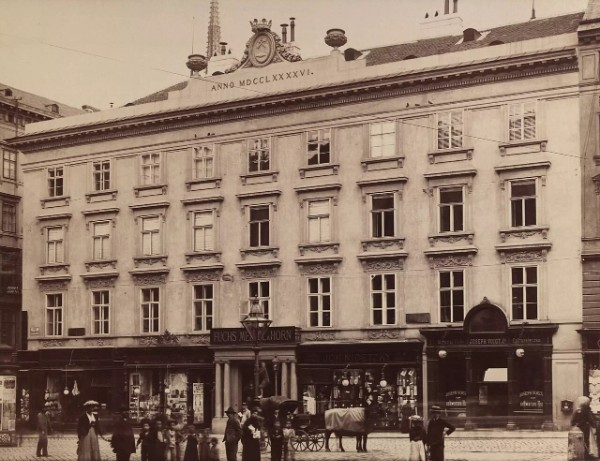
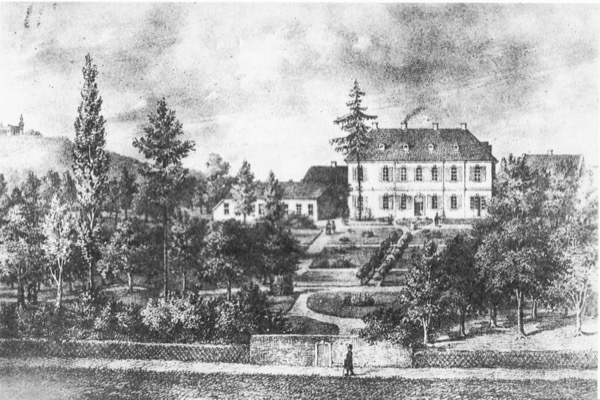
Fanny von Arnstein’s home
She subscribed to Mozart’s concert series, helping to support his pursuit of a freelance music career. (On a more personal note, for a brief time in 1781-82, she was Mozart’s landlady!)
Mozart’s Gran Partita, written in 1781
When Napoleon came to power and crowned himself emperor in 1804, Fanny was disgusted. During the ensuing wars, she funded pro-Austrian and anti-Napoleon causes, as well as charities to aid those adversely affected by the conflicts.
Despite the fact that she made her political opinions clear, when Napoleon’s soldiers invaded Vienna, they reportedly found her charming. In the end, peace terms were ironed out in part at her salons.
After the Napoleonic Wars ended, she moved to the family’s lodgings in the countryside and cut down on her demanding social schedule.
She died in the summer of 1818, likely of tuberculosis. She was almost sixty years old.
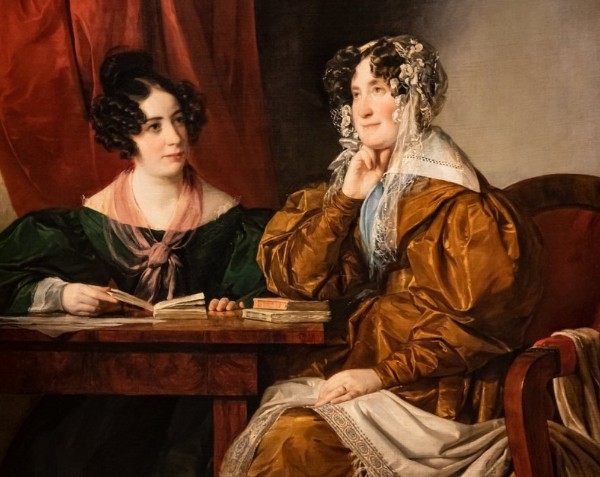
Henriette von Pereira-Arnstein and her daughter Flora
Her daughter Henriette von Pereira-Arnstein followed in her mother’s footsteps. Henriette studied under pianist-composer Muzio Clementi (a hero of Beethoven’s) as well as the renowned piano maker Johann Andreas Streicher, and became a talented pianist in her own right.
Later, Henriette would befriend Beethoven, Mendelssohn, Haydn, and Liszt, playing alongside these giants at her own salon gatherings and carrying on her mother’s legacy.
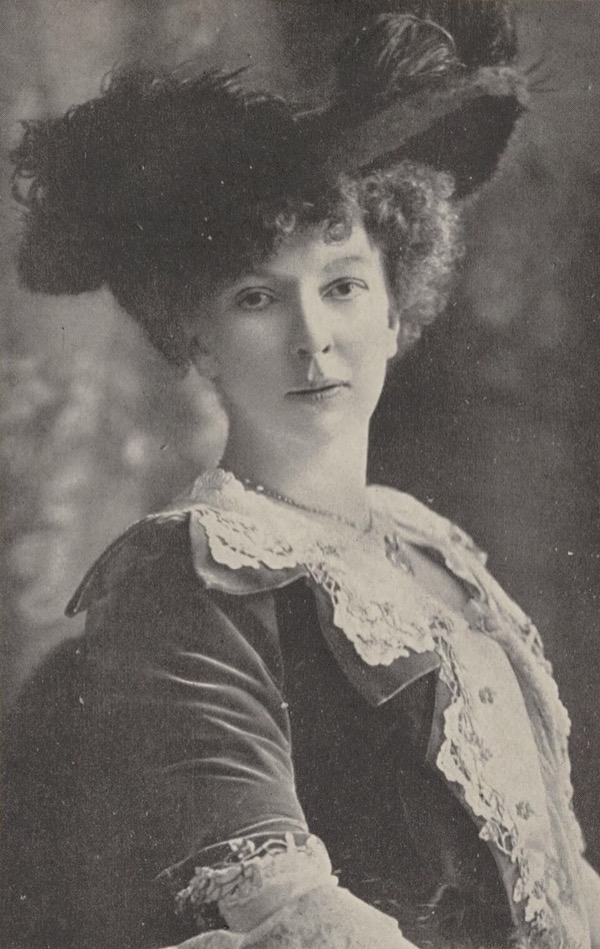
Cäcilie Itzig von Eskeles
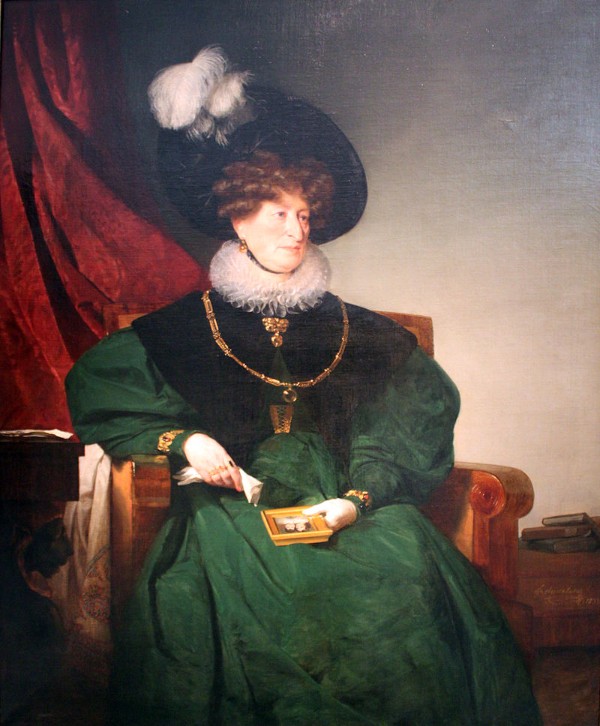
Cäcilie Itzig von Eskeles
Cäcilie was born in 1760, the ninth child of Daniel and Mariane Itzig.
As a child, she studied keyboard with Ignaz Moscheles, the same master who would later teach her grand-niece and grand-nephew, Fanny and Felix Mendelssohn.
Interestingly, she once appeared in public as a harpsichordist in Berlin: an unusual thing for a wealthy woman to do, and indicative of exceptional talent.
In 1777, at the age of 17, she married a cousin named Benjamin Isaac Wulff. The marriage ended in divorce, and they had no children.
A couple of decades later, when she was 40, she married Bernhard von Eskeles, the business partner of her sister Fanny’s husband.
The Arnsteins and Eskeles became the two undisputed power couples of turn-of-the-century Viennese salon life. Fanny’s salon may have been slightly more famous, but Cäcilie’s was a close second.
Cäcilie and her second husband had two children together: a daughter named Marie in 1801 and a son named Daniel in 1803.
Marie learned how to play piano, and she adored Beethoven’s music especially.
Cäcilie and her husband were fans, too, helping Beethoven to buy some stocks that helped secure income for his nephew Karl. In gratitude, he wrote the brief song “Der edle Mensch” in Cäcilie’s album.
Ludwig van Beethoven: Edel sei der Mensch, hülfreich und gut, WoO 185 (Cantus Novus Wien; Thomas Holmes, cond.)
Later, when Beethoven was on his deathbed, Cäcilie sent him a gift of preserves, demonstrating her fondness for him.
Cäcilie died in 1836 in Vienna.
Sara Itzig Levy
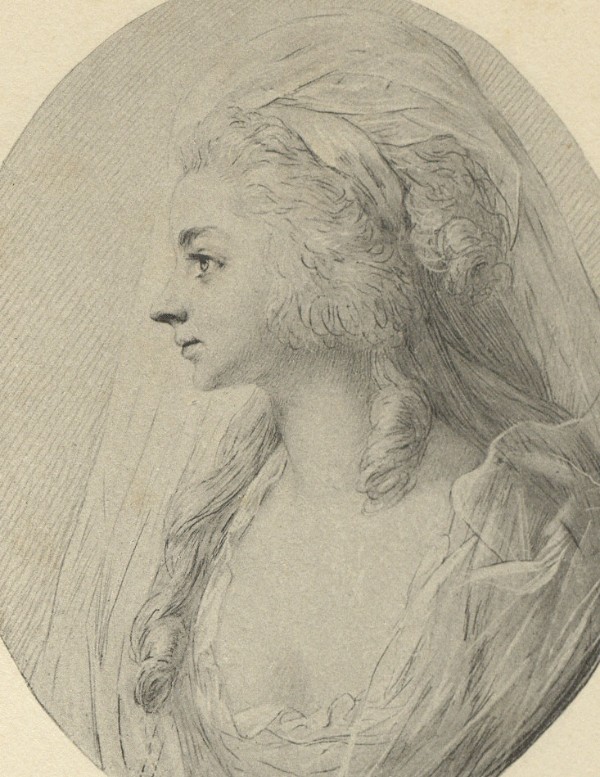
Sara Itzig Levy
Sara was born in the summer of 1761, the tenth Itzig child.
Like her siblings, she was well-educated and taught how to play the keyboard from an early age.
Historians believe that one of her first teachers was J. S. Bach’s student Johann Philipp Kirnberger. She also studied with Bach’s son, Wilhelm Friedemann Bach, between 1774 and 1784. As a result, she grew up admiring Bach’s music, even after it had gone out of fashion.
In 1783, she married a banker named Samuel Salomon Levy. They never had any children, and Sara focused her energies on music and her Berlin salon.
As a young woman, she joined the Berlin Singakademie as a harpsichordist. The Singakademie was a musical organisation founded in 1791. Originally, it consisted of talented amateurs just having fun making music together, but over time, it evolved into a more professional ensemble.
Sara also collected musical scores. Her library was impressive, featuring works by composers like Bach, Telemann, Handel, Pergolesi, etc. Her collection helped to preserve Baroque masterworks that otherwise might have been lost.
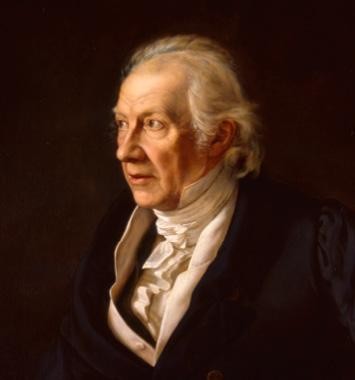
Carl Friedrich Zelter
While playing with the Singakademie, she met a musician named Carl Friedrich Zelter. She was impressed by him and recommended that her talented grand-niece and grand-nephew, Fanny and Felix Mendelssohn, take lessons from him. Zelter ended up being a formative influence on the two children.
Sara lived a long life, dying in 1854. She was 92 years old.
Bella Itzig Salomon
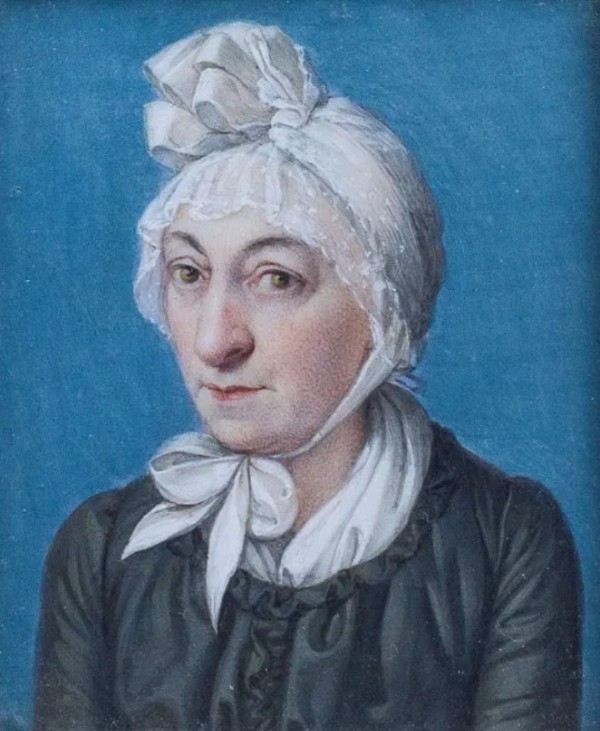
Bella Itzig Salomon
Bella was born in 1749, the second child of Daniel and Mariane Itzig.
As a child, her parents hired Bach student Johann Philipp Kirnberger to teach her keyboard. Kirnberger worshipped Bach, and he passed that reverence to Bella.
In the early 1770s, Bella married a banker named Levin Jacob Salomon. Between 1776 and 1782, they had four children together.
One of those children was a daughter named Lea. Lea inherited her mother’s musicality and enjoyed playing Bach’s keyboard works.
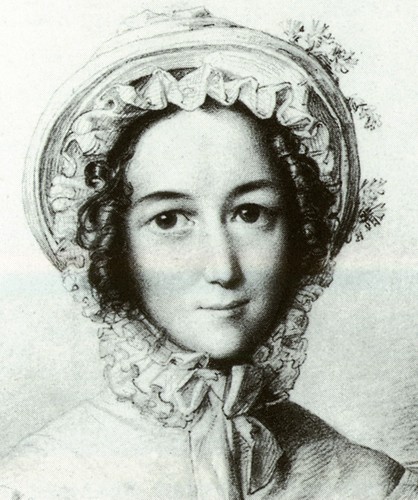
Lea Salomon Mendelssohn
Lea would go on to mother two of the most extraordinary musical prodigies of the nineteenth century: Fanny and Felix Mendelssohn.
Bach’s St. Matthew Passion
As we’ve seen, the family had close ties to Bach. When Bella heard that her fifteen-year-old grandson Felix was a fan of Bach’s work, she was delighted.
She had a professionally copied score of the St. Matthew Passion made and gave it to him as a Christmas gift in 1823.
It was an incredibly thoughtful and extravagant present: there were few copies of the music existing at that time.
The teenage Felix became obsessed with the Passion and brought it to his teacher…who was none other than Carl Friedrich Zelter at the Singakademie.
Mendelssohn insisted he wanted to eventually mount a performance of it, so he and Zelter worked together toward that goal.
In the spring of 1829, after years of study and much rehearsal, the twenty-year-old Felix ascended the podium and conducted the St. Matthew Passion. It was the first time it had ever been heard outside of Leipzig.
Audiences in Berlin were dazzled, and the history of classical music would never be the same.
Unfortunately, Bella Salomon never got to see this historic performance; she died in March 1824, just a few months after giving Felix the Passion score.
But her musical legacy – and that of her sisters and daughter – would live on.
For more of the best in classical music, sign up for our E-Newsletter