A set of short anonymous poems in Boston’s Musical Herald did a poetical job of setting out the history in limericks, along with unique rhyming spellings.
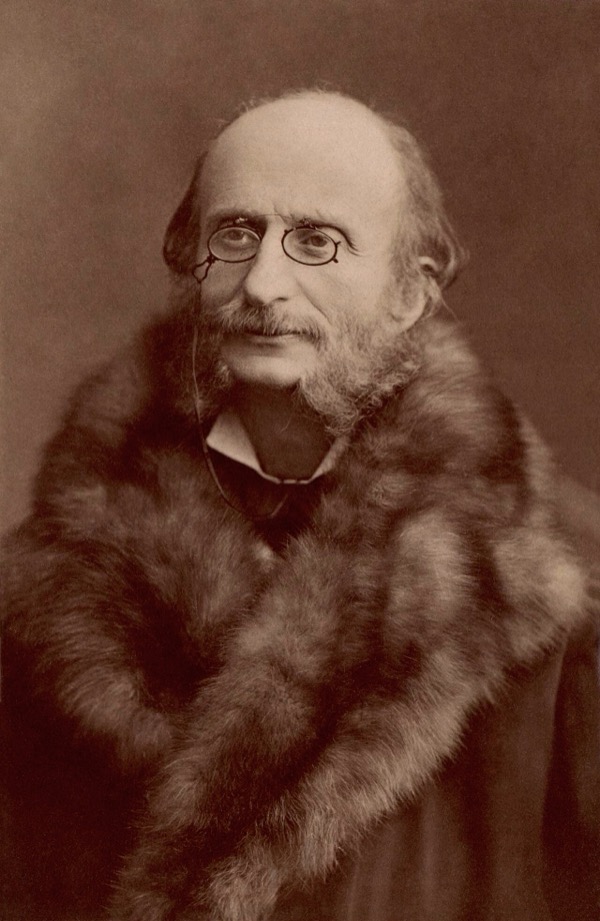
We started in the 18th century with Gluck and then Haydn, and then looked at Brahms and Liszt, and then Auber and Halévy. Now it’s time for more Germans!
There was a composer named Spohr
Whose works were a hundred or mohr.
His great work Jessonda
Long time a wonda,
But now his successes are o’hr.
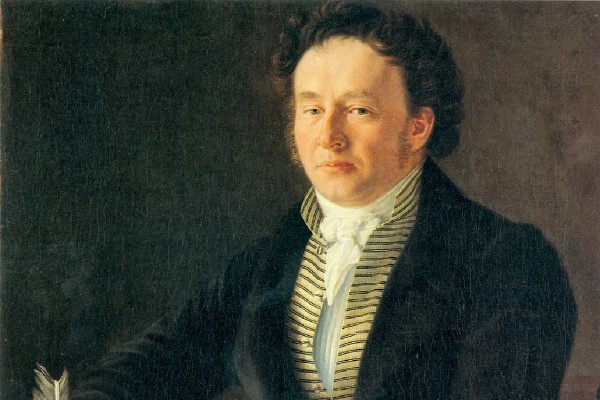
Johann August Nahl the Younger: Louis Spohr, 1824
Louis Spohr (1784–1859) had an established career as a violinist and conductor, and with Jessonda, which received its premiere in Cassel in 1823, he was now an opera composer. Jessonda held the stage for the next 25 years, performing all over Europe.
Spohr, who was court kapellmeister in Hesse, had written an opera that held everything: ‘dancing, stage fights, storm, settings, costumes’, and magnificent scenery. It’s a story of moral good defeating ritualised evil where an innocent Indian widow is saved at the last minute from death on her husband’s funeral pyre. Her saviour is the general of the Portuguese army, who, of course, disapproves of suttee. Western morals triumph over native ritual. A beautiful innocent is saved. All the usual opera material to make everyone feel good at the end.
We’ll ignore the weaknesses of the plot (which have been some of the important reasons keeping Jessonda off modern stages) and look at the innovations that Spohr had in his work. The two pairs of voices are not Soprano and Tenor, as expected, but Soprano and Bass (Jessonda and Tristan) and Mezzo-soprano with Lyric Tenor (Amazili and Nadori). Following the lead of Carl Maria von Weber in Der Freischütz, this is a through-composed opera with the spoken dialogue replaced with recitative. He shortened the musical numbers to make them tighter and avoid the overuse of coloratura and fioriture, which just made empty holes in the vocal parts. The dramatic elements are heightened, and emotion comes to the fore.
Louis Spohr: Jessonda – Overture (Hamburg Philharmonic State Orchestra; Gerd Albrecht, cond.)
In many ways, Spohr’s musical development paved the way for the creation of an independent German Romantic opera that became the basis for Wagner’s music dramas.
Our last limerick is about Carl Maria von Weber:
And lastly we speak about Weber
Who wrote without trouble or leber
He ne’er was pedantic
But always romantic
And Meyerbeer oft was his neber.

Caroline Bardua: Carl Maria von Weber, 1821 (Berlin: Alte Nationalgalerie)
Carl Maria von Weber (1786–1826) died at age 39 but in his few years, wrote 10 operas. Of those 10, 4 of his youthful ones are lost or only known in fragments, the remaining 6, Silvana (1810), Abu Hassan (1811), Der Freischütz (1821), Die drei Pintos (comp. 1820–21), Euryanthe (1823), and Oberon (1826), were all significant contributions to the development of German Romantic opera.
He was born into a musical family: his father, Franz Anton, was director of a small orchestra for the prince-bishop of Eutin, and his mother was a Viennese singer. His cousin Aloysia was wooed by Mozart, who, when she refused him, married her sister Constanze; thus, Mozart was related to Weber through this marriage. Carl Maria von Weber could sing and play the piano by age 4. The frequent family moves (Eutin to Hamburg to Vienna) exposed him to many different musical influences; he was able to study with Michael Haydn (Joseph Haydn’s younger brother) during a study in Salzburg in 1798. In Vienna in 1803, he studied with Abbé Vogler, who founded important music schools in Mannheim, Stockholm, and Darmstadt. A fellow student was Jakob Meyer Beer, later known as Giacomo Meyerbeer, and the two became close friends.
At age 17, he was appointed Director of the Breslau Opera in 1803, leaving the post two years later. In 1813, he was director of the Prague Opera, in 1816 and 1817, he was in Berlin, and from 1817 onward was director of the Dresden opera. This is where he had his greatest success in establishing a new German opera that would replace Italian opera. The premiere of Der Freishütz in 1821 in Berlin marked the creation of the first German Romantic opera. The highlight of the opera comes in Act II, where Kaspar and Max cast the magic bullets that Max hopes will bring him the hand of his beloved Agathe.
Carl Maria von Weber: Der Freischütz, J. 277 (excerpts) – Act II: Finale: The Wolf’s Glen (Caspar, Samiel, Max, Chorus) (Vladimir Baykov, bass; Christian Immler, bass; Stanislas de Barbeyrac, tenor; Accentus Chamber Choir; Insula Orchestra; Laurence Equilbey, cond.)
It’s midnight, ghosts are around. Kaspar calls on Samiel, the devilish ‘Black Huntsman’, who has Kaspar’s soul in his control. Kaspar is hoping to exchange Max’s soul for his own. Max has no idea of this proposed trade and only wants to be able to marry Agathe. In Weber’s opera, this scene has been called ‘the most expressive rendering of the gruesome that is to be found in a musical score’. Like Spohr, Weber’s innovations helped pave the way for Wagner’s work.
These limericks aren’t the best, but they do give us a view from 1888 of how they thought music history, particularly of opera, had developed. Gluck is described as ‘an ancient musician’ and no one older (Bach? Monteverdi?) is credited. Much of this is tied in with the 19th century’s belief that it was the most perfect culmination of all that preceded it.
Who would you memorialise in a limerick?
For more of the best in classical music, sign up for our E-Newsletter