Alcohol shaped (and sometimes shattered) the lives of some of classical music’s greatest composers.
From John Field, a pianist who had to be dragged out of bars to play his scheduled concerts, to Jean Sibelius, whose binge drinking nearly ended his marriage, to Malcolm Arnold, whose addiction drove him to homelessness, alcohol abuse has impacted many composers’ personal lives and musical legacies.
Here’s how five brilliant composers wrestled with their alcohol use, and what music they left behind despite it.
John Field (1782–1837)
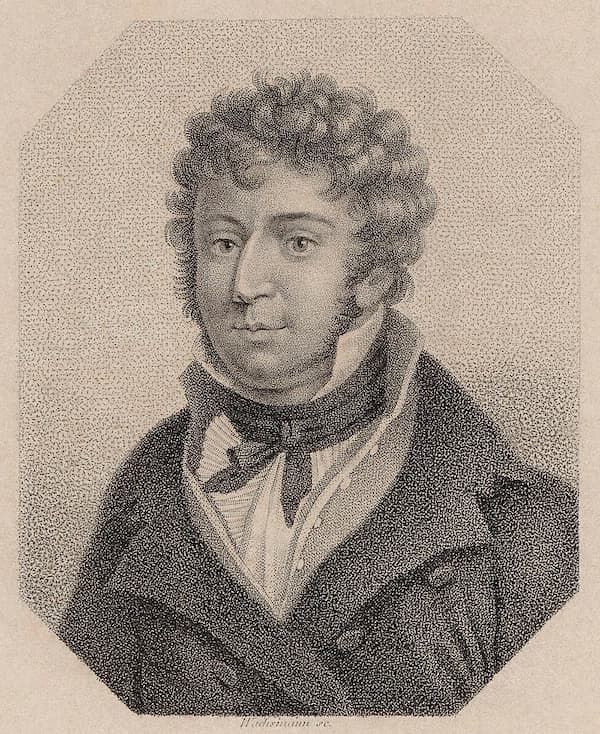
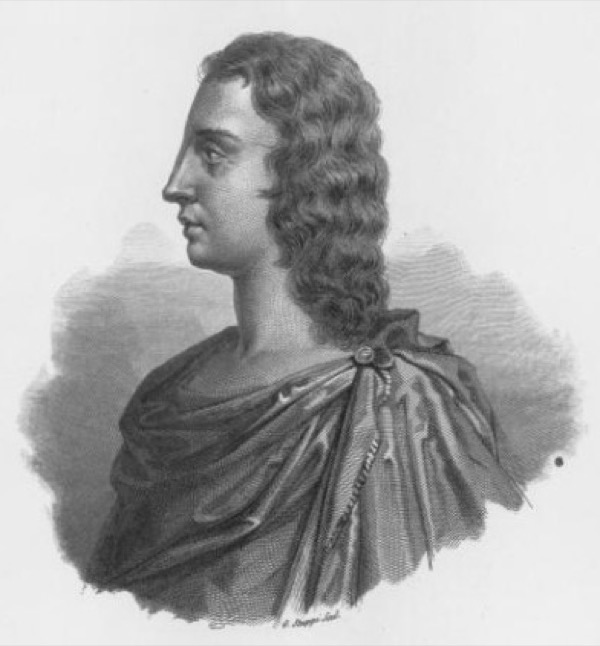
Anton Wachsmann: John Field, ca 1820 (Gallica: btv1b84179686)
John Field was born in Dublin in 1782. He began studying the piano as a little boy and made his debut at the age of nine.
He became a professional pianist and composer who toured across Europe before ultimately settling in Russia.
Today, he is best known as the pianist who standardised and popularised the piano nocturne, a genre that Chopin would later perfect.
John Field’s Nocturne No. 9
In his thirties, Field’s relationship with alcohol became increasingly problematic. His friends claimed that before every composing session, Field would have to drink a glass of alcohol first.
Read and find out how his drinking also impacted his performing career.
One famous anecdote tells of a concert during the Lenten season in 1810, when the Governor of Moscow sent the chief of police to find Field and bring him to the concert hall, whatever his condition. Field was eventually found in a bar surrounded by his drinking buddies, and when rushed to the hall, Field stumbled to the piano. He swayed slightly and bowed to the audience, who gave him a roar of applause!
His health deteriorated through the 1820s, and by the end of the decade, he had largely stopped composing altogether. His nickname became “Drunken John.”
He was diagnosed with cancer in 1831 and died in 1837.
Modest Mussorgsky (1839–1881)
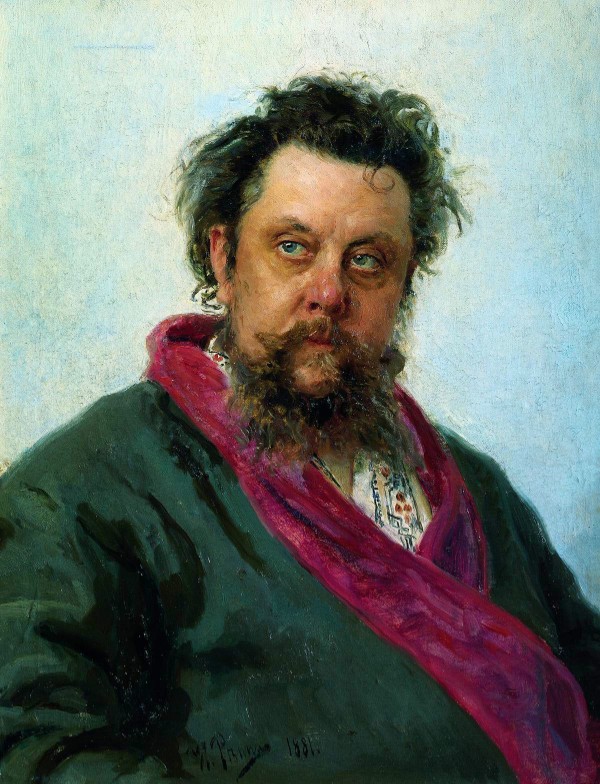
Modest Mussorgsky
Modest Mussorgsky was dealt a particularly harsh hand: he was born into a family of alcoholics and a culture that glorified alcohol consumption.
As a boy, he was sent to the Cadet School of the Guards, where he began drinking at the age of thirteen. Heavy drinking was a part of both military and youth culture at the time. In the words of one author:
“An intense worship of Bacchus was considered to be almost obligatory for a writer of that period. It was a showing off, a ‘poe’, for the best people of the [1860s].”
Consuming alcohol had become a signifier of one’s artsy bohemianism.
Mussorgsky became so addicted that he’d spend all day and all night in a St. Petersburg tavern.
Eventually, he started working in the civil service, but he was drinking so much that his salary didn’t cover the alcohol he was consuming. In 1867, he lost his job due to his addiction, but was reinstated two years later.
When Mussorgsky was in his mid-twenties, his mother died. Major losses are often triggers for addictions to worsen as depressed people seek to self-medicate, and Mussorgsky was no exception. Griefstricken, he began vanishing during weeks-long binges.
Mussorgsky’s Night on Bald Mountain
Remarkably, despite his heavy drinking, he composed a number of memorable works over the course of his side hustle of a music career.
Those works included the opera Boris Godunov, the piano suite Pictures at an Exhibition, and his tone poem Night on Bald Mountain.
In 1880, he was fired again. He found himself unable to pay for housing and was forced to beg to survive. Eventually, he began suffering from seizures. Through it all, his addiction never waned. Even in the hospital, he allegedly bribed a nurse to bring him cognac.
Just weeks before he died, artist Ilya Repin painted a famous portrait of Mussorgsky. The composer’s face is flushed, his gaze wild.
He died from an alcohol-induced stroke or epileptic fit in March 1881.
Modest Mussorgsky left a number of promising works unfinished, including two operas, Khovanshchina and The Fair at Sorochyntsi.
One wonders what else he could have created if he had gotten treatment for his addiction.
Learn more about the tragedy of Mussorgsky.
Erik Satie (1866–1925)
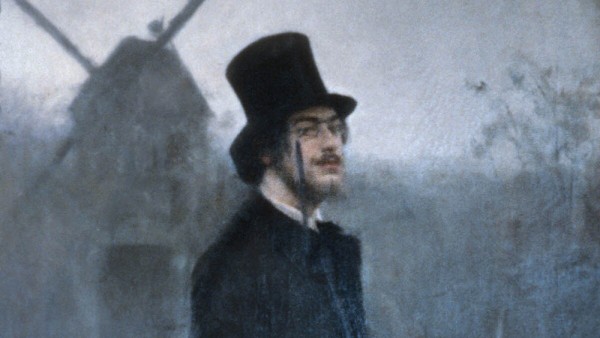
Erik Satie
Erik Satie was born in Normandy, France, in 1866.
He studied music in a desultory fashion as a child. But in 1879, when he was thirteen, his pianist stepmother decided that he should become a professional composer, enrolling him in a preparatory piano class at the Paris Conservatoire.
He was expelled for laziness in 1882, but still found himself attracted to composition anyway, and re-enrolled at the Conservatory a few years later.
During the 1880s, he became a fixture of the bohemian scene in Montmartre, often playing at various cafes and cabarets, sipping the culture’s drink of choice: absinthe.
Soon, he became a hero of young Parisian composers interested in the quirky and avant-garde.
Satie’s Gymnopédie No.1
Satie never married. His longest love affair was with painter Suzanne Valadon, but it only lasted for five months.
He entered middle age, living by himself in a one-room apartment surrounded by years’ worth of hoarded rubbish, with no family to help set guardrails for his alcohol use.
Chronic bronchitis, made worse by his constant smoking and drinking, eventually began impacting his quality of life.
In early 1925, his health declined so precipitously that he had to move to the hospital. He died there in July of cirrhosis of the liver.
Learn more about Erik Satie’s final illness and death.
Jean Sibelius (1865–1957)
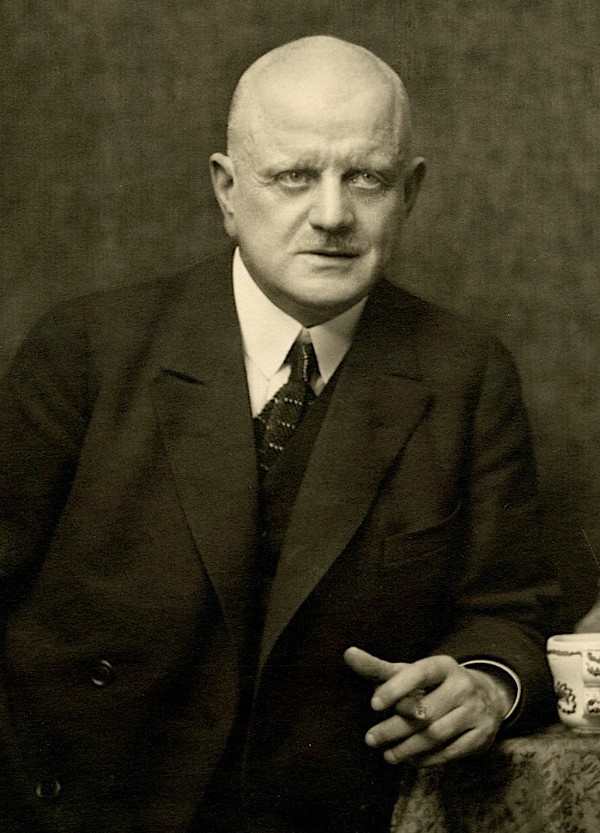
Jean Sibelius, 1923
As a young man, Finnish composer Jean Sibelius loved to party. He was passionate about whiskey, wine, and champagne, and he loved drinking while talking to and debating other musicians and artists.
A famous painting by his friend Akseli Gallen-Kallela actually depicts Sibelius drinking with his friends.
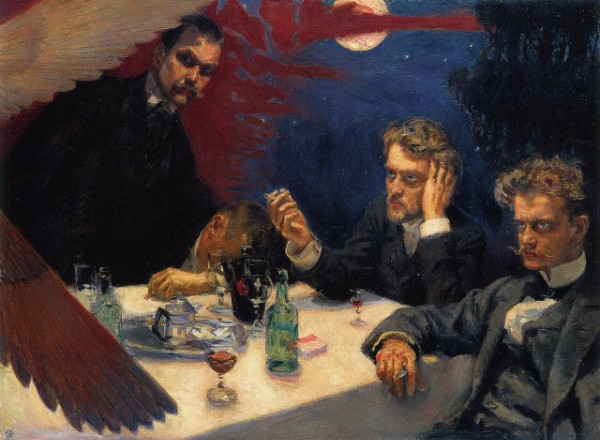
Symposium by Akseli Gallen-Kallela
Unlike some young people, however, Sibelius never grew out of his habit, drinking heavily for two decades.
He often left his home to go on benders, despite the fact that he had a wife and (eventually) six little daughters to take care of at home.
The Sibeliuses ended up building a house in the Finnish countryside in 1904, in part to try to keep him away from the temptations of the Helsinki taverns. Arguably, the rawness of the landscape found its way into his music.
Unfortunately, moving didn’t stop his drinking. His early works – like his first and second symphonies and his violin concerto – were produced while he was still drinking heavily.
Sibelius’s violin concerto
Finally, in 1907, when he was 42, matters came to a head. His doctor and closest friend, Axel Carpelan, warned that “he will soon be dead unless he stops smoking and consuming spirits.”
Sibelius himself finally admitted, “This boozing – in itself an exceptionally pleasant occupation – has really gone too far.”
The next year, he was diagnosed with a throat tumour. Terrified by the news, he quit drinking and smoking. His wife Aino later claimed that what followed was the happiest portion of their long marriage.
During this period of sobriety – which Sibelius labeled his “silver age” – he composed his third, fourth, and fifth symphonies, among other masterpieces.
Sibelius’s Symphony No. 5
Unfortunately, a few years later, when faced with mounting career pressures and the stress of World War I, Sibelius relapsed.
He convinced himself that he would only drink and smoke in moderation, but by 1917, he was back in the throes of full-blown alcoholism. Aino pondered divorce, although she ultimately chose to stay.
Sibelius wrote his final major works in the mid-1920s. He tried to write a final eighth symphony, but it never materialised.
In his old age, he began suffering from tremors and memory troubles, traceable in part to his alcohol use.
Malcolm Arnold (1921–2006)
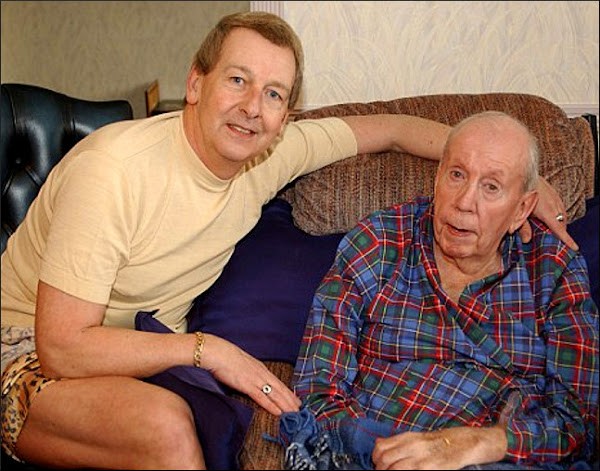
Malcolm Arnold and Anthony Day
Malcolm Arnold was born in 1921 in England to a musical family. He began his career as a professional trumpet player, but after World War II, he made his name as a composer.
His extensive output was legendary, ranging from concert overtures to symphonies to concertos to ballets to movie soundtracks. (He wrote the music for Bridge on the River Kwai in just ten days – and won an Oscar for it.) Over the course of his career, he composed over five hundred works.
Arnold’s Serenade for Small Orchestra: Andante con moto
Unfortunately, by the late 1960s, he had developed a reputation as a difficult person to work with, suffering from extreme mood swings. He’d developed an unhealthy relationship with alcohol, and his mental health was deteriorating. He eventually fled to rural Cornwall to escape the temptations of London and to try to get his health under control.
But things only grew darker. After his second divorce in 1975, and being passed over for the prestigious position of Master of the Queen’s Music, he made two suicide attempts.
Finally, in 1978, he checked himself into a hospital to seek treatment for his mental illness and alcoholism.
His treatment took years. After his social worker died in 1984, Arnold ended up on the streets. He was in his mid-sixties at the time. By chance, someone recognised him and telephoned the BBC. He was connected with a new caretaker and became sober again.
Having finally stabilised his health, Arnold returned to composing. He wrote a ninth symphony and was commissioned by a number of instrumentalist stars, including James Galway, Michala Petri, and Julian Lloyd Weber.
After this extraordinary comeback, he continued composing for many years. He died in 2006, knowing full well how much people adored his music.
Conclusion
Creative people are often drawn to alcohol for a variety of reasons: its loosening effects, its numbing effects, the convivial social life that often accompanies drinking, etc.
The lives and careers of these five composers provide cautionary tales, as well as stories of persistence in the face of addiction and emotional struggle.
We wrote more about the phenomenon here in our article “I Drink, Therefore I Am: The Truth About Alcohol and Creativity.”
For more of the best in classical music, sign up for our E-Newsletter