Classical music has always boasted its share of big personalities, especially on the conductor’s podium.
Today, we’re looking at five love stories between conductors and their wives and how their romances shaped not just their personal lives but their careers, too.
Hans von Bülow & Cosima Liszt von Bülow (Wagner)
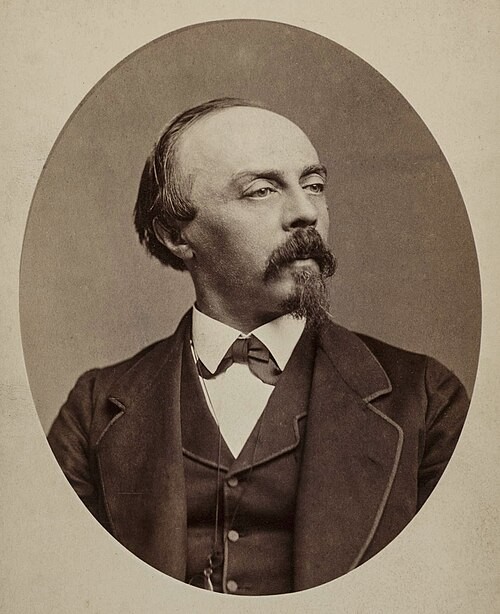
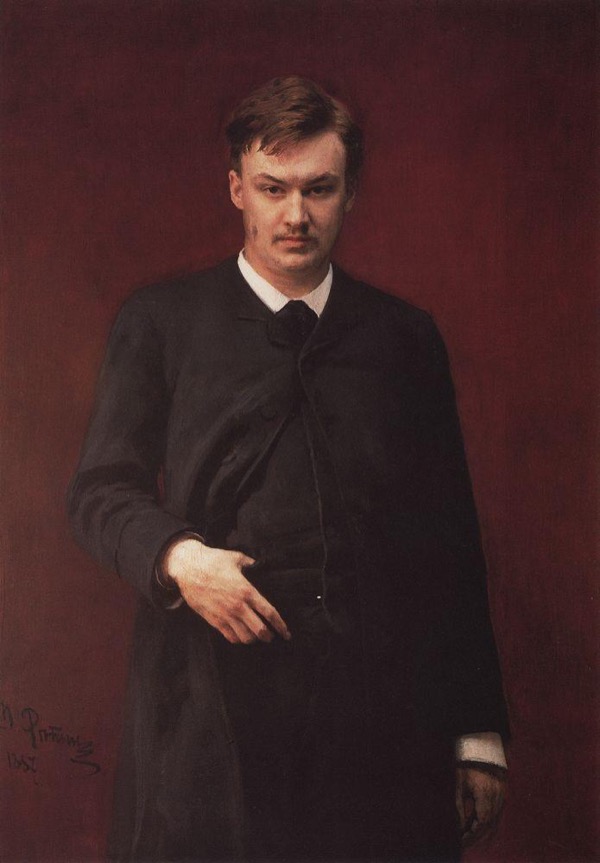
Hans von Bülow, c. 1875 (Newberry Library, Chicago)
In 1851, at the age of 21, conductor-pianist Hans von Bülow became a protégé of composer Franz Liszt.
A few years later, Liszt put his illegitimate daughter Cosima under the care of Hans’s mother. Hans was tasked with overseeing her musical education.
During her studies, he was impressed by her talents. They fell in love and married in 1857.
Unfortunately for their marriage, Hans was more interested in music-making than in his home life, and Cosima hated living in Berlin.
Her dissatisfaction deepened into depression after her brother died in 1859 and her sister died in 1862. (Both of Cosima’s daughters with Hans were named after her late siblings.)
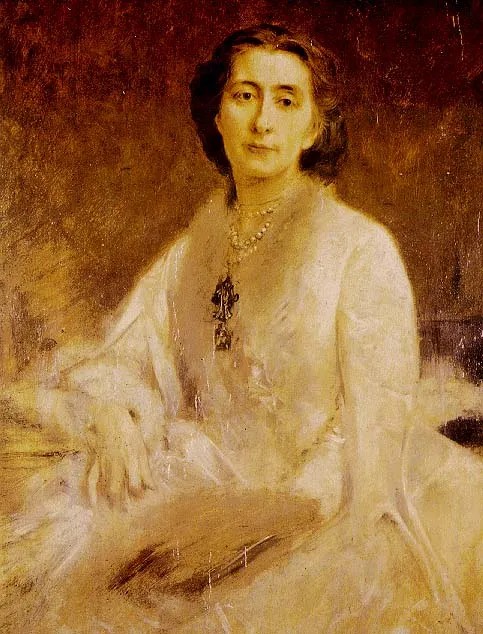
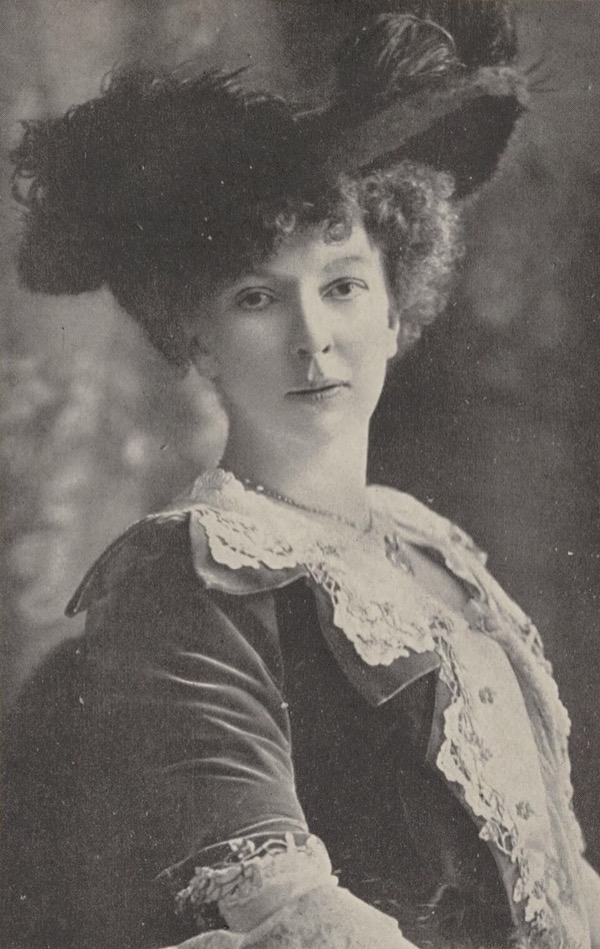
Cosima Liszt von Bülow Wagner © medium.com
At the same time, Hans was working with composer Richard Wagner, whose work he was keen to champion.
Meanwhile, during the depths of Cosima’s unhappiness, she fell in love with Wagner, and the two embarked on an affair.
In 1865, Cosima and Richard had a baby together, a daughter they named Isolde. Two years after that, they had a second daughter named Eva.
Despite his wife’s infidelity, Hans still conducted the premiere of Wagner’s opera Die Meistersinger in 1868, setting up one of the most awkward love triangles in classical music history.
Overture from Die Meistersinger
A few months later, Cosima asked Hans for a divorce. He refused until 1869, when Cosima had a third child, a son named Siegfried, at which point he finally gave in.
He wrote to her, “You have preferred to consecrate the treasures of your heart and mind to a higher being: far from censuring you for this step, I approve of it.”
He never spoke to Wagner again.
Leopold Stokowski & Olga Samaroff
Olga Samaroff’s performance of Liszt’s Liebestraum No. 3
Olga Samaroff, born Lucy Hickenlooper in 1880 in Texas, was one of the great American pianists of her generation.
After the failure of her youthful first marriage, she divorced and focused on making a career as a piano soloist. She made her successful European debut in London in 1905.
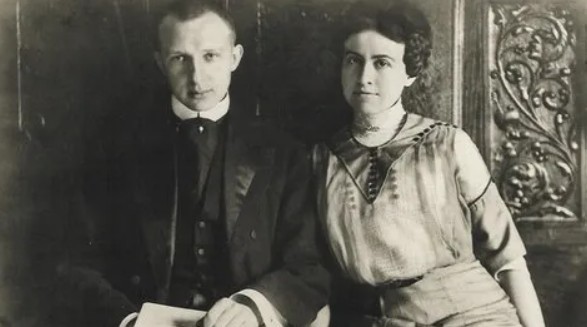
Leopold Stokowski & Olga Samaroff
In late 1905 or early 1906, she met a man named Leopold Stokowski, who was then working as the organist and choirmaster at St. Bartholomew’s Church in New York City.
For several years, they were just friends, as she was focused on her career.
While touring Europe in 1908, one of the conductors she was scheduled to work with backed out. She pulled strings to have Stokowski substitute, and also ensured that representatives of the Cincinnati Symphony were present at the concert. Thanks to her intervention, Stokowski won the music directorship of the Cincinnati Symphony, and his American career was assured.
They eventually fell in love, marrying in 1911. Samaroff didn’t give up her career entirely, but she did cut back on her performances and attempted to play the role of a conductor’s wife.
In June 1912, the Philadelphia Orchestra offered Stokowski the music directorship there. Olga signed the contract on his behalf while he was traveling.
Unfortunately, Stokowski was unfaithful to Samaroff, and the marriage came under increasing strain.
They were set to divorce when Samaroff got pregnant with their daughter Sonya, who arrived in December 1921. The pregnancy complicated matters, but they ultimately divorced in 1923.
Stokowski conducting Tchaikovsky in the 1947 film Carnegie Hall
Stokowski went on to become famous for his decades of womanising, as well as his decades-long tenure at the Philadelphia Orchestra, which Samaroff had made possible.
Samaroff focused on her career and became one of the great pianists and teachers of the mid-twentieth century.
Leonard Bernstein & Felicia Montealegre
Interview with Bernstein and Montealegre in 1955
Leonard Bernstein met Felicia Montealegre in 1946 at a party hosted by pianist Claudio Arrau.
At the time, Bernstein was an up-and-coming conductor/composer, and Montealegre was a stunning Chilean-Costa Rican actress.
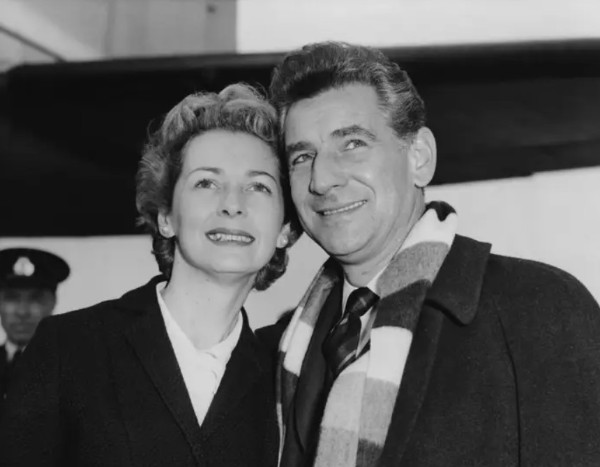
Leonard Bernstein & Felicia Montealegre
They married in 1951, despite the fact that Bernstein was gay. Felicia accepted Bernstein “as you are” – famously writing to him, “You are a homosexual and may never change… If your peace of mind, your health, your whole nervous system depends on a certain sexual pattern, what can you do?… Let’s try and see what happens if you are free to do as you like.”
As Bernstein’s wife, Felicia often hosted musical salons and stood by his side at Philharmonic galas, supporting his meteoric career.
Behind closed doors, life was complex. Bernstein loved his wife deeply, and they had three children together. But he also pursued relationships with men.
As time went on, the strains on their marriage increased, and they separated in 1976. However, in 1977, Montealegre was diagnosed with lung cancer, and they reconciled before her death in 1978.
In the end, although their relationship was unconventional, it was full of deep love.
Sir John Barbirolli & Evelyn Rothwell
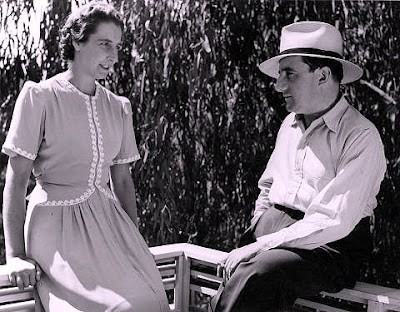
Sir John Barbirolli & Evelyn Rothwell
Oboist Evelyn Rothwell, born in 1911, began her career playing for ragtag ensembles in London, in an era when very few professional women orchestral musicians existed.
During one such performance, the principal oboist fell sick, and she took his place.
A violist in the orchestra was impressed and passed along her name to his brother, who was a conductor named John Barbirolli.
The two began working together. When Barbirolli became the conductor of the present-day Royal Scottish National Orchestra, he appointed Evelyn as principal oboist. She also played at the prestigious Glyndebourne Festival.
In 1935, she became one of the first two women to join the London Symphony Orchestra, but she entered semi-retirement in 1939 when she married Barbirolli.
He had just divorced and was at the time serving as the music director of the New York Philharmonic. She was at his side during the rest of his turbulent New York tenure; in 1943, they returned to England.
Once settled back in England, Barbirolli set to work rebuilding the nearly century-old Hallé Orchestra, whose ranks had grown dangerously thin during wartime.
John began working with the Hallé Orchestra, and Evelyn served as an assistant, while also continuing to play oboe.
Evelyn Rothwell playing the Vaughan Williams oboe concerto with John Barbirolli conducting the London Symphony Orchestra
In 1948, she received the honour of giving the world premiere of a newly rediscovered Mozart Oboe Concerto in Salzburg.
She also premiered contemporary works (like Martinů’s Oboe Concerto, which she premiered at the Proms after its original dedicatee fell ill) and had numerous compositions dedicated to her.
John even arranged Baroque concertos especially for Evelyn to perform.
Barbirolli retired from the Hallé Orchestra in 1968, after a quarter-century. Two years later, he died of a heart attack.
Evelyn had a long and productive career after his death, taking special joy in teaching. She outlived her husband by nearly four decades, passing away in 2008.
Jacqueline du Pré & Daniel Barenboim
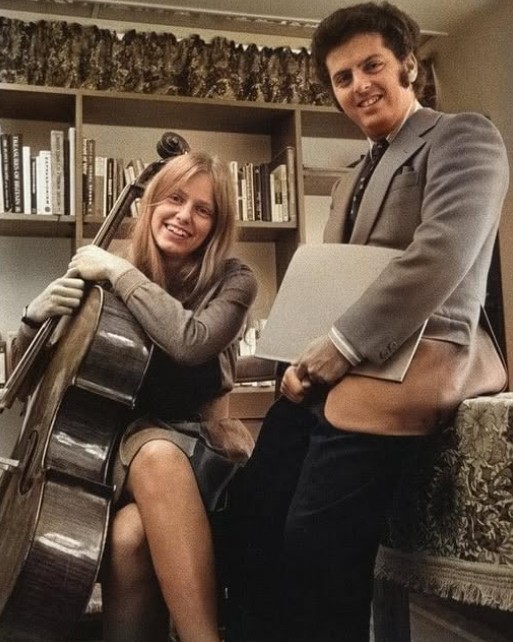
Jacqueline du Pré & Daniel Barenboim
Cellist Jacqueline du Pré and composer/pianist Daniel Barenboim met as rising young stars in the 1960s, and quickly formed an intense bond both on and off the stage.
Jacqueline was a British cello prodigy, famous for her emotionally exuberant music-making. Daniel, an Argentine-Israeli piano virtuoso and conductor, had been giving concerts since the age of seven.
They met on Christmas Eve 1966, when she was 21, and he was 25. She told Gramophone Magazine, “We sat down and made music together – and from then on things developed very fast.”
Footage of Jacqueline du Pré and Daniel Barenboim
In 1967, du Pré converted to Judaism, and the couple married that June in Jerusalem. Just six months into their relationship, they had become the ultimate classical music power couple.
That same year, they recorded a film performance of the Elgar cello concerto with the New Philharmonia Orchestra. It stands as one of the most staggeringly moving concert films in the history of classical music.
Jacqueline du Pré playing the Elgar cello concerto, conducted by Daniel Barenboim
Tragedy struck the golden couple just a few years later in 1971, when du Pré developed the first symptoms of multiple sclerosis.
The illness began to seriously affect her playing, and she was forced to retire in 1973. She was just 28 years old.
Barenboim said in a 2021 documentary, “It was hell on earth for her. For us. But there was absolutely no hesitation in my mind that I was going to stay with her, be with her, whatever happened.”
In 1974, Barenboim was appointed the conductor of the Orchestre de Paris, and he began commuting between London and Paris a couple of times a month.
During his tenure, he fell in love with pianist Elena Bashkirova, whom he met in 1979. In 1983 and 1985, he had two children with her. The press didn’t mention their existence until after du Pré’s death.
“I never claim, nor do I now, that I am or was a saint. But I did what I could,” he said in the documentary. “I wanted to do what my heart said and what I thought was ethically right. And at the same time, I had to find a way to live my own life.”
Barenboim and du Pré remained married until her death in 1987.
Conclusion
Music history is full of complicated marriages. Many times, the most famous men in classical music find themselves drawn to brilliant women, and conductors are certainly no exception. All five of these conductors had wives with huge personalities who left major marks on their husbands’ careers.
What conductor’s love story do you find most fascinating?
For more of the best in classical music, sign up for our E-Newsletter