You likely have no idea who Anna Caroline de Belleville-Oury is. However, many of the great composers did.
Beethoven enjoyed hearing her play. Carl Czerny recognised her as one of the students who made him famous. Chopin dedicated a waltz to her. Schumann and Berlioz reviewed her performances.
So who exactly was this great pianist and composer…and why has she been so thoroughly forgotten by historians and music lovers?
Anna de Belleville’s Early Childhood
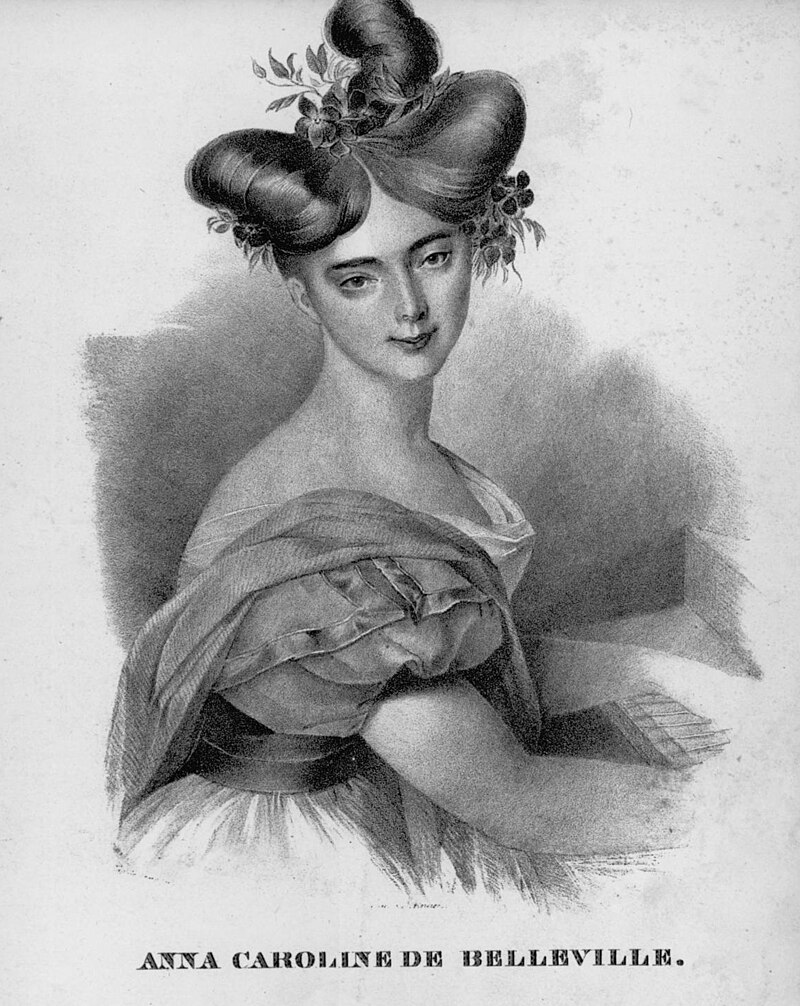
Anna de Belleville
Anna Oury was born Anna Caroline de Belleville on 24 January 1806 in the town of Landshut in Bavaria.
Her family was purportedly of aristocratic French descent and very musical. Her mother Amalia came from a family of professional musicians, and her father, Carl, served as the director of the opera in Munich, in addition to working as his daughter’s music teacher and manager.
It is believed that she also studied with a cathedral organist in Augsburg.
Working under their guidance, she made her debut at the age of ten.
That same year, a critic in Augsburg wrote:
“Miss Belleville gave a concert; now you know the muse we worshipped. It is hard to talk about the performance of this miracle girl in prose, because her playing overflows with a bold imagination. Skill, the defeat of the most difficult things, precision, power, presentation, in short, this master, still blossoming at a very tender age, possesses every excellence to such a degree that one must doubt whether more excellent things could even be accomplished on the pianoforte in the above respects, whether the artist herself would still need to make any progress. A sound of applause and delight filled the room, and the following was heard from all mouths: we have never heard such a thing!”
Working With Czerny
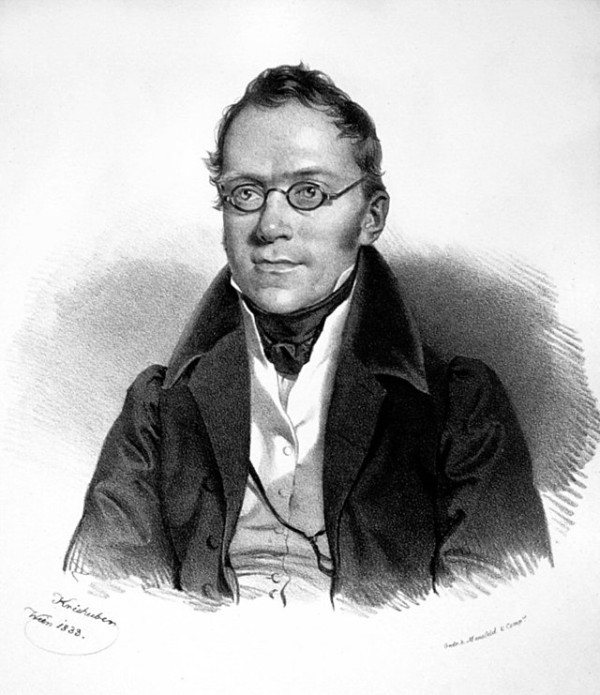
Carl Czerny
Eventually, it was decided that Anna needed additional training. In 1816, at the age of ten, she went to Vienna and began studying with Carl Czerny.
Despite his youth (he was only twenty-five at the time!), Czerny was already making a name for himself as one of the leading piano teachers in Europe.
He had started studying under Beethoven when he was ten years old and had become one of Beethoven’s most trusted interpreters. In fact, a few years before meeting Anna, Czerny had premiered the Emperor Concerto in Vienna.
Beethoven’s Piano Concerto No. 5, “Emperor”
Anna studied with Czerny between 1816 and 1820, and she helped to make him famous. Two decades later, Czerny wrote that she had done a great deal to promote his name across Europe. In time, Czerny would become arguably the most influential piano teacher who ever lived.
One of her fellow Czerny students was Franz Liszt, who studied with him as a boy between 1822 and 1823.
Adam Liszt, Franz’s father, was one of the few people unimpressed by Anna: “She did not play the piano, she bungled it through her ill-advised bravura runs and leaps,” he once wrote.
During the early part of her career, she was sometimes faulted for her showiness due to the virtuosic repertoire she played in public.
Playing for Beethoven
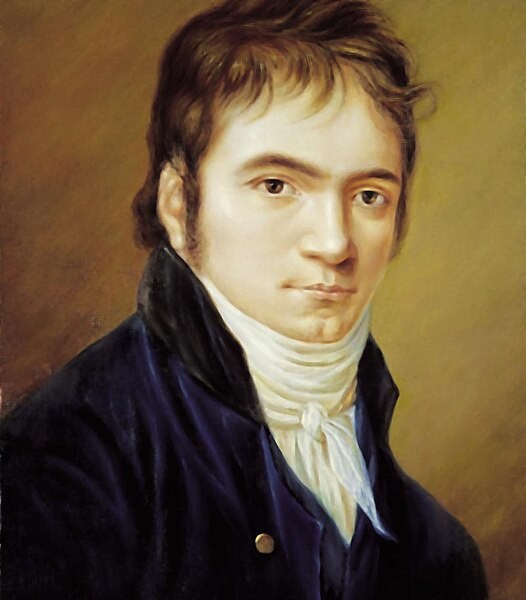
Christian Honeman: Ludwig van Beethoven, 1803 (Beethovenhaus Bonn)
During her time in Vienna, she met Beethoven and heard him improvise.
Czerny would also bring her to Beethoven’s house to play for him. Her speciality became her touch at the piano, so she especially enjoyed playing Beethoven’s adagios. A particular favourite was the Piano Sonata No. 12, op. 26.
Beethoven’s Piano Sonata No. 12
She would go on to champion Beethoven’s works. A little over a decade later, she would give the Russian premiere of the Emperor Concerto.
Starting Her Career
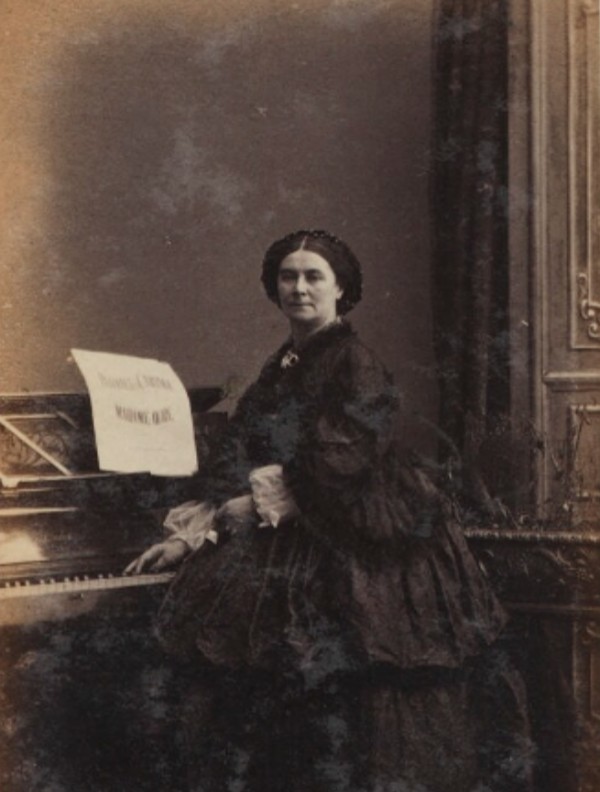
Anna de Belleville
While in Vienna, she made her concerto debut performing a Hummel piano concerto.
In 1820, she moved back to Munich. The following year, she appeared in Paris.
Like the other great virtuosos of her day, she became a creator as well as an interpreter. Around this time, she began to publish her own compositions.
In 1829, she briefly studied with pianist and piano maker Johann Andreas Streicher in Vienna before embarking on a European tour.
Chopin’s Admiration
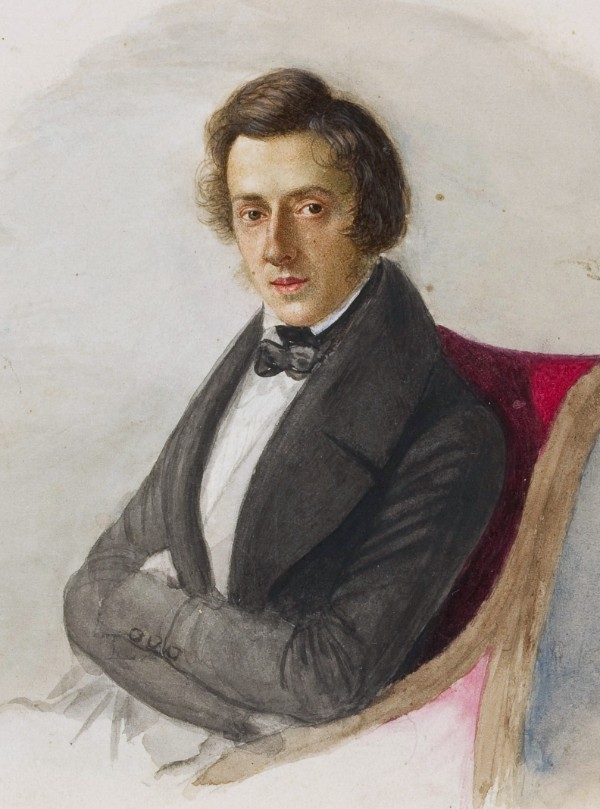
Maria Wodzińska: Frédéric Chopin, 1836 (Wasaw: National Museum)
In 1830, at the age of twenty-four, she performed in Warsaw.
One of the pianists in the audience was the teenage Chopin. He would remain a fan of her playing for the rest of his life.
He wrote to his best friend about her:
“There is also a certain Mlle. Belleville here, a Frenchwoman, who plays the piano very well; most lightly and elegantly, ten times better than Voerlitzer; she gives a concert on Wednesday…”
As a PS, he added:
“Mlle. Belleville has played my printed Variations in Vienna, and knows one of them even by heart.”
The variations he’s referring to are Chopin’s Variations on “Là ci darem la mano”, an aria from Mozart’s opera Don Giovanni.
This would have made her one of the first pianists to champion Chopin’s work. She would continue to do so, eventually becoming one of the first pianists to play his work in Britain.
Chopin’s Variations on “Là ci darem la mano”
Reviewed by Robert Schumann
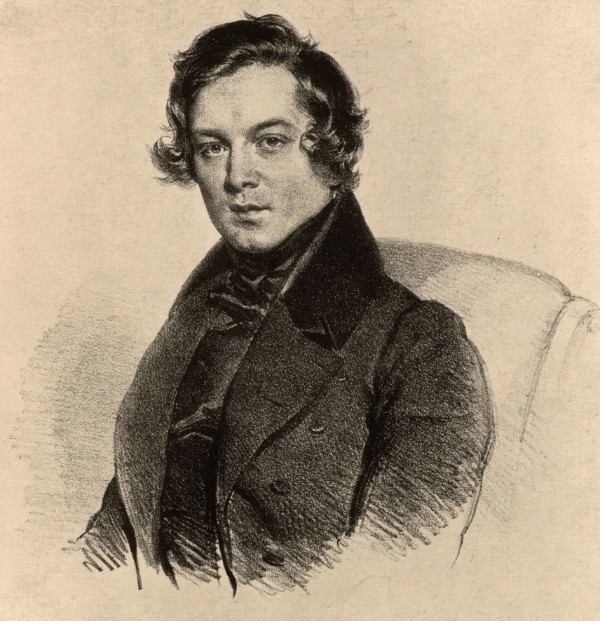
Robert Schumann
One of her direct competitors was Clara Wieck.
In 1832, Robert Schumann wrote a review for the Leipzig journal Der Komet comparing the twenty-six-year-old pianist with Clara Wieck, the twelve-year-old prodigy based in Leipzig:
“Anna de Belleville and Clara [Wieck]. They should not be compared. They are different mistresses of different schools. The playing of the Belleville is technically the finer of the two; Clara’s is more impassioned. The tone of the Belleville flatters, but does not penetrate the ear; that of Clara reaches the heart. Anna is a poetess; Clara is poetry itself.”
Of course, his assessments of her talents should be taken with a grain of salt, given that he studied piano with Clara’s father and would go on to marry Clara eight years later.
Schumann was also taken by Anna’s grace onstage. During this time, he wrote in his diary about how she impacted his own playing:
“I hold the wrist somewhat higher, approximately like de Belleville, except that her graceful undulations are missing… It’s been going magnificently at the piano for the last few days. The notes roll like pearls at times.”
Her London Debut With Paganini
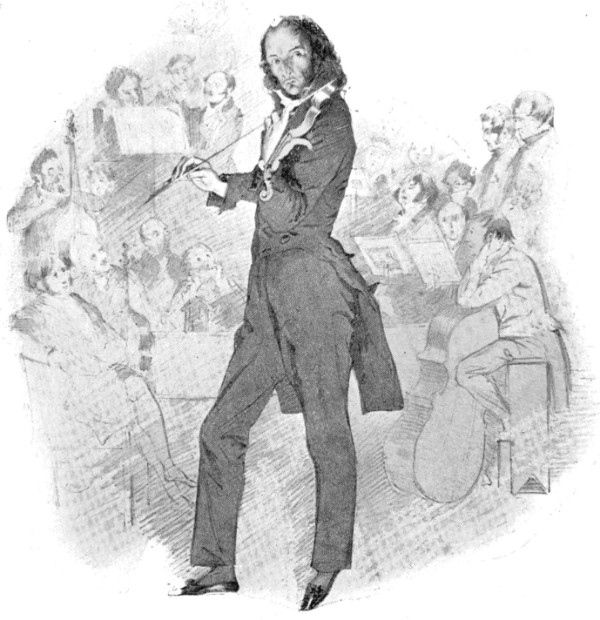
Niccolò Paganini
In July 1831, when she was twenty-five, she traveled to London to appear with Niccolò Paganini, who was on a groundbreaking continent-wide tour. Ever the great promoter, Paganini dubbed her the “Queen of the Piano.” Anna made her solo debut in London the following month.
English critic and composer William Gardiner wrote about her:
“In the hands of Mademoiselle de Belleville, the piano-forte becomes another instrument. Her mode of treating it is strikingly new… The fingers range not in the accustomed track, but strike, and rest upon the keys in every part; often sliding from back to front, as in the act of wiping them. This singular motion imparts to her adagios unspeakable richness.”
Meeting Antonio James Oury and Going On Tour
During this British tour, she met violinist Antonio James Oury, who was concertmaster of the ballet at the King’s Theatre.
In October, the couple was married, and they embarked on their own joint continent-wide tour, playing as a duo everywhere from Russia to Holland.
Soon after her marriage, she stopped playing her own works in public and began focusing less on virtuoso repertoire and more on “heavier” concert works, possibly in a bid to be taken seriously with her male peers.

Hector Berlioz, 1845
Hector Berlioz wrote of her during this time:
“Mrs. Oury, upon performing a very fine Mendelssohn piano concerto, has proven that she possessed in the highest degree the qualities valued most by composers, those that make performers who are faithful to the fullest extent of the word; faithful to the letter, faithful to the spirit, to the traditions, to the passions, to the whims, to the inspiration and finally, to the entirety of the author’s thought, without attempting to correct it, arrange it, civilize it, nor to embellish it with miserable ornaments, of which he did not abstain from using without excellent reasons, and that the interpreter is in no way invited to deliberate.”
All in all, the couple toured for roughly eight years. Around 1840, after she turned thirty, she and her husband settled down in England, where both were hired to teach at the Royal Academy of Music.
A Dedication from Chopin
Anna stayed on Chopin’s mind. In 1841, he dedicated a waltz in F-minor to her.
Chopin’s Waltz in F-minor, Op. 70, No. 2
Sometime around 1841, she wrote to Chopin to thank him for the waltz. He replied:
Dear Madam,
How I thank you for your charming letter… As for the little waltz which I had the pleasure of writing for you, I beg you to keep it for yourself. I do not wish it to be published.
But what I should like is to hear it played by you, dear Madam, and to attend one of your elegant reunions, at which you so marvellously interpret such great authors as Mozart, Beethoven, and Hummel, the masters of all of us. The Hummel Adagio, which I heard you play a few years ago in Paris at M. Erard’s, still sounds in my ears, and I assure you that, in spite of the great concerts here, there is little piano music which could make me forget the pleasure of having heard you that evening.
Accept my respectful homage, dear Madam, and be so kind as to give my friendly greetings to M. Oury.
Her Late Career In Britain
Anna continued to champion the music of her colleagues.
In 1843, she performed Mendelssohn’s relatively new G-minor piano concerto with the Philharmonic Society in London, underlining her desire and attempts to be taken seriously as a musician.
Mendelssohn’s Piano Concerto No. 1
Aside from one tour to Italy that the Ourys embarked on during the 1846-47 season, the couple spent most of their time in Britain.
The couple divided their time between London and Brighton, the famed seaside resort in Sussex. They worked together to help establish the Brighton Musical Union, a chamber music club.
During her time in Britain, Anna devoted most of her attention to writing music. She wrote nearly two hundred piano pieces, “most of them horribly cloying in sentiment…all very lucrative,” according to David Dubal’s 2004 book The Art of the Piano.
This is an unfair descriptor in the twenty-first century, given that few, if any, of Anna’s works are in print, and no comprehensive modern study of her output or its economic value has ever been conducted.
Unfortunately, having compositions unfairly critiqued by male critics has been a rite of passage for women composers for generations.
Retirement and Death
Anna Caroline de Belleville-Oury retired in 1866. She died in Munich in 1880, at 74, three weeks after her arrival from Britain.
She died in a boarding house for impoverished single elderly people, and her husband didn’t die until 1883, suggesting that their marriage may have ended at some point.
Although she was clearly deeply admired by the nineteenth century’s greatest composers, she is incredibly obscure today. Only a handful of her works are currently available on IMSLP, and as of 2025, none have been recorded.
With luck, time, and effort, maybe that will change.
For more of the best in classical music, sign up for our E-Newsletter