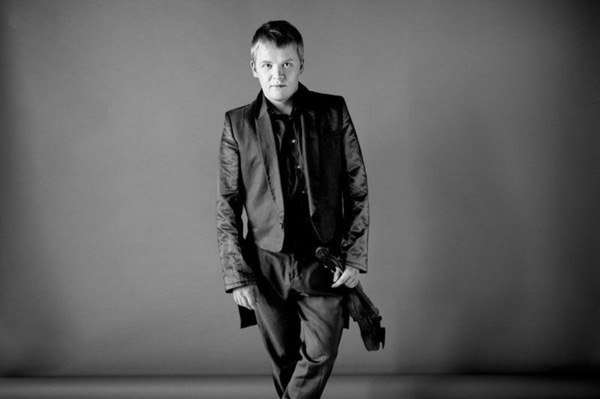
Alexandre Tharaud has established a reputation for making the neglected corners of French music feel more thrilling than the canon itself. In a musical world often driven by a familiar cycle of Beethoven sonatas, Rachmaninoff concertos, and Chopin sets, Tharaud has built an unusually distinctive career by walking past the obvious and listening instead for the music that time has pushed aside.
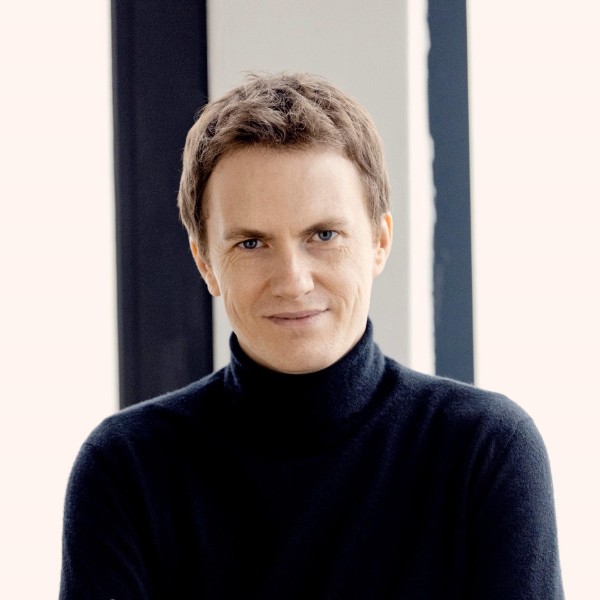
Alexandre Tharaud
To describe his artistry as mere performance misses the point. It is, in fact, restoration, excavation, and quiet advocacy. For more than three decades, Tharaud has used his platform to resurrect forgotten voices of French culture, from the sophisticated salons of early 20th-century Paris to the ornate elegance of Baroque France.
To celebrate his birthday on 9 December 1968, let us explore how his recordings and performances have broadened the repertoire of modern pianists while also reshaping public understanding of French musical heritage.
Alexandre Tharaud plays Olivieri/Rastelli: “J’attendrai”
Rediscovering Lost Voices
At the heart of Tharaud’s mission is the simple and radical conviction that the canon of masterpieces is not fixed. It is shaped by fashion and availability, and often neglects entire bodies of work that once held vibrant life. Therefore, he has devoted his career to becoming an archivist-poet, one who doesn’t merely uncover lost manuscripts but breathes into them colour and nuance.
Tharaud’s work has had a profound influence on how musicians and audiences understand French music. Through his revival efforts, he has helped dismantle several persistent myths, such as the idea that French piano music begins with Debussy and ends with Ravel.
Tharaud has also played a key role in challenging the idea that Baroque keyboard music belongs exclusively to period instruments, and that early 20th-century salon repertoire is decorative but trivial. He has expanded the canon from within and encouraged musicians to question which works have been overlooked and why.
Joseph Nicolas Pancrace Royer: Pièces de clavecin: XIV. La marche des scythes (arr. for piano) (Alexandre Tharaud, piano)
Reviving the Belle Époque
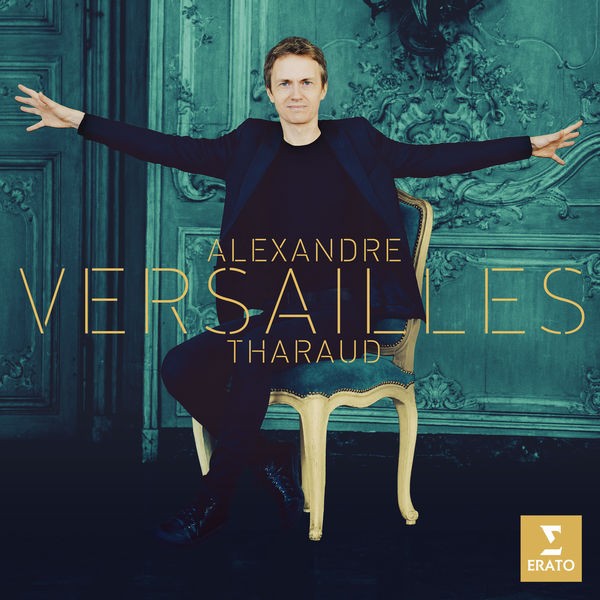
If there is a defining aesthetic to Tharaud’s repertoire choices, it is the unmistakable shimmer of early modern Paris. The years around 1900 were, after all, moments of quicksilver innovation. Yet even within this celebrated milieu, many composers slipped from view.
A landmark example is Tharaud’s championing of Reynaldo Hahn, a composer adored in his lifetime but subsequently marginalised as tastes shifted toward more ambitious symphonic styles.
Tharaud’s recording of Hahn’s piano works has given them new legitimacy. He plays them not as nostalgic trifles but as exquisitely crafted impressions. In Tharaud’s hands, Hahn’s language of translucent harmonies and whispered melancholy takes us into a world of understated elegance and emotional restraint.
Alexandre Tharaud performs Hahn: “Le Rossignol éperdu”
Reawakening Paris
Likewise, Tharaud has been instrumental in rehabilitating the legacy of Maurice Delage, a composer of immense originality whose small output and contemplative nature left him overshadowed by his friend Ravel.
In Tharaud’s performances, Delage’s blend of exoticism, precision, and psychological depth becomes newly illuminated. His interest in these composers is not incidental, but it is deliberate. By reviving Delage and Hahn, Tharaud restores continuity to a French tradition that embraced subtlety and miniature form as essential artistic values.
Tharaud also focuses on genres at the risk of neglect. In his album “Le Bœuf sur le Toit,” he draws listeners into the whimsical and sometimes outrageous world of interwar Parisian cabarets. It is a celebration of the era’s eclecticism, an animated and fluid cosmopolitan mix of styles.
Alexandre Tharaud performs “Chopinata”
Making Specialist Repertoire Accessible
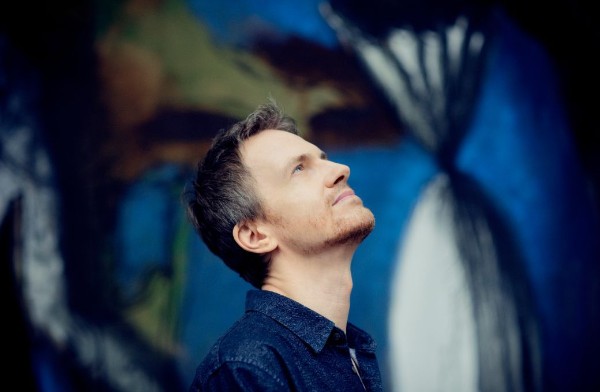
Alexandre Tharaud © Jean-Baptiste Millot
Tharaud’s devotion to French Baroque music is equally significant. This repertoire was confined largely to specialists and early-music circles, with harpsichordists championing Couperin, Rameau, and Louis-Claude Daquin.
Few modern pianists dare to bring their works into mainstream recital programmes, but Tharaud changed that dynamic. His groundbreaking recordings neither imitate the harpsichord nor ignore it. Rather, he translates its texture onto the piano with the instinct of a poet.
Trills are agile and not brittle, lines are articulated with a dancer’s grace, and the music’s courtly rituals acquire a new immediacy. Critically, Tharaud treats these works not as historical artefacts but as living art.
Alexandre Tharaud performs Rameau: “Prélude” (Premier livre de pièces de clavecin)
Curating Forgotten Worlds
Alexandre Tharaud has revived entire musical worlds that might otherwise have faded irrevocably from view. What distinguishes Tharaud from many interpretive specialists is his ability to frame forgotten works within compelling narrative structures.
Each of his albums feels like a curated exhibition rather than a random anthology. He selects repertoire in ways that reveal unexpected connections or illuminate specific cultural contexts.
In rethinking the French Tradition, Tharaud has advocated a special form of artistic integrity. He has shown us that playing great music is not enough, and that a performer can also be an explorer, a storyteller, and a custodian of cultural memory.
For more of the best in classical music, sign up for our E-Newsletter