French composer Camille Saint-Saëns (1835–1921) spanned a change in eras that opens with the child prodigy being recognised by Rossini and Hector Berlioz and ends with the radical changes of the early 20th century. He did not like atonality or even Debussy (Debussy was equally not enamoured of Saint-Saëns). The late Romantics, such as Liszt, loved him, and modernists found him too old-fashioned. However, his most important student, Gabriel Fauré and Fauré’s student Maurice Ravel used him as their basis for French Neoclassicism, so he didn’t fall through the style cracks too badly.
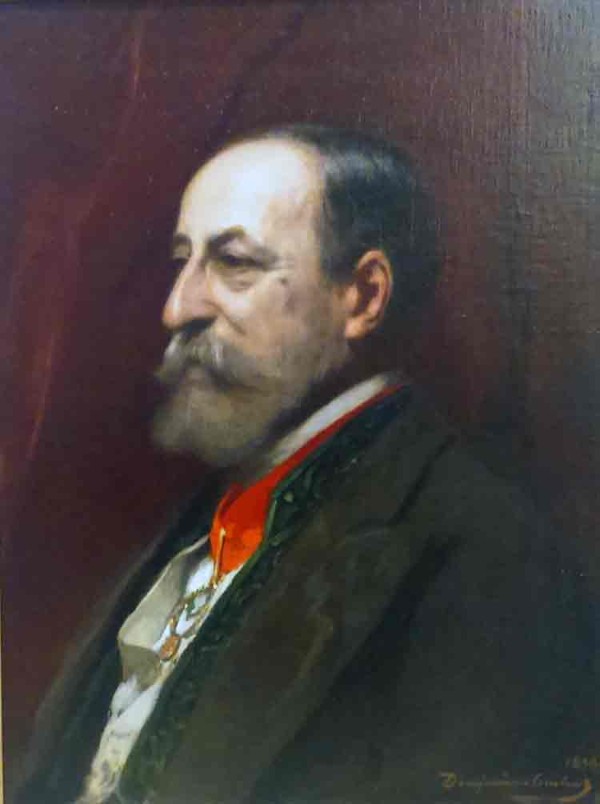
Jean-Joseph Benjamin-Constant: Camille Saint-Saëns, 1898 (Paris: Musée de la musique)
Saint-Saëns’ career not only as a teacher and composer but also as a virtuoso pianist, organist, and critic put him in the middle of many different musical camps. Although he did write opera, Samson and Delilah being his best-known and longest lasting, it’s his instrumental music that we know him better for.
His initial fascination with Wagner was put aside after 1871 when, joining many other nationalistic acts, Saint-Saëns founded the Societé Nationale de Musique to promote both old and new French music to balance out the Wagnermania that had taken over too many concerts.
One of Saint-Saëns’ purely French works was the delightful La muse et le poète, a work for violin and cello and orchestra (originally piano). It’s not violin versus cello versus orchestra but something new: violin and cello in conversation with instrumental support. As Saint-Saëns said: ‘Instead of a duel of two instruments, what we have here is a conversation of two individualities. The performers’ talents will surely prove a decisive factor, because this music is not just about reading the score; it needs to be recited’.
Camille Saint-Saëns: La muse et le poète, Op. 132 (Szymon Krzeszowiec, violin; Adam Krzeszowiec, cello; NFM Wrocław Philharmonic; Jerzy Maksymiuk, cond.)
It was this need for a lyrical improvisation that made this work unique. By relying on the skills of the performers, the work transcended a normal orchestral duet to become what the title proclaimed: a work for someone inspired by the greater (the poet inspired by the muse).
The first performance was in 1910 in London. The two soloists were Eugène Ysaÿe on violin and Joseph Hollman on cello, with Saint-Saëns on piano. The orchestral version was created later in 1910.
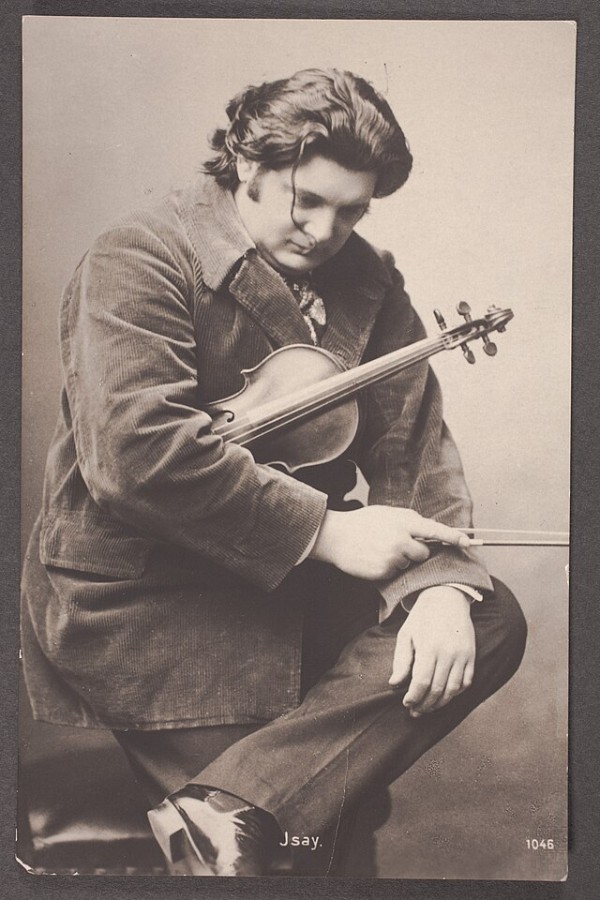
Eugène Ysaÿe, 1900
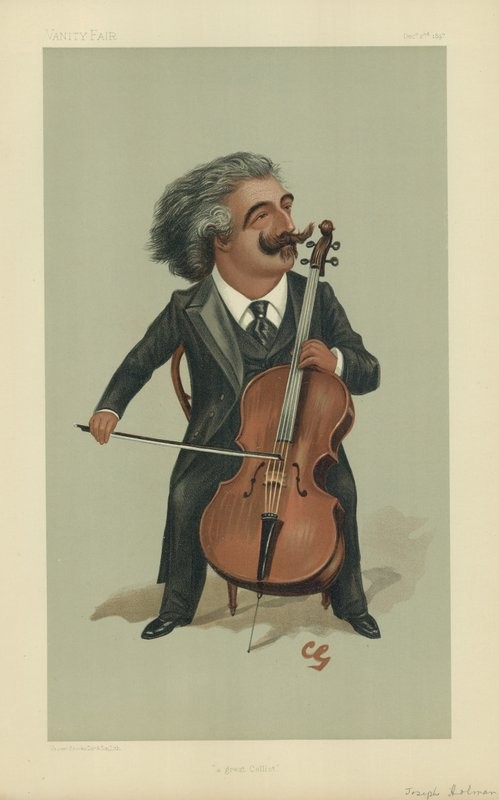
Francis Carruthers Gould: Joseph Hollman ‘A Great Cellist’, 1897 (Vanity Fair, 2 December 1897)
The title didn’t come from Saint-Saëns but from his French publisher, Durand. It took some doing to persuade the composer into this name because he didn’t like ‘sentimental’ titles. The personification of the subtle violin as music and the harsher cello as poet created a world where one must temper the other. The muse-violin can raise the poet-cello to greater heights through inspiration, and always through conversation.
This is not a work that could have come from Wagner’s pen, but one that is purely French in inspiration and delivery.
For more of the best in classical music, sign up for our E-Newsletter