The countertenor is a rare voice in an adult male singer, so much so that it’s natural to wonder what one is hearing as an audience member. Although the countertenor has a natural speaking voice, his vocal range is surprisingly high, matching that of a female contralto or mezzo-soprano. The sound too is unique and distinctive.
You may find some of the history disturbing, though. Countertenors are quite different from a castrato—a male singer castrated before puberty to retain a high soprano or mezzo-soprano vocal range. This distressing practice was utilised in the 16th through 19th centuries because women were forbidden from singing in Catholic church choirs. Poverty-stricken families decided to subject young boys to this procedure in the hopes the child might achieve fame and fortune. As they matured, castrati eventually developed large lung capacities and powerful chests, which enabled them to undertake long phrases in Baroque opera. One such celebrity castrato, nicknamed Farinelli, was Carlo Broschi. The tradition was officially banned by the Vatican in 1903, but by then, with operas becoming more romantic, tastes were already shifting away from this practice. Some of these roles are performed today by female mezzo-sopranos, often called “pants” or “trouser” roles, or by male countertenors who, through intense training, use their falsetto registers.
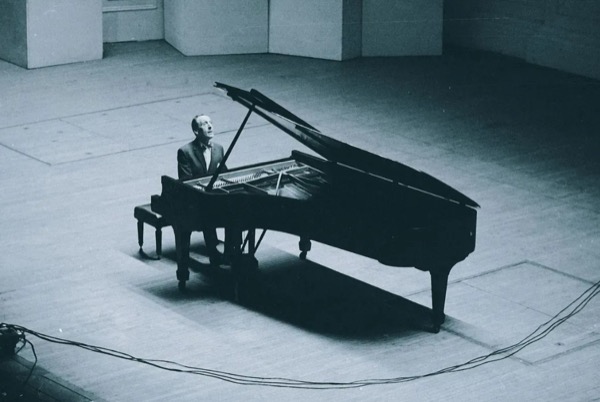
One of the most celebrated natural countertenors was American Russell Oberlin, who died in New York City on November 26, 2016, at the age of 88. Born in Akron, Ohio, he began singing professionally at a very young age, even before attending Juilliard. He was a founding member of the New York Pro Musica Antiqua ensemble and was engaged to sing both here and abroad by such legendary artists as Leonard Bernstein, Sir Georg Solti, Glenn Gould and others.
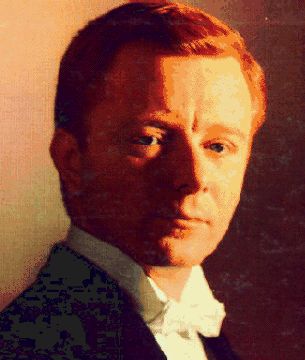
Russell Oberlin
Russell Oberlin’s legacy is preserved in recordings as well as through the musicians he mentored and inspired, and he remained the stuff of legend since his retirement from the concert stage in 1965. His voice is exceptional, rich, and beautiful. Listen to this Handel aria “Vivi, tiranno” from Rodelinda.
Russell Oberlin sings “Vivi, tiranno” from Rodelinda (Handel)
Another rare video features Henry Purcell’s Music for a While.
Russell Oberlin in Recital (Part One of Four)
Oberlin concertized with many illustrious performers. It’s fascinating to hear him share his recollections of the great pianist Glenn Gould from this 2014 interview. At 12:08, Gould and Oberlin perform the beautiful Bach cantata Widerstehe doch der Sünde, BWV 54.
Glenn Gould and Russell Oberlin perform Bach
Sometimes performers may not even realise how life-changing their influence might be on those who attend their concerts. The memories of Joel Cohen are paraphrased here from the Boston Musical Intelligencer of 2016. Cohen describes what it was like to hear Oberlin.
“His beautiful, otherworldly, almost inhuman voice then epitomised the early music movement. In the 50s, when I was a junior or senior at Brown, the chamber music series at the School of Design Auditorium had brought in Noah Greenberg’s New York Pro Musica for a double bill: Flemish Renaissance music in the first half, Spanish Renaissance music in the second. Although I had sung Renaissance partsongs in high school choir, and played a few lute transcriptions on my classical guitar, this concert delivered my very first hearing of an entire program of early music. By the end, I knew that performing this stuff was what I wanted to do. A vocation was born.
And that sense of being called had quite a bit to do with Oberlin’s voice that evening. Was it a man’s sound, or a woman’s? It was supported all the way up without a break or resorting to falsetto. Magical, compelling. It was full, with continuous vibrato, dead accurate as to pitch and rhythm. There was something sexless or androgynous in the timbre, verging on metallic, as though an angel were singing from on high, in some celestial tongue unknown to man. Oberlin’s voice did not make you feel warm and cuddly; rather, it gave you some cosmic, strangely delightful chill…”
The countertenor voice is currently receiving a resurgence of interest. Contemporary composers are increasingly writing for that tessitura. A recent example that features the countertenor as the star is Akhnaten, the 1983 contemporary opera by American composer Philip Glass. Performed in 2019 at the Metropolitan Opera, it depicts the life and religious convictions of the Egyptian pharaoh Akhnaten. The libretto, sung in Egyptian, is also by Philip Glass in association with Shalom Goldman, Robert Israel, Richard Riddell, and Jerome Robbins.
Glass chose to portray the lead as a countertenor to sound otherworldly and untraditional, and it certainly does. The sound transports us to a very different time and place and impels us to imagine people who were very different from those we see in our everyday lives.
Acclaimed countertenor Anthony Roth Costanzo brilliantly portrays the role.
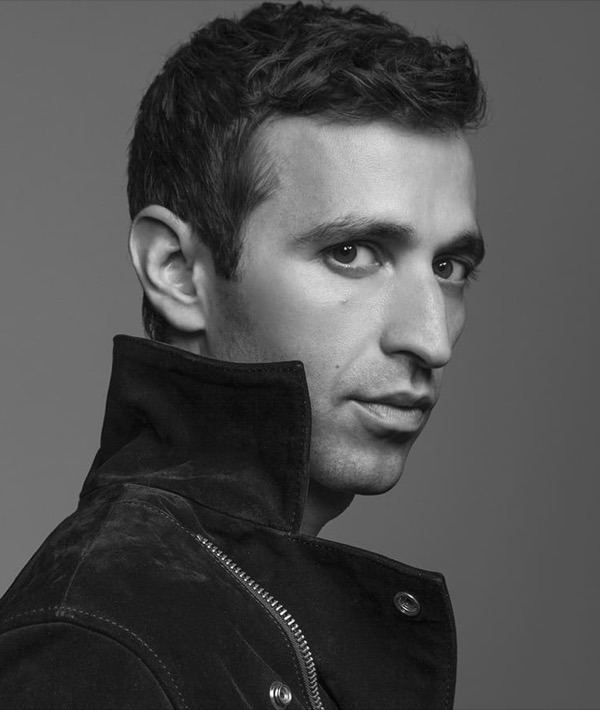
Anthony Roth Costanzo
Here is an excerpt from Act I, The Window of Appearances. In this scene, Akhnaten is joined by Nefertiti, his mother in the opera—a vivid juxtaposition of the range of the countertenor versus the soprano voice. It’s spectacular.
Philip Glass: Akhnaten – The Window of Appearances
The Metropolitan Opera’s recording and DVD of Akhnaten won the 2022 GRAMMY Award for Best Opera Recording. Costanzo wrote a book about his life’s journey and the history of his extraordinary voice type. Entitled Countertenor, it is available with a companion album on Nonesuch Records.
I’m proud of my alma mater. Indiana University’s Jacobs School of Music undertook a masterful production of the opera a few years before the MET’s. Listen to this brief excerpt, “The Hymn to the Aten”, from the IU production of Akhnaten.
Akhnaten – Hymn
Other outstanding countertenors are taking the world by storm. The “first operatic superstar to win over Gen Z” (Telegraph Luxury), Polish countertenor Jakub Józef Orliński, is a fabulous-looking, popular model and breakdancer, and a singer—an opera star who’s graced the greatest concert halls in the world and who has been featured as a model on the covers of Polish Vogue, Esquire, and Elle.
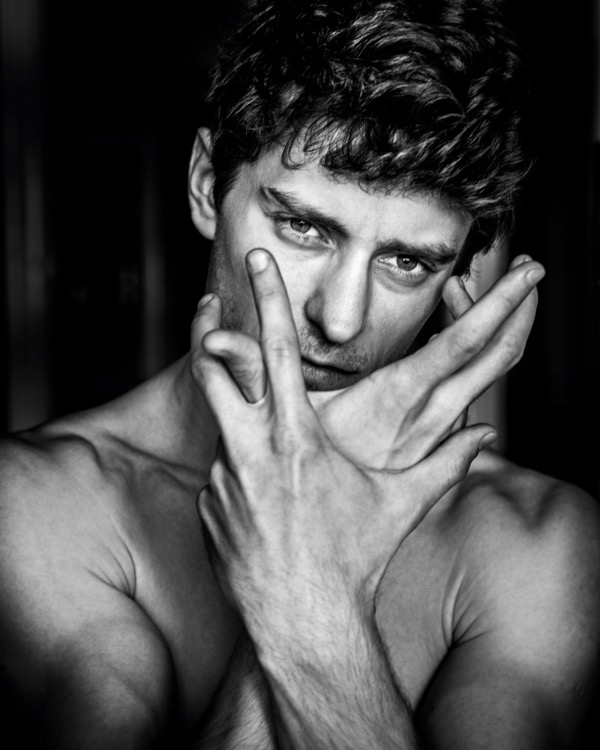
Jakub Jozef Orlinski (Photo: Rafal Maslow)
Perhaps you recall his appearance during the opening ceremony of the Paris 2024 Olympic Games.
The aria from Vivaldi, “Vedro con mio diletto”, his signature piece, has gone viral after he performed live to millions of people at Victoires de la Musique Classique broadcast from France. I think you’ll agree, deservedly so!
Vivaldi – Vedrò con mio diletto (Jakub Józef Orliński)
Another quite lovely example of his singing is by the Baroque composer Barbara Strozzi, L’amante consolato.
Jakub Józef Orliński sings “L’amante consolato” (Barbara Strozzi: Cantate, ariette e duetti, Op. 2)
The voice of the countertenor has surely infused the opera stage with a rare quality and newfound sparkle.
For more of the best in classical music, sign up for our E-Newsletter