Toronto-based pianist Luke Welch is celebrating the release of his sixth album, Herstory: Solo Piano Works from Composers of Colour, a project that reflects both his artistic curiosity and his commitment to championing overlooked voices in classical music. The album-release concert features piano works by Black women composers, including Florence Price, Amanda Aldridge (who composed under the pseudonym Montague Ring), Chiquinha Gonzaga, L. Viola Kinney, and Estella Ricketts.
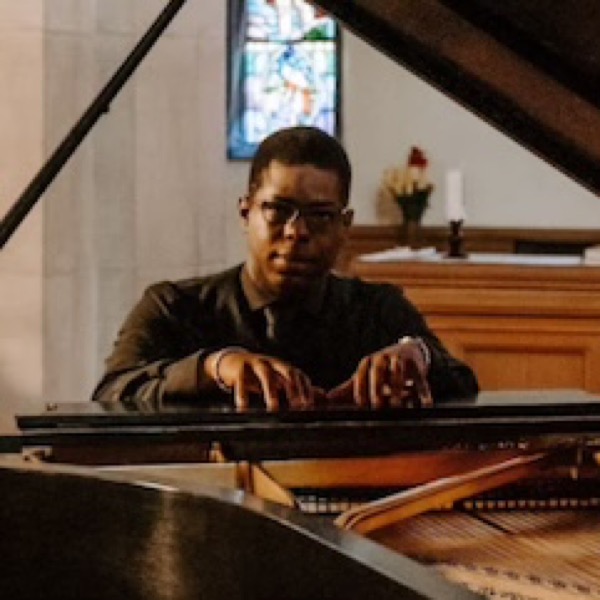
Luke Welch
In conversation, Welch reflected on the musical experiences that first led him to the piano. Growing up in Canada, he attended a public elementary school where an unusually dedicated music teacher introduced students to choir singing, recorder, steel pan, saxophone, and keyboard. Welch recalled that his teacher quickly noticed his natural ability at the piano. “When I started playing the keyboard, I was immediately able to play some of the songs that he had been teaching us,” Welch said. “He said, ‘Where did you learn this?’ and I said, ‘This is my first time.’ That’s when he thought maybe there was something there.”
As both a pianist and educator, Welch credits two major mentors for shaping his musical life. While his elementary school teacher inspired him as a performer, it was his university professor, John-Paul Bracey, who deeply influenced his approach to teaching and interpretation. Welch admired Bracey’s ability to constantly rethink musical ideas. “Every week he would come up with new ways of interpreting the music,” he explained. “One week he’d say, ‘Play it this way,’ and the next week he’d say, ‘Why are you playing it that way? You should do it like this.'”
Welch’s path to becoming a professional pianist was far from easy. During his university years, intense practising led to serious repetitive strain injuries, including tendonitis, carpal tunnel syndrome, and pinched nerves in both arms. Unable to play piano for nearly three years, he temporarily left music behind and worked at a bank while searching for treatment and answers.
“It was very humbling,” Welch admitted. “All my friends were still playing concerts and practising, and I physically couldn’t play.” He described the emotional difficulty of watching others continue their careers while he struggled simply to sit at the piano without pain.
Amanda Aldridge: Four Moorish Pictures – An Eastern Suite – IV. Dance of Triumph
A turning point came when Welch moved to the Netherlands on a full scholarship to relearn piano technique through a radically different European approach. There, he encountered a style of playing focused on relaxation, gravity, body weight, and efficient movement rather than muscular force. “They said, ‘You don’t even touch the piano unless you play from a high bench,'” Welch recalled with a laugh. “They use the full body weight, so you’re not putting pressure on your arms.”
The experience ultimately allowed him to rebuild his technique and return to performing professionally. “I’m very lucky,” he said. “Some people need surgeries or have to stop forever.”
The origins of Herstory can be traced back to the COVID-19 pandemic, when cancelled concerts pushed Welch to create monthly livestream performances from his home. Each program explored a different theme, and after several months, he began searching for less familiar repertoire.
“I thought, ‘Maybe this is a chance to do something different,'” he explained. Earlier projects devoted to composers such as Samuel Coleridge-Taylor and Robert Nathaniel Dett were well received, encouraging him to continue exploring neglected repertoire. Eventually, the idea for an album devoted to Black women composers emerged.
“I thought people who appreciated where I was going with Black composers would also love Black women composers,” Welch said. “Women need their spot as well, and they need to have their recognition.”
Welch emphasised that much of the music on the album was entirely new to him. “I’m learning as much as everybody else is learning at the same time,” he said. “It’s kind of fun to educate myself about these composers and then present them to the public so they can learn about them too.”
T’Chaka: African Suite – II. Monarah
The pianist also reflected on the broader historical neglect faced by Black composers in classical music. Discussing the rediscovery of Florence Price’s manuscripts decades after her death, Welch noted, “They literally just didn’t care. Her music was left behind.” He added that Canada still has significant work to do in recognising Black composers within its own musical history. “We’re still at the starting line,” he observed.
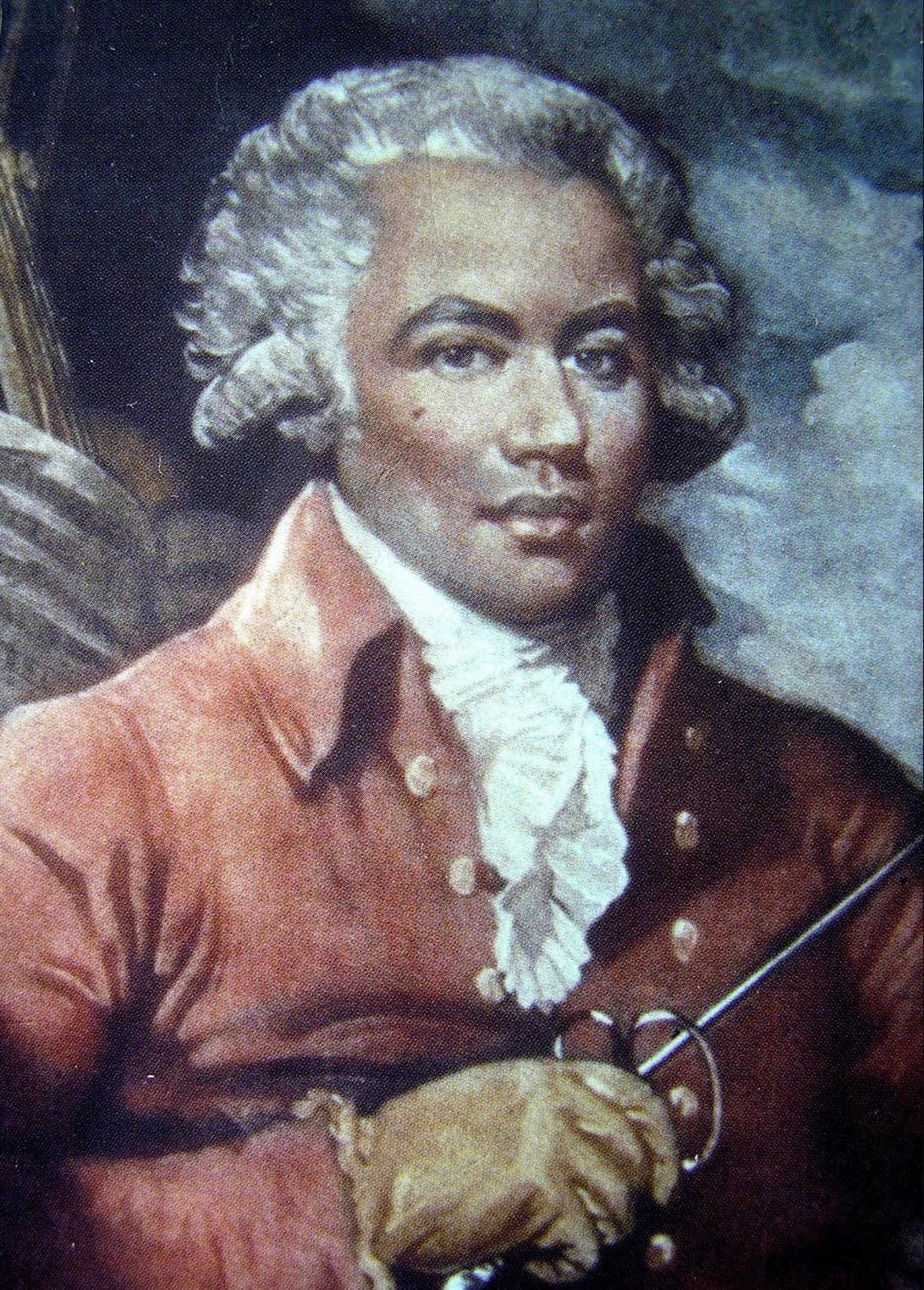
Joseph Bologne, Chevalier de Saint-Georges
Alongside Herstory, Welch is already preparing another ambitious recording project devoted to Joseph Bologne, Chevalier de Saint-Georges, often referred to as the “Black Mozart.” Recently published piano manuscripts by Saint-Georges have opened new possibilities for performers and scholars alike.
“What’s exciting is that there are no recordings,” Welch explained. “There’s no tradition telling you how fast it should go or how it should sound. You have to make your own choices and trust that they follow the composer’s intentions.”
While Welch continues to explore newly rediscovered repertoire, Herstory represents an important milestone in that journey. Bringing together music by Florence Price, Amanda Aldridge, Chiquinha Gonzaga, L. Viola Kinney, and Estella Ricketts, the album highlights composers whose contributions have too often been overlooked. In doing so, Welch invites listeners to discover a rich body of music that is only beginning to receive the recognition it deserves.
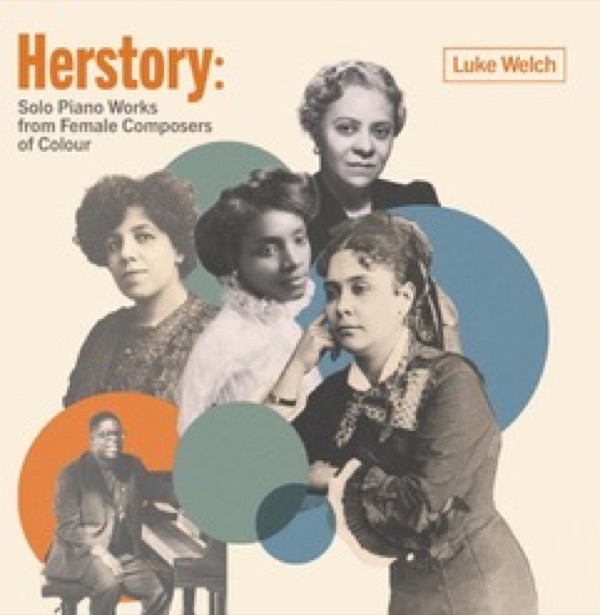
Luke Welch — Herstory: Solo Piano Works from Composers of Colour
Herstory: Solo Piano Works from Composers of Colour
Performed by Luke Welch (piano)
Release Date: June 19, 2026
To learn more about Luke Welch and his album, please visit https://lukewelch.ca.
For more of the best in classical music, sign up for our E-Newsletter