As Sally Beamish approaches her 70th birthday this August, she celebrates milestones like a new album, a major concert with the Academy of St Martin in the Fields, and reuniting with her instrument. Her album, “House of Wonder,” reflects on family, creativity, and rediscovery, featuring collaborations with her children, friends, and colleagues. It started after a 2023 Australian festival when she realised recent works hadn’t been recorded. She approached Delphian Records, which agreed. The album became more personal as her children contributed compositions, alongside friends Joseph Havlat, Chris Stout, Catriona McKay and Karin Rehnqvist. Her sons, Tom and Laurie, wrote pieces, and her daughter Stephanie performed and composed. Recorded in 2024, it coincides with her 70th birthday and a busy season, including a birthday concert given by the Academy of St Martin. Central to the album is Beamish’s renewed relationship with the viola, an instrument she returned to about a decade ago, when her daughter Stephanie Irvine, now a luthier, made a viola as her first instrument. Beamish had stopped playing in 1990 after her Gabrielli viola was stolen.
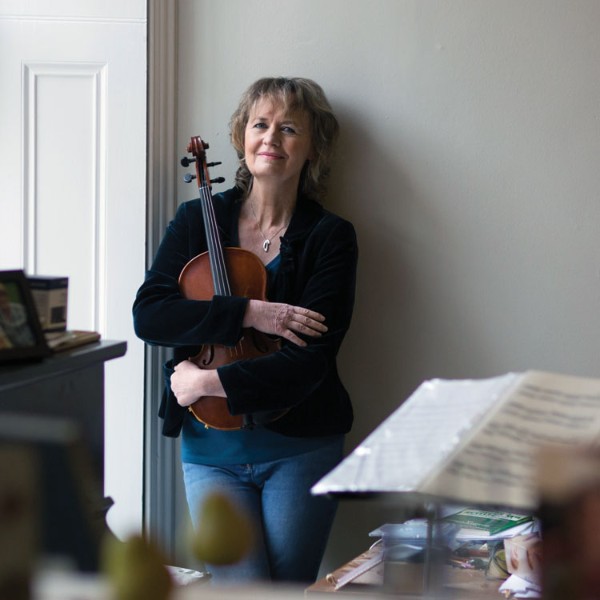
Sally Beamish
“When I started composing full-time, I wasn’t playing,” Beamish reflects. “So, I never wrote for myself.” That changed after she began performing again. Much of the music on House of Wonder was written during this later period, shaped directly by her own experience as a violist. “I discovered a new language when I started writing more recently and playing again,” she says. “I was making sure it was something that felt nice for me to play on the instrument and that makes the viola sound great.” For Beamish, returning to the viola was not simply a technical rediscovery, but an artistic one. Earlier in her career, she spent years performing contemporary music in London, playing works by composers such as Luciano Berio and Peter Maxwell Davies. “I never really connected the two things up,” she says. “I was playing amazing music and meeting these composers, and they were giving me advice. I got free lessons because I never studied composition.” Yet once composition became her primary focus, performance gradually disappeared from her life. Returning to the instrument 20 years later revealed something she had missed. “I felt that I had missed something by not performing,” she says. “Actually, the performing had been very important to me.” That rediscovery also transformed her compositional voice. The newer works on House of Wonder are more intimate and physically connected to the instrument itself, shaped by what feels natural under the hand and expressive on the viola.
Improvisation has further expanded her musical thinking. During the pandemic, Beamish began studying online with American jazz violinist Christian Howes, whose teaching encouraged classical musicians to approach improvisation more freely. “I learned so much from him,” she says. “Just letting go. A different approach to the instrument- much looser. And I developed a different approach to my composing because of that.” Together with her husband, she even formed a jazz-inspired ensemble. “We started a band,” she says with a smile. “That means playing without music, you know, so this was also a new experience for me, getting away from the notes on the page.” The collaborative spirit of House of Wonder extends naturally into her family life. Stephanie travelled from Sweden to record alongside her mother, contributing both performances and original music.
“Stephanie came over, and we recorded Sally’s Tune, Stephanie’s House of Wonder, which you may have heard, the House of Wonder song, and also my piece Gerropaedie,” Beamish explains.
The miniature Gerropaedie became an unexpected success, exceeding one million Spotify streams after featuring on a calming classical playlist. “We nearly didn’t record it,” she admits, “we thought, if there’s room on the album, we’ll do this piece.” Originally written for Stephanie’s father, cellist Robert Irvine, to play with her, it evolved into a personal, multigenerational work. Working with her daughter was a highlight. The sessions were physically demanding; Beamish, who had broken her shoulder months earlier, was still regaining strength. “I was really holding it together,” she says candidly. “It was lovely to have my daughter there because she was so encouraging, and it was fun as well.”
One particularly moving moment came through Stephanie’s House of Wonder, inspired by the small composing shed at the bottom of Beamish’s garden, where she spent countless hours working while raising her children.
Beamish recalls thinking her daughter might complain about feeling shut out through mum’s unavailability, but instead, her daughter’s piece honoured creative solitude, showing she knew Beamish was happy and that she valued being alone.
That balance between discipline and imagination continues to shape Beamish’s creative life. After years of struggling with creative blocks, she eventually adopted the Pomodoro technique, structuring her day into focused 25-minute working sessions.
“When I’m in a working phase, I do eight Pomodoros a day,” she explains. “I cross them off like I was in jail.” The system gives her both discipline and permission to stop. “It’s very hard to know when you’re finished,” she says. “It’s not a good idea to keep trying and keep going.” Interestingly, Beamish often begins composing not with notes, but with words. “Sometimes I write the programme note first,” she reveals. “I describe the piece, and then I get really creative because I have no notes to block me.”
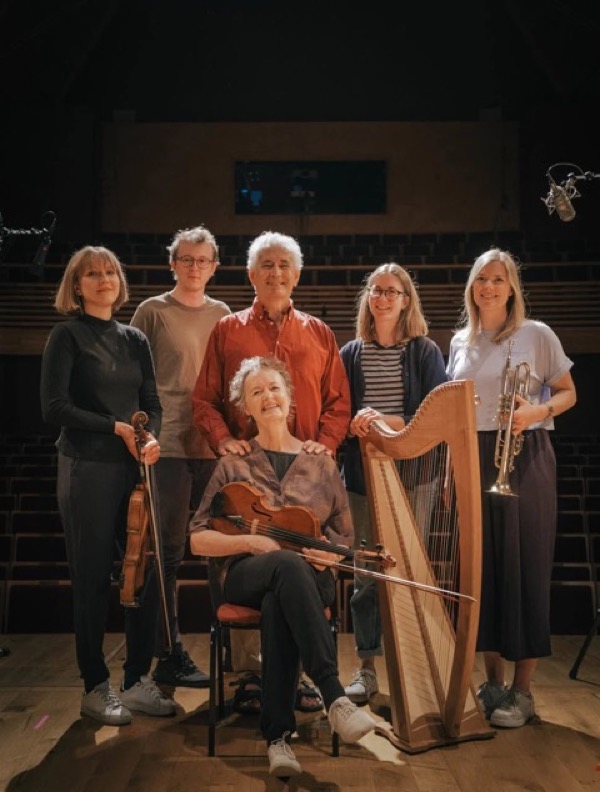
House of Wonder: Sally Beamish at 70 (Delphian Records)
The recording process for House of Wonder also required a new level of trust. Having never recorded a solo viola album before, Beamish relied heavily on producer Paul Baxter during the intense three-day sessions. Rather than repeatedly recording full takes, Baxter carefully guided the process, piece by piece. For Beamish, the experience was another lesson in collaboration and trust. “It was good because I really trusted him to hear everything.”
As the album’s release coincides with her upcoming 70th birthday, Beamish reflects on the unusual convergence of personal and artistic milestones. “People have been saying I have a royal birthday and a real birthday,” she laughs, referring to the album release festivities before her actual birthday on August 26. Yet despite the concerts and public celebrations, her plans for the day itself remain simple.
“I think I’m going to go and visit my children because two of them live in Sweden and one in Denmark,” she says. “I’d like to get together with them and my two grandsons, and we’ll just have a family party.”
It feels like an entirely fitting conclusion for an album so deeply rooted in connection, creativity, and the people closest to her.
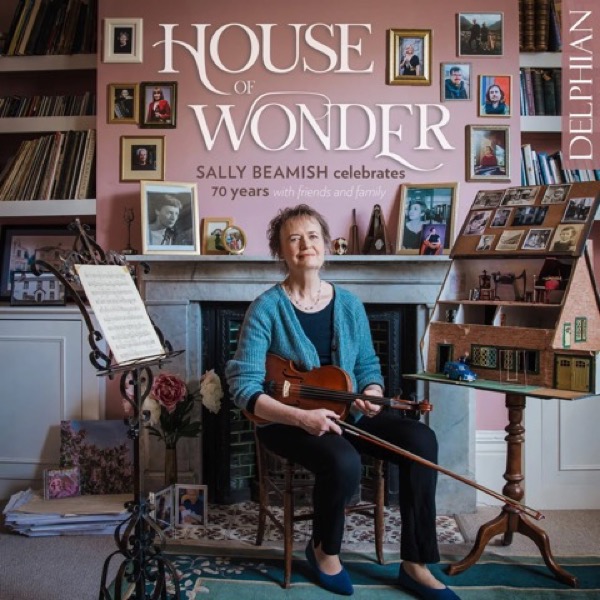
House of Wonder: Sally Beamish at 70 (Delphian Records)
House of Wonder: Sally Beamish Celebrates 70 Years
Label: DELPHIAN
Rel. Date: 12/06/2026
For more of the best in classical music, sign up for our E-Newsletter