In the 18th and 19th centuries, Vienna was one of Europe’s great musical capitals – and some of the most important people shaping its cultural life were women.
Through the friendships and patronage they developed as part of salon culture, Viennese salonnières created spaces where composers, performers, writers, and intellectuals could meet, exchange ideas, and build careers.
Today we’re looking at the stories of three remarkable women whose homes became gathering places for some of the greatest musical minds of their age.
Countess Maria Wilhelmine von Thun und Hohenstein (1744–1800): Mozart’s Opera Networker
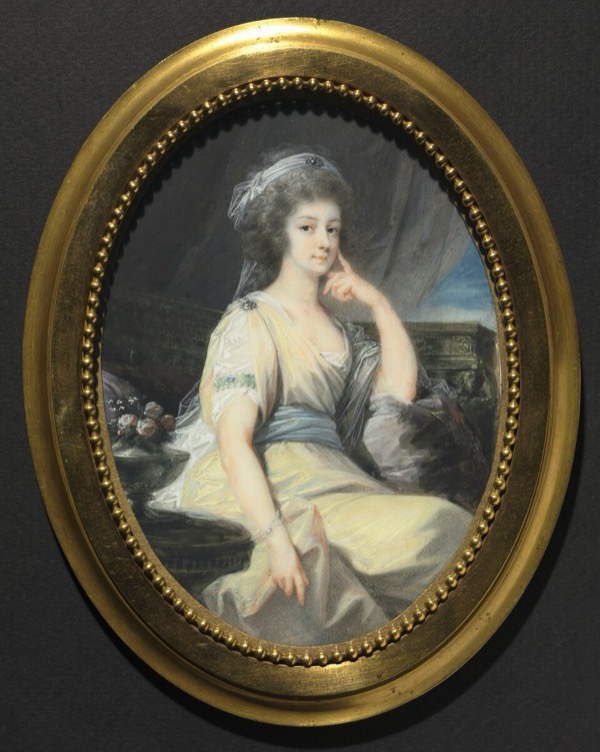
Countess Maria Wilhelmine von Thun und Hohenstein
In 1743, politician and diplomat Anton Corfiz Ulfeldt married 16-year-old Maria Elisabeth von Lobkowitz. Their eldest daughter, Maria Wilhelmine, was born the following year. Soon after, Ulfeldt was named the Oberhofmeister (head of Empress Maria Theresa’s royal court and household), a position he’d retain until his death in 1769.
As a child, Maria Wilhelmine studied with court organist Wenzel Raimund Birck, who tutored both Haydn and Mozart. English musicologist and memoirist Charles Burney, who travelled across Europe in the 18th century, later reported that she “possess[ed] as great a skill in music” as any aristocrat he ever met.
In 1761, when she was 17, Maria Wilhelmine married Count Franz Josef Anton von Thun und Hohenstein. He’d go on to become an Imperial Chamberlain, a position similar to her father’s. Between 1762 and 1769, they had six children together.
She may have met Mozart in 1762, when he was a touring child prodigy, as he performed at her father’s house that year, and it seems like exactly the type of event she would have loved attending.
Their paths crossed again two decades later, when Mozart moved to Vienna to work as a freelance composer and performer. In a letter to his father, Mozart described her as the “most charming and lovable lady I have ever met.”
By this time, she had established an important salon that was a destination for Vienna’s most interesting, talented, artistic people. Mozart began attending – and people began noticing.
Mozart’s Die Entführung aus dem Serail
At one of her 1781 soirees, Mozart took to the piano to play excerpts from his opera Idomeneo. The manager of the Imperial Theater was present and intrigued by the work. He went on to commission Mozart’s Die Entführung aus dem Serail – thereby paving the way for his future operatic successes. Mozart returned to Maria Wilhelmine’s salon to play through each act of Die Entführung as he wrote it.
Even after Mozart and the countess drifted apart, she continued encouraging performers and composers. Ludwig van Beethoven dedicated his 1797 Piano Trio in B-flat major, Op. 11, to her.
ATOS Trio: Beethoven Piano Trio op.11 in Bb-Major, “Gassenhauer” – live
Fanny von Arnstein (1758–1818): Pathbreaking Mozart Supporter
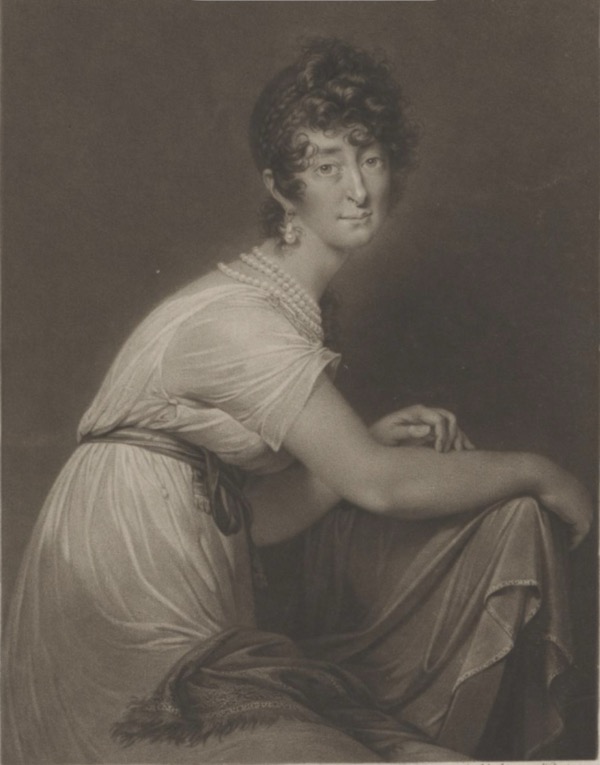
Fanny von Arnstein
Fanny von Arnstein was born Fanny Itzig in Berlin in 1758. The Itzig family was a profoundly talented, artistically inclined family. (In fact, Felix and Fanny Mendelssohn were Fanny’s grand-nephew and grand-niece.)
We covered the remarkable stories of Fanny and her sisters here: https://interlude.hk/how-the-women-in-mendelssohns-family-changed-classical-music-forever/.
After Fanny and her sister Cäcilie married the heads of the banking firm Arnstein and Eskeles, they moved to Vienna, bringing with them the rich tradition of Berlin salons.
Their religion made the social prominence they achieved especially noteworthy: in the 1790s, Arnstein became the first unconverted Jew in Austria to be granted the title of baron.
During the late 18th and early 19th centuries, Fanny entertained the most famous figures in the city, including celebrities active in politics (Prince Metternich and Prince Talleyrand), scholarship (August Wilhelm Schlegel), and literature and poetry (Rahel Varnhagen and Zacharias Werner).
All were welcome every day in her home, which she kept open from noon to midnight or later. She often entertained around three hundred people at a time.
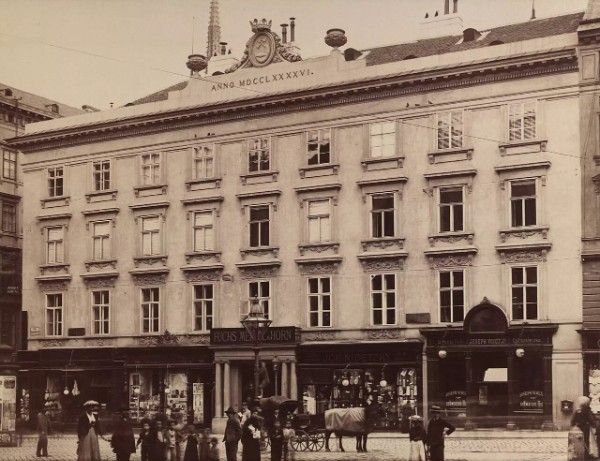
Fanny von Arnstein’s home
Musicians held a special place in her heart, as Fanny was a talented pianist. In 1781, she even rented servants’ quarters in their mansion to Mozart, newly arrived in town and just starting out. She also attended the subscription concerts that Mozart launched; these helped to keep him afloat financially as he composed and built his reputation and were vital to his career development.
In 1812, she became one of the founders of the Gesellschaft der Musikfreunde (Society of Friends of Music). During Arnstein’s lifetime, the group’s primary focus was promoting composers and organising concerts, but it would go on to found the Vienna Conservatory. The Society’s future music directors would include Johannes Brahms and Gustav Mahler.
In 1780, Fanny had her only child, a daughter named Henriette, who became a talented musician herself, studying piano with Muzio Clementi. She would go on to carry on the family salon tradition, entertaining Haydn, Beethoven, Mendelssohn (of course), and Liszt.
Caroline Pichler (1769–1843): Schubert’s Muse
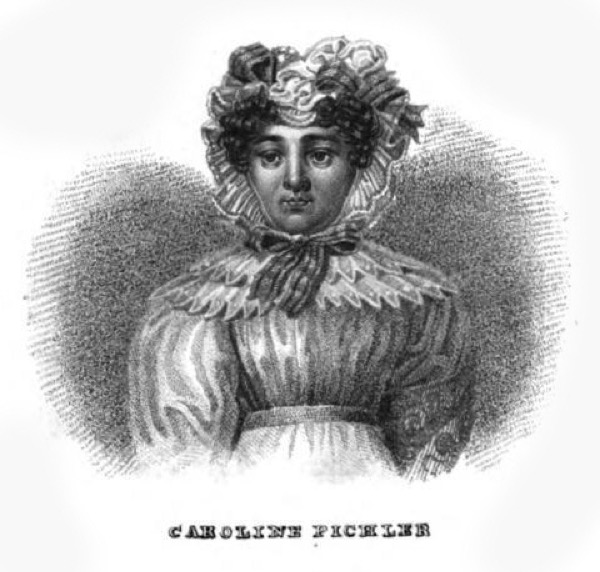
Caroline Pichler
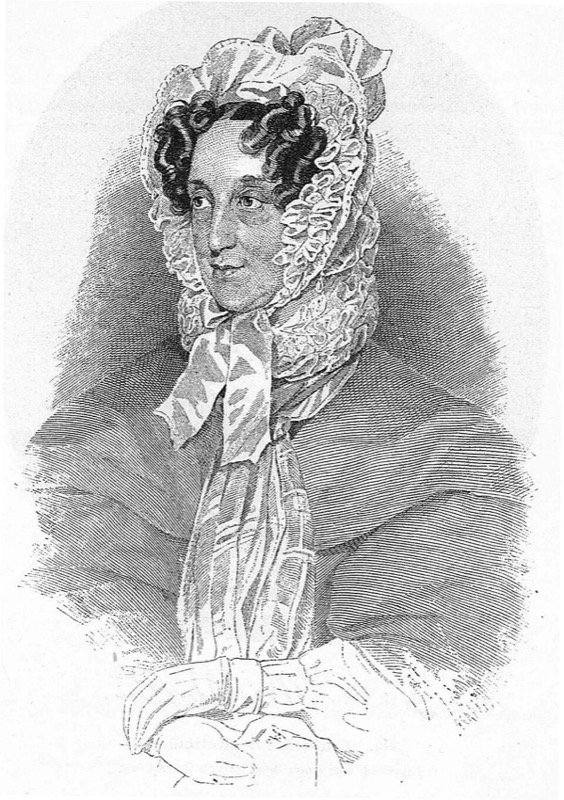
Caroline Pichler was born to a wealthy family in Vienna in 1769. Her father was a royal advisor, and her mother organised a highly respected salon, entertaining literary celebrities of the late 18th century, as well as musical giants like Haydn and Mozart.
Such an environment was perfect for little Caroline to grow up in, as she loved music, languages, and writing. She was a singer and keyboard player and performed for the first time with a small orchestra in her home that her father arranged for her when she was about eight years old. Later, she took keyboard lessons from Mozart. She also learned five languages (German, French, Italian, English, and Latin) and published her first poem when she was twelve.
In 1796, she married a government official named Andreas Pichler. He turned out to be a valuable spouse. Not only did he support her in establishing a salon, but his brother Anton headed A. Pichler’s Witwe & Sohn, a publishing company that printed her writing.
Beginning in 1800, she published novels and books of poetry regularly, becoming one of the first professional women authors in Austria. Her writing helped her family afford the expenses of hosting a regular salon.
That salon, begun in 1801 and meeting on Tuesdays and Thursdays, with more intimate meetings on Sundays, drew artists and intellectuals from across the classes.
Caroline Pichler
It ultimately became so famous that Swedish poet Per Atterbom named St. Stephen’s Cathedral and Pichler’s salon as the two must-see Viennese landmarks for any traveller.
Although she was best known as an author and her primary focus was entertaining writers, her musical visitors were also illustrious, ranging from Beethoven and Schubert to Weber and Maria Theresia von Paradis, the famous blind pianist and composer.
In 1822, Schubert sang some of his lieder at a Pichler salon. He would ultimately set her poetry several times, including in the song “Der Sänger am Felsen” (“The Singer on the Rock”).
Der Sänger am Felsen D482 Schubert
She also gave space for private readings of various operas and oratorios.
As she aged, she retired from salon life and stopped completely after her husband’s death in 1837. From there, her daughter Lotte took up the baton, becoming a celebrated salonnière in her own right.
Conclusion
The stories of Maria Wilhelmine von Thun und Hohenstein, Fanny von Arnstein, and Caroline Pichler reveal a secret side of Vienna’s classical music history that is easy to overlook.
Through their Viennese salons, they provided both composers and performers with invaluable resources: audiences, connections, financial support, encouragement, and welcoming places where new musical ideas could flourish.
For more of the best in classical music, sign up for our E-Newsletter