Clara Schumann was a giant of the Romantic Era. Not only was she a major inspiration to her husband, composer Robert Schumann, but she was also one of the greatest pianists of her generation.
For the first few decades of her career, she also composed. Like every composer, she dedicated her works to people whom she especially respected and admired.
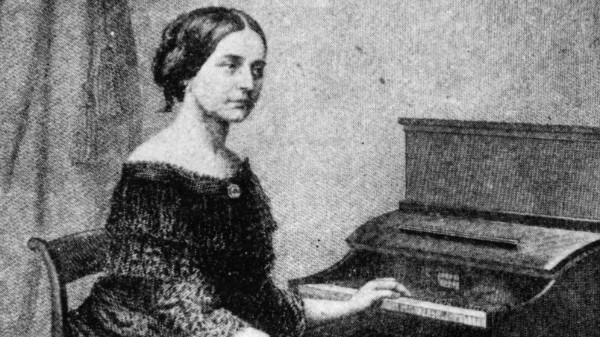
Clara Schumann
Today, we’re looking at nine dedications and the stories behind them.
Romance variée, Op.3 – 1831-33
Dedicated to: Robert Schumann
Clara Wieck met Robert Schumann in March 1828 at a private concert. She was eight and a half years old, already supremely accomplished, and preparing for her debut at the prestigious Gewandhaus hall.
Robert was so impressed by the young pianist that he decided to study with her teacher, her father, Friedrich Wieck.

Joseph Kriehuber: Robert Schumann, 1839 (Gallica: btv1b8424855k)
At the time, it was common for music students to lodge with their teachers, so Robert moved into the Wieck household in 1830.
Between 1831 and 1833, Clara wrote this Romance variée. She was between twelve and fourteen at the time.
She dedicated the work to Robert, who was almost a decade her senior. She had a crush on him at the time, but she was also interested in him as a musical and creative partner.
Robert was in awe of the young genius, and he used the theme from this Romance in his own Impromptus, op. 5. (It is possible that he had actually composed the theme and they exchanged it.)
Their musical dialogue would continue throughout their creative lives.
Robert Schumann: Impromtus on a theme by Clara Wieck, Op. 5 [Uhlig]
Soirées musicales, Op.6 – 1836
Dedicated to: Madame Henriette Voigt
Henriette Voigt was born in Leipzig in 1808, nine years before Clara. As a young woman, she studied piano in Berlin, where she befriended the Mendelssohn family.
She returned to Leipzig and married a merchant named Carl Voigt in 1830. She had two daughters with him: Ottilie in 1835 and Anna in 1839. (Robert Schumann was Anna’s godfather.)
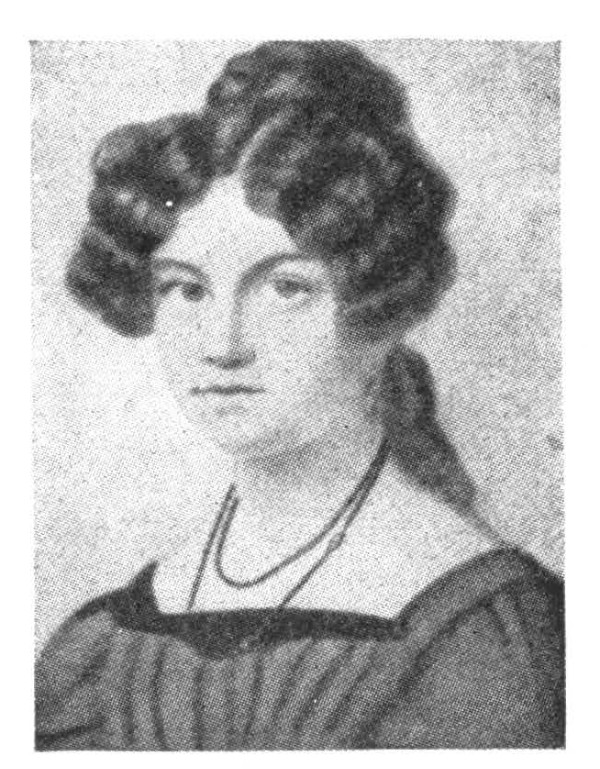
Henriette Voigt
Clara and Henriette met in 1834, on Clara’s fifteenth birthday. Clara described her in her diary as “a highly educated and amiable woman.”
In 1836, Henriette bought a grand piano from Friedrich Wieck, who, in addition to being a piano teacher, sold pianos on the side. As a thank-you for the purchase, Clara dedicated her “Soirées musicales” to Henriette.
In October 1839, Henriette died at the age of thirty of tuberculosis, not long after giving birth to Anna. Robert and Clara stayed friends with her widower for decades to come.
Variations de Concert, Op.8 – 1837
Dedicated to: Adolf von Henselt
Adolf von Henselt was born in Bavaria in 1814, five years before Clara.
He began studying piano when he was five, and grew up to become a pianist and composer.
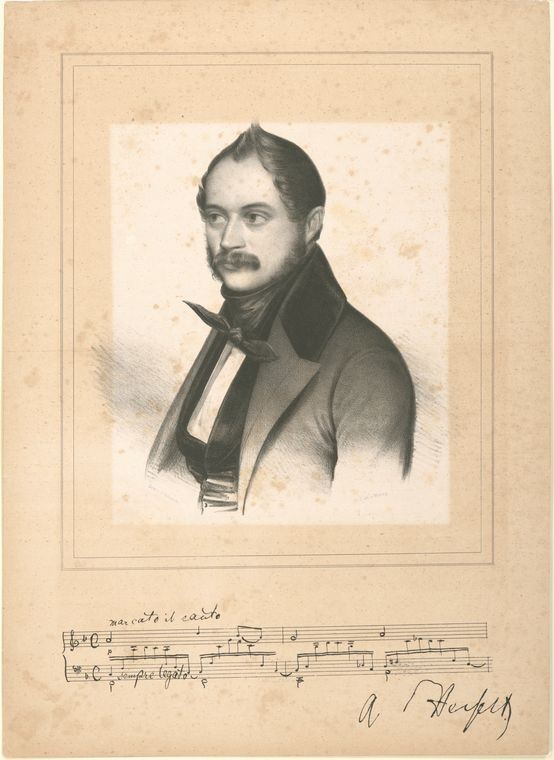
Adolf von Henselt
Robert praised Henselt’s work in his music journal Neue Zeitschrift für Musik in 1836. When they met in December 1837, Robert wrote that he seemed like “a brother.”
Clara dedicated these variations to him. She would also perform Henselt’s piano concerto.
6 Lieder, Op.13 – 1844
Dedicated to: Caroline Amalie, Queen consort of Denmark
Caroline Amalie of Schleswig-Holstein-Sonderburg-Augustenburg was born in 1796 in Copenhagen.
In 1815, she married Christian VIII, who ascended to the Danish throne, making her the queen consort.
Like many royal women of her day, she enjoyed composing piano music. She and her husband traveled across Europe in the late 1810s, seeking doctors to treat her infertility, and during this time, she studied music.
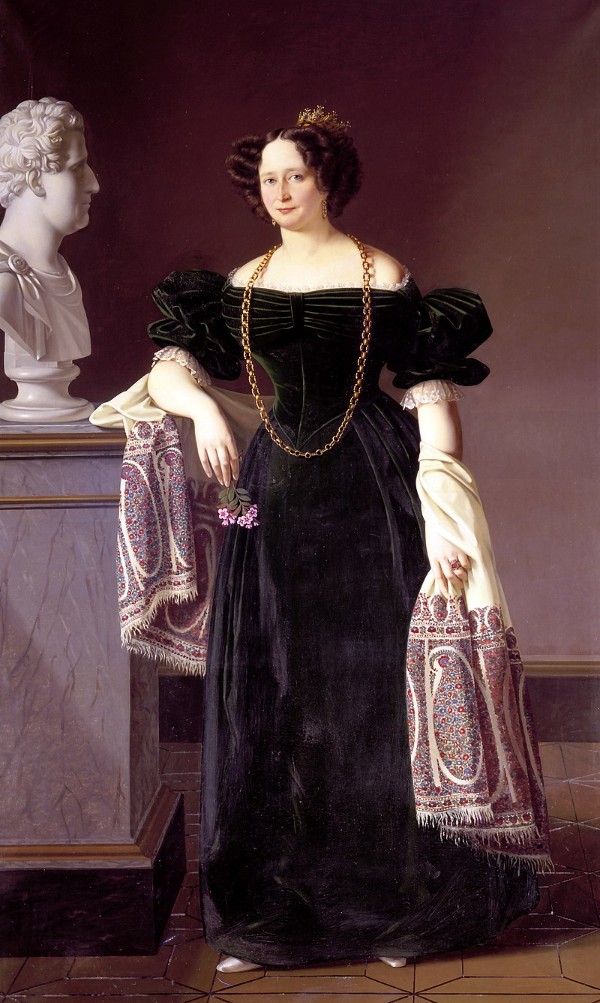
Caroline Amalie
In 1842, Clara made a stop in Denmark during one of her European tours. She had a wonderful time there, attending various parties and soirees and meeting influential people, including Hans Christian Andersen.
She also played at court for Caroline Amalie. In tribute to her and the welcome she received in Denmark, Clara dedicated these six lieder to her.
4 Pièces fugitives, Op.15 – 1845
Dedicated to: Marie Wieck
Marie Wieck was born in 1832, when her half-sister Clara was thirteen. After Clara’s mother left him, Friedrich Wieck divorced her and remarried. Marie was born of this second marriage.
When Marie was a young child, the Wieck household was thrown into an uproar as Clara pursued a relationship with Robert.
Feeling that Clara was starting to slip out of his controlling grasp, Friedrich turned to Marie as his next project.
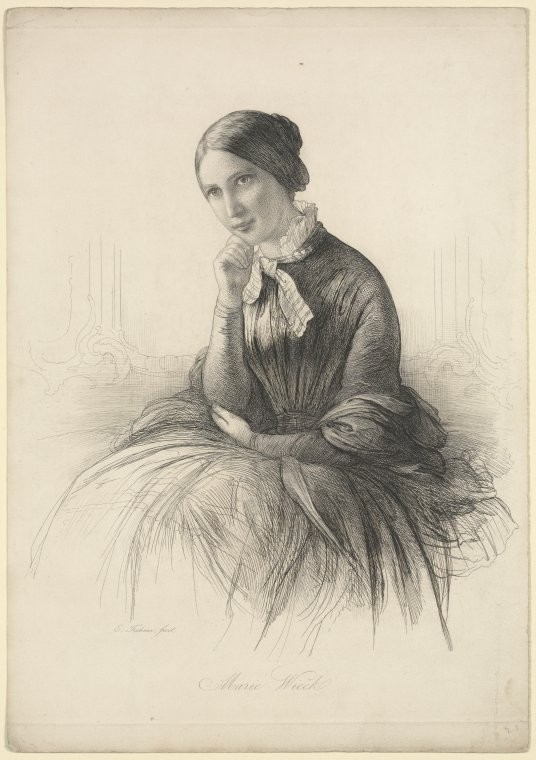
Marie Wieck
Unfortunately, although Marie was talented, she wasn’t the once-in-a-generation artist that Clara was. She did, however, end up pursuing a career in music.
Clara dedicated this piece to Marie in 1845, the year that Marie turned thirteen.
Piano Trio in G minor, Op.17 – 1846
Dedicated to: Fanny Mendelssohn-Hensel
Fanny Mendelssohn (married name Fanny Mendelssohn Hensel) was born in 1805 to a wealthy family.
She was a piano prodigy. Along with her brother Felix, she received the best musical education that money could buy.
However, while Felix was encouraged to make a career for himself as a composer, Fanny was not. It was considered unseemly for a wealthy woman to make a career on the stage…even when the stage in question was a concert platform.
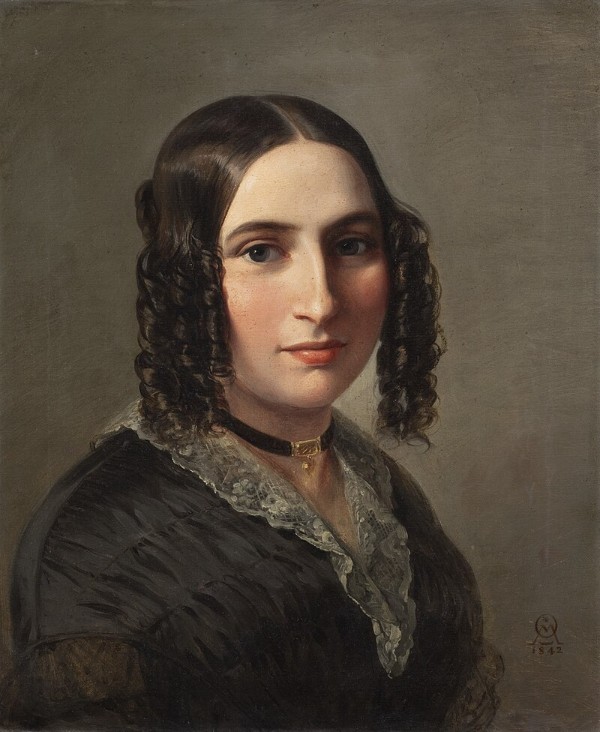
Fanny Mendelssohn Hensel
Instead, she devoted her energies to composing. By the time she died, she had written over 400 works of astonishing quality.
She also focused on organising private concerts in her home: a way of interacting with music that was more socially acceptable.
Fanny and Clara likely met for the first time in 1843. In 1847, Robert and Clara traveled to Fanny’s hometown of Berlin, where they paid her frequent visits.
Fanny wrote in her diary, “I see the Schumann lady very often, she comes to see me almost daily, and I have become quite fond of her.”
Fanny died suddenly of a stroke in 1847. Afterward, Clara wrote to a friend:
She was certainly the most excellent musician of her time, and a very important person for the entire musical life in Berlin – one would hear only good music from her.
I had dedicated to her my Trio, which I am expecting back from the printer any day, and now she is no more! – My husband and I were utterly shocked by this incident.
6 Lieder, Op.23 – 1853
Dedicated to: Livia Frege, née Gerhardt
Livia Frege was born in 1818, the year before Clara, in the city of Gera, Germany.
When she was a teenager, she began studying singing with famous soprano Wilhelmine Schröder-Devrient, the artist who was one of Wagner’s major early inspirations (and also, incidentally, a friend of Clara’s).
In 1832, she performed at a Gewandhaus concert with Clara. Her career took off, and between 1833 and 1835, she performed an astonishing 32 operatic roles.
However, her great career came to an early end when she was still in her teens. In 1836, she married a wealthy lawyer, a few years before Clara married Robert. Unlike Clara, after her marriage, Livia largely gave up public performance.
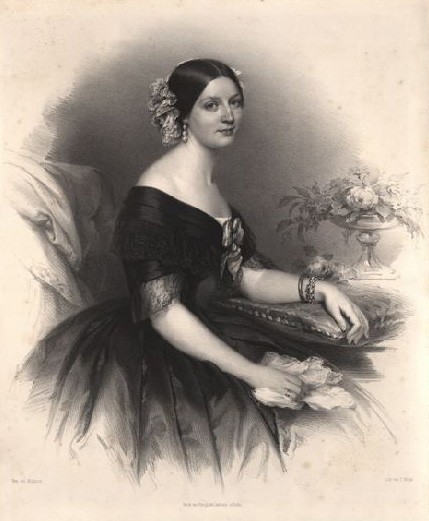
Livia Frege
However, she did appear as a soloist in the premiere of Robert’s Das Paradise und die Peri.
Decades later, after Livia’s death, Clara wrote:
Oh, what a big loss! With her, I have lost my oldest friend and most faithful art companion. How well we understood each other in absolutely everything and how much our views of life and art agreed! How much we shared our enthusiasm for the high arts and our disgust at the degeneration of modern times.
3 Romances, Op.22 – 1853
Dedicated to: Joseph Joachim
Joseph Joachim was born in the Austrian town of Kittsee in 1831. He would become one of the great violin prodigies of the age.
In 1843, at the age of just twelve, he performed in a concert with Clara in Leipzig.
A decade later, in May 1853, he met with the Schumanns and told them about the teenage composer Johannes Brahms, whom he had befriended. Brahms visited the Schumanns’ home for the first time that October, and four musicians became steady fixtures in each other’s lives.
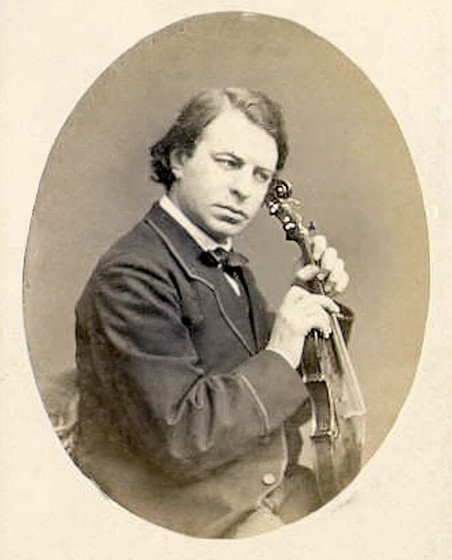
Joseph Joachim
Clara connected with Joachim on a musical level. Audiences found their partnership electric, and they performed across Europe together for decades.
Variationen über ein Thema von Robert Schumann, Op.20 – 1853
Dedicated to: Robert Schumann
Clara had dedicated some of her earliest published music to Robert, and it’s only fitting that she also dedicated some of her last to him.
She wrote this work over the period of one week, between 29 May and 3 June 1853. The rush was to deliver it to Robert as a birthday present on 10 June.
As scholar Karin Bauer notes:
Only one extra-compositional reference in Clara’s Op. 20 has been addressed in the literature. In the coda, Robert’s F-sharp minor theme returns in its entirety, and tucked into the inner voices is a quote of Clara’s Romance variée, Op. 3, which she wrote in 1833 and dedicated to Robert. Robert subsequently used the Romance variée theme as the basis for his Impromptus on a Theme of Clara Wieck, Op. 5 of 1833.
Of course, Clara’s Romance variée is the first work on this list, making the inclusion of these variations a full-circle moment.
For more of the best in classical music, sign up for our E-Newsletter