
For generations, classical music composers have poured the emotional fallouts from their romantic lives into their music, creating some of the most emotional works in the repertoire.
Today, we’re looking at seven of the saddest classical music pieces inspired by tragic breakups by Wagner, Brahms, Bartók, and more.
Tristan und Isolde by Richard Wagner (1854-59)
In 1852, Richard Wagner became infatuated with a beautiful poet named Mathilde Wesendonck. There were two problems: he was already married, and so was she…to Wagner’s wealthy patron Otto Wesendonck.
We don’t know exactly what feelings Mathilde had for Richard, or whether they ever slept together. But we do know that the relationship had a major impact on Richard.
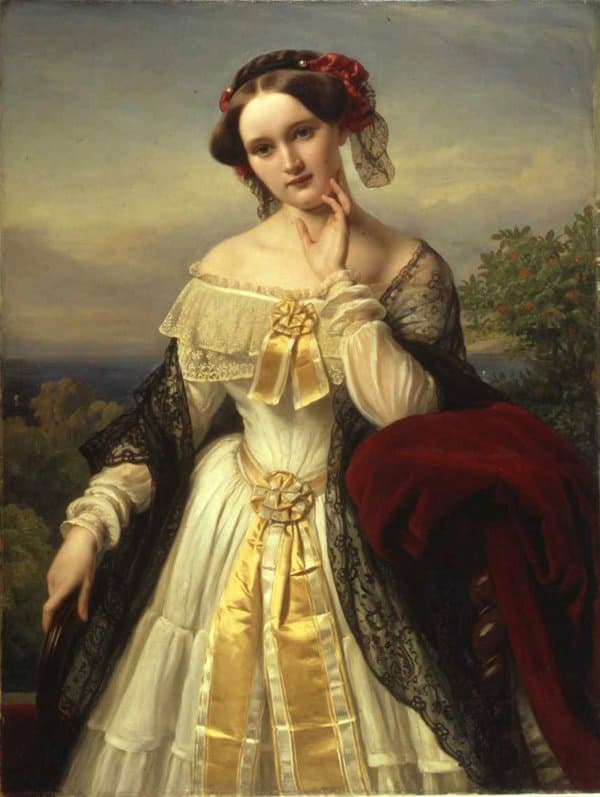
Mathilde Wesendonck
When Wagner’s wife, Minna, discovered Mathilde’s letters, Minna left him, writing to Mathilde: “I must tell you with a bleeding heart that you have succeeded in separating my husband from me after nearly twenty-two years of marriage. May this noble deed contribute to your peace of mind, to your happiness.”
Amidst this personal chaos, Wagner composed Tristan und Isolde, an opera suffused with themes of longing, sensuality, and death.
His feelings for Mathilde and the impossibility of their union shaped the opera’s central theme of tragic but ultimately transcendent love.
Alto Rhapsody by Johannes Brahms (1869)
Can someone experience a breakup if they were never really with the love interest to begin with?
If it’s possible, that’s what happened between Johannes Brahms and Julie Schumann, who never even knew Brahms was romantically interested in her.
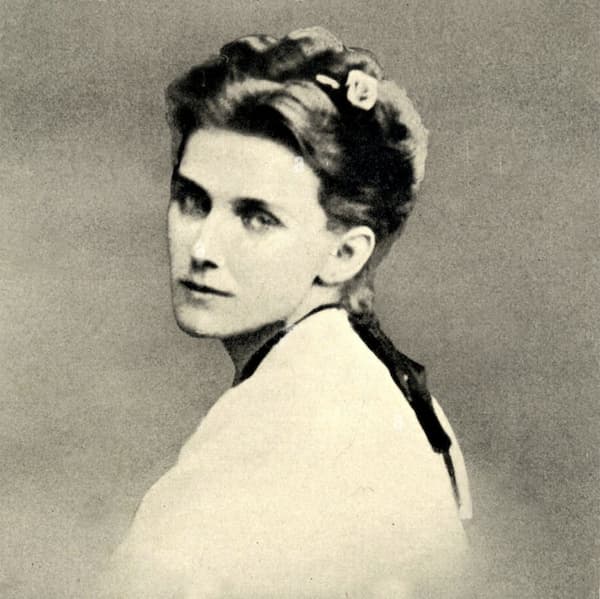
Julie Schumann
Julie was the daughter of Brahms’s best friend (and one-time love interest), Clara Schumann, and her late husband, Robert Schumann.
When Julie was a little girl, Brahms had acted as a father figure to her and her siblings after Robert moved to a mental hospital, where he ended up dying.
As Julie grew into a beautiful young woman, Brahms became increasingly infatuated with her. But he never vocalised his interest in her, and in 1869, she married an Italian count instead. A devastated Brahms served as the best man at her wedding.
His Alto Rhapsody was written as a wedding present for Julie. It’s an awfully dark wedding present, setting a portion of Goethe’s poem “Harzreise im Winter”, which features a lost and wandering narrator traveling in the cold of winter.
Learn more about Brahms’s doomed relationship with Julie Schumann.
Romeo and Juliet Overture by Pyotr Ilyich Tchaikovsky (1869)
The composition of Tchaikovsky’s famous Romeo and Juliet Overture coincided with a personal romantic tragedy of his own.
In 1868, Tchaikovsky developed feelings for the Belgian soprano Désirée Artôt, a celebrated singer who shared his passion for music and seemed open to marriage.
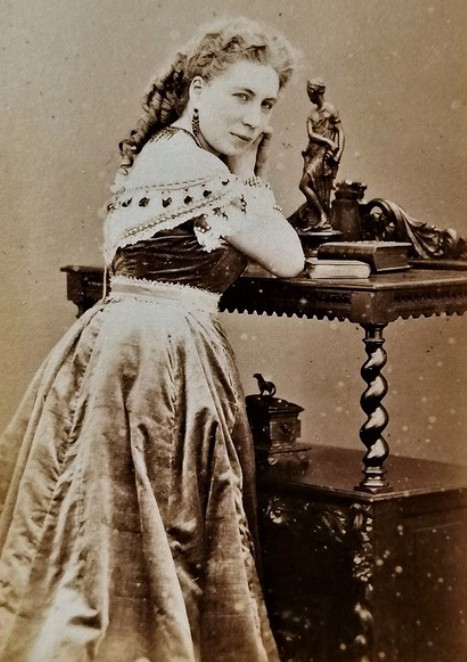
Désirée Artôt
Their courtship was intense but complicated: she valued her career, she was much more famous than he was, and Tchaikovsky knew he was a gay man.
Despite the multiple red flags, Tchaikovsky proposed, and she accepted.
However, in September 1869, Tchaikovsky heard some shocking news: Artôt, without warning, had broken off their engagement and married a colleague, a Spanish baritone, instead. He was stunned.
Tchaikovsky’s friends began drawing connections between this overture, which was completed weeks after her surprise marriage, and his relationship with Artôt.
His colleague Mily Balakirev wrote an eyebrow-raising observation to Tchaikovsky in his review:
“The second D flat tune is delightful… It is full of tenderness and the sweetness of love… When I play it I imagine you are lying naked in your bath and that the Artôt-Padilla herself is washing your stomach with hot lather from scented soap.”
It was probably just as well that the two did not marry, since his 1878 marriage to a former student was an unmitigated disaster.
The tragedy has a happy ending, though: he and Artôt eventually reconciled.
Piano Quartet No. 1 by Gabriel Fauré, Movement 3 (1877-79)
In 1877, Fauré became engaged to Marianne Viardot, daughter of the famous singer Pauline Viardot.
On paper, the engagement looked perfect. Fauré was a rising composer, and Marianne was a gifted singer herself.
But within a few months, Marianne got cold feet and broke up with him, leaving Fauré devastated.
He composed his first piano quartet during his engagement and the fallout. It’s difficult not to tie the melancholy of the work’s third movement to the emotions he was feeling at the time.
The breakup left him disillusioned with romance. When he married in 1883, he did so because he was nearing forty and wanted to settle down. According to legend, a matchmaker friend put three women’s names on pieces of paper and dropped them into a hat, and he selected one.
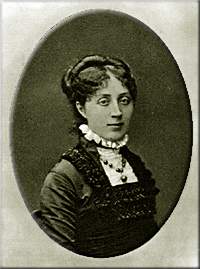
Marie Frémiet
The name he chose was Marie Fremiet, the daughter of a renowned sculptor. He did marry her and had two sons with her, but he was never in love with her, and he cheated on her throughout their marriage.
Learn about both of Fauré’s formative relationships.
Die Seejungfrau by Alexander von Zemlinsky (1902-03)
Alexander von Zemlinsky’s ultimately unrequited love for Alma Schindler, one of Vienna’s most stunningly beautiful women, shaped his creative life in profound ways.
She began studying music with him in 1900. He was 29 and she was 21.
By April of 1901 they were in love, with Alma writing in her diary:
“I would gladly be pregnant for him, gladly bear his children. His blood and mine, commingled: my beauty with his intellect.”
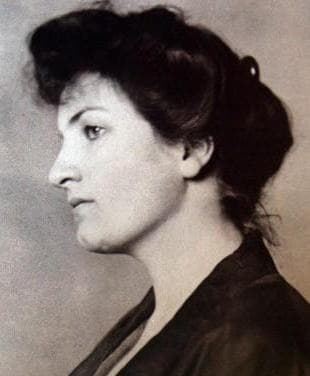
Alma Schindler, 1902
However, that November, she met the 41-year-old conductor and composer Gustav Mahler…and he proved to be a stronger draw.
Within weeks, Gustav and Alma were engaged and began sleeping together. She was pregnant at her wedding in March 1902.
What made this especially difficult for Zemlinsky was that he was a fan of Mahler’s music, and Mahler had even conducted Zemlinsky’s compositions in the past. One of the things that Gustav and Alma actually bonded over during that fateful dinner party was the fact that Mahler claimed not understand Zemlinsky’s ballet “Das gläserne Herz,” and Alma wanted to explain it to him.
To process his feelings, Zemlinsky turned to writing music about Hans Christian Andersen’s fairytale “The Little Mermaid.” He began writing it in February 1902 and finished orchestrating it in March 1903, when Alma’s baby girl was a few months old.
On the Cliffs of Cornwall from The Wreckers by Ethel Smyth (1904)
Composer Ethel Smyth is famous for her frank memoirs discussing her romantic relationships with women.
However, she did have one personally and professionally consequential romantic relationship with a man: American philosopher and librettist Henry Brewster.
One of Smyth’s early female love interests was a woman named Lisl von Herzogenberg. Lisl had a sister named Julia, and Julia was Henry’s wife.
However, Julia and Henry had an open relationship, leaving Ethel and Henry to explore their intense (and complicated) connection for a period of years, without ever becoming traditional lovers or spouses.
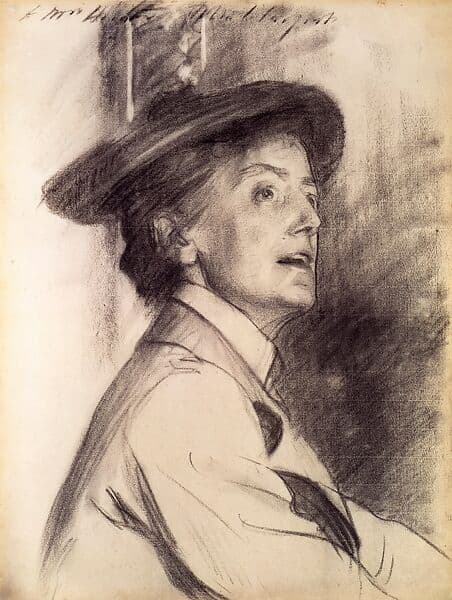
John Singer Sargent: Portrait of Dame Ethel Mary Smyth
They never experienced a traditional breakup like the other composers on this list, but rather a transition from romantic partners to friends (and sometimes back to romantic partners).
In 1904, she completed an opera called The Wreckers, with a French libretto written by Brewster.
The opera, set in a fishing village on the Cornish coast, follows the love affair of two ostracised townspeople who, by the opera’s end, are chained together in a cave to drown.
It’s easy to draw a line between that kind of societal judgment and the unconventional shape of their relationship.
Violin Concerto No. 1 by Béla Bartók (1907-08)
In early 1907, 26-year-old Béla Bartók fell hopelessly in love with the brilliant 19-year-old violinist Stefi Geyer, who was a fellow student at the Budapest Conservatory.
His feelings for her were intense, but Geyer didn’t return his romantic interest.
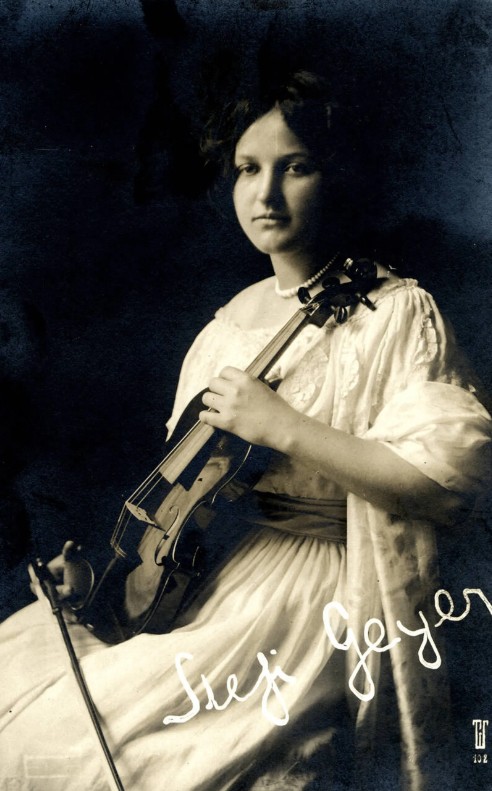
Stefi Geyer
By June 1907, Bartók began composing a violin concerto as a musical love letter to her. The first movement portrays her as a gentle idyllic woman and love interest, the second as a brilliant violinist.
Unfortunately, by February 1908, their relationship had deteriorated. Geyer wrote a letter breaking off their romantic relationship the same day that he finished the concerto.
He wrote back:
“I finished the score of the violin concerto on the 5th of February, the very day you were writing my death sentence… I locked it in my desk, I don’t know whether to destroy it or to keep it locked away until it is found after I die, and the whole pile of papers, my declaration of love, your concerto, my best work are thrown out.”
Ultimately, he chose to send it to Geyer. She kept the score and preserved it through two world wars. It was eventually published after Bartók’s death.
For more of the best in classical music, sign up for our E-Newsletter





Mathilde de hermosa no tenía nada, era una adúltera y una mentirosa. Pobre Minna.