
… four hands. Prior to this, Schubert only wrote two other sonatas and one sonatina for piano four hands, but none of them are as extensive as this work. Schubert wrote these while staying in Court Esterházy’s house. The Grand Duo, D. 812, remains one of the most famous pieces for piano four-hands. Schumann described the piece as a “symphony arranged for the piano.”
Franz Schubert: Sonata for Piano 4 Hands in C Major, Op. 140, D. 812, "Grand Duo" (Radu Lupu, piano; Daniel Barenboim, piano) Divertissement on a French motif D. 823 …
Search Results for: radu lupu

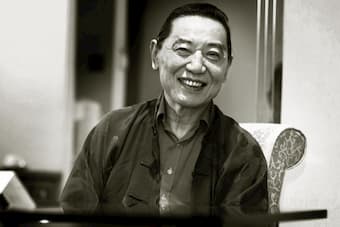
… “we bid farewell to a master, musician and philosopher with a unique gift for conveying Chopin’s greatness to the world both in words and, above all, through his playing. In a special album recorded to mark the artist’s sixtieth birthday, Martha Argerich, Leon Fleisher and Radu Lupu wrote, “Fou Ts’ong became one of the great teachers of our time. We are obliged to Fou Ts’ong for all his new ideas and for opening new musical horizons for all of us.” His former student William Youn writes, “he was …
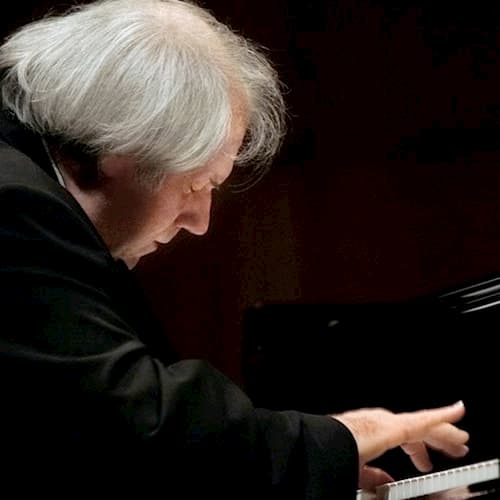
… His interpretations are marked by absolute freedom, spontaneity and explosiveness.
That poetry and esctasy in his playing of Scriabin’s Valse! And what a performance with white-hot passion and unparalleled intensity here! Take note of the roaring bass in the central section, symbolising boiling desire and urge. 5. Radu Lupu Radu Lupu© Hiroyuki Ito / The New York Times Lupu is probably the most seclusive pianist of all time – almost always declining interview invitations, zero social media engagement, last commercial recording made in mid-1990s… His Mozart is certainly the most sublime that I’ve ever heard …
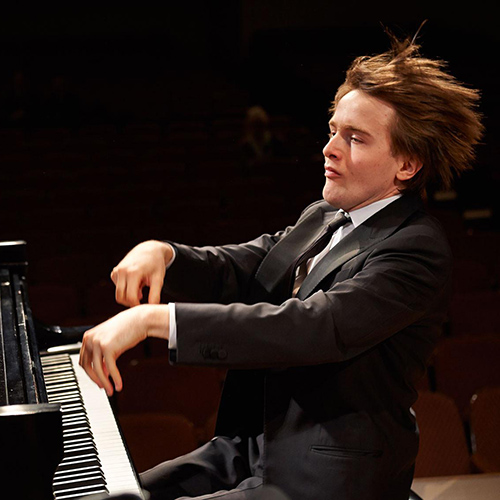
… years old. He made his orchestral debut at eight, an occasion memorable for the loss of one of his milk teeth during the performance! While studying at Moscow’s Gnessin School of Music, he listened to historic recordings of the great pianists from an earlier era, seeking inspiration and learning from recordings of Rachmaninoff, Cortot, Horowitz, Friedman and others from the golden age of piano playing. It’s no surprise that amongst his inspirations today are Martha Argerich, Grigory Sokolov and Radu Lupu. He seems to embody so many of their musical qualities, while also carving a …

She’s stood in for Martha Argerich, Evgeny Kissin, Radu Lupu and Murray Perahia, and performs with some of the greatest orchestras and conductors, who praise her playfulness and unpretentiousness, coupled with artistic maturity, commitment, excellent preparation and professionalism.
Ravel: Piano Concert in G major - II. Adagio assai
Elfin in statue, her technical and artistic prowess and pianistic power belie her petite frame, often clad in dazzling, eye-catching attire and spiky stiletto shoes (which have most of us who play the piano seriously wondering how on earth she manages to pedal!). Critics have commented on the slinky dresses …
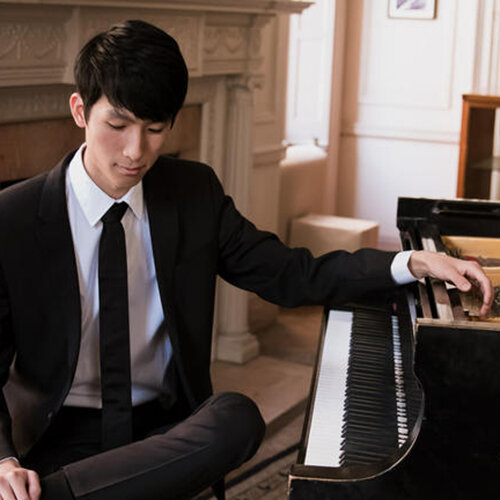
… appointed jury, usually consisting of piano ‘celebrities’ (often established world-class players) and acclaimed teachers, the unquestioned authorities on piano playing. Piano competitions are a way of discovering new talent and have introduced us to some of the greatest pianists of our time, including Vladimir Ashkenazy, Van Cliburn, Radu Lupu, John Ogdon, Murray Perahia, Mitsuko Uchida, Peter Donohoe, Maurizio Pollini, Krystian Zimmerman, Martha Argerich, Boris Giltburg, Yulianna Avdeeva, Daniil Trifonov, Seong-Jin Cho and, most recently, Eric Lu (winner of the 2018 edition of the Leeds).
Success in a competition marks a decisive moment in the career of …
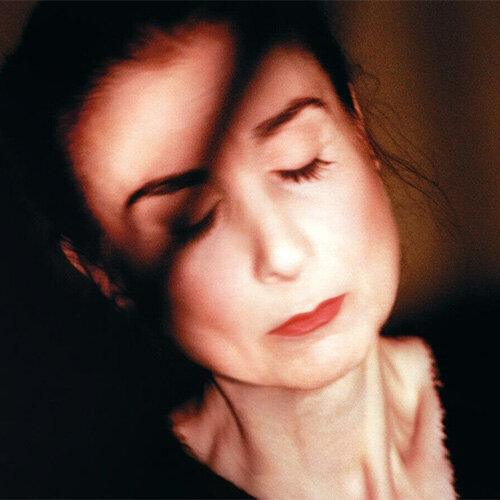
… We just drank it all in. We went from one concert to another. And what concerts! Our teachers were the icons of the stage.
We students were quite a crowd. So prodigiously gifted, so many destined for grand careers. Looking back there were also a lot from abroad. There was Radu Lupu, Peter Rösel, Dódý Tryggvason, Arthur Moreira Lima. And from England Liza Wilson, Allan Schiller … and, of course, Jacqueline du Pré, young, smiling and unforgettable . Love was everywhere. Radu was courting Liza. Dódý was hanging around with Vova [Ashkenazy]. Peter from Dresden had his eye on me. We supported …
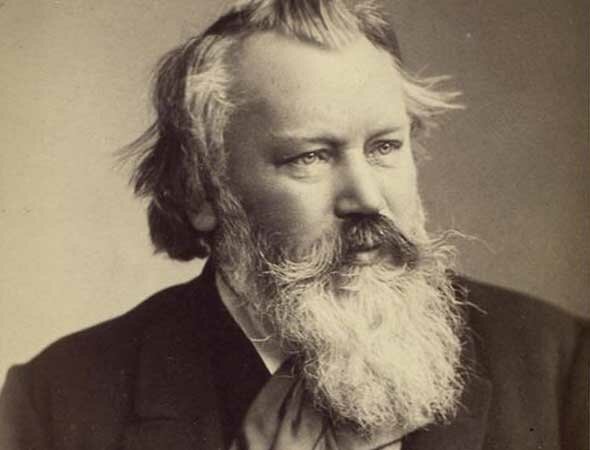
Concluding this series on Brahms' late piano works, we have reached the last composition for solo piano by Johannes Brahms (1833-1897) – Klavierstücke Op.119. It was written together with Op.118 during his stay in Bad Ischl in 1893. Consistent with the previous opus, this collection of piano pieces, as a constellation of imageries, has much diversity in its display of emotions – ranging from desolation to jubilance. Radu Lupu Plays Brahms 4 Pieces for Piano Op.119 The first Intermezzo in B minor, marked Adagio, commences with sobriety, sentiment and despondency – which we may try to link with …