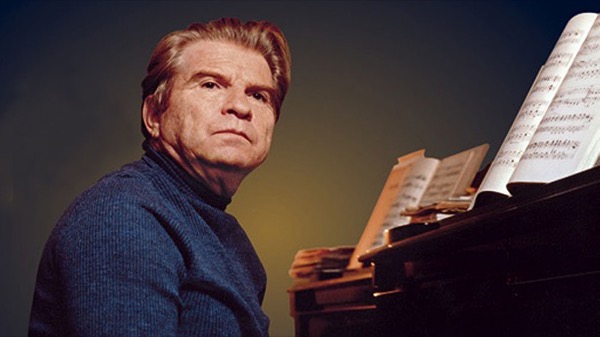
Pianist extraordinaire Murray Perahia was born on 19 April 1947 in New York City. He triumphed at the 1972 Leeds International Piano Competition and has built a legacy of award-winning recordings and exceptional artistry.
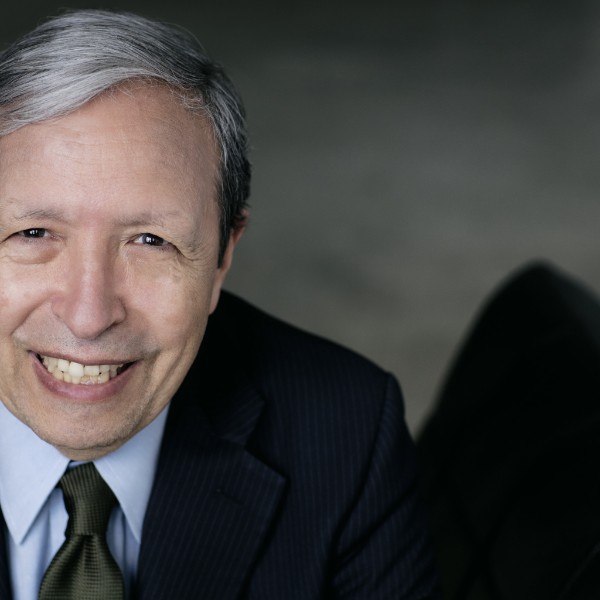
Murray Perahia
Perahia’s artistry rests on technical brilliance in the service of profound emotional and intellectual insight. He is uniquely capable of illuminating the intellectual core with clarity, sensitivity, and a rare balance of restraint and intensity.
On the occasion of Murray Perahia’s birthday on 19 April, I came across a recent interview in which the pianist talks about the importance of musical analysis and what we might discover in the ideas of Heinrich Schenker. (Duchen, Pianist, 2026)
Murray Perahia plays Bach’s Partita No. 6 in E minor, BWV 830
Logic as Emotion
Composers like Mozart, Beethoven, and Brahms had intensive training in figured bass, harmony, and counterpoint. In essence, they had a detailed grounding in tonality and the possibilities of that language. Perahia strongly believes that this kind of foundational knowledge has largely been lost today.
“I don’t think that structure and logic are intellectual… I think it’s an emotional thing. I’m drawn to [Schenker’s] ideas of structure because this is what music is about… there is a pattern underneath” (Moss, The Guardian, 2009)
For Perahia, learning about musical structure is not abstract theory, but the basis of musical meaning. And while we’re frequently taken in by the surface of music, there is something much deeper below that surface. “The heart is important, but you have to use the mind as well.” (Duchen, Pianist, 2026)
Murray Perahia plays Chopin’s Ballade No. 3
Three Levels of Musical Structure
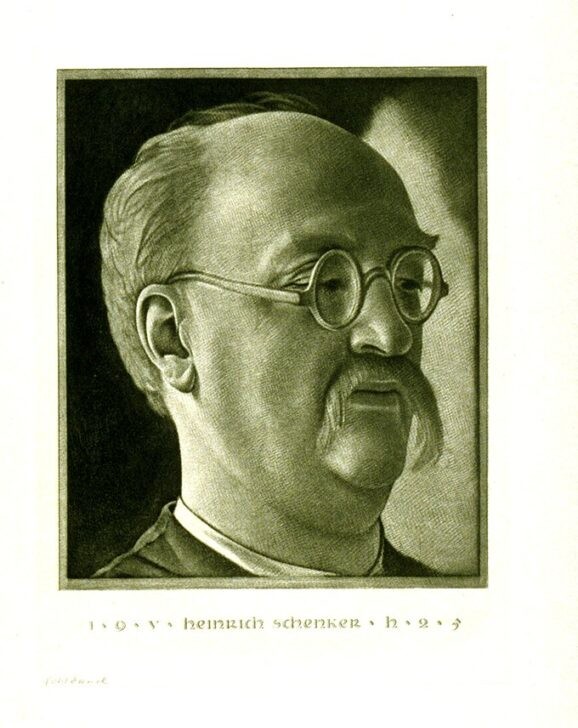
Heinrich Schenker
Heinrich Schenker was an Austrian music theorist who explored the structural hierarchies underlying much of 18th-and 19th-century music. Schenker postulated that music from that era operates on three levels: a foreground, or surface, a background, and most importantly, a middle ground.
In this concept, the background is largely the same for tonal music, so every piece would have a similar background. It’s the middle ground that determines the style and character of a piece, with the foreground, or surface, an expression of that middle ground.
As Perahia explains, “there are some notes that are more important, and the direction is more important than the notes together, and there are somehow forces underneath the notes that determine the emotions and also the direction of the piece.” (Finane, Perahia the Humanist, Steinway & Sons)
Murray Perahia plays Beethoven: Piano Sonata No. 23 in F minor, Op. 57
Organic Whole
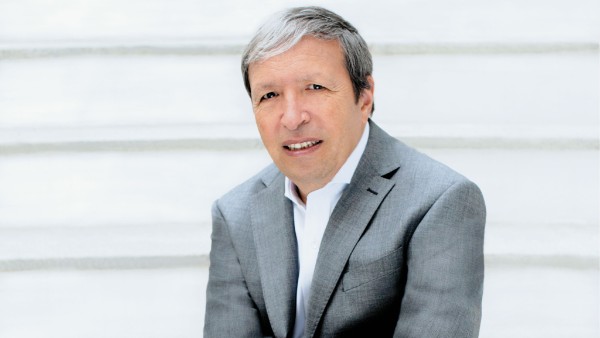
Murray Perahia
For Perahia, the fundamental appeal of Schenker and his detailed graphs is that things are not what they seem on the surface, but that there are layers of meaning. This allows you to see a totality, the way the composers said they saw the whole piece.
“Otherwise it would be a collection of this bit and that bit and the other bit, and that’s not the way music is; it has an organic whole. And this allows you to see that, because once you peel away layers of the foreground, you can see basic chords in the middle ground and direct the whole thing. And it becomes simpler for you to understand, and you can keep it in your mind.” (Finane, Perahia the Humanist, Steinway & Sons)
Murray Perahia plays Schubert: Impromptu in E-flat Major, D. 899
The Discipline of Hearing
For Perahia, Schenker did for music what Freud and Einstein did for their respective worlds, reducing them to fundamental principles. Yet analysis does not destroy the magic of music. “Everything in music is emotional, even counterpoint is. You just try to reach what the composer is saying, what the emotions are about.” (Reider, The Jerusalem Post, 2009)
For Perahia, the Schenkerian principles are not an academic system, but a discipline of listening. Structure, in that sense, is audible and expressive, and not abstract. Every note, the harmonies, and phrasing have their place in telling a story, and interpretations depend on hearing long-range connections. Schenkerian analysis is naturally descriptive, and it is artistically generative.
For more of the best in classical music, sign up for our E-Newsletter