In the summer of 1741, George Frideric Handel sat down at his desk in London and began setting a biblical text to music. Twenty-four days later, he was finished.
The score he produced – 260 pages, 53 movements, running nearly three hours in performance time – was Messiah.
It would become the most performed choral work in Western music history, staged continuously for nearly three centuries, recognized instantly by millions of people who couldn’t name another piece of classical music.
But that outcome was far from inevitable. Messiah was rejected by Handel’s adopted hometown, nearly vanished from the repertoire entirely, and owes its survival less to critical acclaim than to annual performances given for a children’s charity.
This is the story of how a three-week miracle made it into the canon – by the skin of its teeth.
Handel’s Messiah
Handel in 1741: Debt, Failure, and a Libretto He Almost Ignored
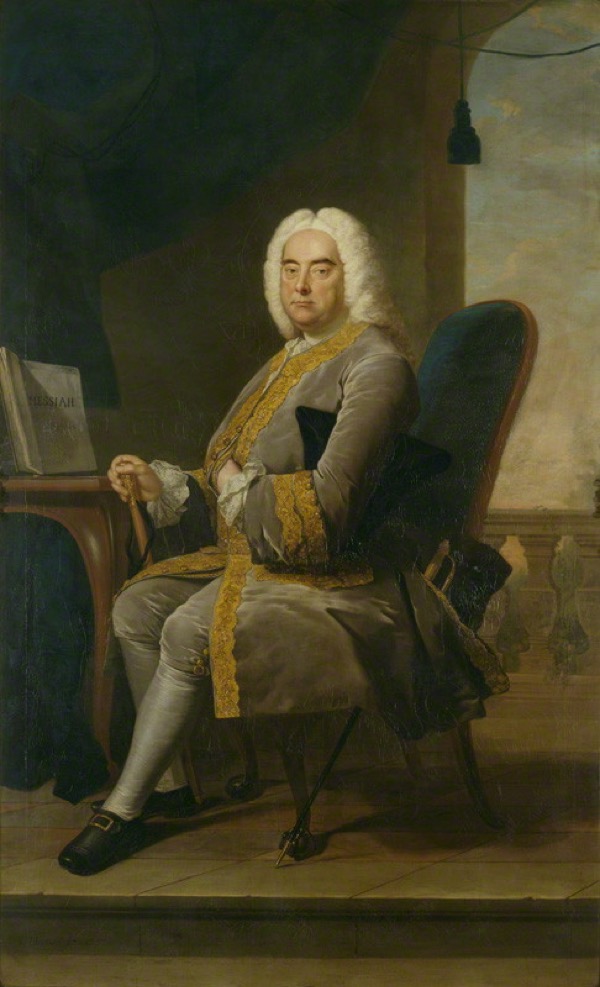
George Frideric Handel
By 1741, George Frideric Handel had become one of the most celebrated composers in London.
He had introduced Italian-language opera to London in 1711 with his opera Rinaldo, and went on to present dozens of operas, reshaping the musical tastes of the city.
However, during the 1730s, Italian opera began to lose popularity.
Then, in 1733, a rival company named Opera of the Nobility was founded, coming into direct competition with Handel’s Royal Academy of Music.
Handel was forced to innovate to avoid financial ruin. He began experimenting with English-language oratorio, and presented three in 1733.
In 1738, Handel wrote an oratorio named Saul. Its libretto was written by a wealthy man named Charles Jennens, who was passionate about literature and religion, and lived off his family’s fortune. He also paid to have Handel’s scores published.
Handel’s “Oh Lord, Whose Mercies Numberless” from Saul
Unfortunately, in 1741, Handel’s Italian opera Deidamia was a flop. The stakes were clear: if Handel couldn’t innovate quickly, he’d risk another costly disaster.
That same summer, Jennens sent a new libretto to Handel. He dubbed it Messiah.
Messiah consisted largely of excerpts arranged from the King James Version of the Bible and the Anglican Book of Common Prayer. It is a meditation on the story and identity of Jesus, especially in his role as spiritual messiah.
On paper, this project did not sound particularly promising. It was a genre that Handel felt pressured to present, with a libretto by a talented but amateur author and subject matter that was far from glamorous – indeed, it was even verging on generic.
The libretto was set aside for a few weeks that summer, and Handel didn’t pick it up until August 22nd.
How Handel Wrote One of History’s Greatest Works in Three Weeks
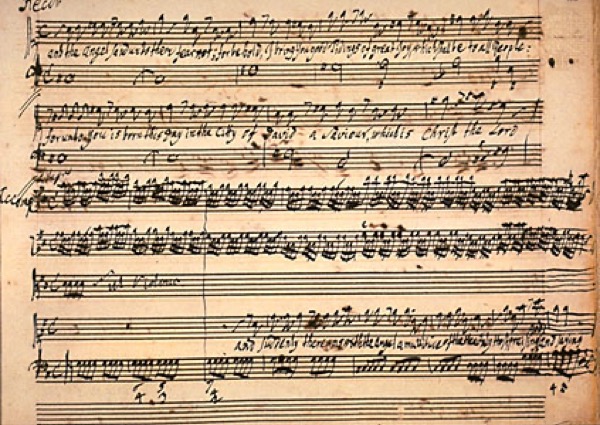
Handel’s Messiah score
However, on August 22nd, Handel picked up the libretto, began composing – and didn’t stop.
Here’s what his day-by-day schedule that month looked like.
22 August 1741 – Handel begins work on Messiah
28 August 1741 – Handel finishes outlining Part I
6 September 1741 – Handel finishes outlining Part II
12 September 1741 – Handel finishes outlining Part III
14 September 1741 – Handel finishes the score
That means from start to finish, Messiah took 24 days to write – just a little over three weeks.
While Handel was working, he would ignore plates of food that his servants had cooked outside the door.
When he wrote the finale for the oratorio’s second part – the “Hallelujah Chorus” – he later said of the experience, “I did think I did see all Heaven before me, and the great God Himself.”
Handel’s “Hallelujah Chorus” from Messiah
Funnily enough, Jennens wasn’t impressed. On the contrary, he feared that Handel’s speed meant that he wasn’t taking the libretto seriously, going so far as to label the creative process “careless negligence.”
The City That Fell in Love with Messiah First
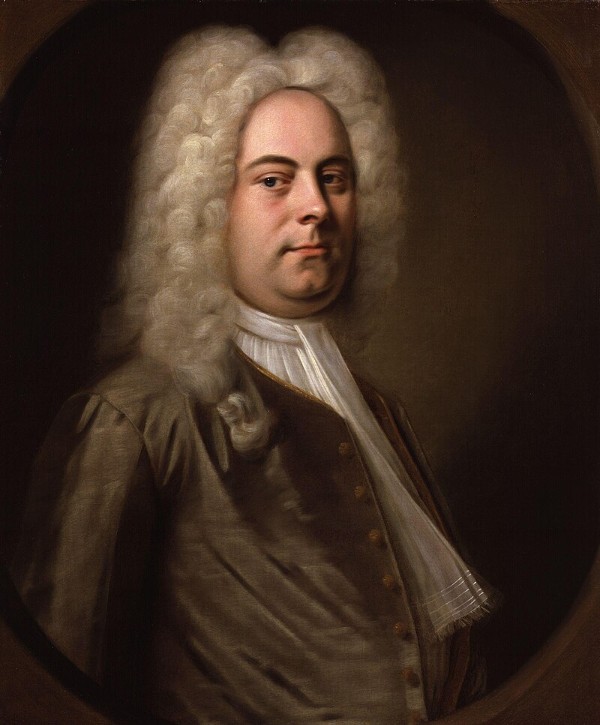
Balthasar Denner: George Frideric Handel, ca 1726–1728 (London: National Portrait Gallery)
After the bitter rivalries and recent commercial failures he’d experienced in London, Handel opted to premiere Messiah out of town. It was the 18th-century equivalent of an off-Broadway musical opening.
A couple of months later, in November 1741, he arrived in Dublin as a guest of the Duke of Devonshire, who was working in Ireland at the time.
Handel presented a series of popular and well-attended concerts over the winter. He decided to present Messiah in the spring of 1742; it would serve as a benefit concert for a handful of local charities, including indebted prisoners and two hospitals.
(We don’t know if this was a longstanding plan. Jennens, for one, wasn’t informed about the premiere being held in Ireland, which he grew prickly about.)
Handel’s “For Unto Us a Child Is Born” from Messiah
Tickets were highly sought after, to the point where a civic announcement was made asking ladies to not wear hoop skirts and gentlemen to leave their swords at home, so the greatest number of people possible could fit into the hall.
The debut was a triumph, with one newspaper writing, “Words are wanting to express the exquisite delight it afforded to the admiring and crowded Audience.”
Handel stayed in Ireland for two more months. At his farewell performance, he conducted a second performance of Messiah – this time, a commercial venture for his own benefit.
When London Rejected Handel’s Messiah
When Handel returned to London, he hoped and expected a similar reception. It was not.
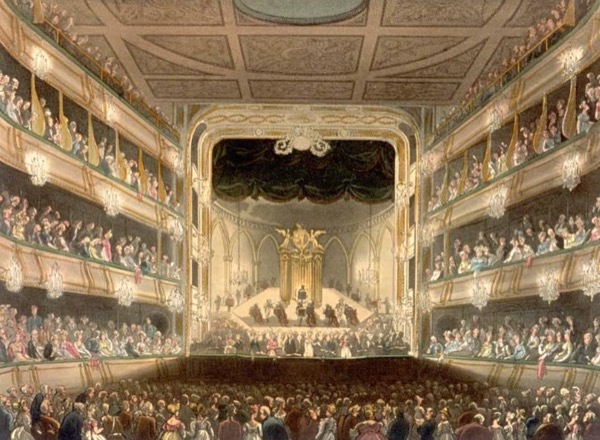
Handel’s first misstep was booking the Covent Garden theatre. Discourse sprang up in the papers, questioning whether it was appropriate for a sacred work to be presented in such a secular space – especially when women singers associated with the sinful theatrical lifestyle were booked as soloists.
Perhaps as a result, the London premiere on 23 March 1743 met a lukewarm reception. Six planned performances were cut down to three. A 1744 performance was cancelled entirely.
Handel’s “He was despised” from Messiah
In August 1745, Jennens gossiped to a friend about the fate of Messiah:
“[Handel] has made a fine Entertainment of it, though not near so good as he might & ought to have done. I have with great difficulty made him correct some of the grosser faults in the composition…”
His relationship with Handel would cool as a result of this chilly reception.
London would not mount another performance of Messiah until 1749: a striking six-year gap.
Messiah only truly entered the repertoire because it was revived for an important 1750 charity concert to benefit the Foundling Hospital. This turned into an annual event that helped to keep the work front of mind for many listeners and musicians, even past Handel’s death.
Why Do We Stand for the Hallelujah Chorus? The Truth Is Complicated
One question that is frequently asked about the performance history of Messiah is, why do audiences stand for the Hallelujah Chorus?
Purportedly, the tradition had its start at the 1743 London premiere, when Handel’s long-time patron George II rose to his feet, causing everyone else to follow his lead, per royal protocol.
Handel’s “Hallelujah Chorus” from Messiah
However, there’s no evidence that George II rose to his feet during this performance – or even that he was there at all. The earliest documentation we have of this tradition dates from 1756.
The explanation may be as simple as the start of the “Hallelujah Chorus” feels like church music that parishioners would have stood for by reflex.
This tradition – and whether it should be followed – remains a subject of debate among audiences, musicians, and conductors even today.
The fact that it is debated demonstrates the enduring appeal and resonance of Handel’s masterpiece.
How a Three-Week Miracle Became a Fixture in the Repertoire
Handel attended his last performance of Messiah on 6 April 1759 at Covent Garden – the same theatre where London had once given it a lukewarm reception. He was blind and in failing health. Eight days later, he was dead.
By then, the work had already outlasted the controversy that nearly killed it. The sacred-text-in-a-theatre scandal, the cancelled performances, the six-year London silence – all of it had been eclipsed by decades of annual performances, charitable associations, and the simple fact that audiences kept coming back to hear it.
Twenty-four days of composition. Nearly three hundred years of performances. Whatever Handel tapped into on 22 August 1741, it has appealed to generations and generations of audiences.
For more of the best in classical music, sign up for our E-Newsletter