When we listen to Claudio Monteverdi‘s L’Orfeo today, we often treat it as the “first” great opera. But the documents surrounding its 1607 premiere and the 1609 score reveal a work that was bleeding, experimental, and deeply conflicted. To understand L’Orfeo is to trace a path from a composer’s private grief to a public revolution in sound.
The Pulse of Private Grief
The emotional gravity of L’Orfeo begins not in the myth of Thrace, but in a cold room in Mantua. In 1607, as Monteverdi was crafting Orpheus’s lament, he was witnessing the slow decline of his wife, the singer Claudia Cattaneo. This was no mere professional commission; it was a psychological exorcism.
As musicologist Sergio Vartolo suggests, when Orpheus sings “Tu se’ morta, mia vita, ed io respiro” (You are dead, my life, and I still breathe), the boundary between the stage and the composer’s life dissolves. This skin-deep pain is why the work transcends the dry academicism of earlier Florentine experiments. Monteverdi didn’t just write a tragedy; he lived one, and that raw sincerity is the engine that drives the opera’s enduring power.
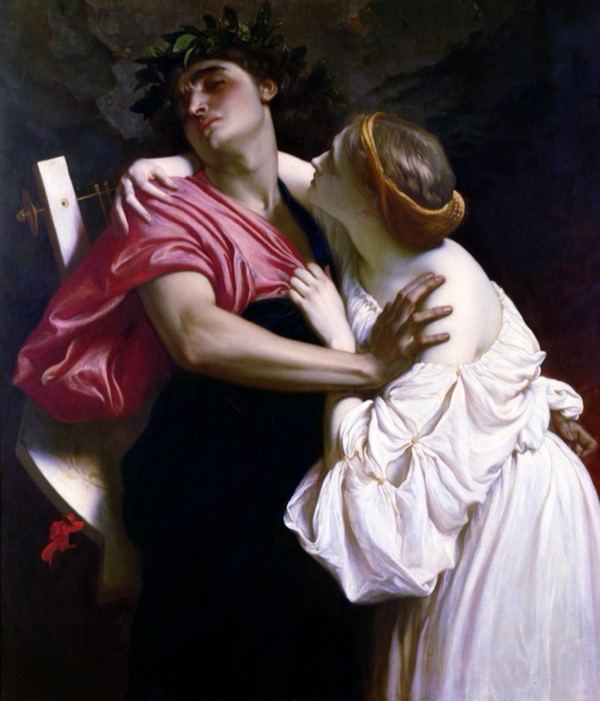
Frederic Leighton: Orpheus and Eurydice 1864 (wikipedia commons)
The Tyranny of the Word
To translate this personal agony into a new art form, Monteverdi had to stage an aesthetic revolution: Stile Rappresentativo. For centuries, complex polyphony had muffled the clarity of human speech. Monteverdi inverted the hierarchy, declaring that “the words must be the mistress of the harmony.”
In Act II, this revolution manifests with shocking violence. We are lulled by the sun-drenched, madrigal-like joy of the shepherds until the Messenger arrives. With the jagged, dissonant cry of “Ahi caso acerbo” (Ah, bitter fate), the musical landscape instantly collapses. By allowing the semantic weight of bitter fate to dictate the harmonic shift—using unprepared dissonances and heavy silences—Monteverdi proved that music’s highest calling was no longer to be purely decorative, but to be a mirror of the psyche.
The Superpower of Sound
If the Messenger’s scene is the opera’s emotional pivot, “Possente spirto” (Powerful spirit) is its technological peak. At the gates of the underworld, Orpheus must use music as a literal weapon to charm the ferryman Charon. This necessity is explicitly laid out by the character Speranza (Hope), who tells Orpheus that to cross into the abyss, he requires a “big heart and a beautiful song”—the very first historical invocation of bel canto as a transformative force.
Following the elite Ferrarese tradition of vocal virtuosity, Monteverdi provides two versions of this aria: one starkly simple, and one draped in labyrinthine, almost supernatural ornamentation. The 1609 score contains a fascinating paradox here. While the layout seems to offer a choice between “simple” or “complex,” a closer reading suggests a da capo structure: Orpheus begins with the humble plea and escalates into the ornate spell. This is music as a superpower—using the terza rima of Dante and the newly invented orchestral recitative to perform a feat of psychological magic. Orpheus doesn’t just ask to pass; he seduces the laws of the universe through the sheer density of his art.
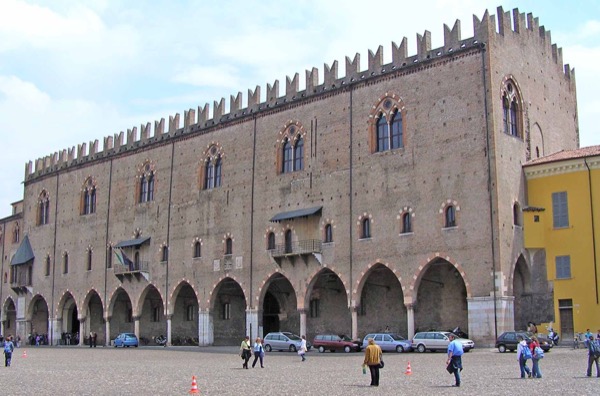
Palazzo Ducale in Mantua (wikipedia commons)
The Vanishing Blood: A Courtly Compromise
Yet, for all its revolutionary power, L’Orfeo was still a product of its time and its patrons. One of the most haunting questions remains: what happened to the ending? The original 1607 libretto follows the grim, classical tradition of Poliziano, where the Bacchantes dismember Orpheus in a ritualistic frenzy—a bloody ending underscored by the chaotic rhythm.
Claudio Monteverdi: L’Orfeo, Act V: Baccanti (San Petronio Cappella Musicale Orchestra; Sergio Vartolo, cond.)
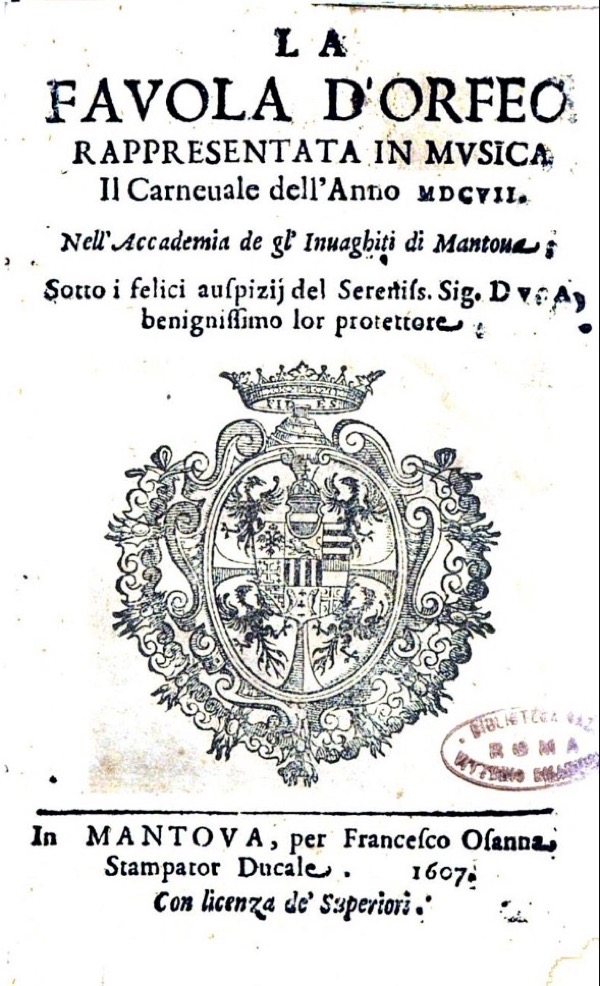
Title page of the 1607 libretto
However, the 1609 score offers a sanitised lieto fine (happy ending), with Apollo descending to rescue his son. Vartolo notes that this shift likely served the refined sensibilities of the court’s noblewomen, for whom the sight of a hero’s slaughter was perhaps inappropriate. This alteration reminds us that opera has always been a compromise between raw artistic truth and the demands of the audience.
Epilogue
It is the first time in history that music achieved the fidelity of a photograph—capturing a husband’s grief, a poet’s Dantean ambitions, and a composer’s radical belief that the human voice, when pushed to its limits, could challenge even the silence of the grave. Today, when we hear Orpheus turn his head to look back, we aren’t just watching a myth; we are witnessing the birth of ourselves on the operatic stage.
Sergio Vartolo’s recording serves as a scholarly yet vibrant manifesto, notably restoring the 1607 “bloody” finale to honour Monteverdi’s original, visceral, tragic vision.
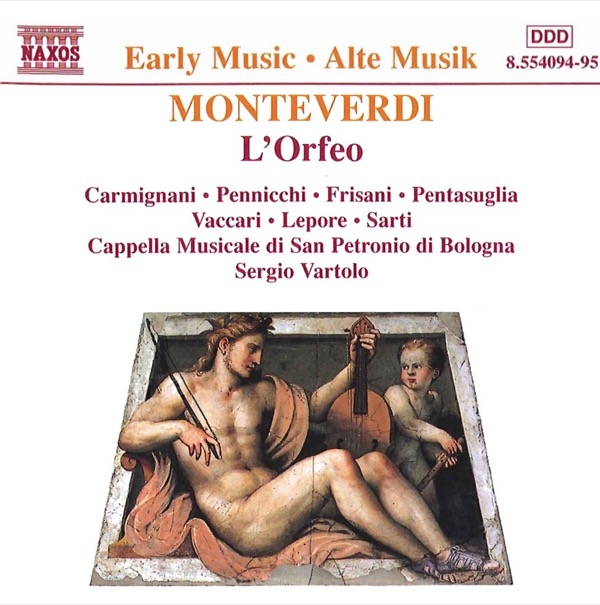
Monteverdi: L’Orfeo — Cappella Musicale di San Petronio di Bologna, Sergio Vartolo (Naxos 8.554094-95)
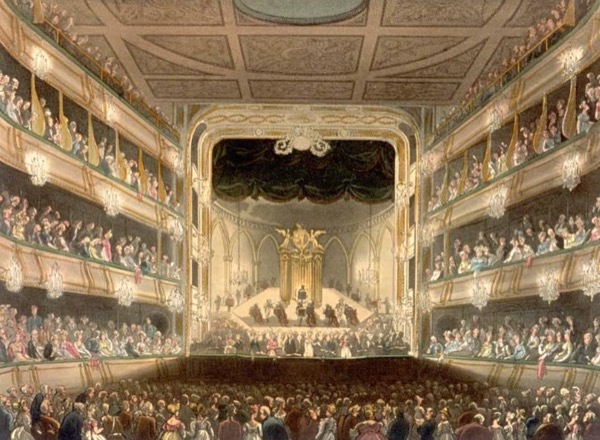
This May, the staging at the Rococo Theatre (Schwetzingen) offers a perfect spatial counterpoint. The theatre’s intimate, ornate acoustic mirrors the splendour of the Mantuan premiere. Watching Orpheus descend into Hades within such an authentic 18th-century jewel bridges the gap between historical scholarship and live, breathing drama—proving L’Orfeo remains opera’s most vital living photograph.
For more of the best in classical music, sign up for our E-Newsletter