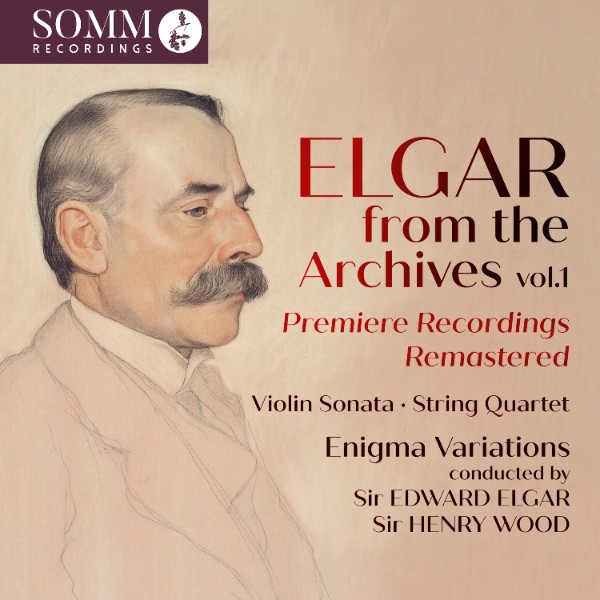
In the second volume of material from the archives of Elgar recordings, we look at Elgar‘s two string concertos.
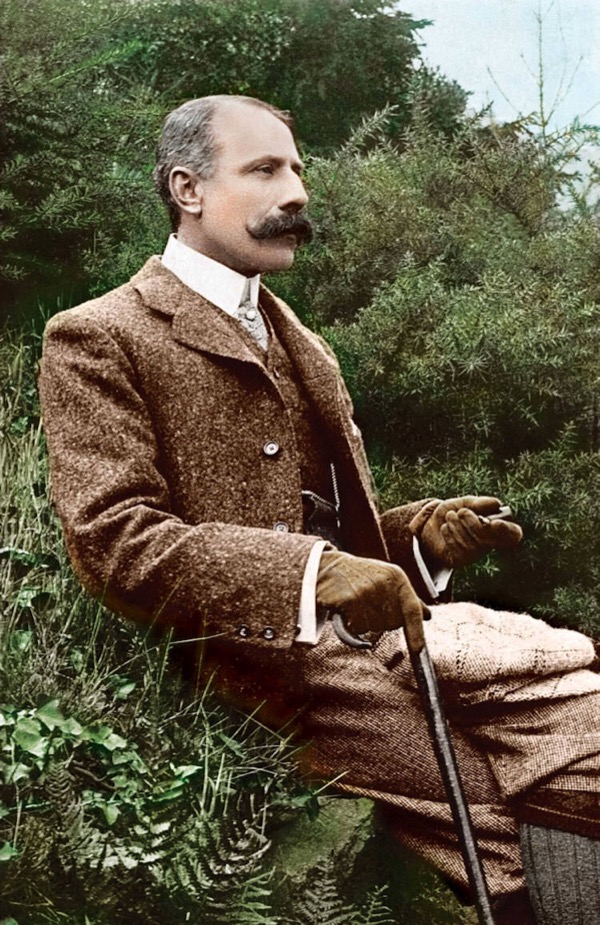
Edward Elgar
Elgar’s violin concerto was written for Fritz Kreisler and, for a time, was part of the repertoire for the great virtuoso violinists of the early 20th century, including Sammons and Ysaÿe and, later, Menuhin and Haendel. Kreisler performed the premiere at Queen’s Hall in London on 10 November 1910, with the composer conducting.
It was Kreisler who had urged Elgar to write the work (and who encouraged him to complete it). To ensure the violin technique was accurate, Elgar worked with W.H. Reed, leader of the London Symphony Orchestra.
What’s surprising is how Elgar’s work dropped out of the repertoire, but given that it was British, it wasn’t taken up by the international conductors who ruled the orchestras at the time, in addition to the disruption to all performers by both WWI and WWII. The demands on the soloist are another stumbling block. However, in the hands of a capable performer (Tibor Varga), a sympathetic conductor (Jan Koetsier) and a great orchestra (the Bamberg Symphony Orchestra), this 1957 performance is all and more that we could ask of the work.
This recording comes from the aircheck for a pre-recorded radio broadcast of the work from the Kulturraum, Bamberg, on 19 December 1957.
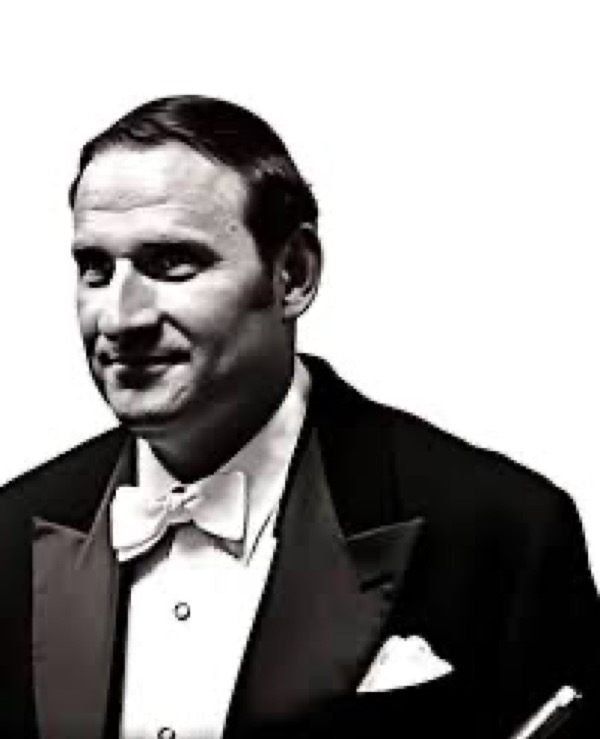
Tibor Varga
Edward Elgar: Violin Concerto in B Minor, Op. 61 – III. Allegro molto
It is in the last movement that the skill of the violinist is put to the test. Elgar has added a cadenza accompagnato, where the strings play a ‘pizzicato tremolando’, using the soft part of their fingers for pizzicato, while the soloist expounds on themes from the first movement. This innovation by Elgar is a unique aspect of this movement.
The cello concerto was written in the second half of 1918 into 1919 and so seems imbued with an autumnal feel. Melancholy also has a role, but there’s also a place for some playfulness. The second movement opens with the cello, and from there, the violas take up a 9/8 melody.
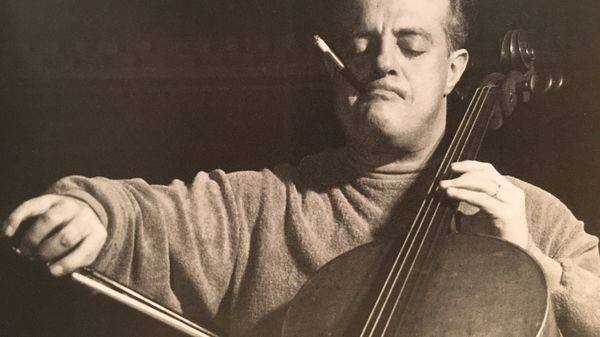
André Navarra
Edward Elgar: Cello Concerto in E Minor, Op. 85 – II. Lento – Allegro molto
Elgar had been promising a piece to Carl Fuchs, the cellist of the Brodsky Quartet, since 1900, and Elgar was reminded of his promise almost 20 years later. He wrote the work while at home in the countryside recovering from a tonsil operation.
At the work’s premiere in October 1919, disaster struck when the orchestra didn’t have enough rehearsal time, and it’s considered a debacle. It was the opening of the London Symphony Orchestra’s 1919-20 season, and the other conductor, Albert Coates, took up all the rehearsal time, leaving Elgar short. The soloist was Felix Salmond, who Elgar thought had done a perfect job of preparation.
It was more than a year before there was a second performance, and in that year, Elgar’s music had fallen out of favour, being seen as old-fashioned. Even its New York premiere in 1922 didn’t receive praise. The melancholy of the work was seen as too Edwardian and not sufficiently up to the post-war taste.
By the 1950s, however, the work had returned to the repertoire, and when Jacqueline du Pré took it up in the 1960s, its redemption was clear.
The performer in this recording is French cellist André Navarra (1911-1988). At his first public performance in Britain, at the 1950 Cheltenham Festival, he played the Elgar Concerto, with Barbirolli conducting.
This recording comes from the aircheck for a live radio broadcast of the work from the Herkules-Saal, at the Residenz, Munich, on 29 November 1956. André Navarra, cello, is joined by the Munich Philharmonic with Fritz Rieger conducting.
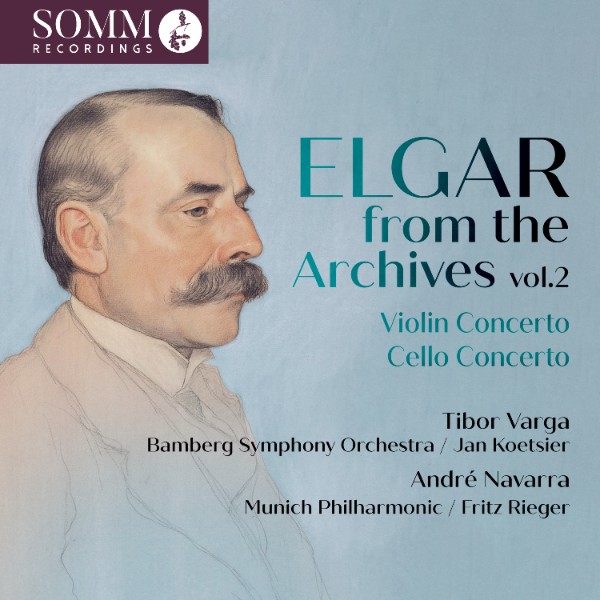
Elgar from the Archives, Vol. 2: Violin Concerto, Cello Concerto
Tibor Varga (violin), Bamberg Symphony Orchestra, Jan Koetsier, cond. / André Navarra (cello), Munich Philharmonic, Fritz Rieger, cond.
SOMM Recordings Ariadne 5047
Release date: 13 March 2026
Official Website
For more of the best in classical music, sign up for our E-Newsletter