Few composers loom larger in Western music history than Johann Sebastian Bach – and few are surrounded by as many myths.
Over the centuries, Bach has been described as everything from a neglected genius labouring in obscurity to a joyless academic writing music only specialists can understand.
These simplified narratives are repeated so often that they begin to feel like facts, even when they don’t hold up to historical scrutiny.
The reality is far more interesting. Bach was respected during his lifetime, deeply engaged with both sacred and secular music, and emotionally expressive as well as intellectually rigorous.
Today, we’re looking at five of the most persistent myths about Bach’s life.
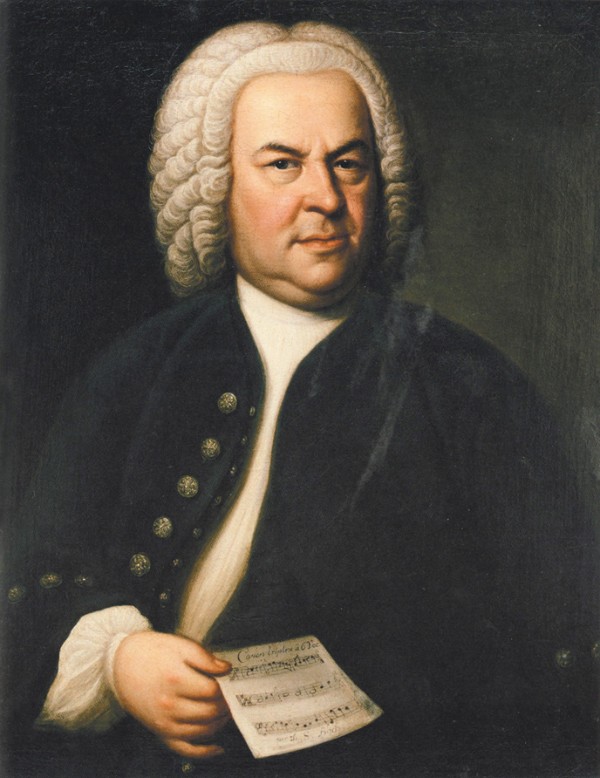
Elias Gottlob Haussmann: J.S. Bach, 1746 (Bach-Archiv Leipzig)
Myth 1: Bach was unappreciated and obscure during his lifetime.
Bach – St Matthew Passion BWV 244 – Van Veldhoven | Netherlands Bach Society
It’s often said that Bach toiled in obscurity until later generations “discovered” him, but this isn’t exactly true.
During his lifetime, Johann Sebastian Bach was highly respected in musical circles. He held prestigious positions: for example, Kapellmeister (music director) for a prince and later Cantor of Leipzig’s Thomasschule, a very prominent post.
In 1747, King Frederick the Great invited Bach to his court in Potsdam to hear the composer improvise. Frederick, a talented musician himself, even hired Bach’s composer son and student, Carl Philipp Emanuel, to work in his court.
Although the trajectory of Bach’s career didn’t follow that of later composers (he never toured, and his compositions weren’t widely published for mass audiences), he was far from unappreciated in his own time.
In the small but close-knit world of German music, “Old Bach” was a well-known name, valued for his virtuosity and inventive compositions long before the 19th-century Bach revival.
Myth 2: Bach only wrote religious music.
Bach: Brandenburg Concerto No. 3 in G Major BWV 1048
Because Bach wrote many church cantatas, passions, and other sacred works, some assume he composed exclusively religious music.
He certainly poured much of his genius into religious pieces (for example, his Mass in B Minor, St. Matthew Passion, and hundreds of cantatas for church services), but he also wrote a great deal of secular music.
However, it is important to remember that much of Bach’s religious music was composed when he held a position in which composing religious music was part of the job description.
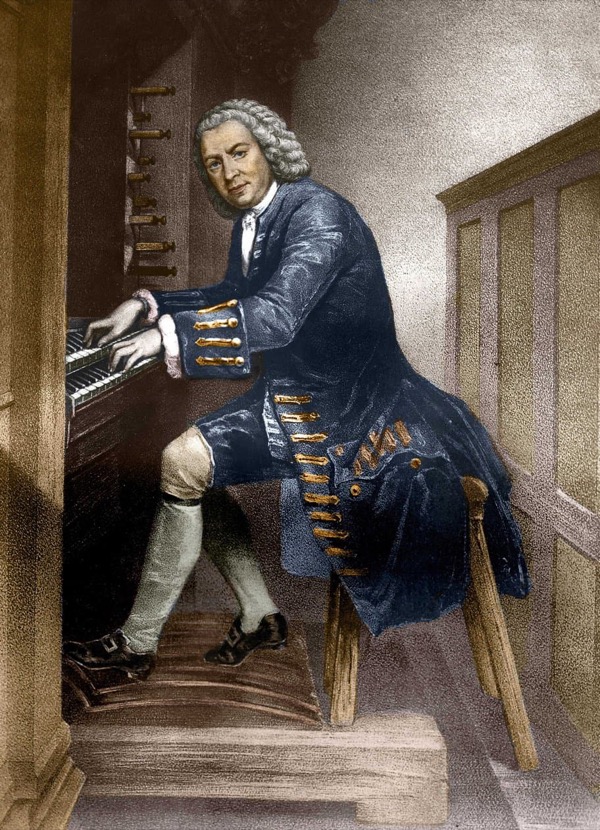
Johann Sebastian Bach playing the organ (c. 1881)
Bach also spent several years at the court of Köthen, which was a more secular post. While there, he wrote a number of instrumental works: the Brandenburg Concertos, the Cello Suites, Violin Sonatas and Partitas, and various orchestral dance suites, none of which were meant for church.
He also composed secular vocal works, including humorous cantatas like the “Coffee Cantata,” which jokingly centres on a young woman’s coffee addiction, and festive pieces for royal occasions or university ceremonies.
In short, Bach was a versatile composer. Yes, his Lutheran faith may have inspired many masterpieces, but he was just as comfortable writing music for the salon, the court, or even the coffee house.
Myth 3: Bach was a dull, rule-bound academic.
Bach – The Art of Fugue BWV 1080 – Sato | Netherlands Bach Society
This misconception paints Bach as a dry scholar who only followed strict musical formulas.
True, Bach was highly learned in music theory and a master of complex forms like the fugue – but he was anything but dull or unimaginative.
Bach’s works are full of passion, innovation, and even playfulness. He routinely pushed the boundaries of form and harmony, astonishing contemporaries with inventive chord progressions and intricate counterpoint.
Just listen to the mournful beauty of “Erbarme Dich” from the St. Matthew Passion or the joyful exuberance of the Brandenburg Concertos’ fast movements.
In life, Bach seems to have had a colourful personality. He could be rebellious and independent, and at one point, he even landed in jail for a month because he quarrelled with his employer.
Myth 4: Bach raised twenty children in the house at once.
Minuet in G Major and Minuet in G Minor (Pezold) from the Notebook for Anna Magdalena Bach
It’s a fact that Johann Sebastian Bach had a very large family – he fathered twenty children with his two wives.
However, the image of twenty kids running around the Bach household all at the same time is an exaggeration.
Bach’s children were born over a span of many years, and sadly, due to the era’s high infant mortality rate, only about half of them survived to adulthood.
By the time the youngest Bach babies came along, many of the older surviving siblings were already grown up and often out of the house.
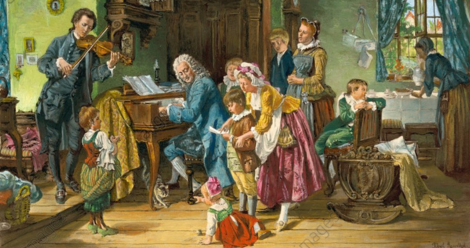
The Bach Family © Oxford Bach Soloists
For example, Bach’s eldest sons (Wilhelm Friedemann and Carl Philipp Emanuel) were adults with careers of their own while the younger children were still in the nursery.
So while family life at the Bach home was certainly busy – at times there were several kids at home, plus music students boarding – it was never twenty children all at once.
Read and find out what happened to Bach’s children.
Myth 5: Bach wrote music that only specialists can appreciate.
Daniil Trifonov – Bach: Cantata BWV 147: Jesu, Joy of Man’s Desiring (Transcr. Hess for Piano)
Bach’s music has a reputation for complexity and intellectual depth, which leads some to think it’s only accessible to trained musicians or academics.
It’s true that professional musicians adore studying and performing Bach; there are endless intricate fugues, clever structures, and subtle details to marvel at, all of which take years of training to fully appreciate.
But that doesn’t mean casual listeners can’t enjoy Bach’s music. In fact, much of Bach’s work has wide appeal even to those who know nothing about harmony or counterpoint.
Think of the gentle “Air on the G String,” which has become a staple at weddings and in film soundtracks, or the dramatic Toccata and Fugue in D minor, which thundered its way into popular culture.
Bach offers endless riches for those who delve into his craftsmanship, but his music is for everyone.
Conclusion
Many of the myths surrounding Bach endure because they contain a grain of truth. His music is complex; he wrote a vast amount of church music, and his posthumous fame eventually surpassed anything he experienced in life.
But in the final accounting, Bach was neither an ignored nobody nor a cloistered academic writing for an elite few.
Rather, he was a respected professional musician, admired by his peers, capable of humour, passion, rebellion, and astonishing creativity across genres.
His music rewards decades of close study, but it also speaks directly and powerfully to listeners encountering it for the first time.
Seen this way, Bach doesn’t need rescuing by mythology. The truth is compelling enough.
For more of the best in classical music, sign up for our E-Newsletter