
In Part 1 of this series, we looked at four composers who lived and worked with significant disabilities.
Here are four more – spanning three centuries and five countries, with disabilities ranging from chronic pain to hearing loss to impacts from injuries sustained in childhood.
Allan Pettersson
Rheumatoid arthritis
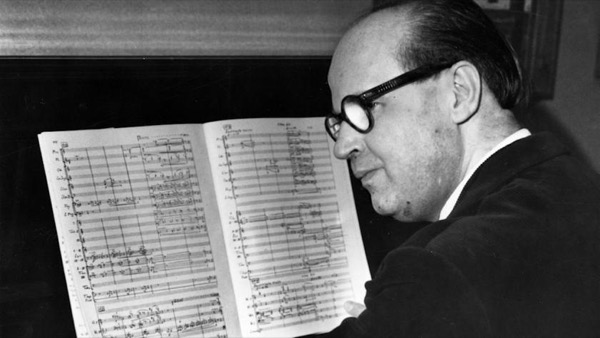
Allan Pettersson
Allan Pettersson was born in 1911 to an alcoholic blacksmith and his dressmaker-and-singer wife.
Against his father’s wishes, he began teaching himself the violin at age 10. In 1930, he enrolled at the Royal Swedish Academy of Music to continue his studies.
The viola would eventually become his favoured instrument, and in the 1940s, he began working as a violist in the Stockholm Concert Society Orchestra, later the Stockholm Philharmonic.
Pettersson has been described as a “combative loner”; he was once scolded by visiting conductor Willem Mengelberg for refusing to blend with his section.
His interest in being an orchestral musician eventually faded, and he began focusing on composition instead, writing multiple symphonies.
His seventh symphony, premiered in 1968, was a breakthrough, becoming a huge success in Sweden.
Pettersson’s Symphony No. 7 (excerpt)
In the early 1950s, his chronic pain was diagnosed as rheumatoid arthritis.
At the time, there were limited effective treatments, and his physical condition deteriorated throughout the 1950s.
He kept composing, but by the early 1960s, his mobility was severely curtailed. His apartment was on the fourth floor of a building without an elevator, leaving him essentially homebound for years.
In 1970, he was hospitalised for nine months with kidney issues.
Still, he continued composing as his health deteriorated. When he died of cancer in 1980, he was working on his seventeenth symphony.
Frédéric Chopin
Tuberculosis
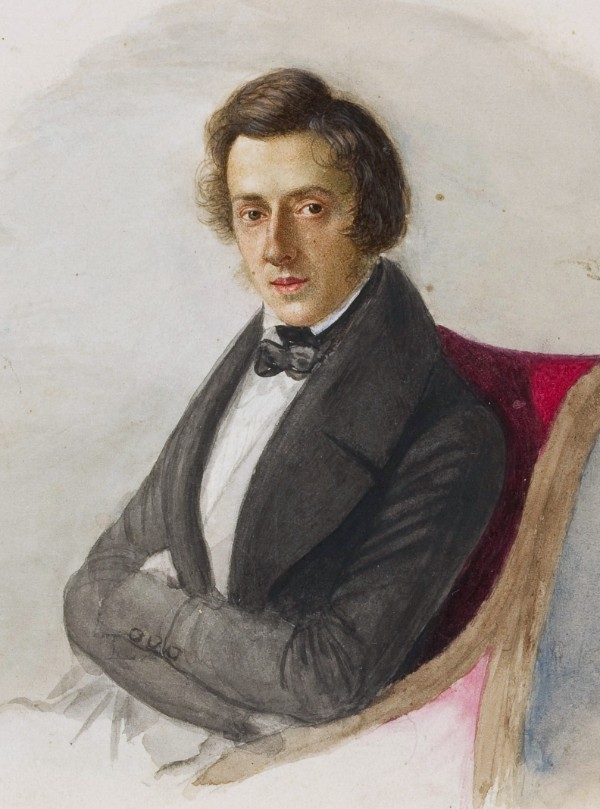
Maria Wodzińska: Frédéric Chopin, 1836 (Wasaw: National Museum)
After Chopin moved from his native Poland to Paris in 1831, his health deteriorated, and he began coughing up blood: classic symptoms of a dreaded tuberculosis infection.
A few years later, he came down with laryngitis and bronchitis, too. He got so ill that rumours of his death began circulating.
Even after he recovered from the acute infections, he continued to endure intense and exhausting coughing spells.
Chopin’s Ballade No. 1
In Chopin’s day, tuberculosis was often treated by bloodletting (the process of draining blood from the body) and colon cleansing. These treatments did not provide lasting relief, if any.
With the lack of treatment options available to him, Chopin turned to belladonna and opium for relief. We wrote about his relationship with opium and how it may have affected his music-making here: https://interlude.hk/piano-opium-eater/.
Throughout his thirties, his condition deteriorated steadily. During a tour of Scotland and England in 1848, he made out his will, acutely aware that his days were limited.
He died the following year in Paris.
Molly Joyce
Injuries from a car accident

Molly Joyce
American composer Molly Joyce was a seven-year-old violinist when she was in a car accident. Her left hand was almost completely severed from her body.
She would go on to study at the Juilliard School, the Royal Conservatory in The Hague, and the Yale School of Music.
Molly Joyce’s “Over and Under”
In a 2022 interview, she told contemporary art music blogger Sandris Murins:
“I identify as disabled because of a car accident that happened a little more than 20 years ago, when my left hand was nearly amputated. Since the accident, I have been on a journey of acceptance… I have had to come a long way, while unfolding my disability, and it has paralleled the progression of my artistic practice.”
Due to her own experiences, Joyce has become increasingly interested in prioritising the experiences of audience members with disabilities. For instance, she provides sign language interpretation and audio descriptions for people who have reduced vision or hearing.
She also works with other artists who have disabilities, such as dancer Jerron Herman, who has cerebral palsy.
According to her official biography, her primary instrument is “her electric vintage toy organ, an instrument she bought on eBay that suits her body and engages her disability on a compositional and performative level.”
Ludwig van Beethoven
Deafness, alcoholism, depression, liver issues, possible lead poisoning
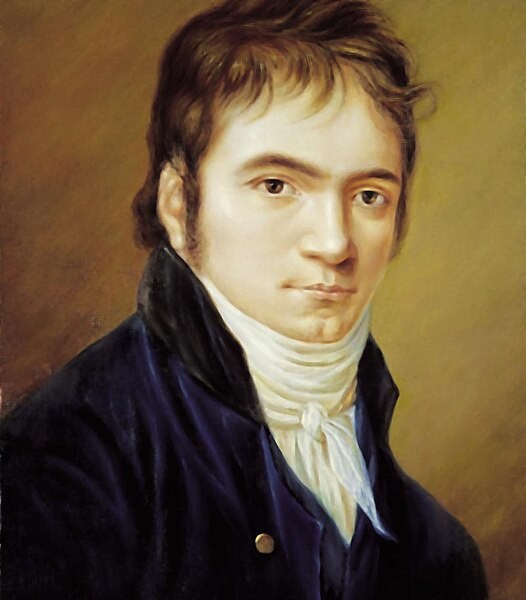
Christian Honeman: Ludwig van Beethoven, 1803 (Beethovenhaus Bonn)
Beethoven dealt with many more health issues than his well-known hearing loss, tinnitus, and depression.
For one, he had severe and lifelong gastrointestinal problems.
These symptoms first began appearing after his beloved mother died when he was just sixteen, leaving his violent and alcoholic father as his only parental figure. During flares of stress or grief, his abdominal pain and digestive problems would often worsen.
In 1821, six years before his death, he also began showing signs of liver disease, including jaundice, vomiting, and more abdominal pain. One contributor was likely his alcohol consumption.
Based on what historians know, it is commonly accepted that his final cause of death was actually liver failure.
Beethoven’s Große Fuge
Modern research has unearthed additional information about Beethoven’s health and disabilities.
For instance, a clipping of Beethoven’s hair was recently tested for heavy metals at the Mayo Clinic.
NPR reported in May 2024 that the lead level in the hair was “64 to 95 times higher than the hair of someone today.”
Paul Jannetto, director of the lab, told NPR he believes this was “likely” due to “the goblets and glasses [Beethoven] drank out of.”
Lead poisoning alone likely wouldn’t have killed Beethoven, but it can worsen liver disease, GI issues – and, yes, hearing loss.
We’ll never know exactly what disabilities Beethoven would be diagnosed with had he lived today – but it would certainly be more than deafness and depression.
Conclusion
Pettersson composed from a fourth-floor apartment he could barely leave. Chopin made out his will on tour, knowing he was dying. Joyce’s art expanded once she came to terms with her disability. Beethoven wrote some of the most celebrated music in the Western canon while going deaf, poisoned by his own cups, and battling organ failure.
Disability is woven into the history of classical music – and these four great composers are just a small part of that larger story.
For more of the best in classical music, sign up for our E-Newsletter








It is truly amazing and with a sense of gratitude, that we can marvel as to how those knowingly gifted artists can overcome their disabilities and press forward to fulfill their calling in life. It is unfortunate however that they did not have the access to the medical knowledge we possess today. We can only imagine what more , in the way of artistic achievement , we would have been blessed with had they lived a decade or two longer.